

Finance & Law
Tax in Spain – Guide for Swedish Property Owners 2026
Complete tax guide for Swedes with property in Spain: IBI, IRNR, wealth tax, capital gains and the double taxation agreement. Updated 2026.
16 min

The Beckham Law in Spain: who can qualify, tax levels, the six-year period, the six-month rule and common mistakes — guide for Swedes 2026.
The Beckham Law in Spain is one of the first tax topics Swedish newcomers hear about, and also one of the most misunderstood. Many think it automatically means "lower tax in Spain". It is not that simple. The regime can be very valuable for the right person, but it does not suit everyone and requires that both timing, income type and legal situation actually line up. See also the overview of tax in Spain and residencia before you decide.
The most important thing to understand is therefore not just how low the percentage rate can be, but whether you qualify at all and whether it will actually be better than ordinary Spanish taxation in your specific situation.
The Beckham rule in brief
Employment income
24 %
usual rate up to 600,000 €
Excess portion
47 %
on the portion above 600,000 €
Duration
6 tax years
the year of arrival plus five years
Deadline
6 months
from the relevant starting point
Information
Short conclusion: The Beckham Law can be very advantageous for certain higher-earning individuals who move to Spain for work or similar qualifying arrangements. It suits less well if you miss the application window, have the wrong type of income, or assume that everyone moving to Spain is automatically covered.
The Swedish name refers to Spain's special tax regime for individuals who qualify under the rules for employees or other covered profiles moving to the country. Current official regulatory summaries for 2025–2026 describe the arrangement as allowing you to be taxed in a special way for a limited period instead of under the ordinary progressive Spanish income tax.
Because David Beckham became the most famous name in the early public conversation about the rule. But for Swedish newcomers it is more important to understand today's rules than the historical nickname.
To make Spain more attractive for incoming talent, executives, specialists and other qualified individuals. The regime has also been broadened in modern times, meaning more types of newcomers may be relevant than before.
Current regulatory overviews following the Startup Law changes indicate that the target group is no longer only the classic employees relocated by an employer. In many cases it can also include certain:
This is, however, the part where you have to be very careful. The category can look clear in a guide but become more complex in practice when contracts, company structure and income source are scrutinised.
Common profiles
The most classic target group, but the arrangement must hold up to actual scrutiny.
More relevant than before, but often more documentation-intensive.
An important point in current summaries is that the previously long requirement of not having been tax-resident in Spain has been shortened. The main rule is now often described as five previous years without Spanish tax residency, not ten.
The most important change
Previous benchmark
10 years
older level that many still refer to
Current main rule
5 years
without Spanish tax residency according to newer summaries
The most common benchmark in current rules and summaries is:
Indicative tax levels on employment income
Employment income up to 600,000 €
24 %
Portion above 600,000 €
47 %
These are the levels most often highlighted for 2025–2026 in official and current regulatory summaries.
No. That is a common mistake to believe.
If you have lower income, the wrong type of income or other circumstances, ordinary Spanish taxation can in some cases be more reasonable than you first think. The special tax regime should therefore not be assessed at headline level, but on its actual net effect.
Often when you:
Tip
Good way to think about it: Do not just ask "can I get the Beckham Law?" Ask "will it actually be better for me than ordinary Spanish taxation given all the details of my situation?"
When it is usually worth calculating
The typical main rule in current summaries is the year of arrival plus the following five tax years, giving a total of six tax years.
Because you need to think about the move across several years, not just the first tax return. An arrangement that looks attractive in year one can become less relevant when the period ends or when your income structure changes.
Many people are too late here. Current guidance indicates that the application normally needs to be submitted within six months of the relevant starting point, often social security registration or equivalent qualifying date.
Application timeline
Main rule
6 months
from the relevant registration or qualifying starting point
Practical conclusion
Raise the question immediately
do not wait until the move feels fully settled
That you should not wait until "everything has settled" after the move. If you suspect you may be eligible the question needs to come up early, ideally before or immediately upon establishing yourself in Spain.
In practice you should assume that timing is critical. That is precisely why it is wise to get advice early in the process, not when six months have almost elapsed.
It is often most interesting for people who move to Spain and will have:
When you:
There are several recurring ones.
Common mistakes
The rule may be broader than before, but it is still conditional and depends on the actual structure.
Timing and net effect are often more important than the figure shown in a guide.
Note
Important warning: The Beckham Law is not a do-it-yourself matter if your situation is the slightest bit complex. If you are moving with a company, options, bonuses, dividends or an international income mix, you should have an adviser calculate it before you lean on the headline advantages.
Yes, potentially, if you are moving to Spain for work or another qualifying arrangement, have the right timing and clear employment income at a level where the tax regime actually makes a difference.
No, or at least not obviously, if you are mainly attracted by the name and have not done the comparison against ordinary taxation. That is precisely where many miss the point. The regime is powerful for the right person, but it is not a general newcomer bonus.
Properties
Explore available properties in Spanien
Browse current homes in the area and compare locations, price levels and property types at your own pace.
Contact
We help Swedish buyers and newcomers sort out area choices, housing arrangements and which questions need to be resolved with a solicitor or tax adviser before the move. Get in touch if you want better structure before taking the next step.
Book free consultationLast updated: 2026-04-02. Tax rules can change and individual qualification must always be verified against the Agencia Tributaria and an adviser before making decisions.
Decision support
Det är det vanliga svenska smeknamnet på Spaniens särskilda skatteregim för personer som flyttar till landet för arbete eller vissa liknande kvalificerande upplägg. Regimen innebär i korthet att du i vissa fall kan beskattas mer som en icke-resident under en begränsad period, trots att du är skattemässigt bosatt i Spanien.
Skattenivåerna regleras i Ley 35/2006 art. 93: 24 procent på arbetsinkomst upp till 600 000 euro och 47 procent på delen därutöver. Ansökan sker via Modelo 149 inom sex månader från kvalificerande startdatum.
Perioden regleras i Ley 35/2006 art. 93: inflyttningsåret plus fem följande beskattningsår, totalt sex skatteår.
Ja, timing är kritisk. Ansökan via Modelo 149 ska lämnas till Agencia Tributaria inom sex månader från kvalificerande startpunkt, vanligtvis registrering i Seguridad Social.
Missar du fristen förlorar du rätten för hela perioden.
Ofta personer med relativt hög arbetsinkomst som flyttar till Spanien för jobb, distansarbete, bolagsroll eller annat upplägg som kan omfattas av de utvidgade reglerna. För lägre inkomster eller fel typ av inkomst är det inte säkert att regimen är bäst, så jämförelse med vanlig spansk beskattning är viktig.
Sources

Las Chapas, Málaga

Lago Jardín II, Alicante

Villa Amalia, Alicante

Los Balcones, Alicante

Los Balcones, Alicante

San Luis, Alicante
Local expertise
Complete tax guide for Swedes with property in Spain: IBI, IRNR, wealth tax, capital gains and the double taxation agreement. Updated 2026.

Guide to the Digital Nomad Visa in Spain: who can apply, income requirements, documents, tax implications and what Swedish remote workers should bear in mind.
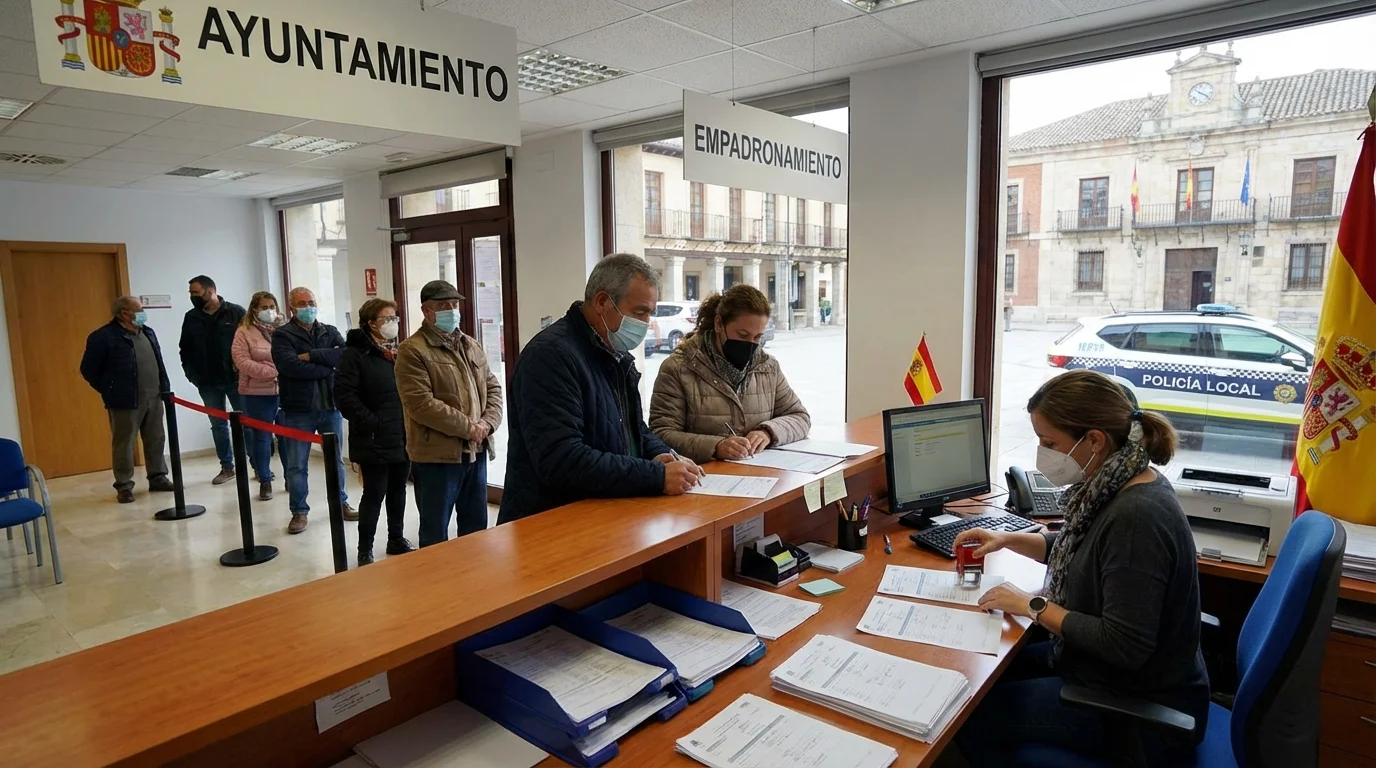
Everything about empadronamiento in Spain: why you need to register, how to do it, what documents are required and what it gives you as a Swedish resident.