
Buying Guides
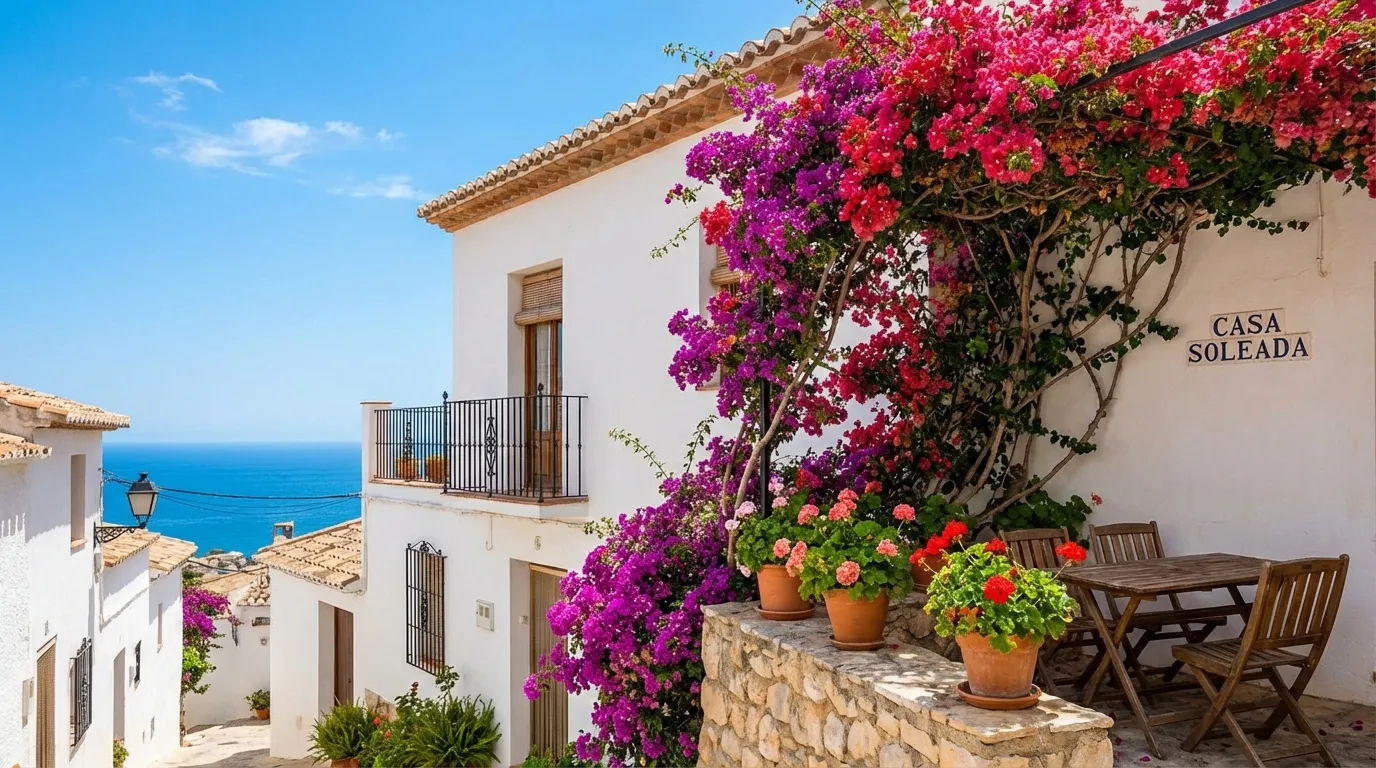
Cheap Houses in Spain for Sale 2026 – Where Do You Find the Best Prices?
Cheap houses in Spain from 80,000 €: prices on Costa Blanca, Costa Cálida, Torrevieja and Mazarrón — hidden costs, risks and tips for bargains in 2026.
15 min
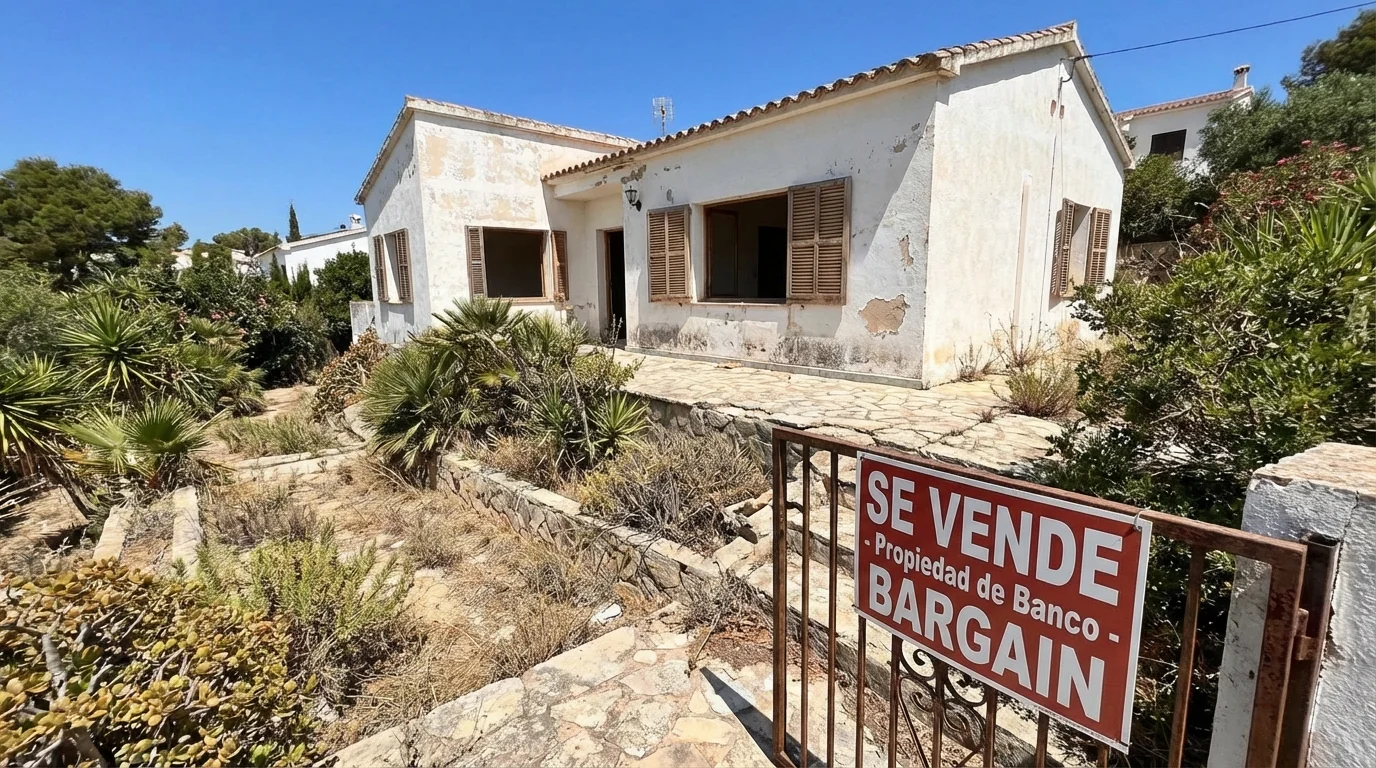
Everything about bank-repossessed properties in Spain: where to find them, what risks exist, how much of a discount you can realistically expect, and what you must check before buying.
Bank-repossessed properties in Spain can be genuine bargains — apartments and villas at 20–40 % below market price. Spanish banks are still estimated to hold around 600,000 properties left over from the 2008 financial crisis and are desperate to offload them. A three-room apartment with a garage at 45,000 euros or a duplex near the beach in Alicante for 80,000 euros sounds fantastic — and sometimes it genuinely is.
But bank-repossessed properties come with risks that ordinary purchases do not have. Hidden debts transferred to you as the buyer. Properties in terrible condition after years without maintenance. Missing documents. And a seller — the bank — that gives no warranties. In this guide we go through exactly where to find bank-repossessed properties, how large discounts you can realistically expect, what risks you need to be aware of, and step by step what to check before you sign.
A bank-repossessed property (Spanish: embargo, inmueble de banco or REO — Real Estate Owned) is a home that the bank has taken over after the previous owner could not pay their mortgage. The process looks roughly like this:
The Spanish financial crisis of 2008–2014 resulted in hundreds of thousands of repossessions. Despite years of sales efforts a huge stock remains. Banks do not want to own properties — it ties up capital and requires management. That is why there is room for negotiation that does not exist with ordinary purchases.
Information
Difference from auction properties: Bank-repossessed properties are already in the bank's ownership and sold via their portals at a fixed price (with scope for negotiation). Auction properties are sold via court — a faster but more complex process with its own rules and risks.
Every major Spanish bank has its own property company handling sales. Here are the most important portals and which bank is behind them:
Servihabitat / InmoCaixa (CaixaBank) — Operates through Coral Homes, where Lone Star owns 80 % and CaixaBank retains 20 %. Wide portfolio covering everything from apartments to commercial premises. Also has partnerships with Kutxabank and Sareb.
Haya Real Estate (BBVA / Cerberus) — Manages over 200,000 properties after Swedish company Intrum acquired the business in 2023. One of Spain's largest operators with properties in all price ranges, from land plots for 10,000 euros to premium homes above one million.
Solvia (Banco Sabadell / Intrum) — Now merged with Haya Real Estate under the Intrum group. Manages properties from several banks including CaixaBank and Sareb. Wide range focused on coastal areas.
Altamira / Casaktua (Banco Santander) — Part of the doValue group managing assets valued at around 138 billion euros in southern Europe. Santander sold Altamira in 2025 to investment fund Apollo for nearly 700 million euros.
Aliseda (Banco Popular / Blackstone) — Manages almost 100,000 properties together with Anticipa (Blackstone's Spanish servicing company). Focus on residential properties and land.
Tip
Tip: Register on several portals simultaneously and set up alerts for your desired area and price range. The banks' best properties often sell quickly — sometimes within weeks of being listed.
The short answer: 20–40 % below market price, depending on the property. But that figure requires nuance.
Realistic discount levels against market price
15–25 %
High demand — the bank knows these properties sell.
25–40 %
Lower demand — the bank wants to clear stock.
25–35 %
Count the discount plus renovation cost in the same calculation.
10–20 %
Best condition — often the smallest discount.
30–40+ %
The bank has often reduced the price in stages.
In coordinated campaigns, Haya Real Estate and Bankia have offered more than 2,000 properties with up to 40 % discount — with over 510 properties in the Valencia region and Murcia alone.
Yes — but do not expect huge additional discounts on top of the already reduced price. Banks typically follow this pattern:
The bank is more willing to negotiate if you finance through them (see the mortgage section below), if the property has been in the portfolio for a long time, or if you can make a quick transaction without financing conditions.
Note
Warning: Do not only look at the discount. A property costing 30 % below market price but needing 25,000 euros of renovation and carrying 5,000 euros of unpaid community fees gives you a real discount of perhaps 15–20 %. Always calculate the total cost — not just the purchase price.
This is the most important part of this guide. Bank-repossessed properties have specific risks that do not exist with ordinary purchases. Ignore them and your "bargain" can turn into an expensive nightmare.
In Spain certain debts follow the property — not the owner. This means that as the new owner you may inherit:
Banks normally only clear debts from their own period of ownership. Debts from the previous owner may still be outstanding. In the worst case accumulated debts can amount to tens of thousands of euros.
Protect yourself: Request a written certificate of all outstanding debts before you sign. Have your solicitor verify directly with the owners' community and the local council.
Previous owners who could not pay their mortgage have rarely had money for maintenance. Properties may have stood empty for years. Common problems:
The bank sells in its current state (cuerpo cierto) — there is no warranty and no recourse beyond hidden defects regulated under Spanish Civil Code article 1484. You have six months after purchase to claim hidden defects that could not be discovered through normal inspection.
Protect yourself: Hire an independent building surveyor (150–500 euros) to inspect the property's condition before you submit an offer.
Spain has had problems with illegal occupants taking over empty homes. New legislation in 2025 has strengthened owners' rights with fast eviction processes down to 15 days. But the risk remains, particularly for properties that have stood empty for a long time.
Protect yourself: Always visit the property in person before buying. Check that it is empty and secure. Ask neighbours and the community administrator.
Bank-repossessed properties often lack important documentation:
Banks rarely have complete documentation. In a documented case the bank only had the title deed, the current year's IBI receipt and community fees — but lacked the occupation licence, community meeting minutes and planning certificate.
Protect yourself: Your solicitor must check all documents before you sign a contract. If the Cédula is missing the application process can take months and cost 500–1,500 euros.
Here is the checklist your solicitor should go through. Do not skip any step — each point can save you thousands of euros.
Order via the Colegio de Registradores or local registry office. The document shows:
Properties
Explore available properties in Costa Blanca
Browse current homes in the area and compare locations, price levels and property types at your own pace.
Yes — this is one of the major advantages. Banks are motivated to sell their own properties and often offer more favourable financing:
Mortgage: ordinary purchase vs bank's own property
The higher loan-to-value means you need less of your own capital. For a purchase of 100,000 euros the difference between 60 % and 80 % LTV means you need 20,000 euros instead of 40,000 euros as a deposit (plus purchase costs).
The bank's offer is not automatically the best. Check:
Hire an independent mortgage broker (intermediario hipotecario) to compare the bank's offer with other options. The cost is usually 0–1 % of the loan amount.
Explore Costa Blanca | Explore Costa del Sol | Explore Costa Cálida
Here is the recommended process from start to keys in hand.
Hire a Spanish solicitor (abogado) who is independent of the bank and the estate agent. The solicitor should:
Budget: 1,000–2,000 euros. It is the best investment you will make.
Before submitting an offer — hire an independent surveyor to inspect the property's condition. The cost (150–500 euros) can save you tens of thousands.
Your solicitor reviews all documents, verifies freedom from debt and ensures everything is in order before you sign a contract.
Note
Important about the timeline: Allow for the entire process to take 3–6 months. Banks' internal decision-making is slower than private sellers. Be patient — and never let urgency drive you to skip due diligence.
The honest answer: it depends.
It is worth it if:
It is not worth it if:
Bank-repossessed properties can absolutely be excellent deals. But they require more work, more knowledge and more care than an ordinary purchase. Those who do their homework properly — with independent legal and technical advice — can find genuine bargains. Those who rush in without due diligence risk paying dearly for their "cheap" purchase.
Properties
Explore available properties in Costa del Sol
Browse current homes in the area and compare locations, price levels and property types at your own pace.
Contact
Get in touch and we'll guide you forward — whether you're just starting out or ready to buy.
Contact usLast updated: April 2026. Prices, discounts and terms may change — contact us for current information.
Decision support
Bankfastigheter i Spanien säljs normalt med 20–40 % rabatt jämfört med marknadspris. De största rabatterna finns på objekt som legat länge i bankens portfölj eller kräver renovering.
I koordinerade kampanjer från Haya Real Estate och Bankia har rabatter på upp till 40 % erbjudits. Räkna dock med att tillkommande kostnader för renovering, skulder och juridisk granskning kan äta upp en del av rabatten.
De största riskerna är dolda skulder (obetalda communityavgifter och IBI-skatt som överförs till köparen), dåligt skick efter år av eftersatt underhåll, illegala ombyggnationer utan bygglov, och saknade dokument som Cédula de Habitabilidad. Bankerna säljer dessutom i befintligt skick utan garanti.
Anlita alltid en oberoende jurist och byggteknisk inspektör innan köp.
De stora bankernas fastighetsportaler är: Servihabitat/InmoCaixa (CaixaBank), Haya Real Estate (BBVA/Cerberus), Solvia (Sabadell/Intrum), Altamira/Casaktua (Santander), och Aliseda (Banco Popular/Blackstone). Även Idealista och Fotocasa listar bankfastigheter.
Du kan också kontakta lokala mäklare som ofta har tillgång till bankfastigheter som inte annonseras publikt.
Ja, ofta. Banker erbjuder ibland upp till 80 % belåningsgrad (LTV) för sina egna fastigheter, jämfört med 60–70 % för vanliga köp av icke-residenter.
Räntan kan också vara förmånligare. Anledningen är att banken vill bli av med sina fastigheter snabbt.
Fråga alltid om specialvillkor — men jämför med oberoende bolåneförmedlare så att du inte binder dig till sämre villkor totalt sett.
Processen tar normalt 2–4 månader, men kan bli längre än ett vanligt köp. Bankernas beslutsprocess är trögare — ditt bud granskas av flera avdelningar och ibland centralt huvudkontor.
Förhandlingar om pris kan ta veckor. Räkna med att hela processen tar 3–6 månader från första visning till att du har nycklarna.
Tålamod är en förutsättning.
Sources
Cheap houses in Spain from 80,000 €: prices on Costa Blanca, Costa Cálida, Torrevieja and Mazarrón — hidden costs, risks and tips for bargains in 2026.
Find your dream villa in Spain: prices by region, types of villas, running costs and what to think about. Complete guide for Swedish buyers.
Buying a house in Torrevieja: prices by area, purchase process, taxes, NIE and mortgages — practical guide for Swedes who want to live on Costa Blanca 2026.