

Buying Guides
Buying a House in Torrevieja – Complete Guide for Swedish Buyers 2026
Buying a house in Torrevieja: prices by area, purchase process, taxes, NIE and mortgages — practical guide for Swedes who want to live on Costa Blanca 2026.
17 min
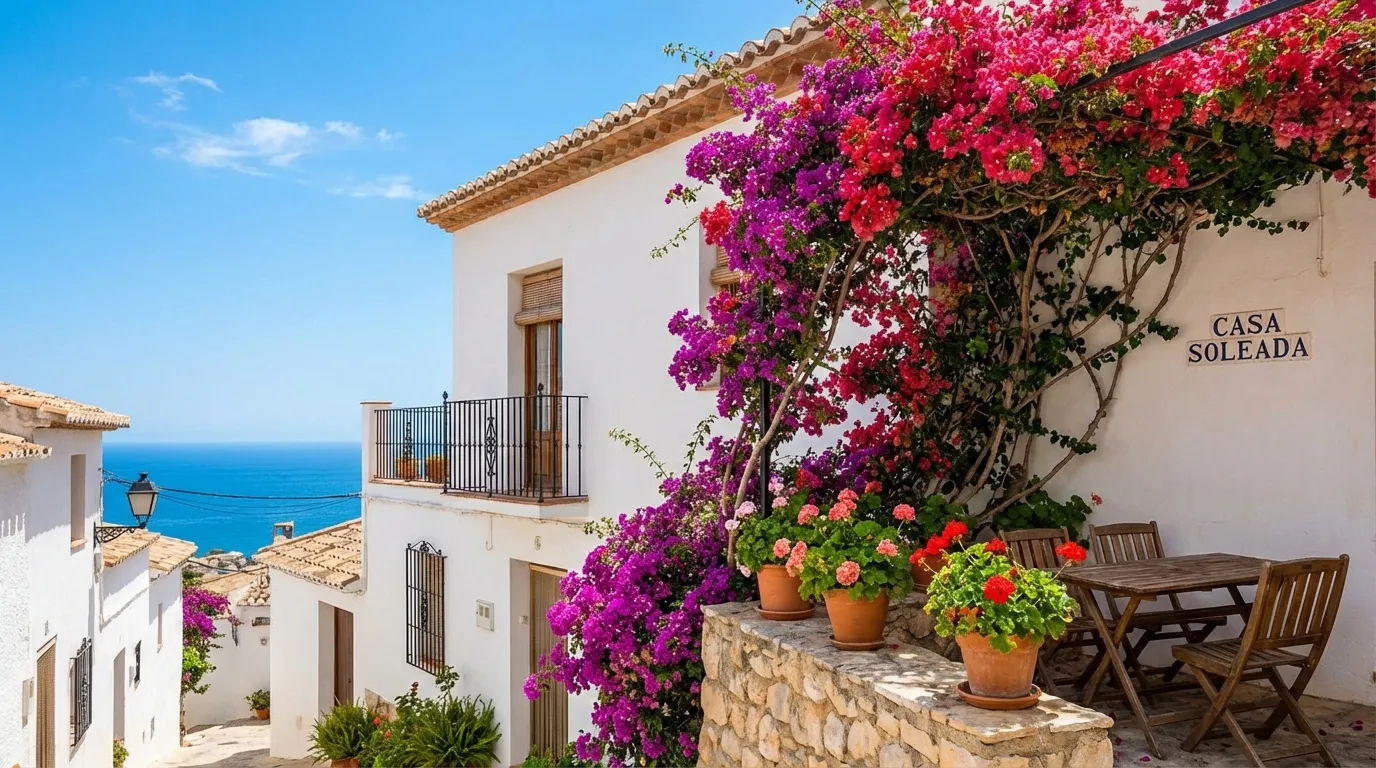
Cheap houses in Spain from 80,000 €: prices on Costa Blanca, Costa Cálida, Torrevieja and Mazarrón — hidden costs, risks and tips for bargains in 2026.
You can still buy cheap houses in Spain. A studio apartment with a shared pool in Torrevieja starts from 80,000 euros. A terraced house with a roof terrace in Mazarrón can be found for 120,000–160,000 euros. And in the Costa Cálida region in Murcia the average price is 1,776 euros per square metre — roughly 35–40% cheaper than comparable coastal areas in France or southern England.
But cheap does not mean risk-free. Spain has hidden purchase costs of 10–13% on top of the price. And extremely low prices can conceal structural problems or legal disputes. In this guide we go through where you find the lowest prices, what you actually get for your money, what extra costs you must budget for, and how to avoid the most common pitfalls.
Spain's property market is fragmented. While Madrid and Barcelona reach record prices, there are coastal regions and inland provinces where prices are still remarkably low. The national average price was 2,091 euros per square metre in Q4 2025, but the differences between regions are enormous.
The very cheapest regions are Castilla-La Mancha (approx. 960 euros/m²) and Extremadura (approx. 980 euros/m²). This is where you move if you want a genuine Spanish village house with space and character — but without a beach and without a large Scandinavian community nearby.
If you want to live by the sea without paying Costa del Sol prices, these areas are the most interesting:
Costa Cálida (Murcia region) stands out as the cheapest coastal region with an average price of 1,776 euros per square metre. The region simultaneously had the strongest price growth in Spain during 2025, with a 29.6% rise — suggesting that the window for genuinely cheap purchases is closing.
Southern Costa Blanca (Torrevieja, Orihuela Costa) offers a middle ground with well-developed infrastructure and a large Scandinavian presence. The average price in Torrevieja is 2,719 euros per square metre for apartments, but varies considerably between neighbourhoods.
The interior of Alicante province — just 15–20 kilometres from the coast you find towns such as Algorfa and Catral with prices from 1,200–1,600 euros per square metre. You get considerably more floor space for your money here, but you will need a car.
Price overview
| Area | Apartment | Villa | Townhouse |
|---|---|---|---|
| Torrevieja | 80,000 – 170,000 € | 200,000 – 400,000 € | 140,000 – 250,000 € |
| Mazarrón | 60,000 – 120,000 € | 150,000 – 300,000 € | 100,000 – 180,000 € |
| Los Alcázares | 90,000 – 160,000 € | 180,000 – 350,000 € | 130,000 – 220,000 € |
| Ciudad Quesada | 75,000 – 140,000 € | 170,000 – 350,000 € | 120,000 – 220,000 € |
| Lorca (inland) | 50,000 – 90,000 € | 100,000 – 200,000 € | 70,000 – 130,000 € |
| Alicante inland | 55,000 – 100,000 € | 120,000 – 250,000 € | 80,000 – 150,000 € |
Information
Price trend 2025–2026: The coastal areas of the Murcia region increased by 30–35% during 2025. Los Alcázares rose 34.9%, San Pedro del Pinatar 31.7% and San Javier 32.2%. Waiting to buy will in all likelihood mean higher prices.
The answer depends entirely on where you buy. 100,000 euros produces very different results depending on coast or inland, big city or small community. Here is a realistic overview.
For 80,000–100,000 euros you will find a studio apartment (40–55 m²) with a shared pool in areas such as Torreta or Centro. The apartment will probably be in an older residential complex from the 1980s or 1990s. Expected standard: functional but not newly renovated. A balcony or small terrace is often included.
If you want two bedrooms you need to stretch the budget to 120,000–160,000 euros, or look a little further from the beach. Beachside two-bedroom apartments in good condition start rather at around 140,000–170,000 euros.
Properties
Explore available properties in Torrevieja
In Mazarrón you get considerably more for your money. A two-bedroom apartment (60–75 m²) with a pool costs 80,000–120,000 euros. There are also terraced houses with a roof terrace and shared pool from 100,000 euros, but expect a simpler standard or a need for some renovation.
Los Alcázares is more expensive — the average price is 2,879 euros per square metre — but still 35–40% cheaper than a comparable location in Torrevieja. A two-bedroom apartment costs around 120,000–160,000 euros here.
With this budget the market opens up considerably. Here is what you can realistically buy:
Tip
Tip: In Ciudad Quesada and surrounding urbanisations you often find villas under 200,000 euros. The area has a large British and Scandinavian presence with restaurants, pharmacies and healthcare adapted for expats.
The most common surprise for Swedish buyers is that purchase costs in Spain are considerably higher than at home. Budget 10–13% on top of the purchase price. Here is a detailed breakdown.
Transfer tax (ITP) applies when buying a second-hand property and varies by region:
If you buy new construction you pay instead 10% VAT (IVA) plus stamp duty (AJD) of 1.2–1.5% depending on the region (Valencia 1.4%, Murcia 1.5%, Andalusia 1.2%).
Several regions offer a reduced ITP for first-time buyers under 35–40. In Galicia the tax can be reduced to 3% for single parents, and to 0% in sparsely populated areas.
Typical additional purchase costs (range)
Notary fees (gastos de notaría)
600–1,500 €
Land registry registration (registro)
500–800 €
Solicitor or gestor
600–1,500 €
Energy certificate
60–150 €
Estate agent fee (if applicable)
3–5 %
of the purchase price.
Purchase costs — example 150,000 € (Torrevieja)
Purchase price
150,000 €
ITP (9%)
13,500 €
Notary
900 €
Land registry
600 €
Solicitor
1,200 €
Energy certificate
100 €
Total
166,300 €
approx. 10.9% on top of the purchase price in this example.
That is 10.9% on top of the price. Since June 2026 ITP in the Valencia region is 9% (previously 10%), which saves 1,500 euros on this purchase compared with the old rate.
Note
Warning: Always check that the property has a Cédula de Habitabilidad (certificate of habitability). Without this you cannot legally set up water and electricity contracts. Also check the Nota Simple from the land registry — it shows whether there are any debts, mortgages or legal disputes attached to the property.
Honest answer: it can be. Very cheap properties often have a reason to be cheap. Here are the most common risks — and how to protect yourself.
Serious building defects such as damp, cracked foundations, faulty electrics or rusty pipes explain why some properties are sold at 20–40% below market value. Spanish civil law (article 1484) protects buyers against hidden defects, but proving them in court requires expert testimony and costs time and money.
Protect yourself: Engage an independent building surveyor before signing a contract. The cost is 150–500 euros depending on the property size.
In Spain unpaid community fees and property tax (IBI) are transferred to the new owner. The seller is obliged to show a debt-free certificate from the owners' community. Never rely solely on the seller's word — have your solicitor verify it.
Renovation without a building permit is common in older Spanish properties. If the council discovers it you may be forced to demolish the addition or pay fines. Always ask your solicitor to check that the property's registered floor area matches reality.
Some cheap properties in inland areas are in flood zones (zonas inundables). The DANA storm in October 2024 hit parts of the Valencia region hard and showed that these risks are real. Always check the PATRICOVA map (Valencia's flood risk plan) or the corresponding regional mapping.
Some residential complexes on the Costa Blanca that were built before the financial crisis of 2008 still have hundreds of unsold apartments. Prices remain low — but so does demand. It can be difficult to sell on. Avoid complexes with an obviously high proportion of empty apartments.
Note
Warning: If a price seems too good to be true — investigate extra carefully. Request the Nota Simple, a debt-free certificate and the Cédula de Habitabilidad before paying a deposit. A good solicitor costs 1,000–1,500 euros and can save you tens of thousands.
Finding genuinely good deals requires more than browsing Idealista. Here are five strategies experienced buyers use.
During winter competition drops dramatically. Holiday home owners who want to avoid maintenance costs and taxes often sell more cheaply. You can often negotiate 5–10% more during winter compared with the peak summer season.
Spanish banks still hold properties from the financial crisis of 2008. Cash buyers can negotiate discounts of up to 30% on bank-owned properties. Register directly with banks' property portals — Solvia (CaixaBank), Haya Real Estate (Cerberus) and Altamira (Santander).
The Murcia region's coast offers a comparable climate and beaches, but prices are 20–30% lower than Torrevieja and Orihuela Costa. Infrastructure is being developed rapidly — the new rail link Alicante–Murcia has significantly cut travel times and Corvera airport (Murcia) has an increasing number of direct routes.
Properties that need renovation are often sold at a 15–25% discount. The key is to have an architect or builder inspect before you commit, so you know the renovation cost does not exceed the discount. A basic refurbishment (new kitchen, bathroom, painting) costs around 10,000–25,000 euros for an apartment.
An estate agent with local knowledge knows which areas are on the way up and which to avoid. They often have access to properties that are not publicly advertised. Choose an estate agent who is registered and has experience with Scandinavian buyers.
Properties
Explore available properties in Mazarrón
Browse current homes in the area and compare locations, price levels and property types at your own pace.
Many people only calculate the purchase — but forget the ongoing costs. Here is a realistic annual budget for an apartment worth 150,000 euros.
Ongoing costs per year (approximate)
IBI
300–800 €
per year
Community fees
600–1,800 €
per year
Home insurance
150–400 €
per year
Electricity, water, gas
800–1,500 €
per year
Non-resident tax
200–500 €
imputed income
Maintenance
500–1,500 €
buffer per year
Total (range)
2,550–6,500 €
per year in this example
Community fees vary enormously. A luxury complex with pool, gym and garden can cost 200 euros per month. A simpler association might charge 40–60 euros.
If you are not registered as a resident in Spain you also pay an annual non-resident tax (imputed income tax) of 19% of 1.1–2% of the property's rateable value. This sounds complicated but in practice amounts to 200–500 euros per year for a typical apartment.
Spain's housing market has had its strongest price growth in 20 years. During 2025 second-hand prices rose nationally by 20.5%. But development looks different depending on the region.
The coastal towns of the Murcia region lead with 30–35% price increases during 2025. Costa Blanca increased by 15–17%. Costa del Sol and Catalonia are slightly lower.
The reason is simple: demand considerably exceeds supply. Spain builds around 100,000 new homes per year — but the need is more than 200,000. The gap drives prices up, particularly in coastal areas where international buyers compete with domestic ones.
The areas that are cheapest today — mainly Costa Cálida and the interior of Alicante — are rising fastest in percentage terms. A property in Mazarrón that costs 120,000 euros today could cost 150,000–160,000 euros in 3–5 years if the current trend continues.
This does not mean you should rush. But it does mean that waiting without good reason will probably cost money. Every year you wait you risk paying more — not just in a higher price, but also in higher taxes (ITP is based on the purchase price).
Banks and analysis firms forecast continued increases during 2026. Singular Bank estimates 9% total price growth, La Caixa reckons on 7%. A crash like 2008 is considered unlikely — at that time three times as many homes were being built as today, and banks were lending 100% of market value. Today's market has stricter credit rules and stronger fundamentals.
This does not mean that price corrections in individual areas are impossible. Excessively tourism-dependent towns or saturated urbanisations may see temporary declines.
Contact
Get in touch and we'll guide you forward — whether you're just starting out or ready to buy.
Contact usLast updated: March 2026. Prices and tax rates may change — contact us for current information.
Decision support
De billigaste regionerna att köpa hus i Spanien är Castilla-La Mancha (ca 960 euro/m²) och Extremadura (ca 980 euro/m²). Vill du bo vid kusten är Costa Cálida i Murcia-regionen billigast med ett genomsnitt på 1 776 euro/m², betydligt lägre än Costa Blanca eller Costa del Sol.
Orter som Mazarrón och Lorca erbjuder strandnära boende från 80 000 euro.
Med 80 000–100 000 euro kan du köpa en enrumslägenhet med pool i Torrevieja eller en tvårumslägenhet i Mazarrón. Med 150 000–200 000 euro får du ett radhus med takterrass och gemensam pool vid Costa Cálida, eller en välskött tvårumslägenhet strandnära i Torrevieja.
Räkna dessutom med 10–13 % i köpkostnader utöver priset.
Utöver köpeskillingen tillkommer överlåtelseskatt (ITP) på 7–10 % beroende på region, notarieavgift 600–1 500 euro, lagfartsinskrivning 500–800 euro, jurist/gestor 600–1 500 euro och energicertifikat 60–150 euro. Totalt blir det 10–13 % extra.
I Valencia-regionen (Costa Blanca) är ITP 9 % sedan juni 2026 (tidigare 10 %).
Ja, om du gör din hemläxa. Anlita alltid en oberoende spansk jurist (abogado) som kontrollerar lagfart, skulder och bygglov.
Begär Nota Simple från fastighetsregistret och kontrollera att Cédula de Habitabilidad finns. Extremt låga priser kan dölja strukturella problem, obetalda communityavgifter eller juridiska tvister.
Budget minst 1 000–1 500 euro för juridisk granskning, det är den bästa investeringen du gör.
November till februari är bäst. Under vintern minskar antalet köpare drastiskt, särskilt i semesterorter.
Säljare som vill bli av med sina fastigheter innan årsskiftet eller undvika underhållskostnader är mer förhandlingsvilliga. Du kan ofta pruta 5–10 % under vinterhalvåret jämfört med sommarens högprissäsong.
Sources

Los Balcones, Alicante

Lago Jardín II, Alicante

San Luis, Alicante

Golf La Marquesa (Ciudad Quesada), Alicante

Centro, Alicante

Centro, Alicante
Local expertise
Buying a house in Torrevieja: prices by area, purchase process, taxes, NIE and mortgages — practical guide for Swedes who want to live on Costa Blanca 2026.
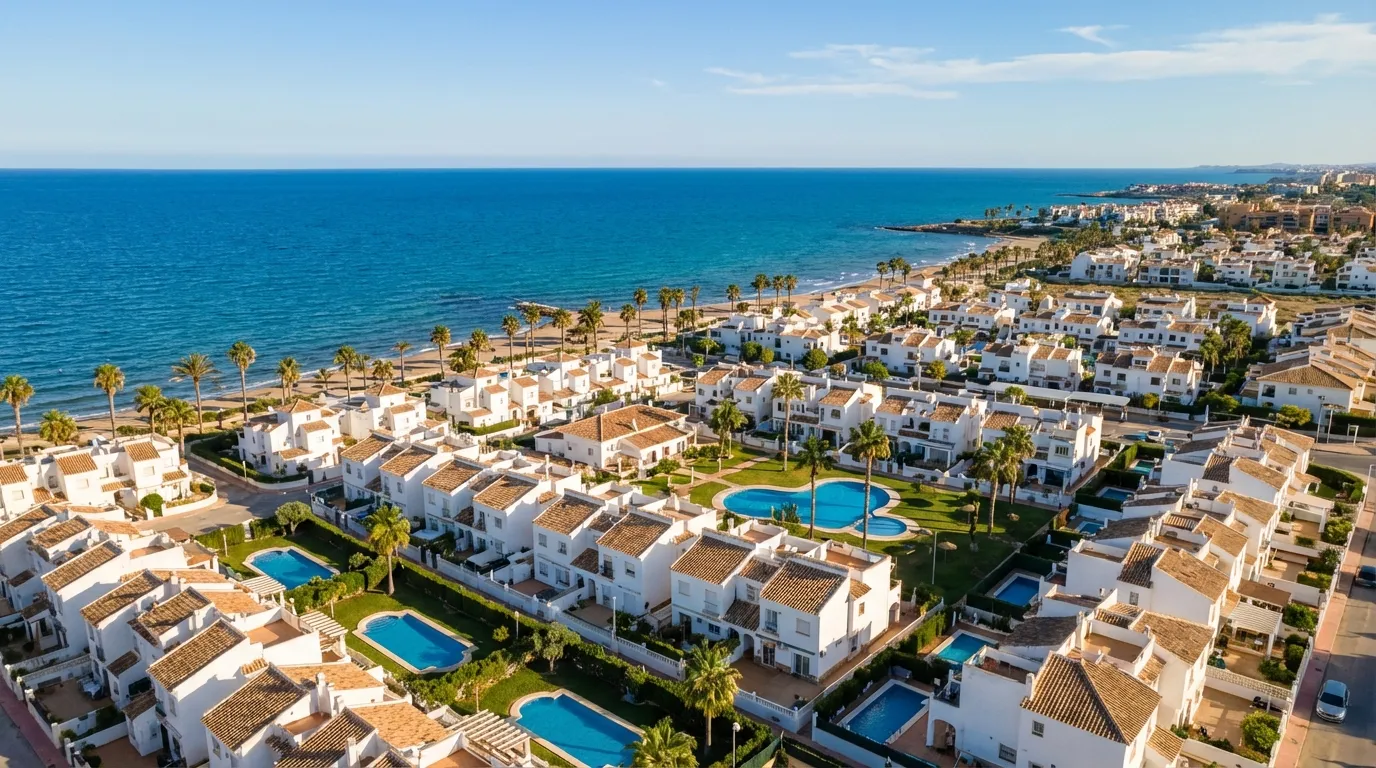
Everything you need to know about Orihuela Costa on Costa Blanca: areas, property prices, climate, beach life and tips for buying property in southern Spain.
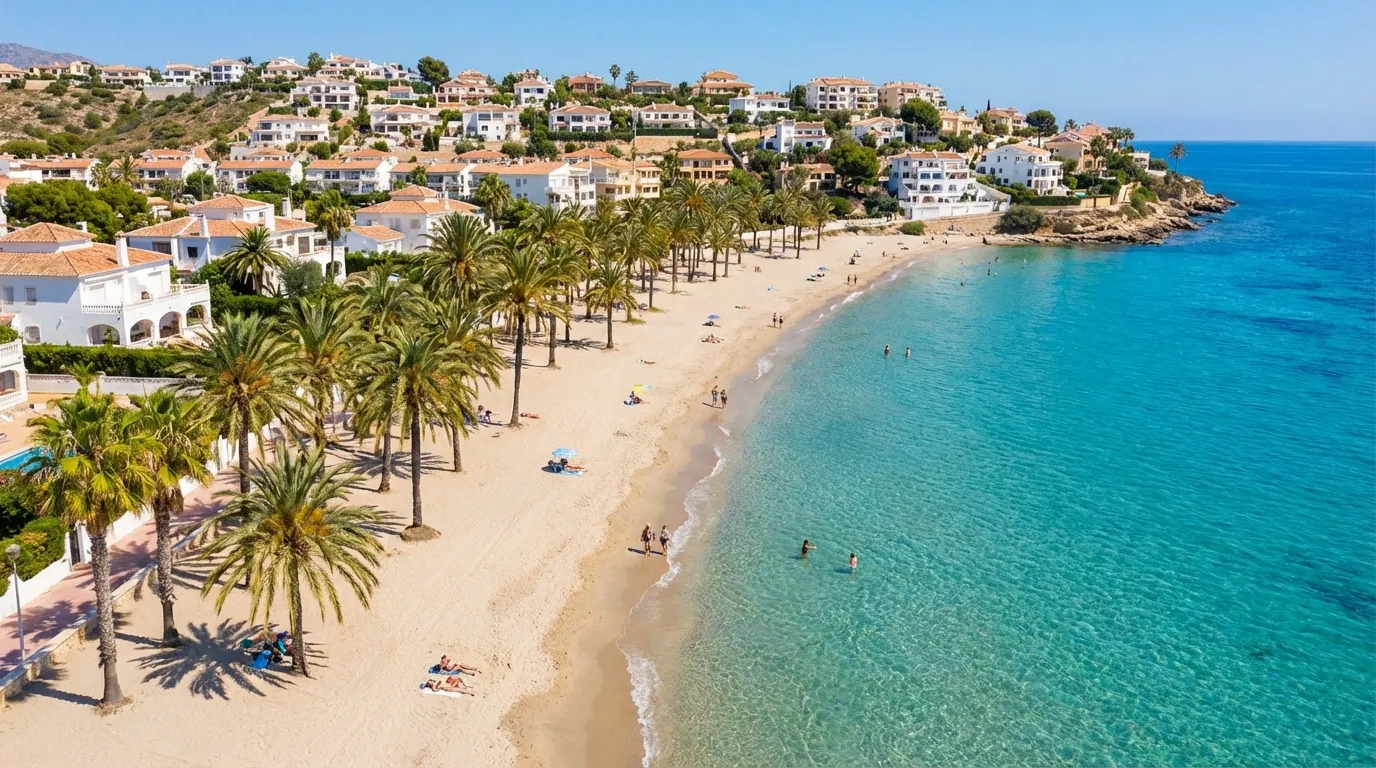
Property in Mil Palmeras: prices, beaches, services and what you should know before buying in this coastal resort on the southern Costa Blanca — for Swedish buyers.