
Finance & Law
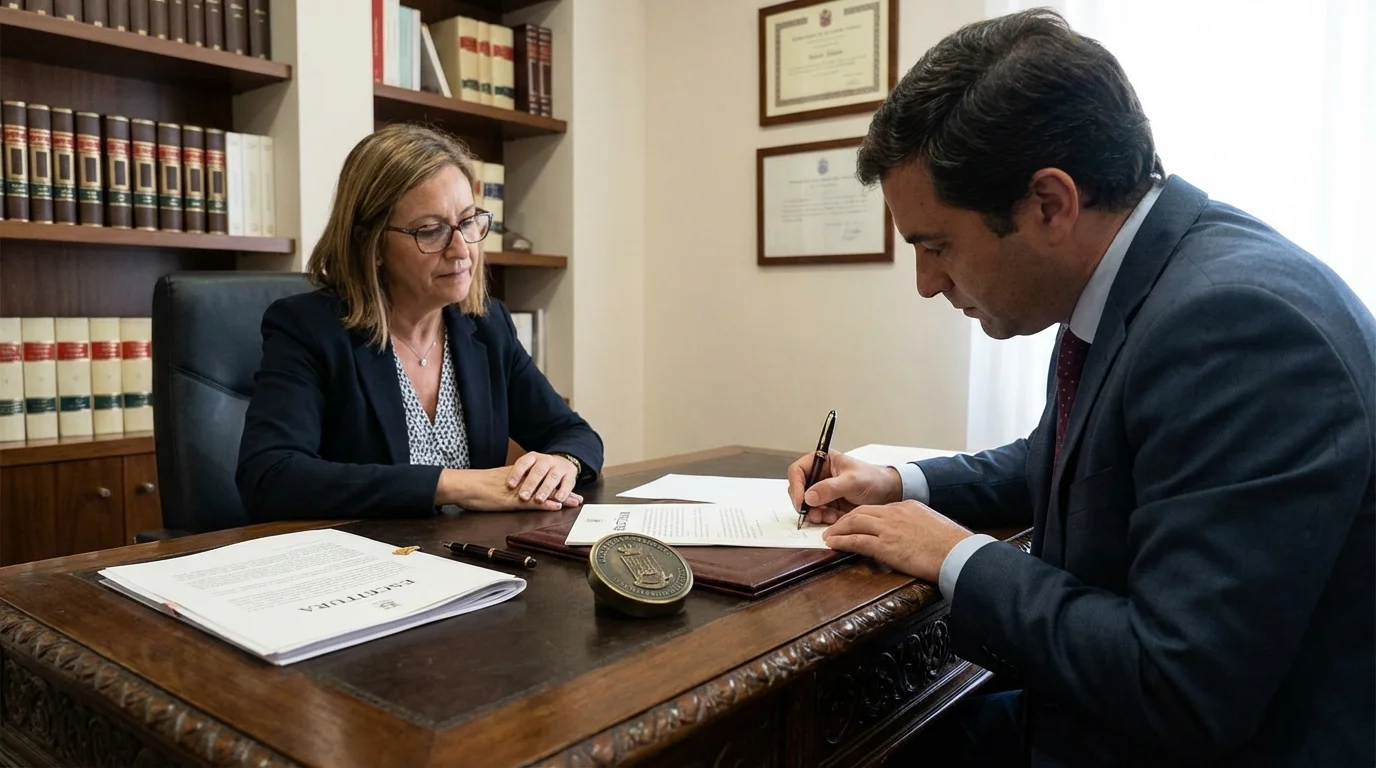
Escritura – The property deed in Spain explained 2026
Everything about the escritura when buying property in Spain: what the document contains, the notary process, costs and common pitfalls for Swedish buyers.
18 min
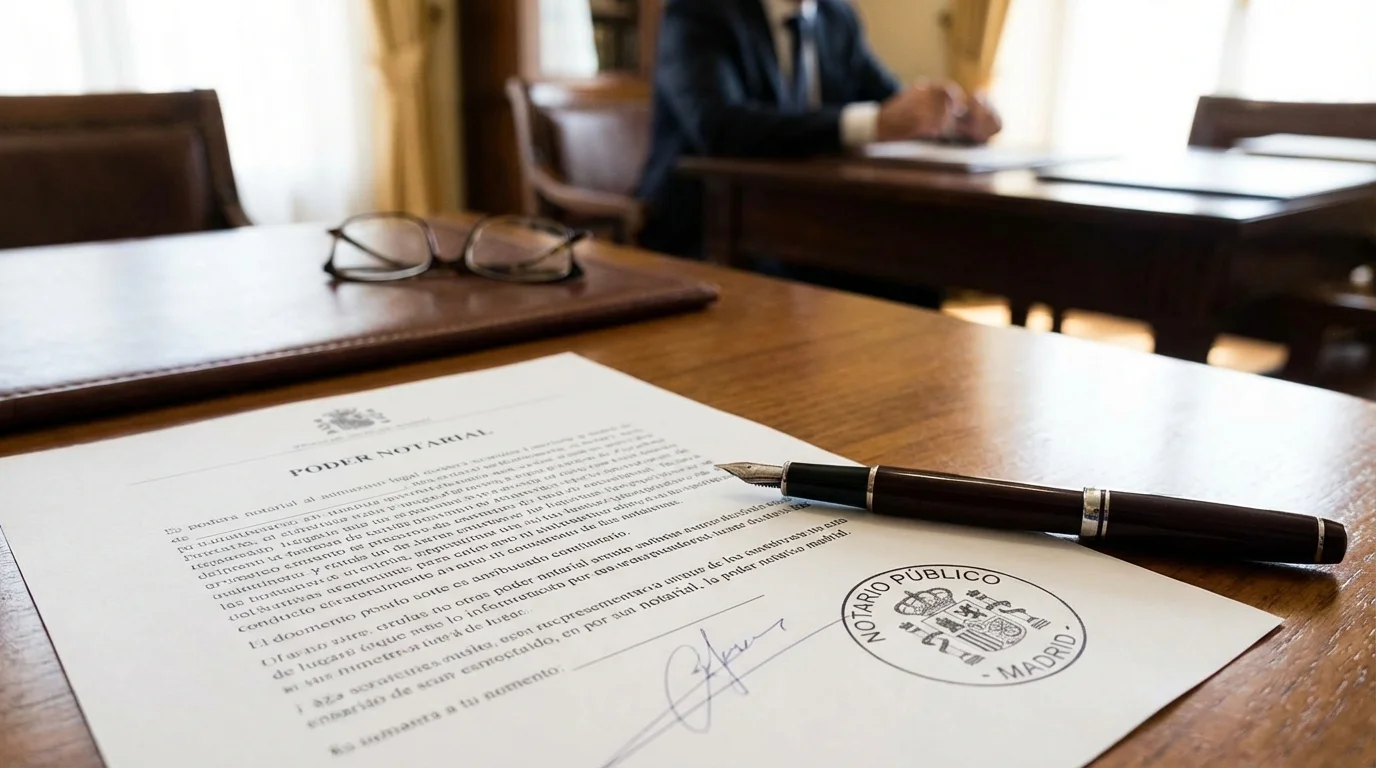
Everything about poder and power of attorney for property purchase in Spain: types, costs, how to set one up and when you need it as a Swedish buyer.
A power of attorney — poder notarial in Spanish — allows you to complete a property purchase in Spain without being physically present at the signing with the notary. You give a trusted person, usually your lawyer, the right to sign the purchase documents on your behalf. The power of attorney must be notarially certified and — if drawn up outside Spain — provided with an apostille under the Hague Convention.
In practice, the majority of Swedish buyers use a power of attorney for their Spanish property transactions. The reason is simple: the buying process in Spain requires personal presence on several occasions — NIE application, banking matters, tax payments and finally the escritura signing at the notary. Few people can travel back and forth every time a document needs to be signed.
This guide explains what types of powers of attorney exist, when you need one, how to set one up (in Sweden or in Spain), what it costs and what mistakes to avoid.
A poder notarial is a public document in which you (poderdante/grantor) give another person (apoderado/attorney) the right to act on your behalf in legal and financial matters. The document is drawn up before a notary and has full legal force in Spain.
In a property purchase this means your attorney — normally your Spanish lawyer — can:
Without a power of attorney you must be personally present at every step. That is entirely possible but requires flexibility and time — often 2–3 trips to Spain during the purchase process.
Information
Good to know: There is no direct equivalent to the Spanish poder notarial in Sweden. Swedish powers of attorney do not normally require notarial form. In Spain, a power of attorney for property purchase must always be notarially certified — a simple signed document on paper is not sufficient.
Spanish law distinguishes between two main types of power of attorney, and the difference is crucial for your security:
A poder especial is limited to a specific transaction. For a property purchase it specifies:
The power of attorney expires automatically when the transaction is completed. Your lawyer cannot use it for other purposes. This is the type you should use for property purchase — full stop.
A poder general gives the attorney broad freedom of action over your financial and legal affairs. It can be used to sell properties, take out loans, open bank accounts and enter into contracts — all in your name, without specific limitations.
There are legitimate reasons to set up a poder general — for example if you live permanently in Spain and want a trusted person to be able to handle your affairs if you become ill. But for property purchase it is unnecessarily risky.
Note
Important: Always use a poder especial for property purchase — never a poder general. With a general power of attorney the attorney can in theory mortgage your property, sell it on or enter into contracts you never approved. Even if you trust your lawyer, a specific power of attorney provides better protection for both of you. A reputable lawyer will never request a poder general for a standard property purchase.
Not everyone needs a power of attorney. Here are the most common situations:
The most common reason. The escritura signing at the notary — the day when ownership formally transfers — requires the buyer or their attorney to be present. If you cannot be there your lawyer needs a poder especial.
The purchase process in Spain normally takes 6–12 weeks from the arras contract to the escritura. During that time purchase taxes must be paid, electricity and water set up, NIE number obtained and banking matters handled. With a power of attorney your lawyer handles everything locally.
If you are buying together with a partner and only one of you can be in Spain, it is sufficient for the absent party to grant a power of attorney. The person on site signs in person.
Sometimes opportunities arise quickly — a bank repossession, a motivated seller or a new-build project with a limited number of units. With a power of attorney already in place your lawyer can act immediately without waiting for you to book flights.
There are three routes, with different costs and timeframes.
The simplest and cheapest option. You visit a Spanish notary, identify yourself with passport and NIE number, and sign the power of attorney on the spot. The notary draws up the document in Spanish. No apostille is needed — the document is already a Spanish public document.
Cost: 50–150 euros depending on complexity Time required: Same day (with a pre-booked appointment) Requirements: Physical presence in Spain, valid passport, NIE number
This option suits you if you are visiting Spain early in the purchase process anyway — for viewings, for example. You sign the power of attorney during the same trip and then do not need to be there for the escritura.
Spanish consulates act as Spanish notaries abroad. You book an appointment, bring your passport and a copy of your NIE number, and sign the power of attorney before the consular notary. The document is drawn up in Spanish and has the same legal status as a power of attorney drawn up in Spain.
Cost: Approximately 50 euros in consular fee Time required: 1–2 weeks (depending on waiting time for a booked appointment) Requirements: Valid passport, NIE number, pre-booked appointment Advantage: No apostille needed, no translation required
The Spanish Embassy in Stockholm offers this service. The disadvantage is that appointments are often limited — book at least 3–4 weeks in advance during high season (March–June).
If you cannot visit Spain or the consulate you can draw up the power of attorney with a Swedish notarius publicus (a public official who certifies documents). The process is more complex and more expensive:
Signing at the notarius publicus — You sign the power of attorney before a Swedish notarius publicus who certifies your identity and signature. The power of attorney should be written in Spanish by your Spanish lawyer in advance.
Apostille — The notarius publicus issues an apostille stamp under the Hague Convention (1961). In Sweden, notarii publici have had the right to issue apostilles since 1 January 2005. The apostille confirms that the notary's signature and stamp are genuine.
Authorised translation — If the power of attorney is not already written in Spanish it must be translated by an authorised translator (traducción jurada). The Spanish notary only accepts documents in Spanish.
Courier of original — The original document with apostille and translation is sent to your lawyer in Spain by courier.
Cost: Total 300–500 euros (notarius publicus 80–150 €, apostille 50–100 €, translation 150–300 €, courier 20–40 €) Time required: 2–4 weeks Requirements: Valid passport, NIE number (or copy), pre-booked appointment with notarius publicus
Tip
Tip: Ask your Spanish lawyer to write the power of attorney text in Spanish before you visit the notarius publicus in Sweden. This avoids the authorised translation step, saving 150–300 euros and a week's waiting time. The notarius publicus only certifies your signature — they do not need to understand the document's contents.
The cost varies considerably depending on where you set it up:
Approximate total cost per option
Spanish notary
50–150 € total
No apostille or authorised translation required.
Spanish consulate
approx. 50 € total
No apostille or authorised translation required.
Swedish notarius publicus
300–500 € total
Notary 80–150 € + apostille 50–100 € + translation 150–300 €.
The price difference means it is almost always worth setting up the power of attorney in Spain if you are going there anyway, or via the consulate if you already have a NIE number. The route via Swedish notarius publicus costs three to five times more and takes longer.
Properties
Explore available properties in costa-blanca
Browse current homes in the area and compare locations, price levels and property types at your own pace.
An apostille is an international stamp that confirms a public document — in this case your power of attorney — is genuine. The system is regulated by the Hague Convention of 1961, which both Sweden and Spain have ratified.
The logic is simple: documents drawn up within the Spanish legal system (including consulates) need no extra verification. Documents from another country's legal system need an apostille so the Spanish notary can trust they are genuine.
In Sweden the notarius publicus issues the apostille. You bring the signed document and request an apostille — often the same notarius publicus who witnessed your signature can issue the apostille directly. The cost is normally 50–100 euros.
The apostille is physically attached to the document and contains: country code, signatory's name, notary's stamp and a unique reference number. Without an apostille, Spanish notaries and banks will reject the document — no exceptions.
Yes. A power of attorney can be revoked at any time. You need to sign an escritura de revocación at any Spanish notary. The process looks like this:
Cost: 50–100 euros Time required: Same day
There is also a built-in protection with a poder especial: the power of attorney expires automatically when the specific transaction is completed. Once your lawyer has signed the escritura for the specified property the power of attorney is exhausted — it cannot be reused.
A poder general, on the other hand, does not expire by itself. It remains valid until you actively revoke it. Yet another reason to choose a poder especial.
A correct poder especial for property purchase in Spain should contain the following information — if anything is missing the notary risks rejecting the power of attorney at signing:
Your Spanish lawyer should draw up the power of attorney text. They know the exact wording Spanish notaries expect and can ensure all necessary powers are covered. Writing the power of attorney yourself — or using a generic template from the internet — is a common shortcut that often ends with the document having to be redone.
We see the same mistakes among Swedish buyers time and again. Here are the most common — and how to avoid them:
Some buyers — or their lawyers — set up a poder general "because it is simpler". It is convenient but creates unnecessary risk. If your lawyer insists on a general power of attorney for a standard purchase, change lawyer.
The power of attorney must state the correct property address, correct registry number and correct maximum price. A spelling error in the address or wrong registry number makes the power of attorney invalid for that specific transaction. The notary at the escritura signing will check that the details match — if they do not, the signing will be refused.
A power of attorney from a Swedish notarius publicus without an apostille will not be accepted in Spain. It does not matter how correct the document is otherwise. Check that the apostille is physically attached to the document before sending the original to Spain.
The purchase process in Spain often moves faster than expected. If you wait with the power of attorney until the escritura date is set it can become tight — especially if you are going via Swedish notarius publicus (a 2–4 week process). Set up the power of attorney early, ideally when you sign the arras contract.
A poder especial that only grants the right to sign the escritura but not to pay taxes, register the title deed or set up electricity contracts forces you to travel to Spain anyway — or draw up a new power of attorney. Ask your lawyer to list all necessary powers from the start.
Always keep a certified copy of the power of attorney and note the notary's name, protocol number and date. If you need to prove that the power of attorney existed — or that it was limited to a specific purchase — these details are crucial.
Planning a purchase on Costa Blanca or Costa del Sol? With the right power of attorney in place your lawyer can handle the entire process while you stay in Sweden. Read more about what happens on signing day in our guide to escritura in Spain and how to find the right lawyer in our guide to solicitors for buying in Spain.
Contact
We guide you through the entire process — from power of attorney and NIE number to escritura signing. Book a free consultation with one of our advisers and we will go through your questions.
Book free consultationLast updated: April 2026. Legal rules and fees may change — always verify current information with your lawyer or gestor before completing a purchase. This guide does not constitute legal advice.
Decision support
Ja. Med en poder especial (särskild fullmakt) kan din advokat signera escrituran, betala köpeskillingen, ansluta el och vatten samt registrera lagfarten — allt utan att du själv är i Spanien.
Fullmakten måste ange exakt vilken fastighet och vilket maxpris den gäller för. Advokaten kan inte agera utanför de befogenheter som står i fullmakten.
Räkna med 2–4 veckor om du upprättar fullmakten hos en svensk notarius publicus. Processen inkluderar notariebesök (1 dag), apostille-stämpel via notarius publicus (1–3 arbetsdagar), auktoriserad översättning till spanska (3–7 arbetsdagar) och frakt av original till Spanien (3–5 arbetsdagar).
Upprättar du fullmakten på spanska konsulatet i Stockholm kan det gå snabbare — ofta 1–2 veckor — men du måste boka tid i förväg.
Hos en spansk notarie kostar en poder especial 50–150 euro. Hos spanska konsulatet i Stockholm ligger avgiften på cirka 50 euro.
Upprättar du fullmakten hos en svensk notarius publicus tillkommer notarieavgift (800–1 500 kr), apostille (500–1 000 kr), auktoriserad översättning (1 500–3 000 kr) och fraktkostnad — totalt cirka 300–500 euro. Den billigaste vägen är att signera hos notarie direkt i Spanien.
Det beror på var fullmakten upprättas. En fullmakt signerad hos en spansk notarie eller på ett spanskt konsulat behöver ingen apostille — den är redan ett spanskt offentligt dokument.
En fullmakt signerad hos en svensk notarius publicus måste däremot apostilleras enligt Haagkonventionen (1961) innan den godkänns i Spanien. I Sverige utfärdar notarius publicus apostillen.
Utan apostille avvisas dokumentet av spanska notarier och banker.
Ja, en fullmakt (poder) kan återkallas när som helst genom att du signerar en escritura de revocación hos valfri spansk notarie. Notarien meddelar sedan den fullmäktige formellt och gör en anteckning i det ursprungliga protokollet.
Återkallelsen kostar normalt 50–100 euro. En poder especial upphör dessutom automatiskt när den angivna transaktionen är genomförd, vilket ger ett extra skydd jämfört med en poder general.
Sources
Everything about the escritura when buying property in Spain: what the document contains, the notary process, costs and common pitfalls for Swedish buyers.
Do you need a lawyer when buying property in Spain? What does an abogado do, what does it cost, and how do you choose the right one? Guide for Swedish buyers.
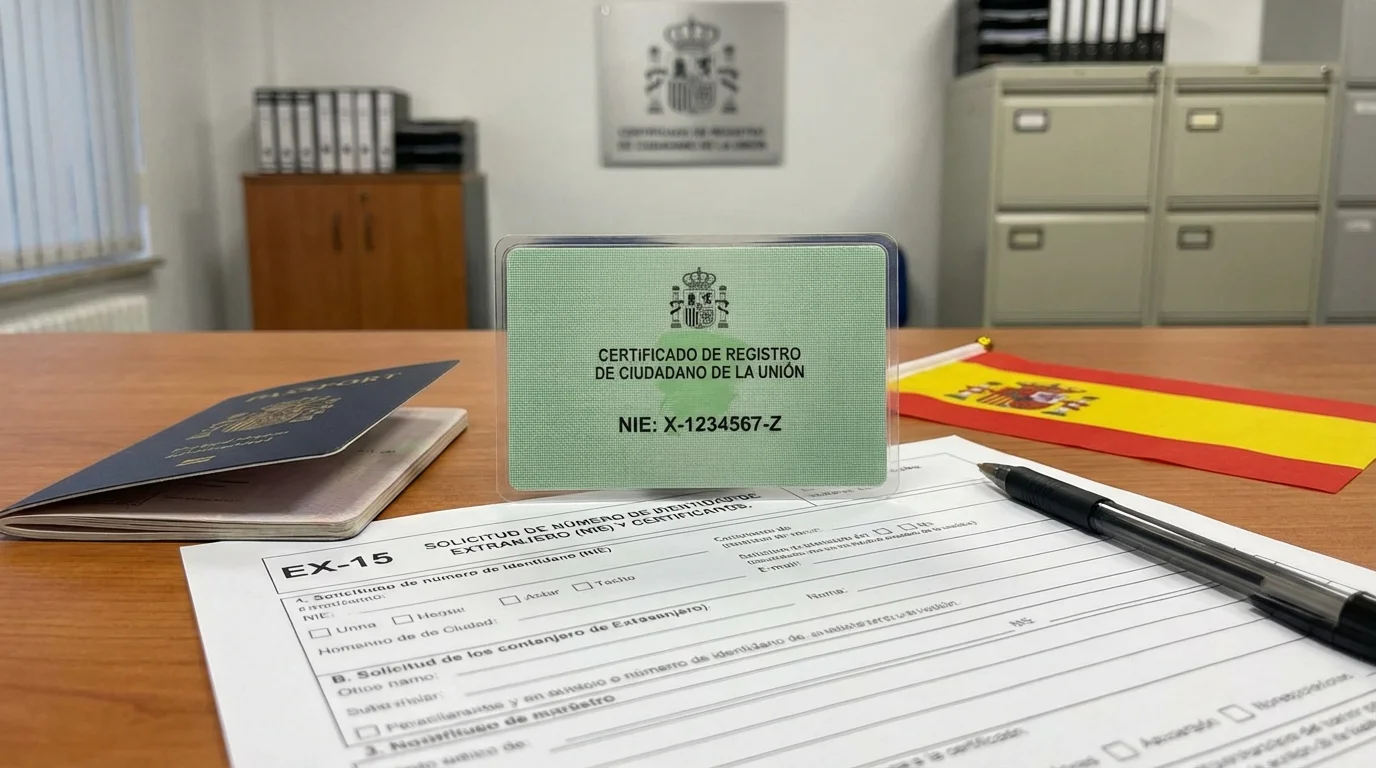
Spanish NIE number 2026: step-by-step guide from Sweden or Spain. EX-15 form, Modelo 790, €9.84 fee, waiting times and NIE/NIF/TIE explained.