


Finance & Law
Cost of Buying Property in Spain 2026 – ITP & Fees
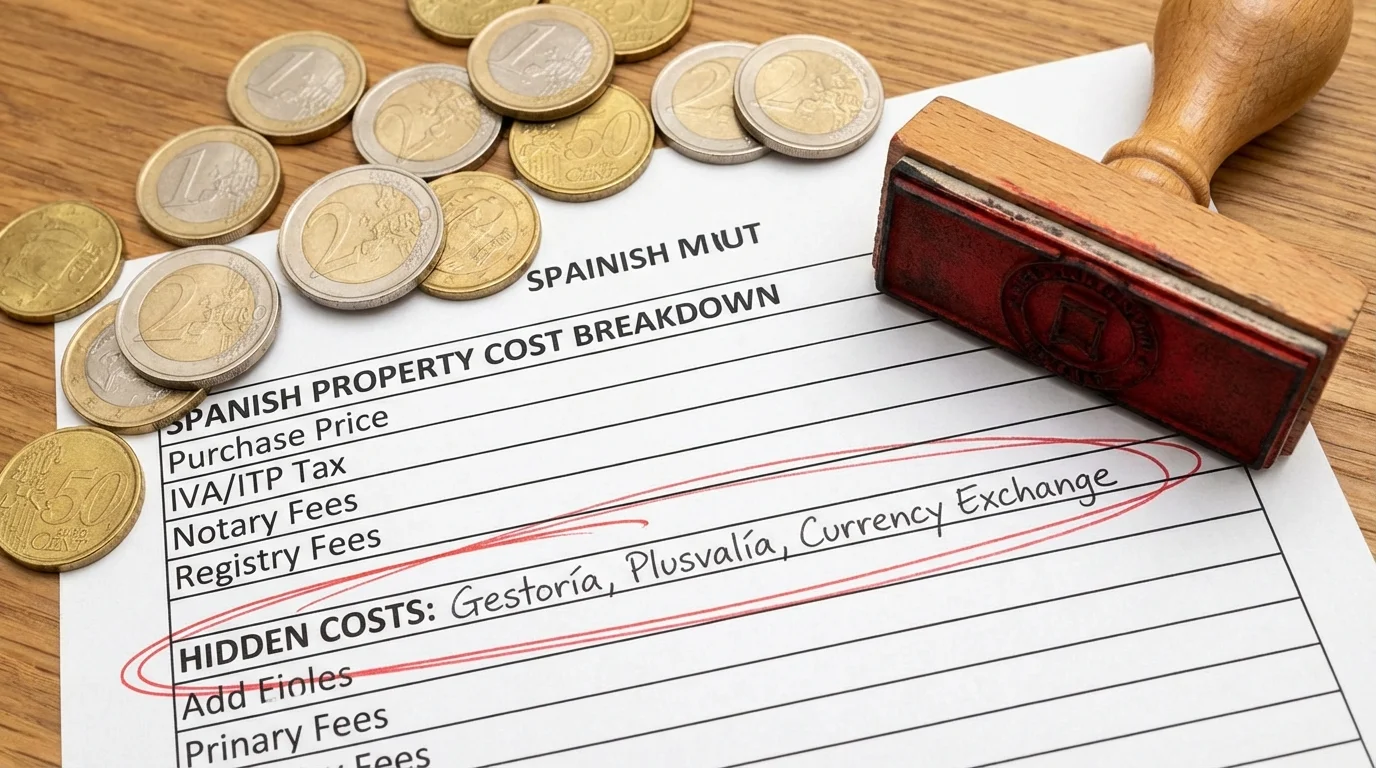
Buying property in Spain costs 10–14% on top of the price: ITP, notary, land registry, lawyer and more. Calculation examples and a region comparison.
22 min
Do you need a lawyer when buying property in Spain? What does an abogado do, what does it cost, and how do you choose the right one? Guide for Swedish buyers.
Yes, you need a lawyer (abogado) when buying property in Spain — even though it is not a legal requirement. Spain applies the principle of caveat emptor, meaning the buyer is responsible for verifying that the property is free of debts, illegal extensions, and legal encumbrances before the purchase is completed. The notary only checks that formalities are correct on the signing day — they do not review the contract in advance or investigate the property's history.
An independent Spanish lawyer normally costs 1–1.5% of the purchase price — that is, 1,500–3,000 euros for a property at 200,000 euros. That sum is a fraction of what you risk losing without legal review: hidden mortgages, illegal construction, or invalid contracts can cost you tens of thousands of euros.
In this guide we go through exactly what a lawyer does when buying property in Spain, what it costs, how to find an independent lawyer, and what problems you avoid by hiring one.
Your lawyer's most important task is to carry out a legal review (due diligence) of the property and look after your interests throughout the entire buying process. This differs fundamentally from a Swedish property purchase, where the estate agent has a statutory duty to provide information and the Land Registry automatically handles the title transfer. In Spain there is no estate agent law protecting the buyer — you need your own legal representative.
Here is what a lawyer typically does:
The lawyer orders a current nota simple from the Registro de la Propiedad (land registry) and verifies that the seller is the registered owner. They check that there are no unregistered mortgages (hipotecas), enforcement orders, easements, or liens attached to the property.
In Spain, debts follow the property — not the person. If the seller has unpaid property taxes (IBI), community fees, or water bills, you as the new owner take them on. The lawyer checks all outstanding debts before you sign anything.
The lawyer reviews and negotiates the terms of the reservation agreement and the arras contract (contrato de arras penitenciales). They ensure that protective clauses are included — for example, that the deposit is returned if the property turns out to have hidden defects or if the seller cannot deliver it free of encumbrances.
Does the property have illegal extensions? Does the registered floor area match the actual size? The lawyer checks planning permission (licencia de obras), the certificate of habitability (cédula de habitabilidad), and that the property is not located in an area classified as rustic land or a protected nature area.
Many lawyers also help with NIE applications, opening a Spanish bank account, transferring electricity and water contracts, and paying purchase taxes (ITP or IVA + AJD). If you do not have a gestoría, the lawyer often handles these tasks.
Information
Good to know: In Sweden, the estate agent has a statutory duty to provide information. In Spain, the agent generally works for the seller. There is no Spanish "buyer's agent" looking after your interests — that role is filled by the lawyer.
No. The only legal party that is mandatory in a Spanish property purchase is the notary (notario público). It is the notary who draws up the escritura (the public deed of sale), reads it out to the parties, and ensures it is registered in the land registry.
But the notary's role is limited. They verify that the parties have identification, that the property is identified in the registry, and that payment has been made. The notary does not review the property legally in advance, does not check debts beyond what appears in the nota simple extract, and does not give legal advice to either party.
In practice, almost all foreign buyers in Spain purchase with legal representation. The Spanish bar associations (Colegios de Abogados) explicitly recommend that foreign buyers engage their own lawyer, and most serious estate agents assume you have one.
The lawyer's fee for a property purchase in Spain is normally calculated as a percentage of the purchase price:
Lawyer's fee on purchase — percentage and VAT (indicative)
Purchase price 100,000 €
1,000–1,500 €
Incl. 21% VAT: 1,210–1,815 €
Purchase price 200,000 €
2,000–3,000 €
Incl. VAT: 2,420–3,630 €
Purchase price 350,000 €
3,500–5,250 €
Incl. VAT: 4,235–6,352 €
Purchase price 500,000 €
5,000–7,500 €
Incl. VAT: 6,050–9,075 €
VAT (IVA) at 21% is always added to the lawyer's fee. Some lawyers work with a fixed price instead of a percentage — usually 1,500–3,000 euros for a standard resale property purchase.
Compared to total purchase costs (10–14% of the price), the lawyer represents a relatively small item. Read our complete breakdown in the guide on costs of buying property in Spain.
Properties
Explore available properties in torrevieja
Choosing the right lawyer is just as important as choosing the right property. Here are five concrete tips:
Never hire a lawyer recommended by the seller, the estate agent, or the developer. A lawyer who receives clients through the estate agent has a financial interest in the deal going through — not in protecting you. This is the most common trap for foreign buyers in Spain.
All practising lawyers in Spain must be registered with their regional Colegio de Abogados. Ask for the lawyer's colegiado number and check it in the regional database. In the Alicante province you can search at Colegio de Abogados de Alicante.
Spain does not have specialisation requirements as in Sweden, but you want a lawyer with experience in conveyancing (property transfer) — not a family lawyer who takes property cases as a side assignment.
Your lawyer should speak Swedish or English fluently in addition to Spanish. You must fully understand every document you sign. Several law firms on Costa Blanca and Costa del Sol have Swedish-speaking lawyers.
A reputable lawyer gives you a written quote with a fixed price or a clear percentage before you hire them. Avoid lawyers who are unwilling to specify their fees.
Note
Warning: Lawyers representing the seller. Never use a lawyer who simultaneously represents the seller or who is recommended by the estate agent. Even if the person seems professional, they have a fundamental conflict of interest — the assignment is to close the deal, not to protect you. This also applies to "free" legal advice offered by developers on new-build purchases. The developer's lawyer looks after the builder's interests, not yours.
A complete due diligence for a Spanish property purchase should cover the following checks:
The entire process normally takes 2–4 weeks. The lawyer should begin the review immediately after you have signed the reservation agreement and before you sign the arras contract.
Many Swedish buyers confuse a gestoría with a lawyer. They serve entirely different functions:
Lawyer or gestoría?
Qualified solicitor — the right choice for the purchase itself and legal risk.
Administrative agency — not a replacement for a lawyer at the purchase.
A gestoría is excellent for administrative tasks after the purchase — for example, the annual tax return (Modelo 210) for non-residents, renewing your NIE, or handling IBI payments. But a gestoría cannot replace a lawyer for the purchase itself.
In practice, a lawyer and gestoría often work side by side: the lawyer handles the legal review and contracts, while the gestoría deals with the paperwork with authorities afterwards.
Tip
Tip: Ask your lawyer whether they work with a gestoría. Many law firms include gestoría services in their package, so you do not need to hire them separately. This saves both time and money.
If you cannot be physically present at the escritura signing, you can give your lawyer a power of attorney (poder notarial) to act on your behalf. There are two types:
Limited to a specific purchase — with the property specified, a maximum price, and a time frame. This is the recommended type for property purchases. The power of attorney automatically expires once the purchase has been completed.
Gives your lawyer broad authority to act in all legal and financial matters on your behalf. Appropriate if you live abroad permanently and need ongoing representation in Spain, but not recommended solely for a single purchase.
You have three options:
With a power of attorney, the lawyer can apply for your NIE number, open a bank account, sign the arras contract, and complete the entire escritura act without your physical presence. Read more about the escritura process in our guide on escritura in Spain.
Properties
Explore available properties in mijas
Skipping the lawyer to save money is a false economy. Here are the most common problems affecting buyers without legal representation:
In Spain, debts are tied to the property, not the owner. If the seller has unpaid mortgages, property taxes, or community fees, you as the new owner inherit the entire debt. We have seen cases where buyers inherited 15,000–20,000 euros in debts that a lawyer would have discovered in an afternoon.
Extensions without planning permission (ampliación sin licencia) are common in Spain, particularly in older properties and in rural areas. If you buy a property with an illegal extension, the local authority may refuse to issue a certificate of habitability, meaning you cannot legally connect electricity and water. In the worst case, you may be forced to demolish the extension at your own expense.
Without a lawyer you risk signing an arras contract with conditions that heavily favour the seller. We have seen contracts where the buyer's deposit (10% of the price) is forfeited at even the slightest delay, while the seller can withdraw without penalty. A lawyer identifies and negotiates away such imbalances.
In parts of Spain — particularly in the Valencian region — buyers have been affected by the so-called Ley de Costas (Coastal Law) and LRAU (urbanisation laws) that can force property owners to pay for infrastructure development or, in extreme cases, lead to expropriation. A lawyer checks the urban development plan (PGOU) before the purchase.
It happens that the registered floor area in Catastro does not match the Registro de la Propiedad, or that the property is not correctly registered at all. Without a lawyer you discover this only when it is too late — for example, when you try to resell and the bank refuses to grant a mortgage to your buyer.
In summary — five steps that dramatically reduce the risk in your Spanish property purchase:
Contact
We work with Swedish-speaking lawyers on the Costa Blanca and Costa del Sol who exclusively represent the buyer. Book a free video consultation and we will tell you more — no obligations.
Book free consultationDecision support
Nej, det finns inget lagkrav på att anlita advokat vid fastighetsköp i Spanien. Notarien (notario público) är den enda juridiska aktören som är obligatorisk.
Men i praktiken rekommenderas en oberoende advokat starkt, särskilt för utländska köpare. Den spanska principen caveat emptor innebär att du själv ansvarar för att kontrollera fastigheten innan köpet.
Ja, genom en fullmakt (poder notarial) kan din advokat signera escrituran och övriga köpehandlingar utan att du själv är i Spanien. Det vanligaste är en poder especial begränsad till just ditt fastighetsköp, med angiven fastighet och maxpris.
Du kan upprätta fullmakten hos spanska konsulatet i Stockholm (ingen apostille krävs) eller hos en svensk notarius publicus (kräver Haag-apostille och auktoriserad spansk översättning). Kostnaden är normalt 150–400 euro.
Sök via din regions Colegio de Abogados (advokatsamfund). Du kan också kontakta svenska konsulatet i Spanien som ofta har listor med svensktalande jurister.
Viktigast: välj aldrig en advokat som rekommenderas av säljaren, mäklaren eller byggherren. En oberoende advokat ska uteslutande representera dig som köpare.
En gestoría är en administrativ byrå som hanterar pappersarbete (skattedeklarationer, NIE-ansökningar, registreringsärenden). En advokat (abogado) är en kvalificerad jurist registrerad hos Colegio de Abogados med rätt att ge juridisk rådgivning, granska kontrakt och företräda dig i domstol.
Gestoría kostar 300–800 euro per uppdrag, advokat 1–1,5 % av köpeskillingen. De kompletterar varandra men är inte utbytbara.
Utan egen advokat riskerar du dolda skulder (obetalda inteckningar, skatter, community-avgifter) som följer med fastigheten enligt spansk lag. Du kan också köpa en fastighet med olagliga tillbyggnader som saknar bygglov.
Utan juridisk granskning av arras-kontraktet kan du förlora din handpenning på 10 % om villkoren är dåligt formulerade. Kostnaden för en advokat (1 500–3 000 euro) är en bråkdel av potentiella förluster.
Sources
Buying property in Spain costs 10–14% on top of the price: ITP, notary, land registry, lawyer and more. Calculation examples and a region comparison.
Everything about the escritura when buying property in Spain: what the document contains, the notary process, costs and common pitfalls for Swedish buyers.
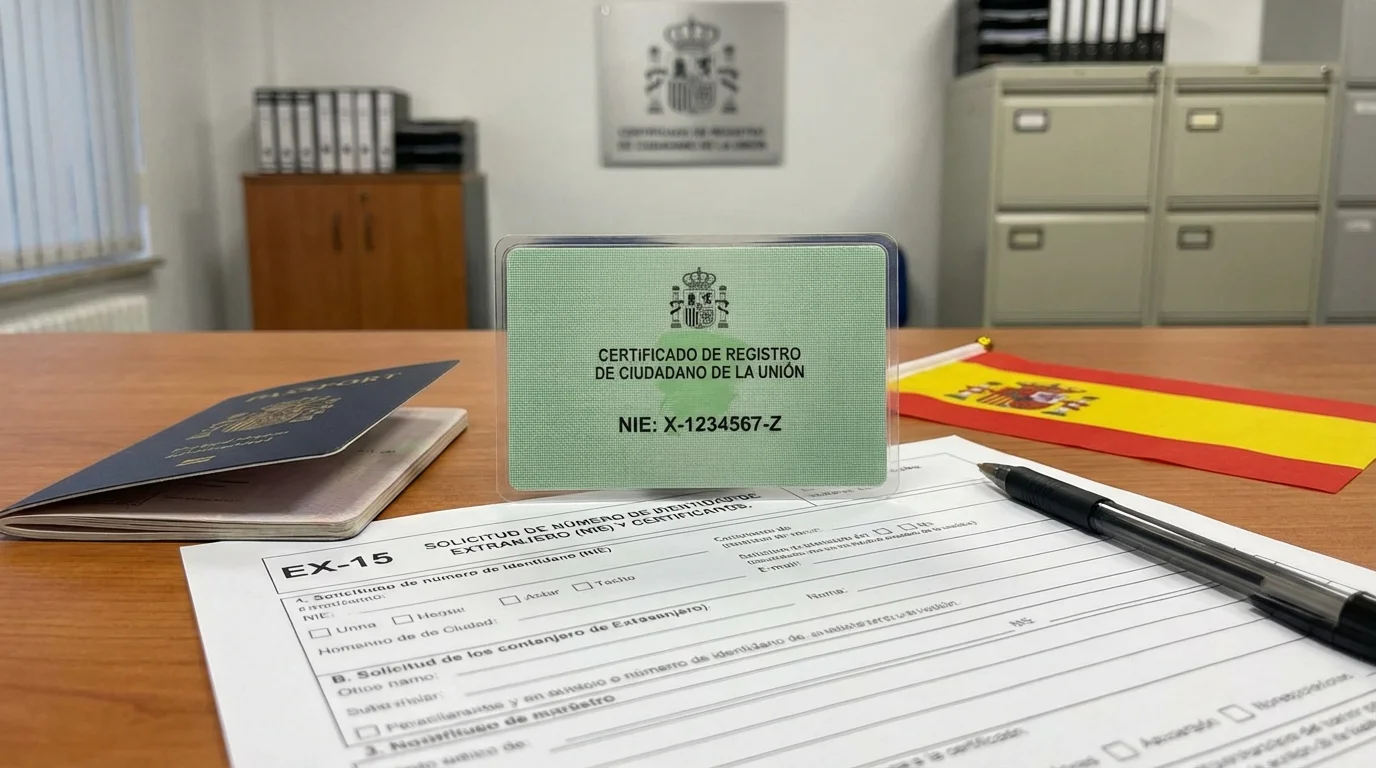
Spanish NIE number 2026: step-by-step guide from Sweden or Spain. EX-15 form, Modelo 790, €9.84 fee, waiting times and NIE/NIF/TIE explained.