
Lifestyle
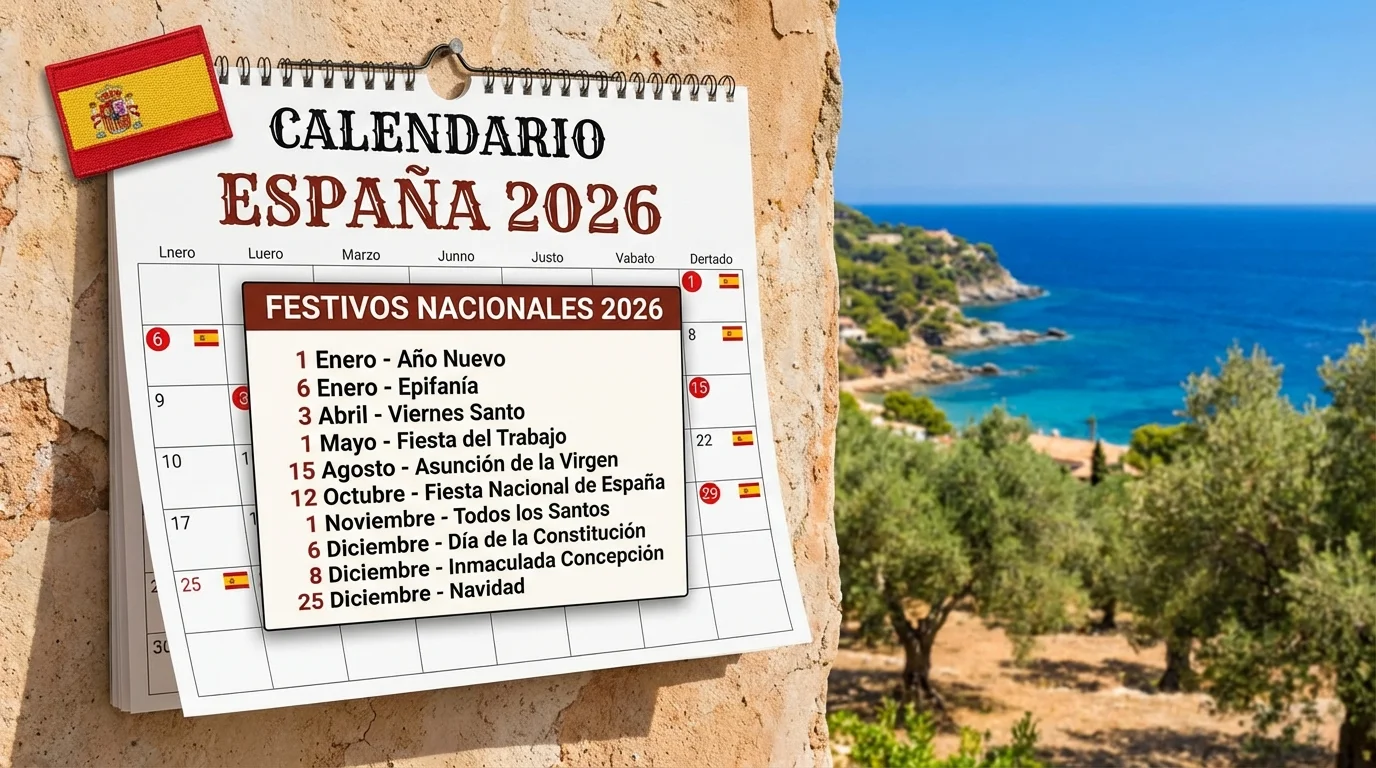
Public holidays in Spain 2026 – Complete calendar
All public holidays in Spain 2026: national, regional and local fiestas. Calendar for the Valencian Community, Murcia and Andalusia with dates and explanations.
14 min
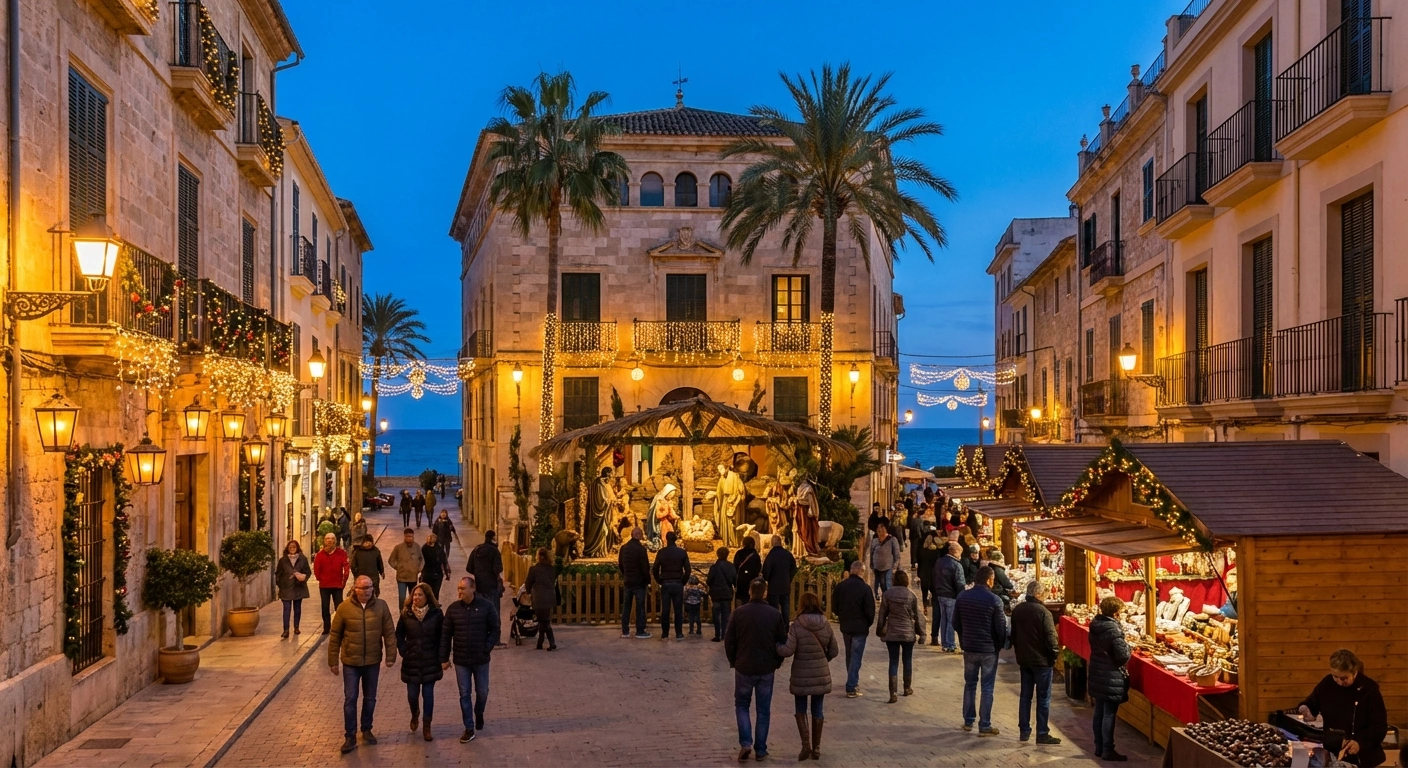
How is Christmas celebrated in Spain? Nochebuena, New Year's grapes, Three Kings Day and how it differs from Swedish Christmas. Guide for Swedish residents.
Christmas in Spain starts on 22 December with the El Gordo lottery and does not end until 6 January with Three Kings Day — over two weeks of celebrations compared with the Swedish Christmas concentrated around 24–26 December. The big difference: in Spain Christmas Eve (Nochebuena) is a late dinner with seafood and turrón rather than Christmas ham and Donald Duck, New Year's Eve involves twelve grapes at midnight, and children receive their Christmas presents on 6 January from the three kings — not from Father Christmas.
If you live in Spain, own a holiday home or are planning to celebrate Christmas by the Mediterranean: the Spanish Christmas is warmer, longer and different in almost every way. In this guide we go through all the important dates, traditions, food and practical tips for you as a Swede in Spain.
Spanish Christmas is not a single weekend but an entire season with three separate highlights: Nochebuena (Christmas Eve on 24 December), Nochevieja (New Year's Eve on 31 December) and Día de Reyes (Three Kings Day on 6 January).
Swedish Christmas revolves around 24 December with the Christmas buffet, Donald Duck and Father Christmas. Spaniards spread the celebrations out. Christmas Eve belongs to the family dinner, New Year's Eve belongs to the grapes and the party, and 6 January belongs to the children and their presents. In between, Christmas markets, belén exhibitions (nativity scenes) and a constant buzz of Christmas parties are ongoing.
The celebrations have Catholic roots, but even secular Spaniards participate. Christmas lights are switched on in most cities as early as the end of November. 22 December marks the unofficial start, when the whole country stops for the El Gordo lottery.
Nochebuena (literally "the good night") on 24 December is Spain's most important Christmas day. Everything revolves around the dinner.
The dinner starts late, rarely before 9 p.m. Many families begin the evening with aperitifs around 8 p.m. while the final dishes are being prepared. The dinner itself can run until midnight. Children run around, adults eat and talk. No rush.
The menu varies between regions but follows a pattern: seafood as a starter (prawns, langoustines, mussels), meat or fish as the main course (roast lamb, turkey, sea bass) and dessert with turrón, polvorones and mazapán. Cava is served with dessert. More about the food further down.
After dinner many go to Misa del Gallo (Midnight Mass, literally "The Rooster's Mass"). The name comes from the legend that a rooster crowed the night Jesus was born. Even non-religious Swedes often appreciate the mass as a cultural experience, especially in older cathedrals and small villages where the whole community gathers.
Information
Difference from Sweden: In Spain Christmas presents are not given on Christmas Eve. Nochebuena is about dinner and family — presents come on 6 January with the three kings. The exception: Papa Noel (Father Christmas) has started to spread in parts of Spain, and some families give small presents on 25 December — but Three Kings Day is still the major gift-giving occasion.
Christmas Day (Día de Navidad) on 25 December is a national holiday in Spain, but it is celebrated more quietly than Nochebuena. Families gather again for a long lunch — often with the extended family who were not present the previous evening.
The food is similar to Christmas Eve but slightly simpler. Roast lamb (cordero asado) and turkey (pavo relleno) are common main courses. In coastal areas like Torrevieja and Orihuela Costa fish is often served. Dessert is the same turrón and polvorones as the evening before.
25 December is a quiet, stay-at-home day. Shops are closed and the streets are empty — most Spaniards are recovering from the previous late night. Some families take a walk in the afternoon or visit the local belén (nativity scene) in the church or town hall.
Nochevieja (New Year's Eve on 31 December) is the big party night. If Nochebuena belongs to the family, Nochevieja belongs to friends.
Las doce uvas de la suerte (the twelve lucky grapes) is the New Year's tradition every Spaniard knows. At midnight you eat one grape for each of the twelve chimes of the clock. If you manage all twelve in time you are said to be lucky throughout the year's twelve months.
The tradition started around 1909, when grape growers in the Alicante region had a surplus of grapes and launched them as "lucky grapes" to boost sales. The idea caught on and is now so established that supermarkets sell ready-made packs with exactly twelve peeled, seedless grapes.
All of Spain follows the countdown on TV from the clock at Puerta del Sol in Madrid. It is roughly equivalent to Sweden's New Year's bells, but with grapes instead of champagne.
Tip
Tips for beginners: The grapes go faster than you think — each chime has only three seconds between them. Buy seedless grapes, peel them and cut them in half in advance. Many first-timers fail and laugh at themselves — that is part of the tradition. It is worth practising once before midnight.
After the grapes the cava flows and the party starts in earnest. Many families have a late New Year's dinner before midnight, then change into party clothes and go out. Nightclubs do not close until around 6–7 a.m. Cotillón parties (New Year's galas) at restaurants and hotels are popular — book well in advance.
6 January, Día de Reyes Magos, is the children's big day. This is when they receive their Christmas presents, not on 24 December as in Sweden. The three wise men, Melchor, Gaspar and Baltasar, fill Father Christmas's role.
On the evening of 5 January the three kings march through cities and villages in a great parade, the Cabalgata de Reyes. The kings ride in floats through the streets and throw sweets to the children lining the route. There is music, dancing and fireworks. In Alicante the Cabalgata draws tens of thousands of spectators each year.
Children leave their shoes by the door or window the evening before, sometimes with water and hay for the kings' camels. On the morning of 6 January they wake up to presents. Naughty children risk in theory finding coal (carbón) in their shoes. In practice, sweet shops sell coal-shaped sugar pieces as a consolation prize.
The family breakfast on 6 January revolves around Roscón de Reyes, a ring-shaped cake filled with cream or vanilla custard and topped with candied fruit. Inside are two surprises: a small figurine (if you find it you are crowned king or queen for the day) and a dried broad bean (if you find it you must pay for the cake).
Roscón is sold in every bakery in Spain during the first days of January. The best bakeries have queues around the block on the morning of 5–6 January. A family-size one costs €15–30 depending on the filling.
Christmas food in Spain has nothing in common with the Swedish Christmas buffet. Forget Christmas ham, herring and Jansson's Temptation. Here it is about seafood, almonds and sweets with Arab heritage.
Seafood (mariscos) is the Christmas status dish. Markets overflow with prawns, langoustines, crab, mussels and lobster in December. Prices rise 20–40 percent compared with the rest of the year. Langoustines (cigalas) can cost €50–80 per kilo during Christmas week.
The preparation is simple: boiled or grilled, with lemon, sea salt and aioli. On the Costa Blanca, where seafood is everyday food, Christmas becomes an excuse to buy the very finest from the market.
Turrón is the one thing that absolutely must be on a Spanish Christmas table. There are two main types: Turrón de Jijona (soft, with finely ground almonds to a creamy consistency) and Turrón de Alicante (hard, with whole almonds in a chewy honey mass). Both come traditionally from Jijona in the province of Alicante, just over 30 kilometres from the coast.
The basic recipe (roasted almonds, honey, sugar and egg white) has not changed significantly in several hundred years. Today there are hundreds of variations with chocolate, coconut and fruit, but purists stick to the classics.
Polvorones are shortbread biscuits with cinnamon and almond that crumble in the mouth. The name comes from polvo, dust. They originate from 16th-century Andalusia, particularly from Estepa near Seville, which still produces most of Spain's polvorones. Mantecados are a close cousin, more compact and flavoured with cinnamon, lemon or cocoa.
Spanish mazapán (marzipan) has Arab roots and has been made in Toledo since the Middle Ages. Figuritas de mazapán — small shaped marzipan pieces in animal and fruit forms — are sold everywhere during Christmas. Toledo's marzipan has protected designation of origin (Indicación Geográfica Protegida).
Properties
Explore available properties in Costa Blanca
Browse current homes in the area and compare locations, price levels and property types at your own pace.
Spanish Christmas decoration differs from the Swedish. Christmas trees are now found in many homes, but the traditional Christmas is most visible in belenes (nativity scenes) and Christmas lights.
The belén (nativity scene) is Spain's most traditional Christmas decoration. The tradition was introduced to Spain in 1759 by Queen Maria Amalia of Saxony, who brought her belén with 7,000 figures from Italy. Today families, churches, municipalities and associations build everything from simple mangers to entire miniature cities with running water, lighting and hundreds of figures.
In many cities a Ruta de Belenes is organised — a walking route between the best nativity scenes. Churches and town halls compete to build the most impressive. In Catalonia there is a unique tradition: every belén includes a caganer — a small figure squatting in a corner, a symbol of fertility and good harvests.
Spain's major cities invest heavily in Christmas lighting. Málaga, Madrid and Vigo compete every year to have the most spectacular display. In Alicante the Christmas lights are traditionally switched on at the end of November and shine until 6 January. Christmas markets (mercadillos de Navidad) appear in most cities with handicrafts, Christmas decorations, turrón and belén figures.
If you are used to Swedish Christmas, the Spanish version will feel different in almost every way. Here are the most important differences.
The timing of presents. In Sweden Father Christmas comes on Christmas Eve, 24 December. In Spain the three kings come on 6 January. Father Christmas (Papa Noel) has admittedly started to establish himself, but Three Kings Day is still the dominant gift-giving occasion.
The food. No Christmas buffet with herring, ham and Jansson's Temptation. Spanish Christmas is about seafood, roast lamb, turrón and polvorones. Mulled wine is replaced by cava. Meatballs are replaced by gambas. The only thing in common: lamb features in both countries.
The timing. Swedish Christmas Eve starts around lunchtime. Spanish Nochebuena starts late — dinner is rarely on the table before 9 p.m. New Year's Eve in Spain ends at sunrise.
Donald Duck. Over 40 percent of Swedes still watch Donald Duck's Christmas at 3 p.m. on Christmas Eve. Spaniards have no equivalent. Their shared TV moments are instead the El Gordo draw on 22 December and the grape countdown at midnight on 31 December.
The weather. In Sweden: dark, cold, perhaps snow. In Spain: daytime temperatures of 14–18°C along the Mediterranean coast in December, with sun several days a week. You can eat Christmas lunch outdoors in a T-shirt on a sunny day on Costa Blanca.
The length. Swedish Christmas lasts 24–26 December. Spanish Christmas stretches from 22 December (El Gordo) to 6 January (Reyes) — two and a half weeks of celebrations with several highlights.
El Gordo (Sorteo Extraordinario de Navidad) is the world's oldest lottery, with roots going back to 1812. It is drawn on 22 December and marks the unofficial start of the Christmas period. All of Spain stops: offices set up TVs, bars fill up and families gather in front of screens.
In 2025 a total of €2.77 billion was distributed in prizes. Spaniards spent a combined €3.55 billion on tickets — just over €72 per person on average. Around 70–90 percent of adult Spaniards buy at least one ticket (décimo).
A full ticket costs €200 but is divided into tenths (décimos) at €20 each. The top prize — El Gordo — gives €400,000 per décimo. The unique feature of the lottery is that the same number is sold in multiple series, so the prize is often spread across entire villages, workplaces or circles of friends. It is common for colleagues or friends to buy joint tickets and share any winnings.
The draw takes over four hours and is broadcast live on TV. Winning numbers are sung out by children from the San Ildefonso school in Madrid — a tradition almost as famous as the prize itself.
Tip
Tips for Swedes: You can buy décimos at any lottery outlet (administración de lotería). Many also sell online via the lottery's official website. Always keep the receipt — it is needed to collect winnings. Prizes over €40,000 are taxed at 20 percent.
Celebrating Christmas in Spain as a Swede involves some adjustments. Here is the most important things to keep in mind.
Shops and services. On 24 December shops close early, often already at 2 p.m. 25 December and 6 January are national holidays with shops closed. Supermarkets (Mercadona, Carrefour) may have shorter opening hours throughout Christmas week. Plan food shopping by 23 December at the latest.
Restaurants. Eating out on Christmas Eve requires booking well in advance. Many restaurants offer fixed Christmas menus (menú de Nochebuena) for €40–80 per person. New Year's Eve is even harder to book — hotels and restaurants fill their cotillón parties weeks in advance.
Temperatures. December on Costa Blanca brings daytime temperatures of around 14–18°C and night temperatures of around 6–10°C. You need a jacket in the evening but can sit outside on a sunny day. Inland and in northern Spain it is colder.
Swedish Christmas presents. If you want to give presents on Swedish Christmas Eve — do it. Many Swedish families in Spain combine the Swedish tradition on 24 December with the Spanish Three Kings Day on 6 January. Children gain from that arrangement.
Don't miss the Cabalgata. The Three Kings parade on 5 January is one of the best events of the entire Christmas period. Arrive early to get a good spot. Bring a bag to collect sweets in. The parades in Alicante, Murcia and Málaga are particularly impressive.
Swedish Christmas food. Missing herring and Christmas ham? Scandinavian shops in Torrevieja and on Costa del Sol sell Swedish Christmas food in December. Ikea in Murcia, Alicante and Málaga has Christmas ham, meatballs and gingerbread biscuits in their Swedish Food Market.
Contact
Get in touch and we'll guide you forward — whether you're just starting out or ready to buy.
Contact usLast updated: April 2026. Dates and prices may change — always check current information before the Christmas period.
Decision support
Julperioden i Spanien sträcker sig från den 22 december (El Gordo-lotteriet) till den 6 januari (Trekungadagen, Día de Reyes). Det är alltså drygt två veckor av firande — betydligt längre än den svenska julen.
De viktigaste dagarna är Nochebuena (julafton 24 december), Nochevieja (nyårsafton 31 december) och Día de Reyes (6 januari) då barnen får sina julklappar.
Den spanska julaftonen (Nochebuena) inleds ofta med skaldjur: gambas, langoustiner, musslor och krabba. Huvudrätten varierar regionalt men inkluderar vanligen stekt lamm (cordero asado), kalkon eller fisk som havsabborre.
Desserten är alltid turrón (mandelnougat), polvorones (mördegskex med kanel) och mazapán (marsipan). Måltiden avslutas med cava — spansk mousserande vin.
Traditionen med las doce uvas de la suerte (de tolv lyckodruvorna) innebär att man äter en druva för varje klockslag vid midnatt. Traditionen startade runt 1909 då vinodlare i Alicante hade ett överskott av druvor och marknadsförde dem som lyckodruvor.
Idag följer miljontals spanjorer nedräkningen från Puerta del Sol i Madrid via TV — och den som lyckas äta alla tolv druvor i tid sägs få tolv månader av tur.
I Spanien får barnen traditionellt sina presenter den 6 januari, Día de Reyes (Trekungadagen), inte på julafton som i Sverige. Kvällen innan (5 januari) tågar de tre kungarna Melchor, Gaspar och Baltasar genom gatorna i en stor parad kallad Cabalgata de Reyes och kastar godis till barnen.
På morgonen den 6 januari öppnar barnen sina presenter och familjen äter Roscón de Reyes, en ringformad kaka.
El Gordo (Sorteo Extraordinario de Navidad) är världens äldsta och största lotteri. Under 2025 delades totalt 2,77 miljarder euro ut i priser.
Högsta vinsten, El Gordo, ger 400 000 euro per lott (décimo). Omkring 70–90 procent av Spaniens vuxna befolkning köper lotter, och spanjorerna spenderade sammanlagt 3,55 miljarder euro på lotter — drygt 72 euro per person.
Dragningen sker den 22 december och TV-sänds i hela landet.
Sources
All public holidays in Spain 2026: national, regional and local fiestas. Calendar for the Valencian Community, Murcia and Andalusia with dates and explanations.
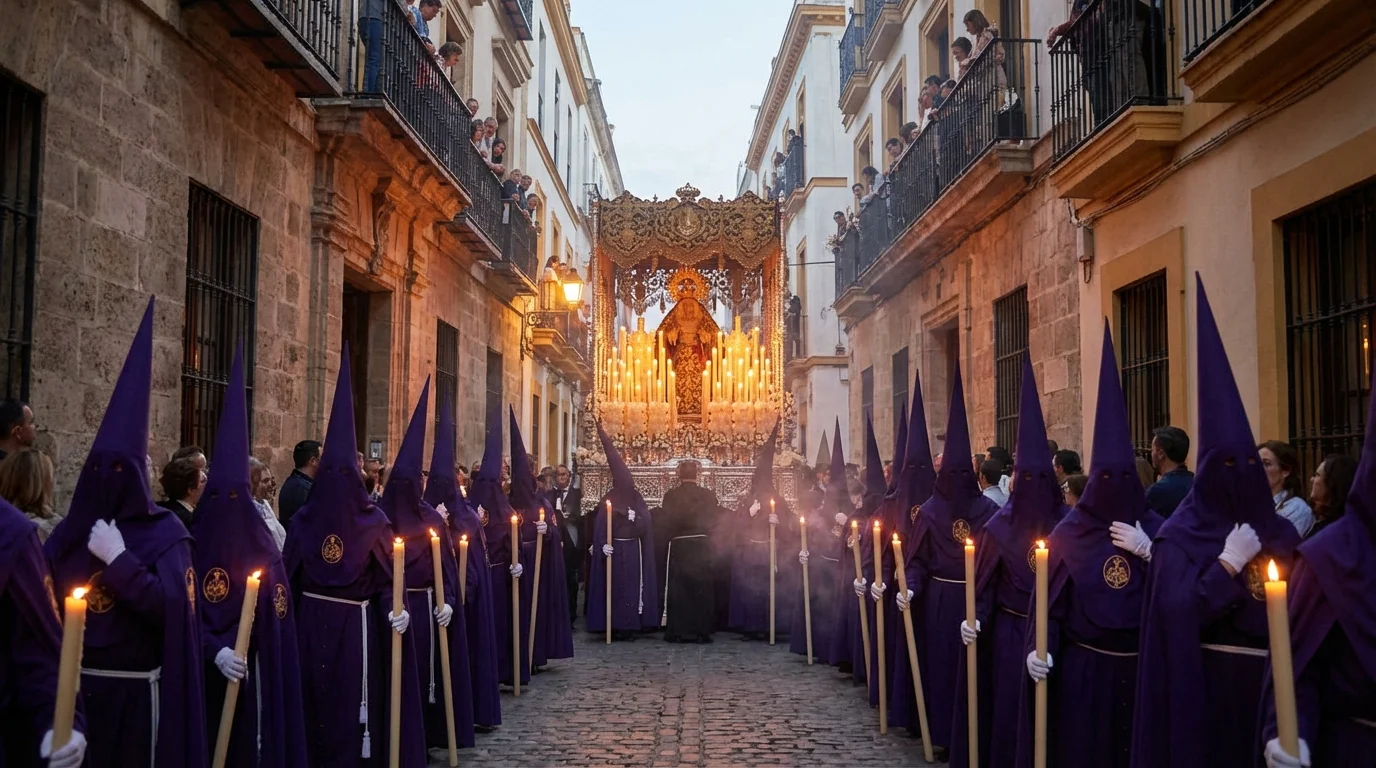
Everything about Easter in Spain: Semana Santa processions, traditions, public holidays, food and how it differs from Swedish Easter. Guide for Swedish residents.
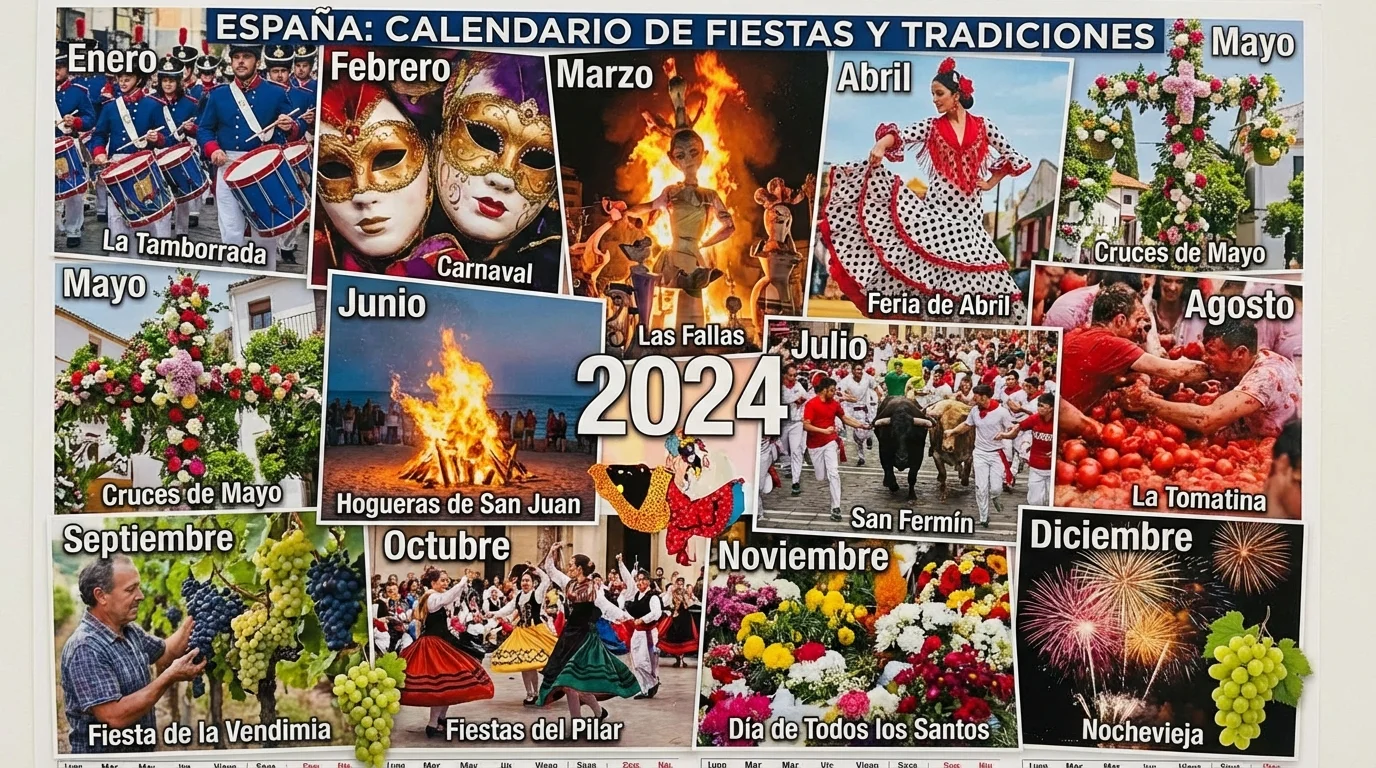
Discover Spain's best fiestas and traditions: Las Fallas, San Fermín, Feria de Abril, La Tomatina and more. Guide for Swedish residents in Spain.