
Area Guides
Orihuela Costa – Complete Guide for Swedish Buyers 2026
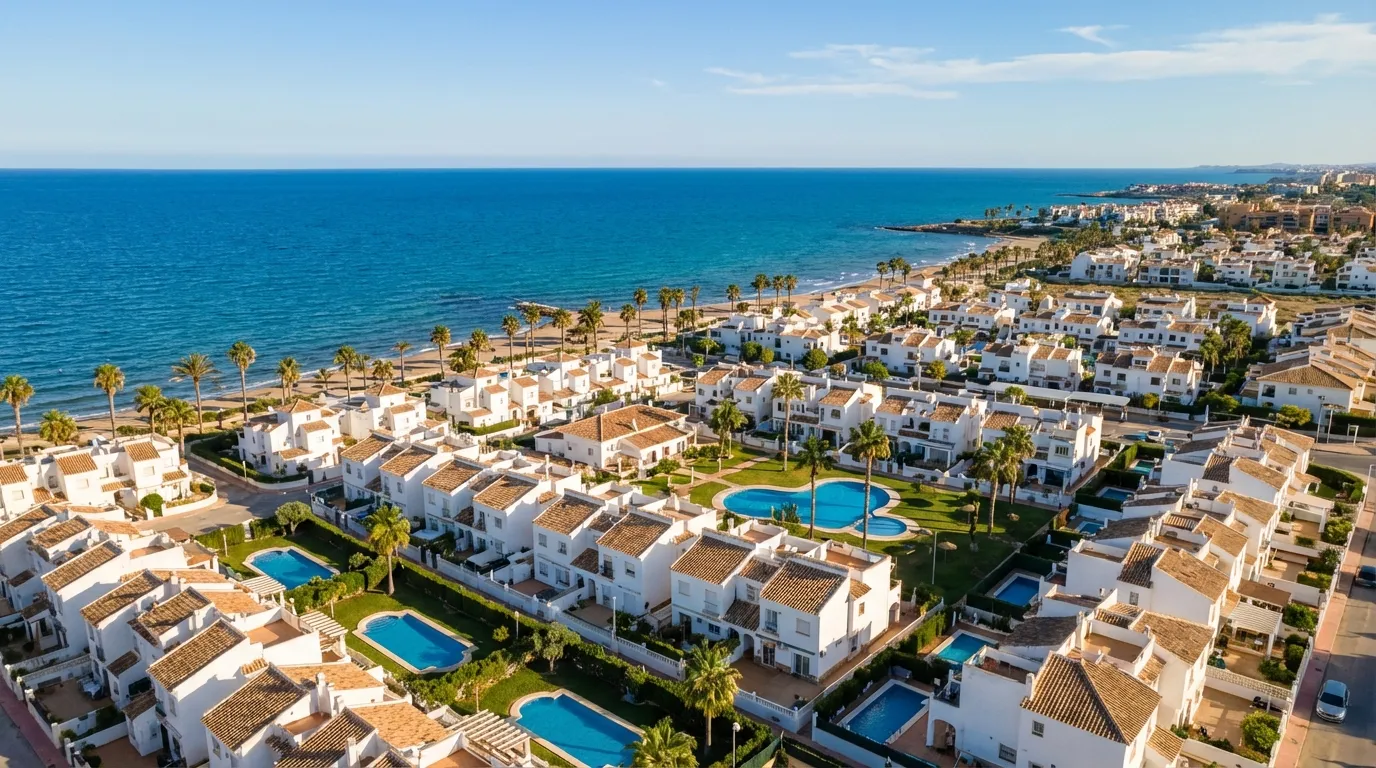
Everything you need to know about Orihuela Costa on Costa Blanca: areas, property prices, climate, beach life and tips for buying property in southern Spain.
16 min
Everything about Easter in Spain: Semana Santa processions, traditions, public holidays, food and how it differs from Swedish Easter. Guide for Swedish residents.
Easter in Spain is not Easter eggs and Donald Duck. It is Semana Santa — Holy Week — and it is the country's most intense cultural and religious event. For an entire week in March or April, large parts of Spain come to a standstill. Hundreds of thousands of people take to the streets to watch or participate in processions that have continued in the same form since the 16th century. Semana Santa 2026 runs from 29 March to 5 April.
Whether you live in Spain, own a holiday property or are planning a visit over Easter — it is an experience unlike anything you have seen in Sweden. In this guide we go through what Semana Santa means, the key dates, how it is celebrated in different regions, what people eat and what you as a Swedish resident should consider on a practical level.
Semana Santa (Holy Week) is the week leading up to Easter Sunday and marks the final days of Jesus according to the Christian tradition — from his entry into Jerusalem to the crucifixion and resurrection. Celebrations have deep roots in Spain and can be traced back to the medieval period, but the form we see today took shape during the 16th and 17th centuries.
At the heart of Semana Santa are the religious brotherhoods — cofradías or hermandades. These organisations, many founded hundreds of years ago, are responsible for organising the processions. In Seville alone, 71 brotherhoods participate with a total of around 50,000 participants.
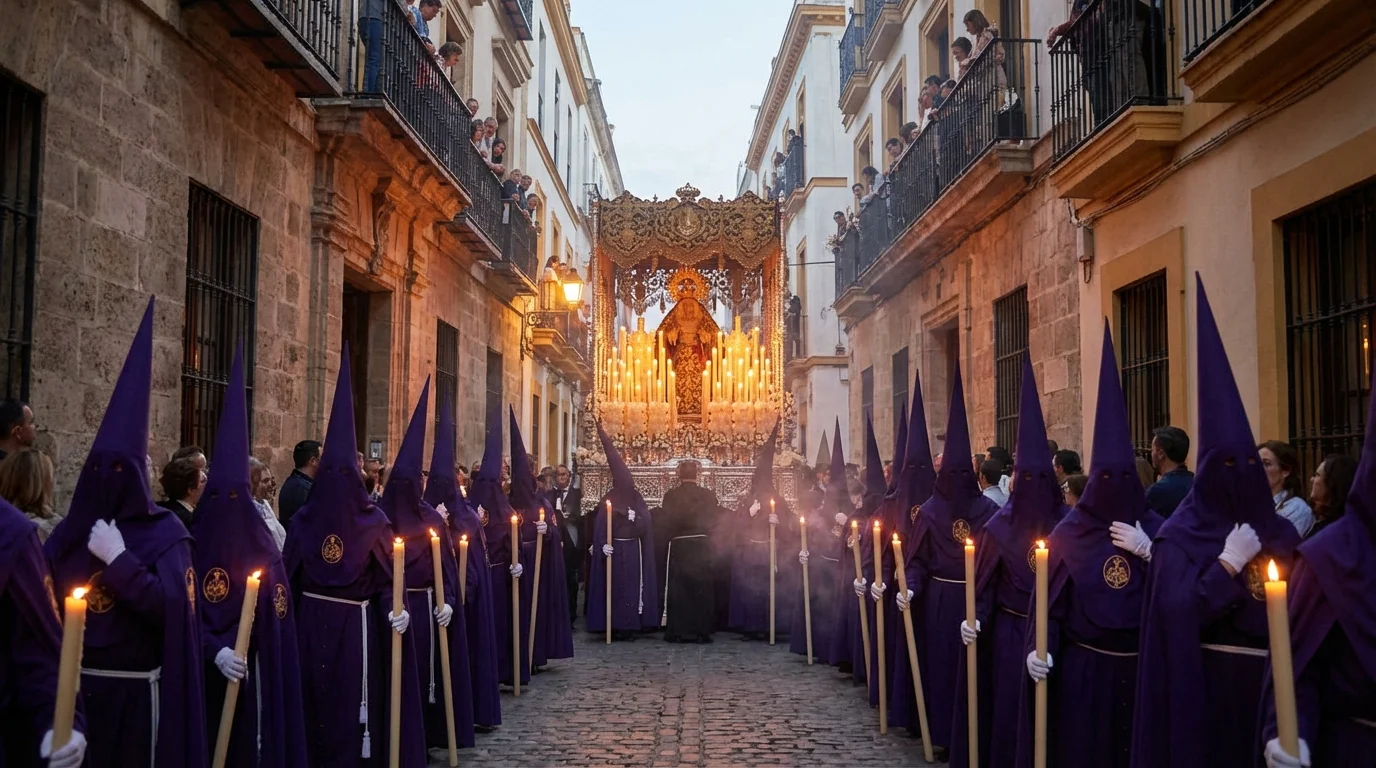
During the processions, enormous floats — called pasos or tronos — are carried through the streets. These can weigh several tonnes and are carried by groups of 24 to 48 people (costaleros). On each paso are intricately sculpted religious scenes, often hundreds of years old and of great artistic value. In front of and behind the pasos walk nazarenos — brotherhood members dressed in long robes and pointed hoods (capirotes) that conceal the face.
Information
The capirote — why the pointed hood? The robed nazarenos can look strange to Swedish eyes. The capirote (the pointed hood) symbolises penance and humility. The tradition dates back to the Spanish Inquisition, when those who had confessed their sins wore a similar headgear. Today it is a purely religious symbol with no negative connotations in Spain.
Easter moves each year, and in 2026 Semana Santa falls relatively late. Here are the key dates:
Good Friday on 3 April is a national public holiday — all of Spain is closed. Maundy Thursday on 2 April is a public holiday in almost all regions except Catalonia and the Valencia region (which instead have Easter Monday on 6 April as a holiday). In practice many Spaniards take the whole week off, and many businesses close from Wednesday to Monday.
Note
Bear in mind: Banks, government offices and many shops are closed on public holidays. Supermarkets (Mercadona, Carrefour) may have reduced opening hours or be completely closed on Good Friday. Plan your shopping in advance, particularly if you live in a smaller town.
Semana Santa is celebrated throughout Spain, but the style varies dramatically between regions. Here are the most relevant areas for Swedish residents.
Andalusia is the epicentre of Semana Santa. Seville, Málaga, Granada and Córdoba have the most famous processions in the country. The atmosphere is intense and emotional — it is not uncommon for spectators to weep as a paso passes.
In Seville processions take place from early morning to late evening every day during the week. The highlight is La Madrugá — the night between Maundy Thursday and Good Friday — when some of the most venerated brotherhoods march through the city before half a million spectators. A unique tradition is saetas: spontaneous flamenco songs performed from balconies along the procession route.
In Málaga enormous tronos are carried through the city's wide avenues. Here the Spanish Foreign Legion participates in a ceremonial procession on Maundy Thursday — a dramatic display that draws thousands of spectators. Another tradition unique to Málaga: each year a prisoner is pardoned and carried out of jail to join the procession.
On Costa Blanca — where many Swedes live — Semana Santa is celebrated with great intensity, particularly in Orihuela. Orihuela's processions are considered among the most important in the entire Valencia region, with over 8,000 participants and 1,000 musicians. The highlight is the "El Silencio" procession on Good Friday, when over 10,000 spectators gather in absolute silence as the procession passes through the old town centre, lit only by the participants' lanterns.
In Alicante city processions take place every evening during the week, and the 2026 programme covers a complete guide of 223 pages. Torrevieja also has its own Semana Santa with processions that culminate on Good Friday, when all local brotherhoods come together in a joint procession.
Cartagena's Semana Santa stands out for its nocturnal processions and strict military order — a legacy of the city's history as a naval base. Processions take place before dawn or late in the evening, creating a completely different atmosphere from the Andalusian ones. Murcia's processions are known for their salzillos — sculptures by 18th-century artist Francisco Salzillo, considered among the finest in Spain.
Processions take place every day, often several per day, from Palm Sunday to Easter Sunday. Each brotherhood follows a set route from its home church to the cathedral and back. A procession can take 4–8 hours to complete. Streets are lined with spectators who have often reserved their places weeks in advance — in Seville chairs are sold along the procession route and the best spots cost upwards of 200 euros.
The atmosphere varies between processions. Some are held in total silence — the only sound being the costaleros' footsteps on the stone street. Others are accompanied by brass bands, drums or cornetas (a type of horn). The contrast between the deep silence and the sudden sound of hundreds of drums is one of Semana Santa's most moving experiences.
Many Spanish women wear a mantilla — a black lace veil over the head — during processions, particularly on Maundy Thursday and Good Friday. It is a tradition that remains strong, and you see mantillas on people of all ages. Men typically wear dark suits. The dress code is not obligatory for spectators, but it is respectful to dress somewhat smartly if you plan to attend a procession.
Spanish Easter food is completely different from the Swedish version. Forget pickled herring and boiled eggs — here it is about fried bread, salt cod and honey pastries.
Torrijas are Spain's most iconic Easter dish. They are thick slices of day-old bread soaked in milk (sometimes with cinnamon and lemon zest), dipped in egg, fried in olive oil and then rolled in sugar and cinnamon. Their origin is thought to lie in convents where nuns used leftover bread. During Easter, bakeries and supermarkets sell ready-made torrijas, and every family has their own recipe.
On Good Friday many Spaniards abstain from meat — a Catholic tradition. Instead they eat potaje de vigilia: a hearty stew with chickpeas, spinach, hard-boiled eggs and salt cod (bacalao). It is a simple but filling dish served throughout the country, with regional variations.
In eastern Spain — Catalonia, Valencia, Murcia and the Balearic Islands — godparents give their godchildren a mona de pascua on Easter Sunday. Traditionally it is a sweet bread cake decorated with boiled eggs, but the modern version is often a chocolate cake with elaborate chocolate figures. In Valencia and Alicante you find monas in all bakeries during Easter week.
In Andalusia pestiños are baked — fried dough parcels flavoured with anise and sherry, glazed with honey or sugar. Other regional Easter sweets include buñuelos de viento (light fried balls), flores manchegas (fried dough flowers) and leche frita (fried custard).
Properties
Explore available properties in Costa Blanca
Browse current homes in the area and compare locations, price levels and property types at your own pace.
If you are accustomed to Swedish Easter, Semana Santa will be a culture shock — in the best possible way. Here are the biggest differences:
Religious vs secular. In Sweden Easter is in practice a secular holiday with sweets, Easter eggs and cartoons. In Spain Easter is deeply religious — even for those who do not go to church for the rest of the year. Processions and traditions have a serious, devotional tone, particularly on Good Friday.
Public vs private. Swedish Easter is celebrated at home with family. Spanish Easter is celebrated in the streets. Entire cities are transformed for a week — streets are closed off, processions take over city centres, restaurants put out extra tables on pavements. It is a collective event.
A week vs a long weekend. In Sweden it is an extended weekend. In Spain celebrations last a full week, with processions every day. Many Spaniards take the whole week off.
The weather. While Sweden often has snow, sleet or rain over Easter, Spain's coasts offer pleasant spring weather. On Costa Blanca and Costa del Sol daytime temperatures in April are around 18–22°C with an average of 8 hours of sunshine per day.
The food. No pickled herring, no boiled eggs, no Janssons frestelse. Instead: torrijas, bacalao, potaje and chocolate monas. Lamb does appear in both countries — in Spain cordero asado (oven-roasted lamb) is often eaten on Easter Sunday.
Seville's Semana Santa is classified as a Fiesta de Interés Turístico Internacional. With 71 brotherhoods and processions from morning to night every day during the week, it is the most complete experience. The downside: enormous crowds, high hotel prices and you should book accommodation months in advance.
Málaga's processions are more accessible than Seville's and almost as impressive. The enormous tronos carried through the city centre weigh up to 5 tonnes. The Spanish Foreign Legion's procession on Maundy Thursday is a spectacle in itself.
Cartagena's processions, with their military precision and nocturnal atmosphere, offer a completely different experience. The city is less touristy and prices are lower.
For those living on Costa Blanca, Orihuela is the obvious choice. The city's processions are among the oldest and most impressive in the Valencia region. You also avoid the extreme crowds of Seville and Málaga, and you can combine it with your normal daily life at home.
Tip
Tips for experiencing your first procession: Arrive early to get a good spot — ideally an hour before the scheduled time. Bring water and patience. Avoid walking in front of the procession or photographing with a flash. Show respect — even if you are not religious, it is deeply meaningful for the participants.
During Semana Santa — particularly on Maundy Thursday and Good Friday — many shops, banks and government offices are closed. Supermarkets often have reduced opening hours. Pharmacies generally remain open with on-call hours. Restaurants are often fully booked, particularly in procession cities — reserve a table in advance.
City centres are closed off for processions, often several hours in advance. If you live in the centre it may be difficult to get in and out by car. Park outside the centre and walk, or use public transport. Motorways and coastal roads see increased traffic throughout the week, particularly on Wednesday (when many begin their holiday) and Easter Sunday (return journeys).
Processions can continue until midnight or later. Drums, cornetas and fireworks are clearly audible if you live near the procession route. If you are a light sleeper — bring earplugs, particularly for the night between Maundy Thursday and Good Friday.
Hotel prices rise sharply in popular procession cities during Semana Santa. In Seville prices can triple. Book accommodation at least 2–3 months in advance if you are planning a trip. Flights to Alicante and Málaga are also usually more expensive during Easter week.
Expect daytime temperatures of around 18–22°C on the coasts at the end of March and beginning of April. Evenings can be cool — bring a light jacket. Rain is possible but uncommon. Inland and in northern Spain it is colder.
Contact
Get in touch and we'll guide you forward — whether you're just starting out or ready to buy.
Contact usLast updated: April 2026. The dates of Semana Santa vary each year — always check the current year's calendar.
Decision support
Semana Santa 2026 pågår från palmsöndagen den 29 mars till påskdagen den 5 april. Skärtorsdagen (Jueves Santo) den 2 april är helgdag i de flesta regioner, och långfredagen (Viernes Santo) den 3 april är nationell helgdag i hela Spanien.
Annandag påsk firas inte nationellt men är helgdag i bland annat Valencia-regionen och Katalonien.
De mest framträdande traditionerna är de religiösa processionerna där cofradías (brödraskap) bär skulpterade tronos eller pasos genom gatorna. Deltagarna bär långa kåpor och spetsiga huvor (capirotes).
Processioner ackompanjeras av trummor, blåsinstrument och ibland flamenco-sång (saetas). Under långfredagen avstår många från kött och äter fiskrätter som bacalao.
Sevilla anses vara den mest spektakulära platsen med 71 brödraskap och över 50 000 deltagare. Málaga imponerar med sina enorma tronos och den spanska legionens medverkan.
Cartagena utmärker sig med sina nattliga processioner och militära inslag. För dig på Costa Blanca erbjuder Orihuela en av regionens mest imponerande processioner med över 8 000 deltagare.
Den mest ikoniska påskrätten är torrijas — tjocka brödskivor doppade i mjölk och ägg, stekta i olivolja och rullade i socker och kanel. Under långfredagen äts potaje de vigilia, en gryta med kikärtor, spenat och torsk.
I östra Spanien är mona de pascua en traditionell påsktårta som faddrar ger till sina gudbarn. I Andalusien äts pestiños — honungsglaserade friterade kakor.
Svensk påsk är mestadels sekulär med påskägg, godis, påskkärringar och familjemiddagar. Spansk påsk är djupt religiös med processioner varje dag under en hel vecka.
I Sverige samlas man hemma — i Spanien är firandet offentligt och tar över hela städer. Vädret gör också stor skillnad: medan Sverige ofta har snö eller regn i april, njuter Spanien av 18–22 graders värme.
Sources
Everything you need to know about Orihuela Costa on Costa Blanca: areas, property prices, climate, beach life and tips for buying property in southern Spain.
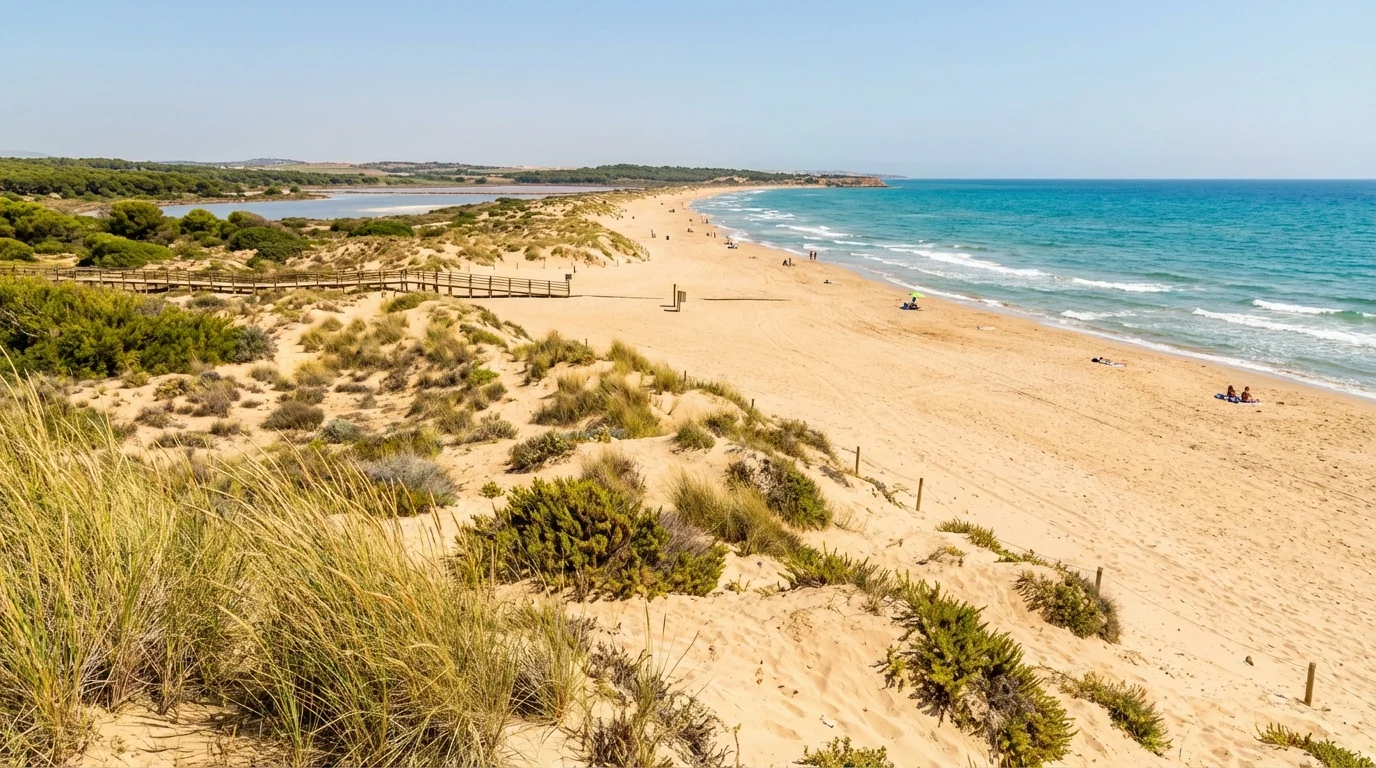
La Mata near Torrevieja: 2.3 km sandy beach, prices €2,600–2,750/m², nature reserve with flamingos. Honest guide for buyers on the Costa Blanca.
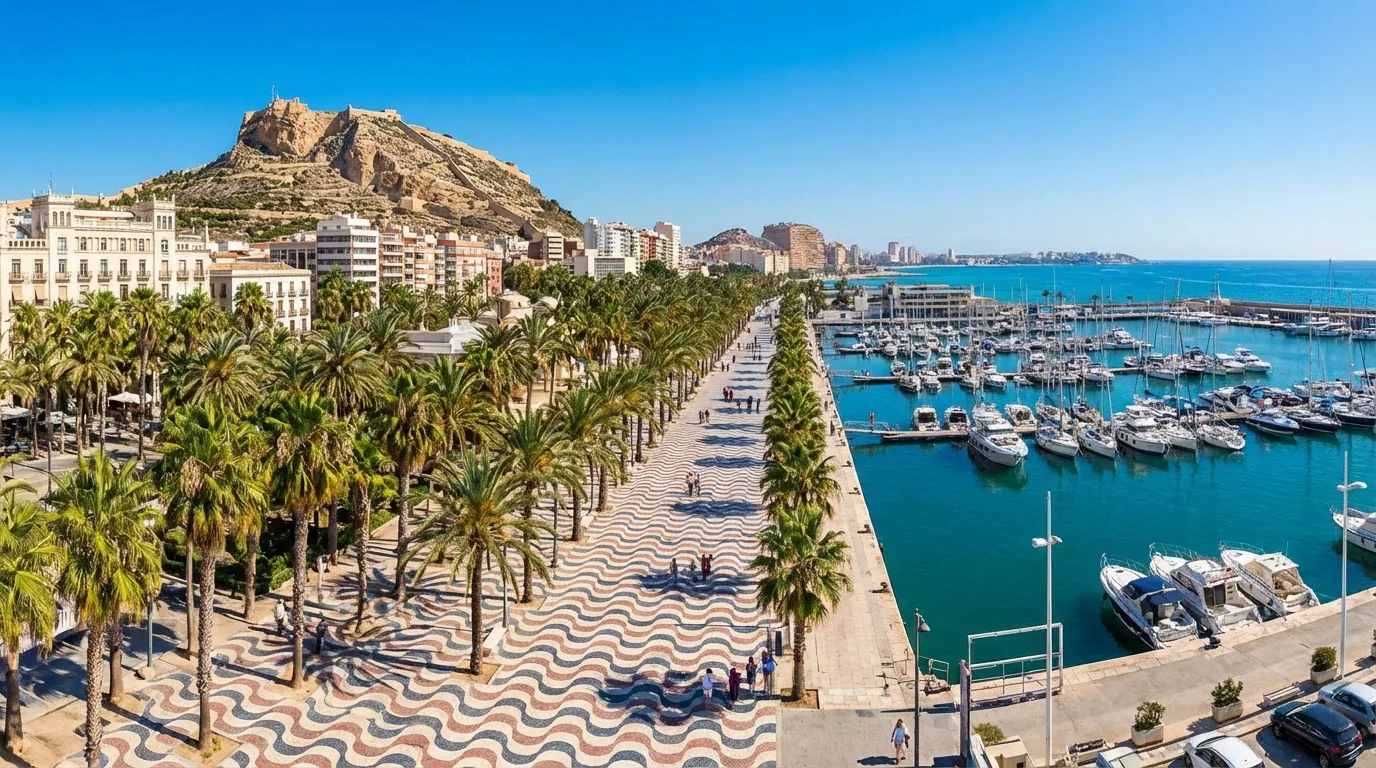
Alicante city as a property market: neighbourhoods, prices, beach, public transport, and flights — practical guide for Swedish buyers looking to buy an apartment in 2026.