


Area Guides
Orihuela Costa – Complete Guide for Swedish Buyers 2026
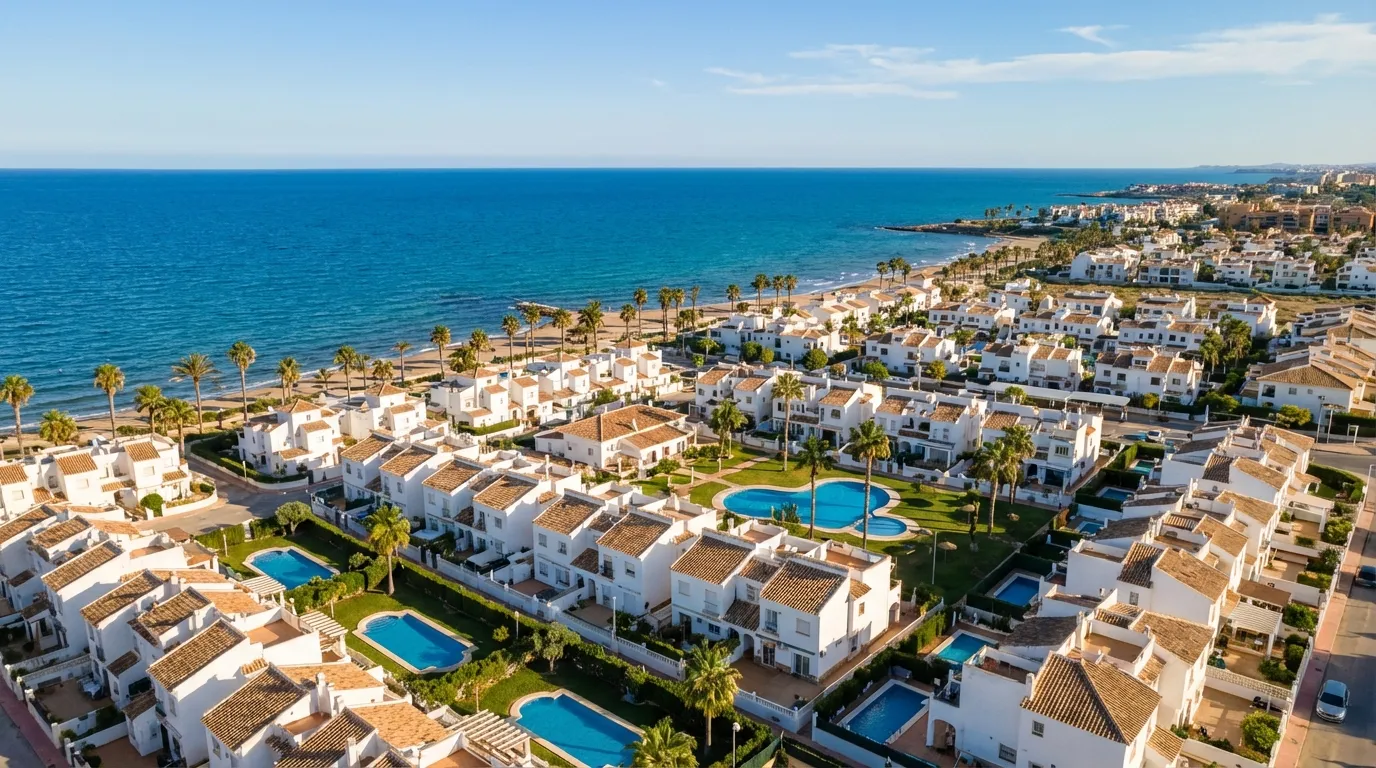
Everything you need to know about Orihuela Costa on Costa Blanca: areas, property prices, climate, beach life and tips for buying property in southern Spain.
16 min
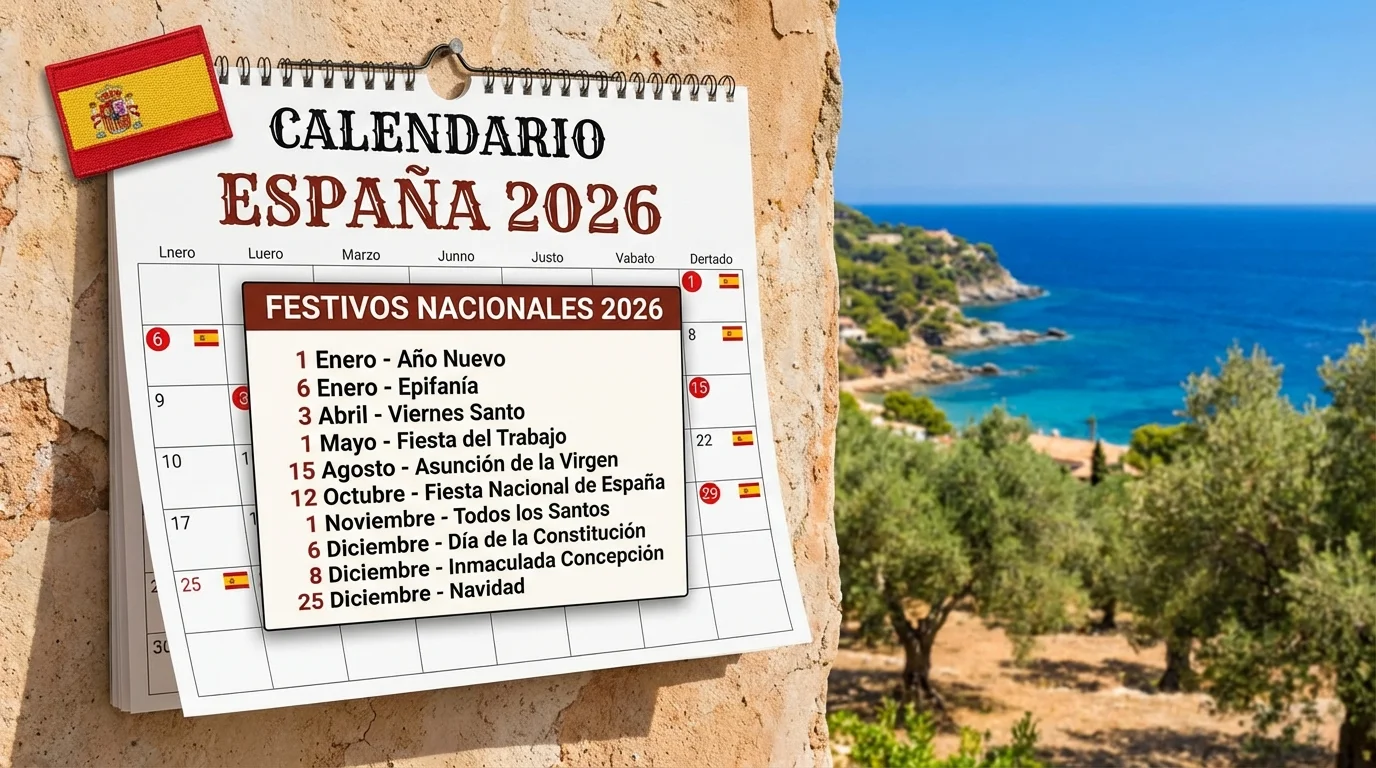
All public holidays in Spain 2026: national, regional and local fiestas. Calendar for the Valencian Community, Murcia and Andalusia with dates and explanations.
Spain has 14 paid public holidays per year — roughly the same as Sweden. But the system works completely differently. Instead of a shared list, holidays are determined at three levels: national (8–9 days), regional (3–4 days) and local (2 days per municipality). This means your neighbour in another municipality may have a day off when you are working.
In 2026 the calendar creates at least four long weekends thanks to public holidays falling on Fridays and Mondays. Spaniards call this puentes — bridges between a holiday and the weekend. In this guide we go through all national public holidays, regional holidays for the three most popular coastal regions among Swedish buyers (Valencian Community, Murcia and Andalusia), local holidays for towns like Torrevieja and Alicante, and practical information about what applies on red-letter days.
Spain's public holiday system is three-tiered and governed by law. It differs markedly from the Swedish system where all holidays are national.
National public holidays (fiestas nacionales) are decided by the Spanish government and published in the BOE (Boletín Oficial del Estado). In 2026 there are 8 national public holidays that apply throughout the country. These include New Year's Day, Good Friday, Labour Day, Christmas Day and a few others.
Regional public holidays are decided by each autonomous region (comunidad autónoma). Spain has 17 autonomous regions, and each region adds 3 to 4 of its own holidays to reach a total of 12 national plus regional days. Regions can choose to include Maundy Thursday, local patron saints or historical dates.
Local public holidays are decided by each municipality (municipio). Each town chooses 2 local holidays, often linked to the town's patron saint or a historical event. Torrevieja celebrates Virgen del Carmen (16 July) as it is a seafaring town. Alicante celebrates Hogueras de San Juan (23 June) with enormous sculptures that are burned on the beach.
Information
Did you know? Spain has over 3,000 different combinations of public holidays if you count all municipalities' local variants. Two towns 5 kilometres apart can have completely different days off. That is why it is important to check the calendar for your specific municipality.
These 8 holidays apply throughout Spain in 2026. They are paid and non-recoverable — meaning your employer cannot require you to work them in lieu.
National public holidays 2026
1 Jan (Thursday)
New Year's Day
Año Nuevo.
6 Jan (Tuesday)
Epiphany
Día de Reyes / Epifanía.
3 Apr (Friday)
Good Friday
Viernes Santo.
1 May (Friday)
Labour Day
Día del Trabajo.
15 Aug (Saturday)
Assumption of Mary
Asunción de la Virgen.
12 Oct (Monday)
Spain's National Day
Fiesta Nacional de España.
8 Dec (Tuesday)
Immaculate Conception
Inmaculada Concepción.
25 Dec (Friday)
Christmas Day
Navidad.
In addition to these 8 days each region adds further days. All Saints' Day (1 November) and Constitution Day (6 December) fall on Sundays in 2026 and are moved in most regions to the following Monday.
Tip
Tip for 2026: Good Friday 3 April, Labour Day 1 May, National Day 12 October and Christmas Day 25 December all fall on Fridays or Mondays. This gives four guaranteed long weekends — perfect for exploring Spain if you have just moved there.
The Valencian Community — the region that encompasses the Costa Blanca, including Alicante, Torrevieja and Orihuela — has four regional public holidays in addition to the national ones.
Valencian Community — regional days 2026
19 Mar (Thursday)
San José
St Joseph's Day — Fallas in Valencia city.
6 Apr (Monday)
Easter Monday
Lunes de Pascua.
24 Jun (Wednesday)
Sant Joan
Hogueras in Alicante.
9 Oct (Friday)
Day of the Valencian Community
The region's day — the reconquest of 1238.
Notably: the Valencian Community does not celebrate Maundy Thursday as a public holiday — unlike most other Spanish regions. Instead it has Easter Monday. This means residents of the Valencia region have Good Friday + Easter Monday, while those in Murcia and Andalusia have Maundy Thursday + Good Friday.
San José on 19 March coincides with Fallas — Valencia's most famous festival, where enormous papier-mâché sculptures are burned in the streets. Even though Fallas is primarily a Valencia festival, the San José holiday is felt throughout the region.
9 October is the Valencian Community's national day. It is always a big day with parades, and in 2026 it falls on a Friday — a perfect long weekend.
The Region of Murcia — with the Costa Cálida and towns like San Pedro del Pinatar, Los Alcázares and Mazarrón — has these regional holidays:
Murcia — regional days 2026
19 Mar (Thursday)
San José
St Joseph's Day.
2 Apr (Thursday)
Maundy Thursday
Jueves Santo — processions.
9 Jun (Tuesday)
Day of the Region of Murcia
The region's national day 1982.
Murcia celebrates Maundy Thursday (2 April) as a regional holiday, which creates a four-day Easter break together with Good Friday on 3 April. Semana Santa in Murcia city is one of Spain's most famous Easter celebrations with processions dating back to the 17th century.
Día de la Región de Murcia on 9 June falls on a Tuesday in 2026 — a classic puente situation where many people take Monday off for a four-day weekend.
In Murcia city, the local holidays are 7 April and 15 September.
Andalusia — with the Costa del Sol, Marbella, Málaga and Estepona — has these regional holidays:
Andalusia — regional days 2026
28 Feb (Saturday)
Andalusia Day
The autonomy referendum of 1980.
2 Apr (Thursday)
Maundy Thursday
Jueves Santo — Semana Santa.
Like Murcia, Andalusia celebrates Maundy Thursday. Andalusia Day on 28 February falls on a Saturday in 2026, meaning it is effectively "lost" — no extra day off in practice.
All Saints' Day (1 November) falls on a Sunday in 2026 and is moved to Monday 2 November in Andalusia, creating a long weekend. Constitution Day (6 December) also falls on a Sunday and is moved to Monday 7 December. Combined with the Immaculate Conception on 8 December (Tuesday) this creates the classic puente de diciembre — a five-day break from Saturday 5 to Tuesday 8 December.
Each municipality chooses its own 2 local holidays. Here are the dates for the towns most popular among Swedish property buyers:
Properties
Explore available properties in torrevieja
A puente (bridge) is when a public holiday falls on a Tuesday or Thursday and people take the bridging day (Monday or Friday) off to create a four-day weekend. It is not an official public holiday — it is a cultural tradition that permeates all of Spanish society.
During a puente this happens in practice:
In 2026 there are several excellent puente opportunities:
Puente examples 2026
Epiphany
6 Jan (Tuesday)
Many take 5 Jan off → 4 days.
San José (Val./Mur.)
19 Mar (Thursday)
20 Mar often taken off → 4 days.
Maundy Thursday + Good Friday
2–3 April
4 days without an extra day.
Day of the Region of Murcia
9 Jun (Tuesday)
8 Jun often taken off → 4 days.
Immaculate Conception
8 Dec (Tuesday)
7 Dec often taken off → 4–5 days.
Note
Important for property buyers: Never plan notary visits, NIE applications or banking matters during a puente week. Processing times increase and staffing is reduced. Semana Santa (Holy Week), the whole of August and the period 23 December to 6 January are particularly problematic. Book important matters in February, May or October instead.
Sweden and Spain have roughly the same number of public holidays per year, but they are distributed and structured in completely different ways.
Sweden vs Spain — quick comparison
Number of holidays
13
Spain: 14.
System
All national
Spain: national + regional + local.
Midsummer
Major holiday
Spain: no equivalent (San Juan 24/6 is comparable).
Easter
Good Friday + Easter Monday
Spain: often Maundy Thursday + Good Friday (regions vary).
Christmas
24–26 Dec
Spain: officially 25 Dec; 6 Jan Reyes.
Epiphany
Not a day off
Spain: Reyes Magos — central for children.
National Day
6 June
Spain: 12 October.
All Saints' Day
1 Nov
Same date.
Ascension Day
Yes
Spain: not a holiday since 2013.
The biggest cultural difference is Epiphany (6 January). In Sweden it is a quiet holiday. In Spain it is the most magical day of the year for children — Reyes Magos (Three Kings). Children receive their Christmas presents on 6 January, not 24 December. The evening before (5 January) sees the grand Cabalgata de Reyes — a parade with three kings throwing sweets to the children.
Another important difference: Sweden has Christmas Day, Boxing Day and Christmas Eve. Spain has only Christmas Day (25 December) as an official holiday. Christmas Eve (Nochebuena) is culturally important but not an official red-letter day. Many Spaniards work half a day on 24 December.
Here is a practical overview for those who live in or visit Spain:
Always closed on public holidays:
Closed with exceptions:
Normally open:
Public transport: Buses and trains run on Sunday timetables during public holidays. Expect fewer departures, especially on local bus routes. During major holidays (Christmas, Easter) RENFE adds extra long-distance trains but at higher prices.
Contact
We help Swedish buyers find the right property on the Costa Blanca, Costa Cálida and Costa del Sol. Book a free video call and we will tell you more — no obligations.
Book a free consultationLast updated: April 2026. Public holidays are set annually by the Spanish government (BOE), regional authorities and municipalities — always check your municipality's official calendar for local variations.
Decision support
Varje arbetstagare i Spanien har rätt till 14 betalda helgdagar per år. Dessa fördelas på tre nivåer: 8–9 nationella helgdagar som gäller i hela landet, 3–4 regionala helgdagar som bestäms av respektive autonom region, och 2 lokala helgdagar som väljs av varje kommun.
Exakt vilka dagar det blir varierar alltså beroende på var du bor.
Stora mataffärer och köpcentrum måste enligt lag stänga på nationella och regionala helgdagar i de flesta regioner. Undantaget är turistzoner vid kusten där reglerna är mer generösa.
Små livsmedelsbutiker och kiosker kan ofta hålla öppet. Restauranger och caféer har normalt öppet, men med anpassade tider.
Apotek har ett roterande joursystem där minst ett apotek i varje kommun alltid är öppet.
Spanien firar flera helgdagar som inte finns i Sverige: Trettondagen (6 januari) är barnens stora julklappsdag, Jungfru Marias upptagning (15 augusti) och Obefläckade avlelsen (8 december) är viktiga katolska högtider. Spaniens nationaldag den 12 oktober firar Columbus upptäckt av Amerika.
Dessutom har varje region egna högtider — till exempel San José den 19 mars i Valencia och Andalusiens dag den 28 februari.
När en nationell helgdag infaller på en söndag kan den flyttas till måndagen efter — men det är inte automatiskt. Regeringen beslutar varje år vilka dagar som flyttas och publicerar det i BOE (Boletín Oficial del Estado).
Under 2026 infaller Alla helgons dag (1 november) och konstitutionsdagen (6 december) på söndagar, och de flyttas till måndagen i de flesta regioner.
Undvik att boka myndighetsärenden veckan före och efter stora helgdagar — handläggningstiderna förlängs och många tjänstemän tar puente (klämdagar). Särskilt Semana Santa (påskveckan), augusti och julperioden 23 december–6 januari innebär kraftigt reducerad offentlig service.
Renoveringsarbeten stannar ofta helt under dessa perioder. Planera viktiga ärenden som NIE-ansökan eller notariebesök till februari, maj eller oktober.
Sources
Everything you need to know about Orihuela Costa on Costa Blanca: areas, property prices, climate, beach life and tips for buying property in southern Spain.
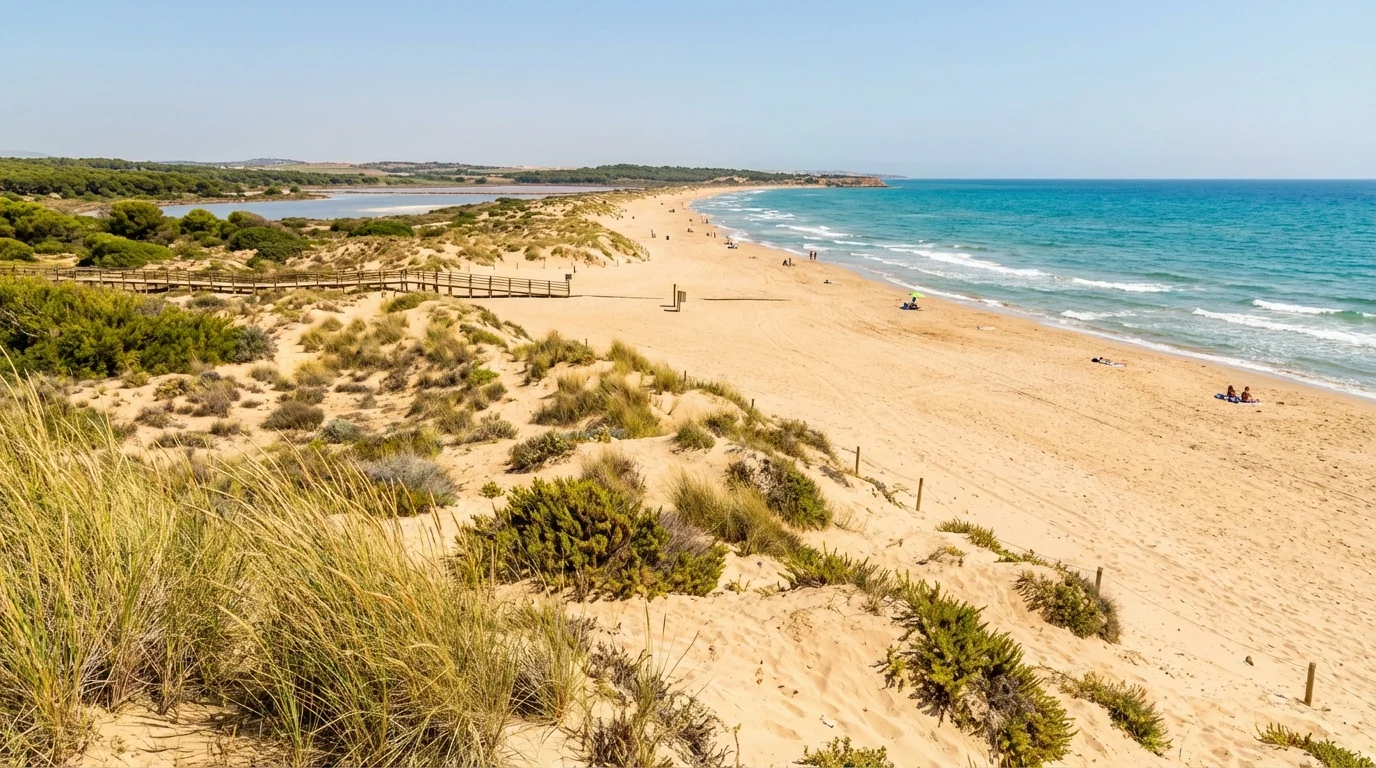
La Mata near Torrevieja: 2.3 km sandy beach, prices €2,600–2,750/m², nature reserve with flamingos. Honest guide for buyers on the Costa Blanca.
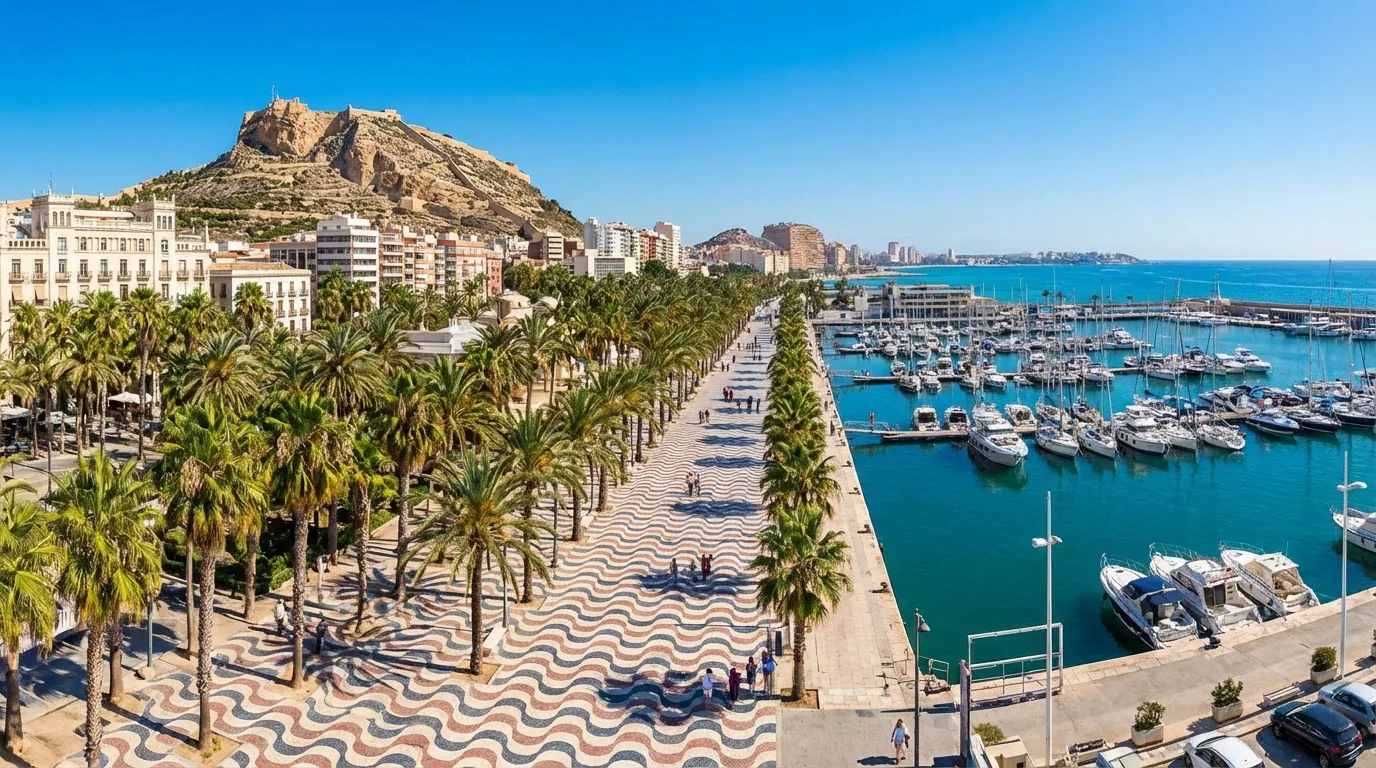
Alicante city as a property market: neighbourhoods, prices, beach, public transport, and flights — practical guide for Swedish buyers looking to buy an apartment in 2026.