

Moving & Living
Living in Spain as a Swede – Everyday Life and Practical Info 2026
What is it like to live in Spain as a Swede? Cost of living, healthcare, bureaucracy, social life and everything you need to know about everyday life in Spain.
17 min

Complete guide to moving with a dog, cat or other pet to Spain: EU passport, vaccinations, regulations and practical tips.
Moving with pets to Spain from Sweden is straightforward as long as you follow EU rules: your animal needs a microchip, a valid rabies vaccination and an EU pet passport. The whole process takes at least 21 days from the date of vaccination to departure. For dogs and cats that already have a valid EU passport and up-to-date vaccination you can travel as soon as next week.
What makes the move smooth is that both Sweden and Spain are EU countries. You do not need a health certificate, no quarantine and no customs declaration for your pet. But there are pitfalls: the vaccination must be given after the microchipping, not before. Puppies under 15 weeks may not travel. And in Spain rules await that do not exist in Sweden — compulsory lead laws, a PPP licence for certain breeds and restricted dog beaches.
In this guide we cover everything step by step: EU passport and vaccination requirements, rules for dogs, cats and other animals, flying versus driving, veterinary care in Spain, lead regulations and dog beaches, pet-friendly properties and the most common mistakes.
The rules for moving with a dog, cat or ferret within the EU are governed by EU Regulation 576/2013. Three things are required: microchip, rabies vaccination and EU pet passport.
Microchip — Your animal must be marked with an ISO 11784/11785-compatible microchip. In Sweden most chips are already of the right type. The chipping must take place before or on the same day as the rabies vaccination — otherwise the vaccination will not count.
Rabies vaccination — The animal must be vaccinated against rabies. The vaccine becomes valid 21 days after the first dose. If it is a booster dose given within the validity period of the previous vaccination it takes effect immediately. The vaccine is valid for 1–3 years depending on the product — the vet records the expiry date in the EU passport.
EU pet passport — The passport is issued by an authorised vet and contains information about the owner, the animal's identification (chip number), rabies vaccination and any other treatments. It costs 200–400 Swedish kronor in Sweden. The passport is valid for the animal's entire life as long as vaccinations are kept up to date.
Information
Did you know? Since April 2026 the EU requires all newly registered dogs and cats in the union to have an approved ISO chip. Older chips that are already registered continue to be valid. If your animal has an older chip that cannot be read with a standard reader you need to bring your own reader to border controls.
Book an appointment at a veterinary clinic authorised to issue EU passports. Most clinics in Sweden can do this. Bring:
The vet checks that the chip can be read, records the rabies vaccination and issues the passport. If the animal is not yet vaccinated against rabies this is done at the same visit — but then you must wait 21 days before departure.
Dogs are the most common pet that people bring to Spain. Beyond microchip, rabies vaccination and EU passport there are a few things specific to dogs.
Age requirement — Puppies can be vaccinated against rabies from 12 weeks of age. Since the vaccine requires a 21-day wait, the minimum age at entry is 15 weeks. Unvaccinated puppies under 12 weeks may not travel between EU countries.
Worming — Spain does not require worming against tapeworm (Echinococcus multilocularis) on entry. However, it is required on return to Sweden — the dog must be treated by a vet 24–120 hours before arrival in Sweden. Note this now if you plan to travel back.
Number of animals — You may travel with a maximum of 5 pets per person. If you have more, the same documentation is required as for commercial transport.
Spain has a law on potentially dangerous dogs (Perros Potencialmente Peligrosos, PPP). Eight breeds are affected: Pit Bull Terrier, Rottweiler, Dogo Argentino, Staffordshire Bull Terrier, American Staffordshire Terrier, Fila Brasileiro, Tosa Inu and Akita Inu.
If you own one of these breeds you need to apply for a PPP licence from your local municipality (ayuntamiento) within 3 months of moving. Requirements for the licence:
The law also applies to dogs weighing over 20 kg whose physical characteristics match PPP criteria, regardless of breed.
Note
Important: Since the Ley de Bienestar Animal 2023 compulsory third-party liability insurance (seguro de responsabilidad civil) is required for all dogs in Spain — not just PPP breeds. The insurance must cover damage caused by the dog to third parties. Expect 30–80 euros per year depending on breed and insurer. Several home insurance policies in Spain include this, but check that it is explicitly stated.
Cats have the same basic requirements as dogs: microchip, rabies vaccination and EU passport. In practice it is simpler with cats because Spain has no breed-specific restrictions or licence requirements for cats.
Since the Ley de Bienestar Animal 2023 there are two specific requirements for cats in Spain:
If you have a cat that is already chipped and vaccinated against rabies in Sweden you only need to register it with a vet in Spain after the move. The neutering requirement applies to new cats — if your cat is already older and not neutered you may be able to get an exemption from your vet, but it is advisable to comply with the rules.
Cats transported by air or car must be in a carrier or transport bag. When flying, most airlines accept cats in the cabin if the bag fits under the seat in front of you (usually max 8 kg including bag).
Rabbits, guinea pigs, birds and other exotic animals are not covered by the EU pet passport system. Rules vary depending on the species.
Rabbits and guinea pigs — Do not require an EU passport but need a health certificate issued within 10 days before departure. The certificate must confirm that the animal is healthy and free from infectious diseases. Contact the Swedish Board of Agriculture for current requirements.
Birds (parrots, budgerigars, canaries) — Birds require a health certificate and in some cases a CITES certificate if the species is listed under the CITES convention (applies to most parrot species). Application for a CITES certificate is made via the Swedish Board of Agriculture and takes 2–4 weeks. Birds to be transported by air also need an IATA-approved transport crate.
Reptiles and amphibians — Tortoises, lizards and snakes may require CITES permits depending on species. Check your specific species against CITES Appendix I–III before planning the move.
Spanish maximum — Since 2023 a limit of a maximum of 5 pets per household applies in Spain. If you have more animals a special permit (núcleo zoológico) from your municipality is required.
The choice between flying and driving depends on the animal's size, temperament and your personal situation. Both options work, but each has different pros and cons.
Flight time from Stockholm to Alicante is about 4 hours. Most airlines accept pets, but places are limited.
In the cabin — Small dogs and cats (max 8 kg including transport bag) can travel in the cabin on most airlines. SAS allows pets in the cabin for 500–900 Swedish kronor one way. Norwegian charges around 990 kronor. You must book the pet space separately — call the airline, it often cannot be done via the website.
In the hold — Larger dogs travel in an IATA-approved crate in the aircraft's pressurised and temperature-regulated hold. Costs vary: expect 1,500–4,000 kronor one way depending on dog size and airline. KLM, Iberia and Lufthansa are popular options for larger dogs. Some airlines, including Ryanair, do not accept pets at all (exception: assistance dogs).
Temperature restrictions — Most airlines refuse to transport animals in the hold if the temperature at the departure or arrival airport exceeds 30°C or falls below -5°C. During summer high season (July–August) there can be problems with air freight to Alicante and Málaga.
The driving distance from Stockholm to Costa Blanca is around 3,200 km — about 30–35 hours' driving spread over 2–3 days. The most common route goes via the Øresund Bridge, through Denmark and Germany, then through France and into Spain via the Basque Country or Catalonia.
Driving suits large dogs, dogs that are nervous about flying and families with a lot of luggage. The dog must be securely restrained in the car — in a secured crate, behind a divider or with a dog safety harness.
Rest stops — Stop every 3–4 hours to exercise the dog. Plan overnight stays in pet-friendly hotels (search "pet-friendly hotel" on Booking.com). Bring sufficient water, food and the dog's own blankets.
Ferry option — A popular shortcut is the ferry from Gothenburg to Kiel (Stena Line) or Trelleborg to Rostock (TT-Line), which cuts the driving distance through Scandinavia. Dogs usually have to stay in the car during the crossing, but some ferries offer pet cabins.
Passport control — Within the EU there are normally no border controls, but in spot checks you may be asked to show the EU passport. Always have it accessible.
Properties
Explore available properties in Costa Blanca
Browse current homes in the area and compare locations, price levels and property types at your own pace.
Finding a good vet in Spain is easier than you might think. Spain has a well-developed veterinary network with over 6,000 registered clinics.
Finding a clinic — Search "clínica veterinaria" + your town on Google Maps. Check reviews and choose a clinic with at least 4 stars and several hundred ratings. In expat areas on Costa Blanca and Costa del Sol there are clinics with English-speaking vets — ask in local Facebook groups such as "Swedes on Costa Blanca" for recommendations.
Registration — When you arrive in Spain you need to register your pet with a local vet. The vet reads the chip, checks the vaccinations and registers the animal in RIAC (Registro de Identificación de Animales de Compañía) or the regional animal register. In the Valencia region it is called RIVIA.
Costs — Veterinary care in Spain is generally cheaper than in Sweden. A standard consultation costs 30–60 euros. Annual vaccination (rabies, parvovirus, distemper) costs 50–80 euros. Neutering costs 150–300 euros depending on the animal's size and sex.
Emergency care — Most larger cities have veterinary clinics with 24-hour emergency services (urgencias veterinarias). In Torrevieja there are several 24-hour clinics, and Hospital Veterinario de Referencia in Alicante is one of the region's largest emergency clinics.
Spanish rules for dogs in public places differ from Swedish ones. In Sweden it is relatively free — in Spain the rules are stricter and vary between municipalities.
In most Spanish municipalities compulsory leads apply in urban environments, parks and on streets. The lead may be a maximum of 2 metres long in urban areas (for PPP breeds an even shorter lead applies). In nature areas and in the countryside the rules are less strict — many municipalities allow dogs off the lead in fields and forests, provided the dog is under control.
Since 2023 the Ley de Bienestar Animal has given municipalities the option to create enclosed dog parks (parques caninos) where dogs can run free. Most medium and large cities have at least one dog park. In Torrevieja there are dog parks in central Torrevieja and near the La Siesta area. Search "parque canino" + your city to find your nearest one.
Dogs are generally prohibited on Spanish beaches during summer season (June–September). In winter (October–May) many municipalities relax the ban, but it varies.
Spain has over 100 official dog beaches (playas caninas). On Costa Blanca there are dog beaches in Alicante (Playa de Agua Amarga), Santa Pola and Villajoyosa, among others. Torrevieja has at times had dog zones at Cala del Palangre. Fines for breaking beach rules are 50–750 euros depending on municipality.
Spanish restaurants are more dog-friendly than you might expect — especially outdoor terraces. Most restaurants with a terrace welcome dogs without problem. Indoors it varies, but the trend is towards more openness. In supermarkets and food shops dogs are generally not allowed, with the exception of assistance dogs.
Finding property in Spain with pets can be a challenge — especially if you have a large dog. Spanish rental law does not prohibit pets, but landlords have the right to write a no-pets clause into the contract.
Rental property — Search for "se admiten mascotas" (pets allowed) on portals such as Idealista and Fotocasa. Expect around 30–40% of rental apartments to accept pets, but the proportion decreases for large dogs. Be prepared to pay an extra deposit (fianza) — often an extra month's rent — to cover any damage.
Buying property — If you own your own property you have the right to keep pets. If the property is part of a comunidad de propietarios (residents' association) the association's rules can in theory restrict pets, but in practice it is difficult to enforce after the Ley de Bienestar Animal 2023. Associations cannot completely ban pets, but can only regulate that animals do not disturb neighbours.
Garden and fencing — If you have a dog and are buying a house with a garden, check that the fencing is high enough and secure. Many Spanish walls are lower than Swedish fences, and busy roads without pavements are common in residential areas.
Tip
Tip: Ask your estate agent specifically about pet-friendly properties right at the start of your contact. Ground floor with enclosed garden, near a dog park or natural area — it saves time to filter correctly from the start. In urbanisations (gated communities) on Orihuela Costa and Torrevieja there are often green spaces that are suitable for dog walks.
The move with pets usually goes well, but there are recurring mistakes that cause problems and delays.
1. Vaccinating before chipping — The rabies vaccine must be given after the chip is inserted. If the vet vaccinates first and chips afterwards the vaccination does not count under EU rules. You have to start again: new vaccination and a 21-day wait.
2. Forgetting worming on return to Sweden — Sweden requires worming against tapeworm (Echinococcus) 24–120 hours before arrival. Spain does not require it on entry, so many people forget. Without worming at the border you risk being refused entry to Sweden with your dog.
3. Underestimating the summer heat — Spanish summers mean 35–40°C in large parts of Costa Blanca and Costa del Sol during July and August. Dogs with thick coats (huskies, samoyeds, Saint Bernards) suffer. Plan walks early in the morning and late in the evening. Asphalt heated by the sun can burn the dog's paws — a rule of thumb is to place your hand on the asphalt for 5 seconds; if it is too hot for your hand it is too hot for the paws.
4. Skipping registration in Spain — Many Swedes assume the EU passport is sufficient. In Spain all dogs and cats must be registered in the regional animal register (RIAC/RIVIA) with your Spanish address updated. Do this with your vet within the first few weeks.
5. Lacking liability insurance — Since 2023 liability insurance is required for all dogs in Spain. Fines for not having insurance can be up to 10,000 euros for serious violations.
6. Taking the dog to the beach in summer — Dogs are prohibited on most beaches from June to September. Fines are regularly issued — especially in popular tourist municipalities.
7. Forgetting the PPP licence — If you have a breed classified as potentially dangerous and lack a PPP licence you risk fines and in the worst case the dog being seized. Apply for the licence from the municipality as soon as you have registered your residence.
Contact
We help you find pet-friendly properties on Costa Blanca and Costa del Sol. Ground floor with garden, near dog parks and natural areas — tell us what you and your pet need.
Book free consultationLast updated: April 2026. Rules and prices can change — contact the Swedish Board of Agriculture for current veterinary requirements and your municipality in Spain for local regulations.
Decision support
Din hund måste rabiesvaccineras minst 21 dagar innan avresa. Hunden måste också vara mikrochippad innan eller samma dag som vaccinationen.
Valpar kan vaccineras från 12 veckors ålder, vilket innebär att en valp måste vara minst 15 veckor gammal vid inresa. Tänk på att boka veterinärbesök i god tid — du behöver även uppdatera EU-passet med vaccinationsintyget.
Det beror på hyresvärden och bostadsrättsföreningens (comunidad de propietarios) regler. Spansk lag förbjuder inte husdjur i hyresbostäder, men hyresvärden kan skriva in en klausul mot husdjur i kontraktet.
Sedan Ley de Bienestar Animal 2023 har attityden blivit mer husdjursvänlig, men i praktiken nekar fortfarande många hyresvärdar husdjur — särskilt stora hundar. Sök efter annonser märkta 'se admiten mascotas' på Idealista eller Fotocasa.
Spanien klassificerar åtta raser som potentiellt farliga (Perros Potencialmente Peligrosos): Pit Bull Terrier, Rottweiler, Dogo Argentino, Staffordshire Bull Terrier, American Staffordshire Terrier, Fila Brasileiro, Tosa Inu och Akita Inu. Ägare måste ha PPP-licens, ansvarsförsäkring på minst 120 000 euro, använda kort koppel (max 2 meter) och munkorg på allmän plats.
Licensen söks hos kommunen och kräver utdrag ur straffregistret.
Ja, men reglerna skiljer sig från hundar och katter. Kaniner omfattas inte av EU:s pass-system för sällskapsdjur och behöver inget EU-pass.
Däremot kräver Spanien ett hälsointyg utfärdat av en veterinär inom 10 dagar före avresa. För fåglar (papegojor, undulater) krävs CITES-intyg om arten är CITES-listad, samt ett veterinärintyg.
Kontakta Jordbruksverket för artspecifika krav innan resan.
Ett vanligt veterinärbesök i Spanien kostar 30-60 euro. Årlig vaccination kostar 50-80 euro och sterilisering 150-300 euro beroende på djurets storlek.
Priserna är generellt lägre än i Sverige. Många kliniker på Costa Blanca och Costa del Sol har engelsktalande personal, och några har även skandinavisktalande veterinärer.
Sök efter 'clínica veterinaria' på Google Maps för att hitta kliniker med bra omdömen nära dig.
Sources
What is it like to live in Spain as a Swede? Cost of living, healthcare, bureaucracy, social life and everything you need to know about everyday life in Spain.
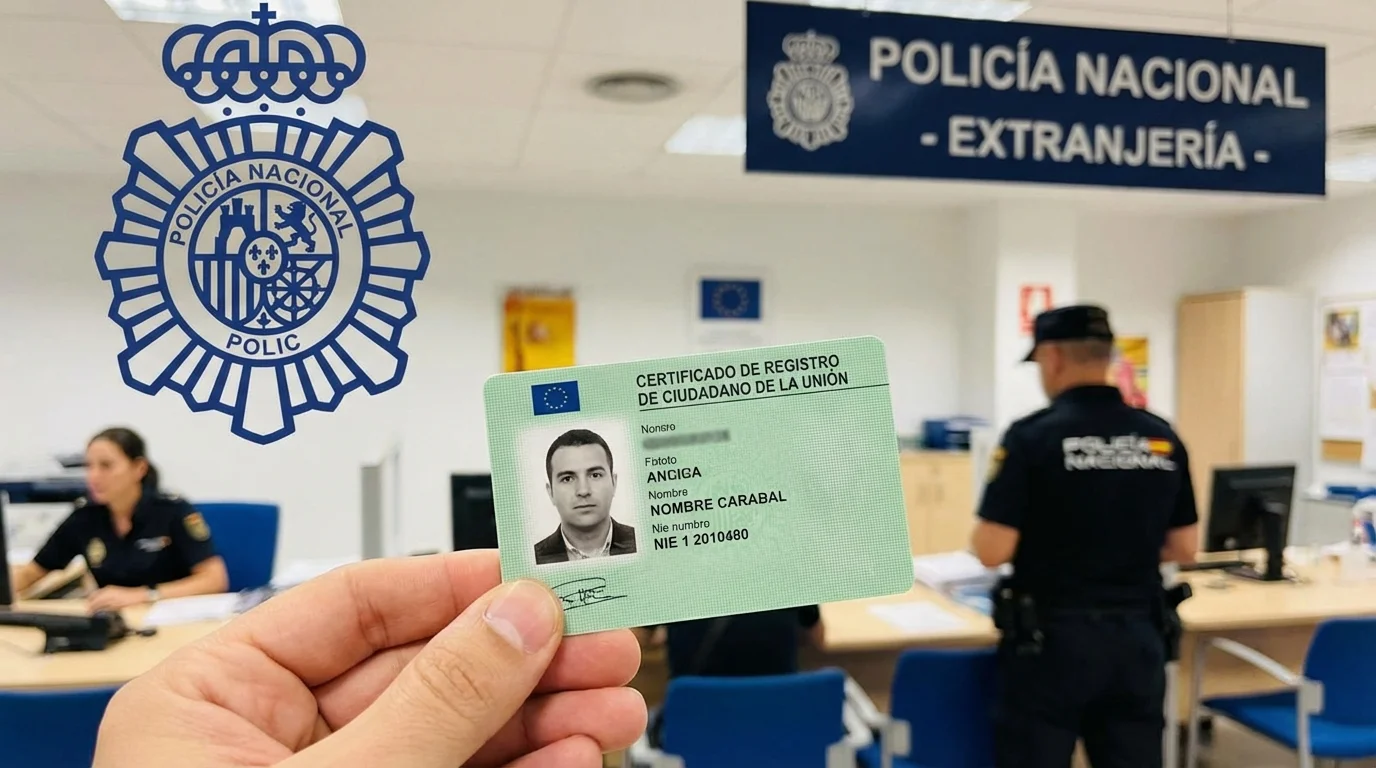
Complete guide to residencia in Spain: requirements, documents, application and what it means for your taxes. Step-by-step for Swedish citizens.

Everything about empadronamiento in Spain: why you need to register, how to do it, what documents are required and what it gives you as a Swedish resident.