


Moving & Living
Residencia in Spain – Documents, Timeline and NIE vs Padrón 2026
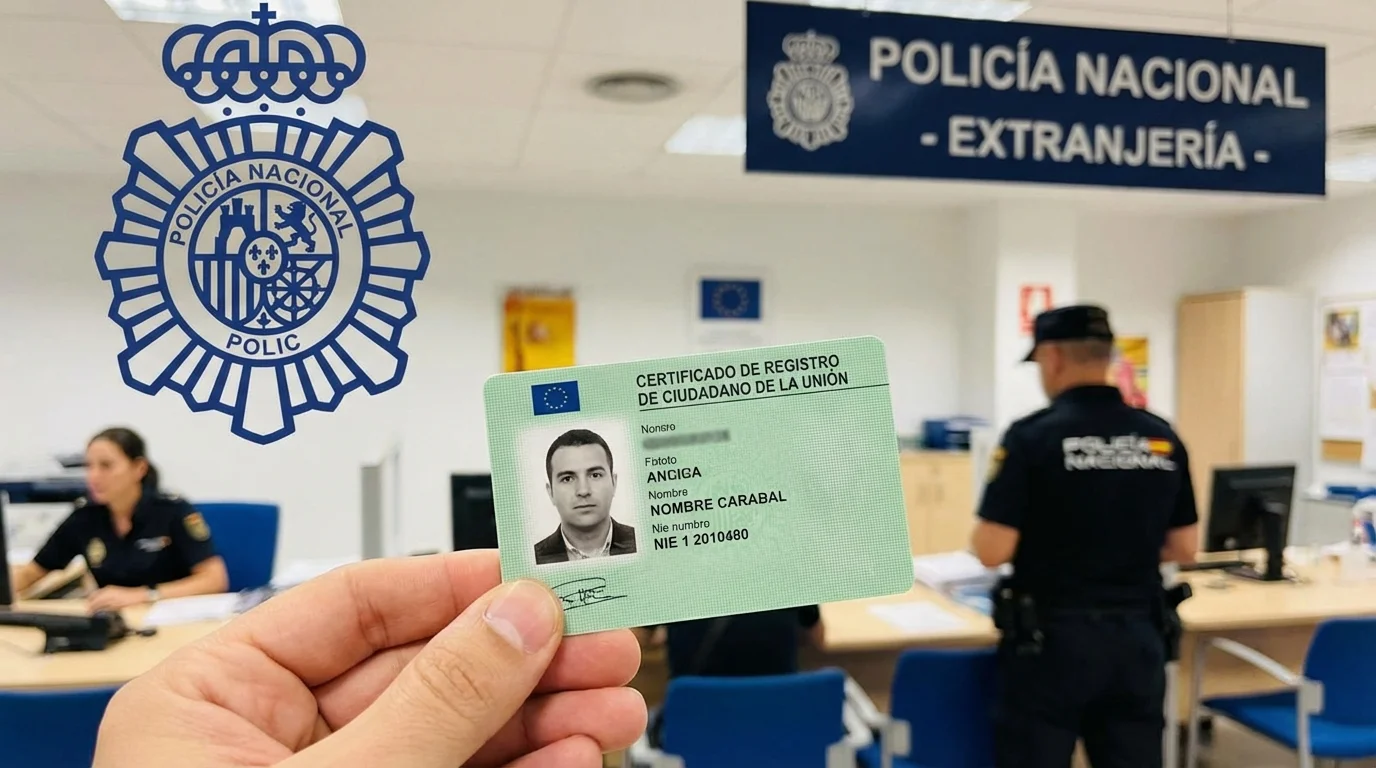
Complete guide to residencia in Spain: requirements, documents, application and what it means for your taxes. Step-by-step for Swedish citizens.
16 min
Does the Golden Visa still exist in Spain in 2026? Guide to rule changes, what has been removed and what alternatives Swedish buyers and residents have today.
The Golden Visa in Spain no longer exists in practice for property buyers in 2026. Spain removed the articles on investor visa and investor residence from Ley 14/2013 with effect from 3 April 2025. This means that a normal property purchase no longer gives you any special route to residency, even if you buy for large amounts.
The important thing for Swedish buyers is to distinguish between two things that are often confused online: the right to buy a property and the right to live in Spain. You can still buy property in Spain as a Swede without a Golden Visa. But if you want to live there for longer periods you need instead to think about NIE, EU registration, health insurance and tax. If you already have a valid Golden Visa, or applied before the rules changed, there are transitional provisions that mean old cases can still be processed.
In this guide we go through what was actually removed, what still applies, why so many old articles are still circulating, and what you as a Swedish buyer should do instead.
No, not for new property-based applications. The clearest official signal is found in the BOE's consolidated version of Ley 14/2013. There it states that articles 63 to 67, which previously regulated the investor route, were amended with effect from 3 April 2025. In the updated legal text the articles appear as "sin contenido", that is without content.
This is the core of the matter. Many websites still write as if the Golden Visa has merely become "harder" or is "on its way out". That is no longer accurate. For new applicants who were thinking of using a property purchase as a route in, the track is closed.
Note
Warning: If an article still says you can get a Spanish Golden Visa by buying a property for €500,000, check the publication date. If it has not been updated after April 2025 it is likely outdated or directly misleading.
This does not mean Spain has closed the door to all international mobility. Other rules remain. But the specific link "buy a property and get investor residence" is no longer something you should plan around.
It helps to understand what actually existed, since almost all old information online is still based on those rules.
In the previous version of Ley 14/2013, a non-resident investor could obtain an investor visa through what was called a significant capital investment. For properties the threshold was €500,000 per applicant. For other types of investment the levels were higher: €2 million in Spanish national debt or €1 million in shares, funds or bank deposits in Spain.
The old arrangement was fairly clear on paper:
For property purchases it also applied that at least €500,000 needed to be free from loans or other charges. Everything above that level could be financed, but not the basic threshold itself. That is a detail many old guides glossed over.
The old system was therefore not "buy anything in Spain and get a visa". It was a fairly specific investor track with document requirements, register extracts, insurance and verification that the investment had actually been made.
Two things matter most.
First, the content of articles 63 to 67 in Ley 14/2013 disappeared — that is, the parts that regulated the investor visa, how the investment should be proven, the effects of the visa and the investor's residence permit.
Second, transitional provisions were added. These state that investors and family members who had already submitted their application before the entry into force can still have it examined under the rules that applied when the application was submitted. Valid visas and permits also continue to apply during their validity period, and renewals shall be assessed under the older rules if the original permission was granted there.
This is important because many confuse "removed" with "all old permits expire". That is not how it works. For existing holders the track continues through the transitional provisions. For new property buyers it does not.
Information
The transitional rule in brief: old cases can continue; new property-based Golden Visa applications cannot be built in the same way after 3 April 2025.
Yes, absolutely. For Swedish buyers this is almost the most important point in the entire article. The Golden Visa and property purchase are not the same thing. The Golden Visa was a residency track for certain investors. The right to buy property in Spain as a Swede remains regardless.
As an EU citizen you have the right to move freely within the EU. You can also stay in another EU country for up to three months without registering as a resident, though longer stays normally require registration of the right of residence. After five years of lawful and continuous residence you automatically acquire the right to permanent residence.
In practice this means that as a Swede you should not start with the question "How do I replace the Golden Visa?" but with the question "Am I buying as a holiday home owner, a part-time resident or for a permanent move?" That determines what you need to arrange.
If you buy a property in for example Costa Blanca, Torrevieja or Alicante the basic steps are largely the same as before:
The NIE application costs €9.84 in government fees according to the information in our updated guides for 2026. It is a small cost, but a document that in practice blocks everything if you do not have it sorted.
Tip
Tip: If your goal is a normal property purchase, put your energy into the NIE, financing and legal checks. That is where the deal is decided now, not in any investor visa.
The short answer is: follow a normal EU track, not an old investor track.
If you are Swedish and want to use the property as a holiday home, it is often enough to buy correctly, declare properly and keep your tax obligations in order as a non-resident. The questions are then practical: NIE, bank account, IBI, any IRNR and how long you are actually staying in the country.
If you are thinking of living in Spain for more than three months you normally need to register your right of residence as an EU citizen. In our updated guides the fee for residencia is approximately €12, and the process is based on being able to show income and health insurance.
For a Swedish buyer the reasonable checklist therefore looks roughly like this:
This sounds less glamorous than a Golden Visa. But it is also the reality of 2026. And honestly it is a better starting point for most Swedish buyers, because you are forced to plan your housing and tax based on how you actually intend to live, not based on a marketing term from old investor articles.
Properties
Explore available properties in Costa Blanca
Browse current homes in the area and compare locations, price levels and property types at your own pace.
This is the point where many Swedish buyers get stuck, because old Golden Visa articles often made everything sound like one package. Buy a property, get a visa, move down. Now you need to think more separately.
First comes the property part. That is about the purchase, completion, taxes and the ongoing ownership cost. Then comes the residency part. That is about how long you are actually going to be in Spain, whether you should register residencia and how your tax situation is affected.
It is also important to understand that residencia and tax residency are not the same thing. You can register as a resident as an EU citizen when you live there for more than three months, but the tax question is determined in practice by where you stay and where your economic interests lie. A central guideline is the 183-day rule: if you spend more than 183 days during the calendar year in Spain you may become tax resident there.
This matters much earlier than many people think. If you buy a property to "be there for half the year" you actually need to count the days. If you go over the threshold, it is not just the Spanish tax return that changes, but often also how you should plan income, pension, dividends and banking arrangements.
On the residency side the EU rule is considerably more straightforward. As a Swede you can live in another EU country for up to three months without registering, but after that you normally need to register your right of residence if you stay longer. After five years of lawful residence you automatically acquire the right to permanent residence.
This means the practical order for many Swedish buyers looks like this:
It is less dramatic than old Golden Visa headlines. But it is also much more useful. Most of the problems I see after the fact are not about buyers lacking an investor visa. They are about buyers who bought first and thought about tax, health insurance and resident status much later.
If you already have a valid permit the situation is different from that for new buyers. The BOE's transitional provisions state explicitly that already valid visas and permits retain their validity for the period they were granted.
More importantly: if you later submit a renewal it shall be examined under the legislation that applied when your original authorisation was granted. This means in practice that some existing holders can still live within the same system, even though the door has closed for new property-based applications.
This is an area where I would be extra cautious with general advice. If you already have a Golden Visa, or if your family submitted an application before April 2025, it is worth having a Spanish solicitor check exactly which transitional rule applies to your specific situation. There are no points to be scored by guessing here.
Because Golden Visa was a strong search keyword for many years. Many estate agent websites, affiliate articles and old news posts were built to capture traffic on "Spain Golden Visa 500k" and similar phrases. When the rules then changed, much of the content was left in place.
There are three common problems:
1. "The Golden Visa still exists but is harder to get." No, that is not accurate for new property purchases. The problem is not tougher requirements. The problem is that the entire property track is gone.
2. "You get a residence permit automatically if you buy for €500,000." It was never that simple, and now it is also outdated information. Even when the system existed, formal applications, documentation and verification of the investment were required.
3. "Swedes now need a new visa instead." Usually no. As a Swede you already have free movement within the EU. That is why in most cases you should think residencia, not visa.
My advice is simple: always check three things when reading about the subject online.
If the answer is no to two of the three, move on.
For most Swedish property buyers the answer is no, or at least "not as a first step".
Spain's digital nomad visa is mainly relevant for people from outside the EU. As a Swede you do not normally need that track to live and work from Spain. You already have free movement and should instead handle registration, health insurance and tax correctly. That is why our guide on digital nomad visas is actually more relevant for non-EU citizens than for Swedish buyers.
There are of course situations where other tracks may be relevant within the family. If you have a partner from outside the EU, for instance, family law rules and family cards may become more important than old investor arrangements. If you run a business, work remotely or are moving permanently, tax questions can become bigger than the property itself quite quickly.
The point is that you should not try to squeeze a normal Swedish property purchase into an old Golden Visa logic. It just leads to the wrong focus.
Yes, for many people. But not for the same reasons as when some saw a property purchase as a shortcut to a residence permit.
If you want a property for longer seasons, retirement, remote working or pure quality of life, Spain can still be logical. But if your main reason was to buy a property to unlock an easy immigration route, then the calculation has changed and you need to rethink.
This is actually healthy. The property purchase becomes clearer when you do not mix it up with an investor visa. You can look more soberly at location, monthly fees, tax consequences, resale value and how you will actually use the property.
For many Swedes this is precisely why areas with a functioning everyday life continue to be most interesting. This is especially true of the coast where you can combine good flight connections, year-round service and more reasonable price levels than in Spain's most expensive premium zones.
Properties
Explore available properties in Alicante
Golden Visa Spain is no longer a relevant keyword for how you should plan a property purchase in 2026. It is mainly a keyword that lives on in search results. What applies now is simpler, but also a little less romantic.
You can still buy property in Spain. You can still move there as a Swede. You can still become a resident, and you can still build a life there. But you do it through normal EU rules, NIE, residencia and correct tax planning. Not by buying your way into an old investor track.
That is why I think the best question is no longer "does the Golden Visa apply?" but "how do you actually want to use your property in Spain?" Answer that question honestly and the next step is almost always much clearer.
Contact
We help Swedish buyers sort the right questions in the right order: area, budget, NIE, residencia and tax. Book a free call about your next step.
Book a free consultationLast updated: April 2026. Rules and interpretations can change. This article is a practical guide and does not replace individual legal advice.
Decision support
Nej. Spanien tog bort investerarspåret i Ley 14/2013 med verkan från den 3 april 2025.
Det betyder att ett vanligt bostadsköp inte längre ger rätt till Golden Visa eller motsvarande investerarresidens. Det går fortfarande att köpa bostad som svensk, men du får skilja på fastighetsköp och uppehållsfrågor.
Ansökningar som lämnades in före ikraftträdandet får fortfarande prövas enligt de gamla reglerna. Visum och tillstånd som redan var giltiga när ändringen trädde i kraft fortsätter att gälla under sin giltighetstid, och förnyelser ska hanteras enligt reglerna som gällde när det första tillståndet beviljades.
Nej, inte för själva köpet. Som svensk kan du köpa bostad utan residencia, men du behöver normalt NIE-nummer, spanskt bankkonto och korrekt due diligence innan tillträde.
Om du sedan tänker bo i Spanien längre än tre månader ska du registrera din uppehållsrätt som EU-medborgare.
Inte automatiskt som skatteresident, men du får spanska skatteplikter som fastighetsägare. Äger du bostad i Spanien ska du normalt hantera lokala och statliga skatter, och om du vistas mer än 183 dagar per kalenderår kan du bli skatteresident i Spanien.
Det är därför klokt att planera skatten innan du flyttar på riktigt.
Vanligtvis nej. Spaniens digital nomad-visum är i första hand till för personer utanför EU/EES.
Som svensk har du redan fri rörlighet inom EU och behöver normalt inte ett sådant visum för att bo och arbeta från Spanien. För dig är det oftast viktigare att ordna residencia, sjukförsäkring och skatteupplägg än att jaga ett nytt visumspår.
Sources
Complete guide to residencia in Spain: requirements, documents, application and what it means for your taxes. Step-by-step for Swedish citizens.
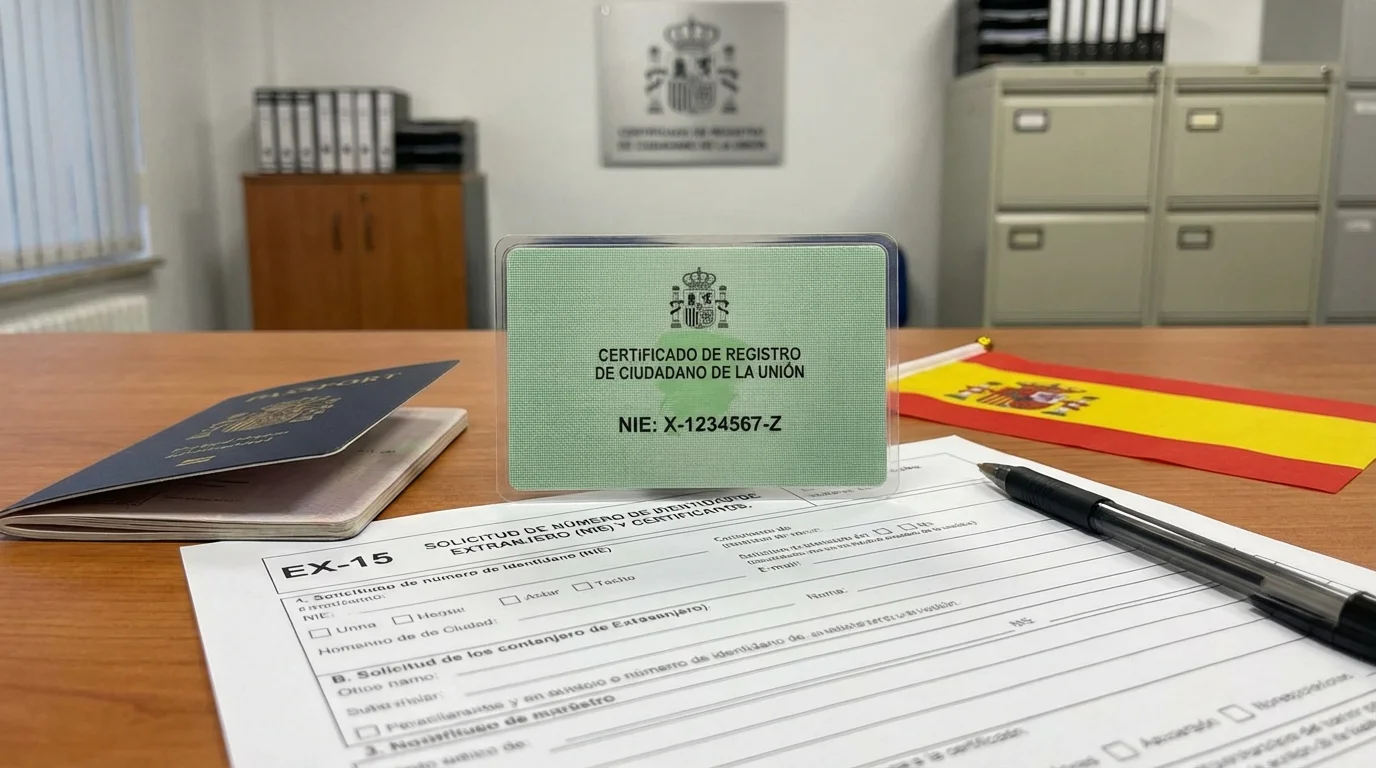
Spanish NIE number 2026: step-by-step guide from Sweden or Spain. EX-15 form, Modelo 790, €9.84 fee, waiting times and NIE/NIF/TIE explained.

Complete tax guide for Swedes with property in Spain: IBI, IRNR, wealth tax, capital gains and the double taxation agreement. Updated 2026.