


Finance & Law
Cost of Buying Property in Spain 2026 – ITP & Fees
Buying property in Spain costs 10–14% on top of the price: ITP, notary, land registry, lawyer and more. Calculation examples and a region comparison.
22 min

How to negotiate the price when buying property in Spain: how much you can negotiate, strategies that work, and common mistakes Swedish buyers make.
Yes, you can negotiate the price when buying property in Spain — and you should. The average negotiation margin is 5–10% of the asking price for second-hand properties, but it has shrunk to a historically low 6.2% in 2025 due to high demand and limited supply. On a property priced at €200,000 that means you can realistically negotiate the price down by €10,000–20,000 — enough to cover a large part of the purchase costs.
How much you can actually negotiate depends on three things: where the property is located, how long it has been on the market, and how motivated the seller is. An apartment in central Málaga listed last week offers minimal room for negotiation. A villa outside Torrevieja that has been on the market for eight months might yield a 10–15% discount.
This guide covers how much you can negotiate per market and property type, which arguments work, how to use the arras contract as a negotiation tool, and the most common mistakes Swedish buyers make. You get a step-by-step process that works — whether you are buying your first holiday home or your fifth investment.
The negotiation margin varies considerably depending on market, property type and economic conditions. Here is a realistic picture based on current market data.
Typical negotiation margin by market
Major cities (Madrid, Barcelona)
2–5%
Extremely high demand, short time on market.
Costa del Sol (Marbella, Estepona)
3–7%
Popular with international buyers.
Costa Blanca (Torrevieja, Orihuela Costa)
5–10%
Varies considerably per property.
Inland (Murcia, Almería)
8–15%
Lower demand, longer time on market.
The islands (Ibiza, Mallorca)
2–5%
Luxury segment with limited supply.
Source: Tecnocasa market analysis 2025, Alfa Inmobiliaria, Idealista
In popular coastal areas like Costa Blanca the picture is two-sided. Beachfront apartments in good condition often sell at close to the asking price — sometimes within days. At the same time there are properties further from the coast or in need of renovation where you can negotiate the price down 10–15% without the seller blinking.
New builds (obra nueva) generally offer worse negotiation possibilities. Developers work with fixed price lists and have calculated their margins. The negotiation margin is normally 0–3%, and they often prefer to offer extras — better appliances, wardrobes, a parking space — rather than lowering the price.
Second-hand properties (segunda mano) offer more room. Private individuals sell for personal reasons — divorce, inheritance, relocation — and have often listed the property with a price that includes a negotiation margin. Spanish sellers expect you to negotiate. An offer at exactly the asking price can even be interpreted as not understanding the market.
Information
Did you know? According to Alfa Inmobiliaria the average negotiation margin on the Spanish property market is 10%, but in practice it varies from 0% in hot city-centre areas to 20% for difficult-to-sell properties in rural areas.
Timing plays a major role in price negotiation in Spain. There are periods and situations that give you a clear advantage.
Winter season (November–February) is generally the best time to negotiate. Fewer buyers are active, and sellers who have had the property on the market through the whole summer season without selling are beginning to worry. Coastal areas like Costa del Sol and Costa Blanca lose tourist buyers in winter, and local estate agents are more inclined to push sellers to accept a lower offer.
Long time on the market is your strongest negotiating card. Spanish properties sell on average within 77 days. If a property has been on the market for four months or more it signals that the price is too high. Every month costs the seller money in community fees, IBI, insurance and electricity — motivation to compromise increases over time.
End of the financial year (December) can provide extra negotiating room with developers wanting to close their accounts with more units sold. Estate agents with commission targets can also be more helpful in convincing the seller at the end of the quarter.
Conversely: during spring and early summer (March–June) the market is at its hottest. Scandinavian and British buyers are actively searching, and sellers know they can wait for better offers.
Simply saying "I want a discount" is not enough. Effective negotiation in Spain is built on concrete arguments the seller cannot ignore.
1. Technical deficiencies and renovation needs Have an independent technician or your solicitor inspect the property. Document everything: damp in the bathroom, old wiring, worn windows, broken air conditioning. Each deficiency has an estimated repair cost. "The bathroom needs renovating, that costs €8,000 — I want that deducted from the price" is an argument that works.
2. Comparable prices (comparables) Search on Idealista and Fotocasa for similar properties in the same area that have sold or are listed at lower prices. "This apartment is €195,000, but an equivalent apartment in the same urbanisation is listed at €180,000" gives you a fact-based position.
3. Payment capacity and speed A buyer who can pay cash — or has an approved mortgage — is more attractive to the seller. Speed reduces uncertainty. "I can sign arras next week and be at the notary within six weeks" is worth a 2–3% discount for a seller who wants to get the deal done.
4. Community debts and derramas Check whether the urbanisation has an ongoing or planned derrama (special assessment). A derrama of €5,000 for pool equipment or facade renovation is a legitimate deduction from the price — either the seller pays it before transfer, or the amount is deducted from the purchase price.
Tip
Tip: Ask your estate agent or solicitor to obtain a nota simple from the land registry before you negotiate. It shows whether there are debts, charges or mortgages on the property. Debts that remain on the property at transfer become your problem — use them as a negotiation argument or demand they are resolved before the escritura.
Here is how a typical price negotiation works when buying property in Spain — from first offer to agreement.
Step 1: Research the market (1–2 weeks) Before making an offer you need to understand what the property is actually worth. Check sale prices (not asking prices) for similar properties via Idealista, Fotocasa and your estate agent. Note how long the property has been on the market — it gives you a sense of how the market values it.
Step 2: Carry out an inspection Visit the property in person, ideally with a technician. Document the condition, renovation needs and any deficiencies. This becomes your concrete basis for the negotiation.
Step 3: Make a first offer (oferta) Your first offer should be 10–15% below the asking price if you assess there is negotiating room. Be prepared to meet in the middle. The offer is normally made verbally via the estate agent or in writing as an "oferta de compra". Many estate agents require a symbolic reservation fee of €1,000–3,000 to show you are serious — this is returned if the offer is not accepted.
Step 4: Counter-offer and negotiation (1–3 weeks) The seller rarely rejects an offer outright — instead comes a counter-offer. It is normal for there to be 2–3 rounds before you settle on a price. Be patient. Spanish negotiations take time, and pressing for a quick answer can be perceived as impolite.
Step 5: Verbal agreement Once you have agreed on price, payment terms and timeline, move quickly to a written agreement. A verbal agreement is not legally binding in Spain — the seller can accept a higher offer from another buyer until the arras contract is signed.
Step 6: Arras contract (1–2 weeks) The arras contract formalises the agreement and binds both parties financially. See the next section for details.
Properties
Explore available properties in costa-blanca
Browse current homes in the area and compare locations, price levels and property types at your own pace.
The arras contract (contrato de arras) is more than a formality — it is one of your most important tools in the negotiation. The contract is drawn up after the buyer and seller have agreed on price and terms, and before the final escritura at the notary.
The most common type is arras penitenciales (penalty-based). The rules are simple: if the buyer withdraws they lose the deposit. If the seller withdraws they must pay back double the deposit. A property at €200,000 with 10% arras means a €20,000 deposit — and €40,000 back if the seller changes their mind.
The size of the deposit can be negotiated. In a hot market you can strengthen your offer by offering 15% instead of 10% — it shows the seller you are serious. Conversely, if you feel uncertain you can try to negotiate the deposit down to 5%, but this makes for a weaker offer.
The deadline is negotiable. Need time to arrange a mortgage? Negotiate in a three-month deadline. Can you act quickly? Offer six weeks — speed is worth money to the seller.
Conditions can be written in. "The purchase is conditional on mortgage approval" or "that all debts on the property are resolved by the seller" are reasonable clauses. But be aware: the more conditions, the weaker your offer in the seller's eyes.
Note
Warning: Never sign an arras contract without your solicitor having reviewed it. The contract type matters greatly — arras confirmatorias (confirmatory) do not give the same right of withdrawal as arras penitenciales. An incorrect contract type can mean you become liable for damages beyond the deposit if you withdraw. Always have an independent solicitor check the wording.
Certain factors are decisive for how much you can negotiate. Learn to read them, and you will know before making an offer how much room there is.
Time on market: The single most important factor. A property that has been on the market for 30 days has minimal negotiating room — the seller is still optimistic. After 90 days doubt starts to creep in. After 180 days the seller is often prepared to accept 10–15% below asking price. Check the listing date on Idealista — it is public information.
Seller's motivation: Divorce, inheritance, financial problems or relocation abroad create time pressure. A seller who must sell within three months negotiates differently from one who is testing the market. Ask your estate agent — they often know why the seller is selling.
Property condition: Renovation needs give you concrete figures to negotiate with. A property that needs a new kitchen (€10,000–15,000), bathroom renovation (€5,000–8,000) or new windows (€3,000–6,000) gives you documented arguments for price reductions.
Season and market conditions: During 2025 property prices in Spain rose by 6–8%, and demand increased by 30% while supply fell by 16%. This pushed negotiation margins downwards. During 2026 the market is expected to cool somewhat, with longer sales times and gradually increasing negotiating room.
Financing: Cash buyers have an advantage. A seller who knows there is no bank that can say no at the last minute will often accept a lower price. If you have an approved mortgage in writing (preapproval) it gives almost the same reassurance.
Swedish buyers often make the same mistakes — mistakes that cost tens of thousands of euros. Here are the most common, and how to avoid them.
1. Making an offer at the asking price In Sweden the asking price is often a minimum price. In Spain it is a starting point for negotiation. Accepting the asking price directly signals that you do not understand the Spanish market — and you will certainly pay too much. Always make an offer below the asking price.
2. Negotiating without local knowledge You do not know what an apartment in La Mata is worth if you have never checked sale prices in the area. Do your research first. Use Idealista, talk to local estate agents and ask your solicitor for an assessment.
3. Showing too much enthusiasm "We have been looking for two years and this is our dream home!" gives the seller zero reason to lower the price. Stay neutral, show interest but not desperation. Your estate agent should communicate with the seller's agent — not you directly.
4. Skipping due diligence before making an offer Never make an offer without having checked the nota simple (land registry), community debts, energy certificate and any unregistered extensions. If you find problems after the arras contract is signed you are in a weaker negotiating position — and risk losing the deposit if you want to withdraw.
5. Not having financing in place A buyer without financing arranged is an uncertain buyer. Sellers and estate agents prioritise buyers with an approved mortgage or cash. Sort your financing before you start negotiating — it significantly strengthens your offer.
6. Applying time pressure Spanish negotiations take time. Setting ultimatums — "you have 24 hours" — is perceived as disrespectful and can make the seller refuse to negotiate at all. Be patient. Give the other party time to consider.
Properties
Explore available properties in torrevieja
If you are accustomed to Swedish property transactions, the Spanish market will feel different. Understanding the differences helps you avoid unnecessary misunderstandings.
Asking price vs bidding: In Sweden the estate agent often starts with a low asking price and lets bidding drive the price up. In Spain the seller sets a high asking price and expects the buyer to negotiate downwards. These are opposite logics — and the most important thing to understand as a Swedish buyer.
The estate agent's role: In Sweden the estate agent in theory represents both parties. In Spain the estate agent almost always works for the seller — it is the seller who pays the commission (usually 3–5% of the purchase price). As a buyer you should either engage your own buyer's agent or at least have an independent solicitor watching your interests.
Pace and tone: Swedes prefer efficient negotiations with quick responses. Spanish negotiations are more relationship-oriented. Offer coffee, talk about other things first, build trust. A counter-offer can take three to five days — that does not mean the seller is uninterested, it means they are considering.
Verbal promises: In Sweden verbal agreements have some legal weight. In Spain nothing counts until it is on paper and signed. A seller who verbally accepts your offer can change their mind the same evening if a higher offer appears. That is why the arras contract is so important — it is your protection.
Transparency: The Spanish market has historically had less price transparency than the Swedish market. Final sale prices are not published as openly. This means you need to work harder to understand what a property is actually worth — and it gives an advantage to buyers who do their research.
Contact
We help Swedish buyers negotiate the right price on properties in Spain. Book a free call with one of our advisors — we will tell you what you can expect in your specific area.
Book a free consultationLast updated: April 2026. Market conditions and negotiation margins change continuously — contact us for current advice. This guide does not constitute legal or financial advice.
Decision support
Ja. Prisförhandling är en naturlig del av spanska bostadsaffärer; säljare räknar med att köpare lägger ett bud under utgångspriset.
I snitt ligger förhandlingsmarginalen på 5–10 % av utgångspriset, men i hetare marknader som stora städer och populära kustorter kan den krympa till 2–5 %. Nyproduktion har generellt mindre förhandlingsutrymme (0–3 %) än begagnade bostäder.
Vid ett arras penitenciales (den vanligaste typen) förlorar du handpenningen om du drar dig ur. Normalt är handpenningen 10 % av köpeskillingen.
Ångrar sig säljaren istället måste denne betala tillbaka dubbla handpenningen till dig. Det innebär att båda parter har ett ekonomiskt incitament att fullfölja affären.
Kontrollera alltid kontraktstypen med din advokat innan du signerar.
Ja, betydligt svårare. Byggherrar har fasta prislistor och sällan utrymme att sänka priset, särskilt i populära projekt med hög efterfrågan.
Däremot kan du ofta förhandla om tillägg: uppgraderade vitvaror, bättre golv, extra parkeringsplats eller inkluderade förråd. Tidiga köpare i ett projekt (off-plan) har ibland bättre förhandlingsläge innan priserna justeras uppåt i senare försäljningsfaser.
Räkna med 1–4 veckor från första bud till överenskommelse. Spanska säljare avvisar sällan ett bud direkt; de återkommer med ett motbud, vilket kan ta några dagar.
Processen kan gå snabbare om du har finansieringen klar och kan visa att du är en seriös köpare. Efter att ni kommit överens skrivs normalt arras-kontraktet inom en vecka, följt av 1–3 månader till escritura hos notarien.
Det rekommenderas starkt, särskilt om du inte talar spanska. En köparagent (buyer's agent) som arbetar uteslutande för dig kan bedöma rimligt marknadsvärde, lägga strategiska bud och navigera förhandlingen på spanska.
I Spanien representerar mäklaren normalt säljaren; en köparagent säkerställer att dina intressen bevakas. Räkna med 2–3 % av köpeskillingen i arvode, eller ett fast pris.
Sources
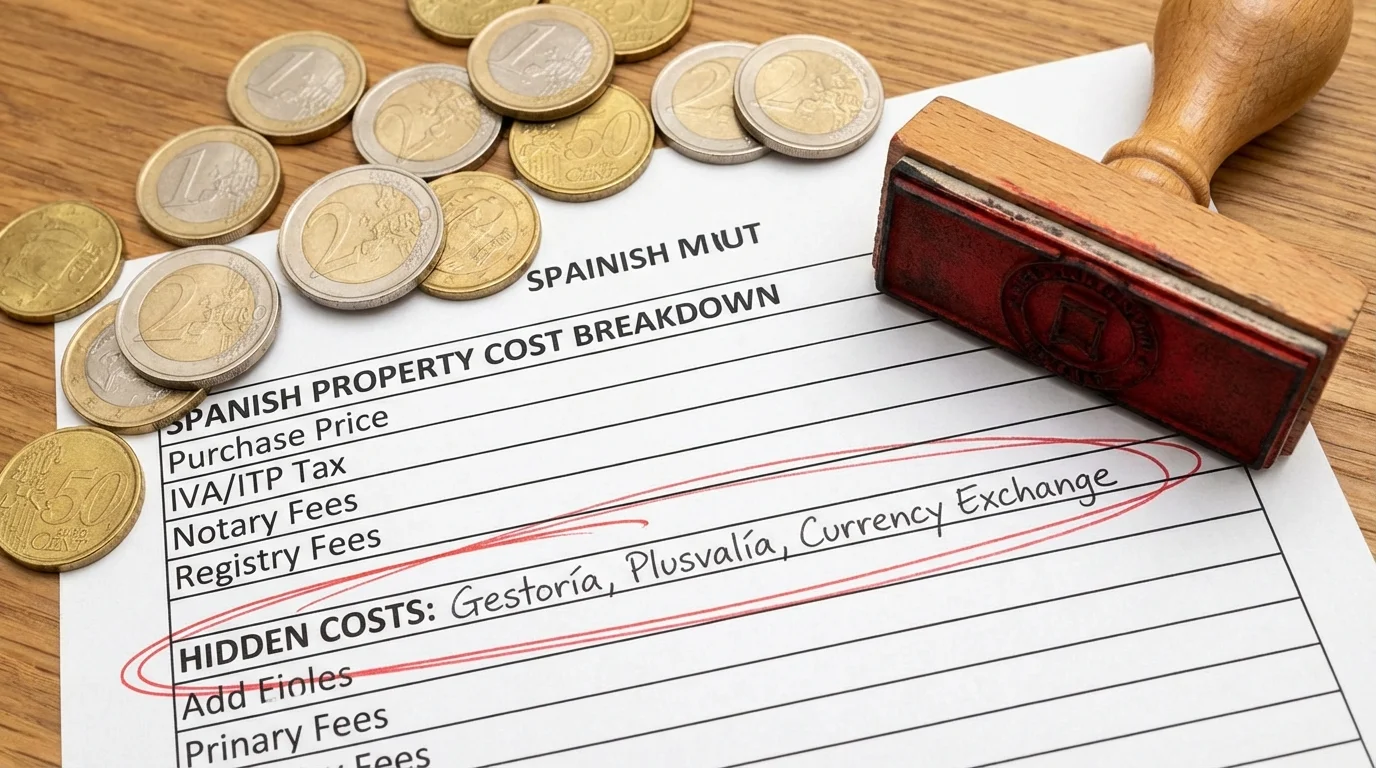
Buying property in Spain costs 10–14% on top of the price: ITP, notary, land registry, lawyer and more. Calculation examples and a region comparison.
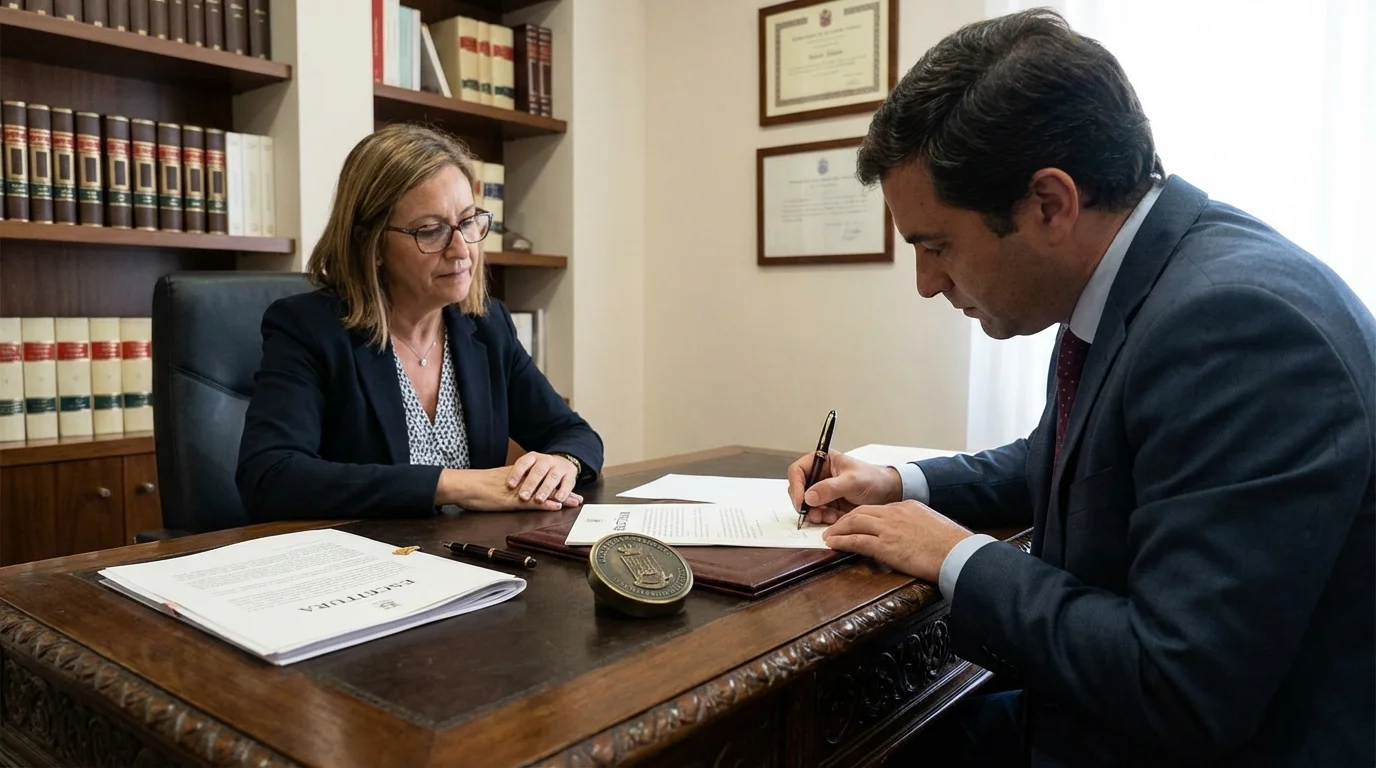
Everything about the escritura when buying property in Spain: what the document contains, the notary process, costs and common pitfalls for Swedish buyers.
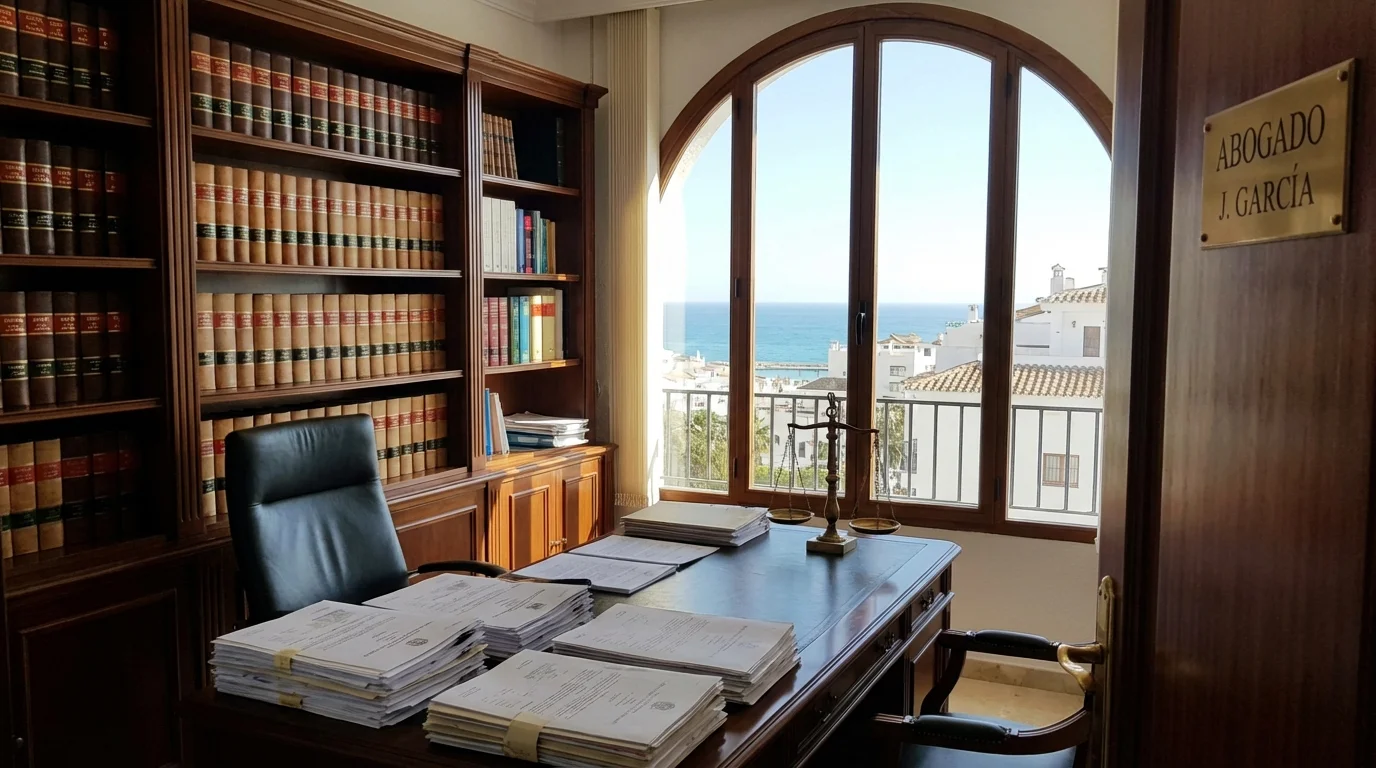
Do you need a lawyer when buying property in Spain? What does an abogado do, what does it cost, and how do you choose the right one? Guide for Swedish buyers.