
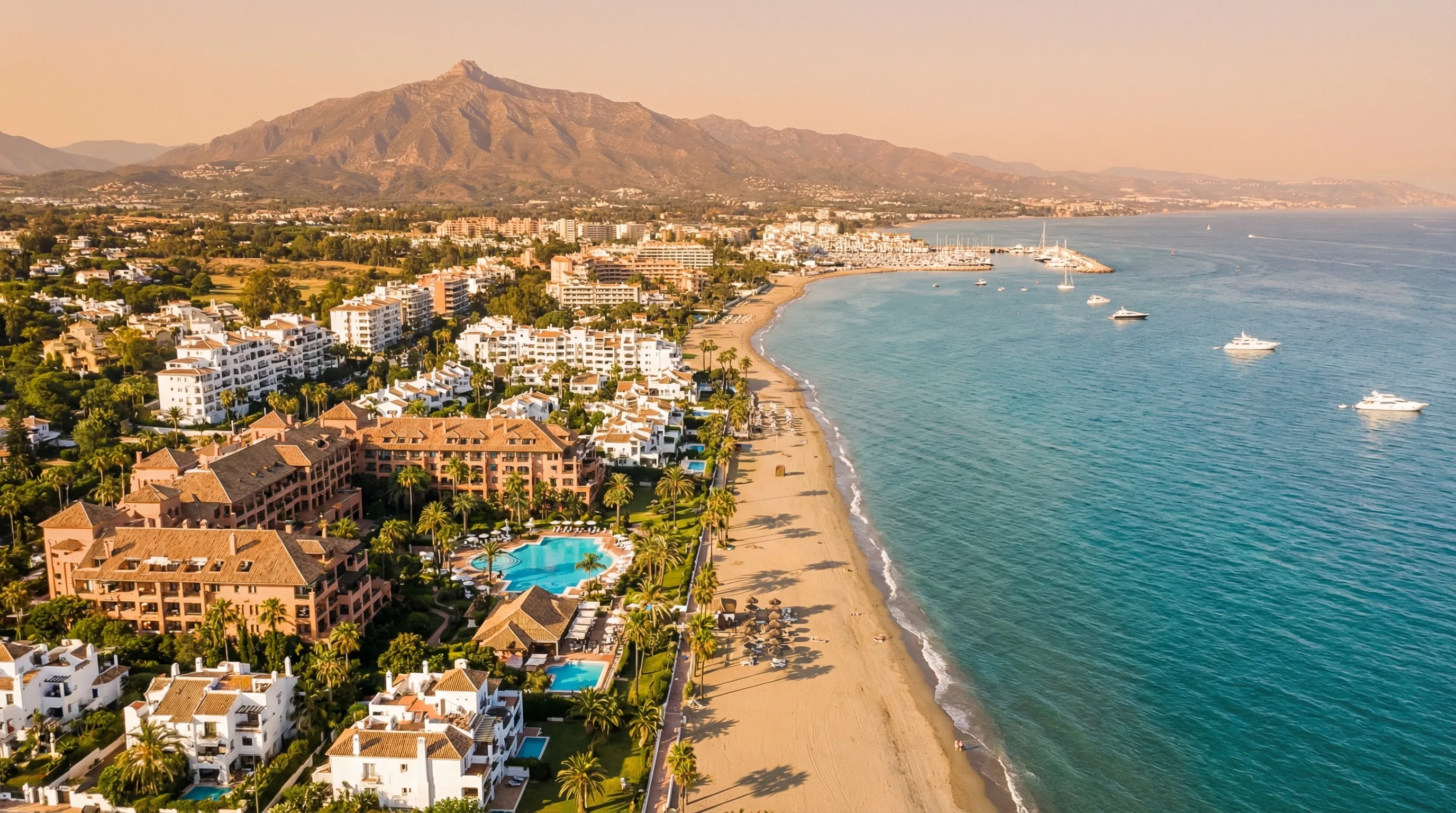
Area Guides
Marbella – Luxury, Lifestyle and Living on the Costa del Sol 2026
Complete guide to Marbella: Golden Mile, Puerto Banús, old town, property prices by area and why Marbella continues to attract international buyers.
19 min
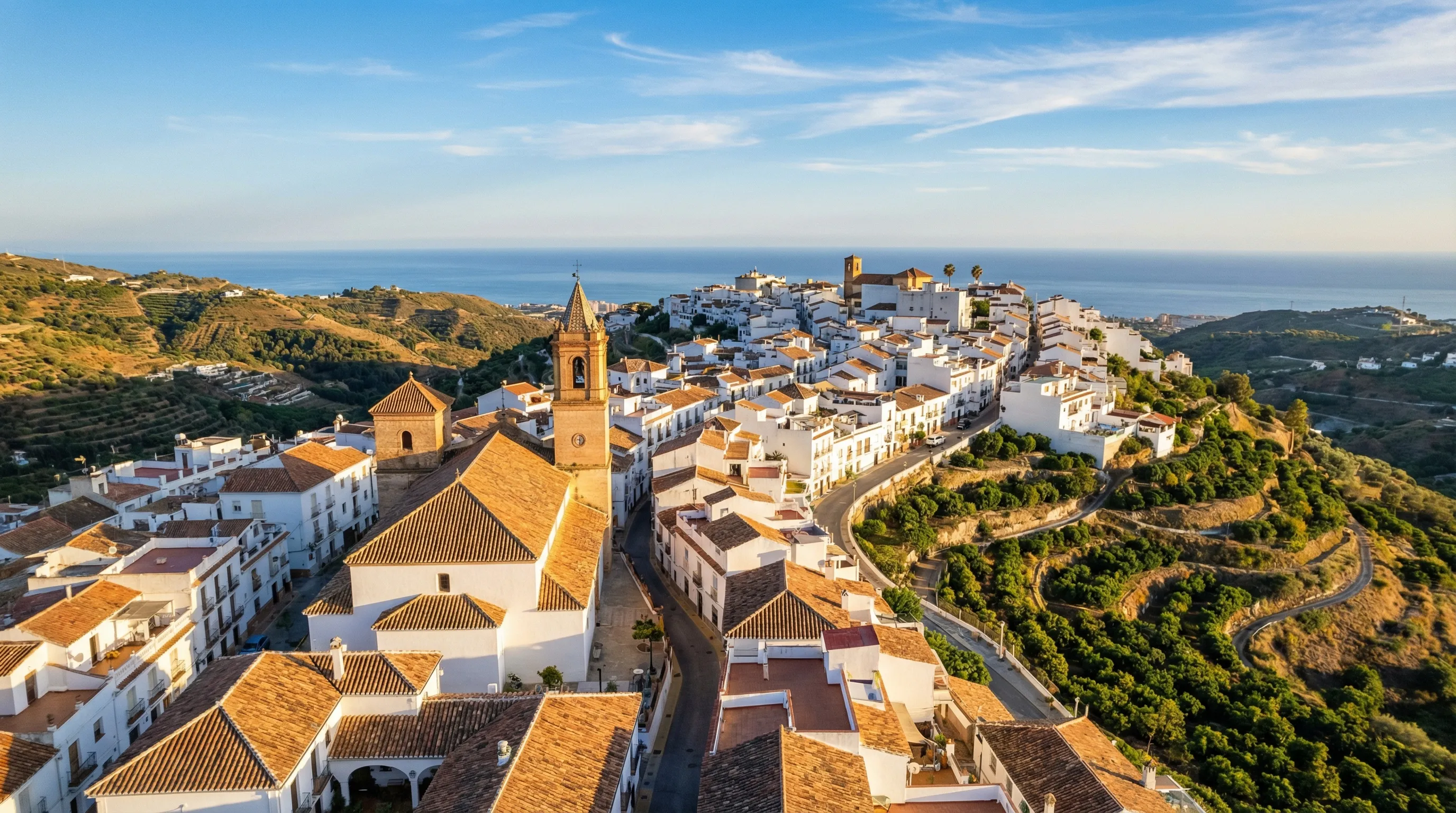
Complete guide to Torrox: Europe's best climate according to WHO, property prices, Torrox Costa vs Pueblo and why it attracts more and more buyers to Axarquía.
Torrox has the best climate in Europe — at least if you ask the municipality itself, and there is actually scientific data to support the claim. The average property price in Torrox is approximately 2,600 to 2,800 euros per square metre, making it 25 to 30 per cent cheaper than the neighbouring municipality of Nerja and considerably cheaper than Málaga's city prices. The population passed 22,000 inhabitants during 2025, a growth that makes Torrox Axarquía's fastest-growing municipality. With 320 sunny days per year, an average temperature of 18 degrees and only 54 rainy days, it is difficult to argue against the climate claim — regardless of who stands behind it.
This guide is for those considering buying property in Torrox or wanting to understand what makes this small municipality east of Málaga so special. I go through everything: property prices, climate data, the difference between Torrox Costa and Torrox Pueblo, beaches, food, demographics and honest advantages and disadvantages.
Torrox is located on the eastern Costa del Sol, in the Axarquía region in the province of Málaga, Andalusia. The municipality is nestled between the Sierra de Almijara mountains to the north and the Mediterranean to the south, with Nerja as the neighbouring municipality to the east and Vélez-Málaga to the west. It is a municipality in two parts — Torrox Pueblo up on the hillside and Torrox Costa down by the sea, separated by four kilometres of farmland and the A-7 motorway.
Distances worth knowing:
From Sweden there are direct flights to Málaga from Stockholm, Gothenburg and other cities with SAS, Norwegian and Ryanair. The flight time is approximately four hours. From the airport you drive east along the A-7 — one of Spain's most scenic coastal roads with the mountains on one side and the sea on the other.
Buses to Torrox Costa depart from Málaga's bus station with ALSA, but the journey is longer than by car and the frequency is limited. To Torrox Pueblo there is no direct bus from other towns — you have to change in Torrox Costa. A car is in practice essential if you live here permanently, but Torrox Pueblo itself and Torrox Costa are both fully walkable.
Information
Torrox is strategically situated in the Axarquía region, known for its subtropical microclimate. Here avocados, mangoes and cherimoyas are grown — tropical fruits that can barely be produced anywhere else in Europe. The subtropical climate is a direct result of the mountains' protection against northerly winds.
The claim that Torrox has "the best climate in Europe" is everywhere — on signs at the entrance, on the municipality's website and in every estate agent's brochure. But what does the science say?
The claim is based on a 2008 study carried out by the German meteorological company Meteogroup. The study compared Torrox with 21 other coastal towns around the Mediterranean and measured factors such as temperature stability, number of sunny days, precipitation and extreme values. The result: Torrox had the highest minimum temperature in winter, the lowest maximum temperature in summer and ranked third lowest in precipitation among the towns studied — only 54 rainy days per year.
The difference between the warmest and coldest month is only 11 degrees — unusually stable for a European coastal town. That means winters are mild without summers becoming oppressively hot.
It is often claimed that the World Health Organisation (WHO) stands behind the designation. That is incorrect. No verifiable WHO report has been identified as the source of the claim. It was the Meteogroup study that provided the basis, and it has since been incorrectly attributed to the WHO in tourism marketing. That does not make the data less impressive — but it is good to know what actually lies behind it.
Regardless of who says it, there are objective reasons why Torrox has an unusually good climate:
Tip
The best time to visit Torrox to assess the climate is January or February. Then you can see how mild it really is — often 15 to 17 degrees during the day with sunshine, while there are sub-zero temperatures in Sweden. Many property buyers make the mistake of only visiting in summer, when all coastal towns in Spain are warm.
This is the most important question for property buyers, and the answer determines what kind of life you will have in Torrox. The two parts of the municipality are separated by four kilometres and a motorway — but the difference in character is considerably greater than the distance.
Torrox Costa is the modern coastal section with a long promenade, apartment buildings, restaurants, supermarkets and tourist services. The area developed in the 1960s and 70s as a typical Spanish holiday resort and consists largely of multi-storey buildings along the coast. It is not as charming as the pueblo, but it is practical.
Here you find:
Torrox Costa is the choice for those who prioritise beach proximity, convenience and the ability to manage daily life without a car. The downside is that the area can feel a little soulless outside the summer season — many apartments are owned by holiday visitors and stand empty in winter.
Torrox Pueblo is the original village, located on a hillside four kilometres from the coast. Here there are whitewashed streets, flower-adorned facades, a 16th-century church and squares where locals sit and drink coffee. It is a genuine Andalusian community — not a tourist backdrop.
Here you find:
Torrox Pueblo suits those who want to live in a genuinely Spanish community, who enjoy peace and quiet and who do not need the sea outside their door every day. The downside is that you need a car to get to the beach and that bus connections are limited.
| Area | Average price €/m² (2025/2026) |
|---|---|
| Torrox Pueblo | ~€2,100 |
| Torrox Costa | ~€2,800–€3,200 |
| Torrox municipality (average) | ~€2,600–€2,800 |
| Nerja (comparison) | ~€3,600 |
| Vélez-Málaga (comparison) | ~€1,800–€2,200 |
Torrox has a coastline of approximately five kilometres with several distinct beaches. The sand is typically dark grey — volcanic and mineral-rich, not the golden sand you find on Costa Blanca. It takes some getting used to, but the minerals are said to be good for the skin.
The most popular beach in Torrox Costa. Playa de Ferrara (also called Playa de las Lindes) has Blue Flag status and a long promenade lined with cafés, bars and apartment buildings. The beach is wide and spacious — it rarely feels overcrowded, even at peak season. The sand is fine and dark grey, the sea relatively calm and shallow near the shore, making it family-friendly.
El Morche is a lively beach with fishing traditions mixing with modern tourism. At 1,200 metres in length and 50 metres wide, it is one of the larger beaches in the municipality. Dark sand, gentle waves and a range of facilities — parking, showers, sun loungers, playground and adapted accessibility. Several chiringuitos offer fish straight from the sea. El Morche functions as its own small coastal village with a character that differs from central Torrox Costa.
The Peñoncillo beach stretches 1,400 metres along the coast near the N-340, with dark sand and a relaxed atmosphere. It is slightly more secluded than Ferrara and El Morche, making it a good choice for those who want to avoid crowds. Several beach restaurants, parking and showers are available.
A smaller beach between Torrox Costa and Nerja that is often overlooked by tourists. Calaceite has a calmer feel and is popular among locals. The water is crystal clear and snorkelling can be really good along the rocks.
Information
The beaches in Torrox have dark grey, mineral-rich sand — not the golden sand you might expect. This is typical of eastern Costa del Sol and is due to volcanic activity in the mountains. Many people find the sand less aesthetically pleasing but appreciate that it does not burn the feet as much as light sand.
The property market in Torrox has risen sharply in recent years. Prices increased by approximately 11 per cent between November 2023 and June 2025, but the level is still considerably lower than in the neighbouring municipality of Nerja or the more popular parts of western Costa del Sol.
Apartments:
Village houses and townhouses:
Villas:
| Area | Average price €/m² (2025/2026) |
|---|---|
| Torrox (average) | ~€2,600–€2,800 |
| Torrox Pueblo | ~€2,100 |
| Nerja | ~€3,600 |
| Frigiliana | ~€3,000–€3,400 |
| Vélez-Málaga | ~€1,800–€2,200 |
| Rincón de la Victoria | ~€2,800–€3,200 |
| Almuñécar | ~€2,200–€2,800 |
Torrox therefore sits in the middle tier — cheaper than Nerja and Frigiliana but more expensive than Vélez-Málaga. What drives prices upward is the combination of climate, location and increasing attention from international buyers.
Note
Budget for 10–13 per cent in additional costs on top of the purchase price. In Andalusia that means property transfer tax (ITP, 7 per cent for resale properties), notary costs, land registry and solicitor's fee. New builds are subject to 10 per cent VAT (IVA) plus 1.2 per cent stamp duty (AJD).
Properties
Explore available properties in Torrox
Torrox has a subtropical Mediterranean climate (Köppen Csa) with exceptionally stable temperatures. The Sierra de Almijara mountains block northerly winds and create a microclimate that is milder and more even than other parts of the coast.
Temperatures throughout the year:
Key figures:
Compared to western Costa del Sol (Marbella, Estepona), Torrox is slightly drier and has more stable temperatures. Compared to Costa Blanca, eastern Costa del Sol generally has milder winters.
Torrox has one of Spain's most international populations relative to its size. Of the municipality's over 22,000 inhabitants, a significant proportion are foreign nationals — and the composition is unusual.
Torrox has historically had the largest German colony in all of Spain. During the 1980s and 90s, German retirees were the dominant foreign group, and Torrox Costa earned the nickname "Little Germany". As of December 2024, 2,033 Germans were officially registered in the municipality, compared to a peak of 2,677 in earlier years. The decline is partly because the older generation has reduced and partly because other nationalities have arrived.
Despite the decline, the German presence is still clearly noticeable: German bakeries, restaurants, newspapers and associations are part of daily life in Torrox Costa. You can find Bratwurst just as easily as tapas.
The British community has grown and now constitutes the largest foreign group with approximately 24.6 per cent of the foreign population. Scandinavians — primarily Norwegians and Danes, but also a smaller group of Swedes — have also found their way here. Belgians, Dutch and Eastern Europeans contribute to the mix.
What makes Torrox special is that the Spanish population still dominates. Unlike places such as Torrevieja or parts of Costa Blanca, where foreigners constitute 40 per cent or more of the population, Torrox Pueblo feels genuinely Spanish. In Torrox Costa the balance is more international, but not at the expense of the Spanish character.
Torrox's cuisine is characterised by Axarquía's subtropical agriculture and the Mediterranean's fish. Here mountain cooking meets seafood — and the result is unexpectedly good for a municipality of this size.
Migas is Torrox's most iconic dish. It is not a soup and not a bread — it is a dish made from semolina, olive oil, garlic, water and salt that is fried to a fluffy, couscous-like consistency. It is served with fried pork, fish, sardines, tomatoes and aubergine. Every December the Fiesta de las Migas is held, an event that attracts up to 40,000 visitors. Yes, you read that correctly — 40,000 people come to a town of 22,000 inhabitants to eat semolina.
By the sea (Torrox Costa):
In the village (Torrox Pueblo):
Local products to look out for:
Torrox is not a typical sightseeing destination, but there are some genuinely interesting places worth your time.
At Torrox Costa's lighthouse (Faro de Torrox) lies one of Costa del Sol's best-preserved secrets: the Roman ruins of Caviclum. The lighthouse building was completed in 1864, but it was the lighthouse keeper who in 1905 began digging in the ground and found an entire Roman settlement — complete with bathing facilities, a villa, a necropolis and a factory for garum (a fermented fish sauce the Romans were obsessed with).
Today you can visit the Centro de Interpretación Faro de Torrox — a small museum with archaeological finds, nautical charts and photographs. A modern glass viewing platform shaped like the bow of a ship offers panoramic views over the Mediterranean, and through the glass floor you can look down onto the Roman foundations. The ruins date from between the 2nd and 4th centuries AD.
The village itself is the greatest attraction. Whitewashed streets, Iglesia de la Encarnación (the 16th-century church), Plaza de la Constitución with its outdoor seating and viewpoints over the valley towards the sea. Take a walk early in the morning or late in the afternoon — the light is best then and village life is at its most genuine.
Torrox is a perfect base for exploring Axarquía's white villages: Frigiliana (often called Andalusia's most beautiful village), Cómpeta (known for its Moscatel wine), Sayalonga and Canillas de Albaida. All are within 30 minutes by car and offer dramatic mountain landscapes, hiking trails and genuinely Spanish life beyond tourism.
Properties
Explore available properties in Torrox
Advantages:
Disadvantages:
Torrox vs. Nerja: Nerja is the large neighbour with the Balcón de Europa, more developed tourist infrastructure, more restaurants and a livelier town centre. Prices in Nerja are around 3,600 euros per square metre — 25 to 30 per cent higher than Torrox. Rents in Nerja are also high, partly because short-term letting dominates. Torrox offers the same climate and comparable beaches at a lower price, but with considerably less variety and urban feel. Choose Nerja if you want more activity; choose Torrox if you prioritise price and peace.
Torrox vs. Almuñécar: Almuñécar is in the province of Granada, just east of Nerja, and shares the same subtropical microclimate. Prices are around 2,200 to 2,800 euros per square metre — similar to Torrox. Almuñécar has a better-developed old town with a Moorish castle, botanical garden and water play park. The downside is that Almuñécar is further from Málaga airport (approximately 90 kilometres) and Spanish tourism completely dominates — international communities are considerably smaller. Choose Almuñécar if you want Spanish urban feel and cultural heritage; choose Torrox if you want better international infrastructure and proximity to Nerja.
Torrox vs. Estepona: Estepona is on western Costa del Sol and is an entirely different type of place — larger, more developed, with murals and Europe's largest orchidarium. Prices in Estepona (€3,900–€4,600/m²) are considerably higher. Estepona has better healthcare, more restaurants and is closer to Marbella's offerings. Torrox wins on climate, price and authenticity — but loses on infrastructure and accessibility.
Contact
We help you find the right property in Torrox Costa or Torrox Pueblo — whether you are looking for a beachfront apartment or a charming village house with sea views.
Contact usDecision support
Genomsnittspriset i Torrox ligger på cirka 2 600 till 2 800 euro per kvadratmeter. I Torrox Pueblo är snittpriset lägre, runt 2 100 euro per kvadratmeter, medan Torrox Costa ligger högre med strandnära lägenheter från 150 000 euro och uppåt.
Jämfört med grannkommunen Nerja, som ligger på cirka 3 600 euro per kvadratmeter, är Torrox avsevärt billigare.
Málagas flygplats (AGP) ligger cirka 55 till 63 kilometer från Torrox, vilket tar ungefär 45 till 50 minuter med bil via motorvägen A-7 österut. Det finns bussar från flygplatsen via Málaga busstation till Torrox Costa med ALSA, men restiden är längre.
Bil rekommenderas starkt, särskilt om du ska bo i Torrox Pueblo.
Torrox marknadsförs ofta som platsen med Europas bästa klimat, men påståendet kommer inte från WHO som ibland hävdas. Det baseras på en studie från 2008 av Meteogroup som jämförde 21 kuststäder runt Medelhavet.
Torrox hade den högsta minimitemperaturen vintertid, lägsta sommartemperaturen och bara 54 regndagar per år. Oavsett källa är klimatet objektivt sett exceptionellt.
Torrox Costa är kustdelen med moderna lägenhetsbyggen, strandpromenad, restauranger och turistservice. Torrox Pueblo är den ursprungliga byn fyra kilometer upp i bergen med vitkalkade gator, torg och äkta andalusisk karaktär.
Priserna är lägre i pueblon, men kusten har bättre tillgänglighet och strandnärhet. Många köpare väljer pueblon för charm och costa för bekvämlighet.
Torrox är 25 till 30 procent billigare per kvadratmeter än Nerja och erbjuder liknande klimat och stränder. Nerja har en mer utvecklad turistinfrastruktur, fler restauranger och den berömda Balcón de Europa.
Torrox passar bättre för den som söker lägre priser och en lugnare atmosfär, medan Nerja är valet för den som vill ha mer stadskänsla och utbud.
Sources

El Morche, Málaga

El Morche, Málaga

El Morche, Málaga

El Morche, Málaga

El Morche, Málaga

El Morche, Málaga
Local expertise
Complete guide to Marbella: Golden Mile, Puerto Banús, old town, property prices by area and why Marbella continues to attract international buyers.
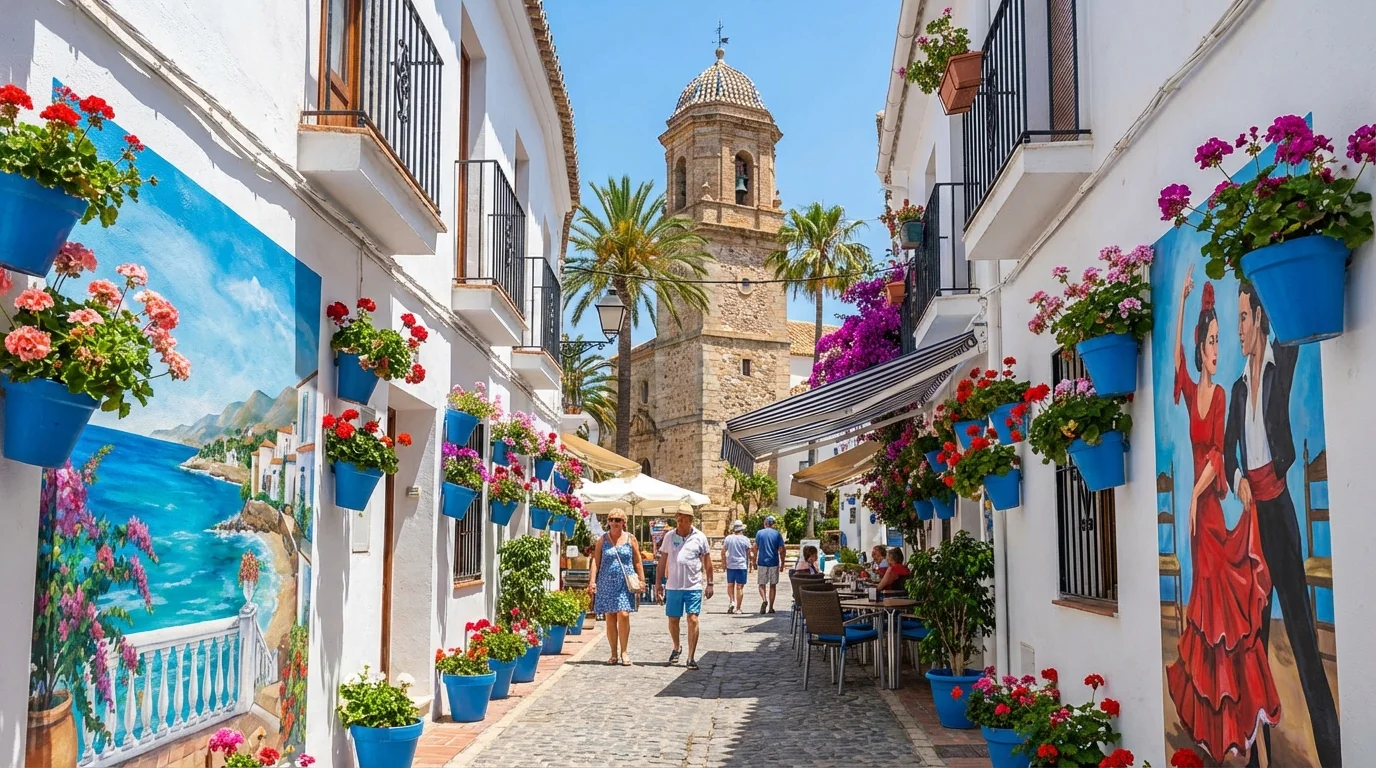
Complete guide to Estepona: murals, the orchid garden, old town, property prices and why it is called the Garden of the Costa del Sol.
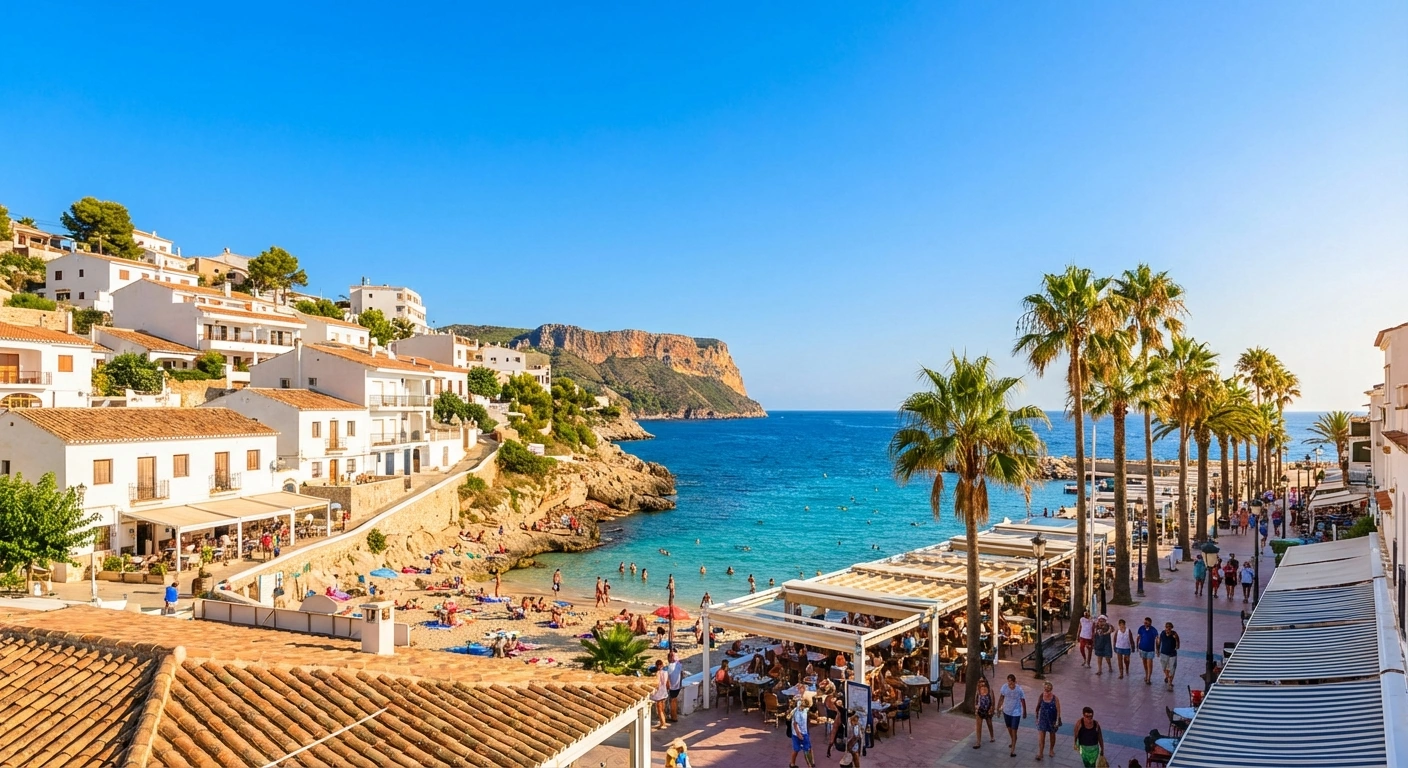
Guide to the climate on Costa Blanca: temperatures, sunny days, sea warmth, rain and which months suit residents, golfers and beach life best.