

Area Guides
Marbella – Luxury, Lifestyle and Living on the Costa del Sol 2026
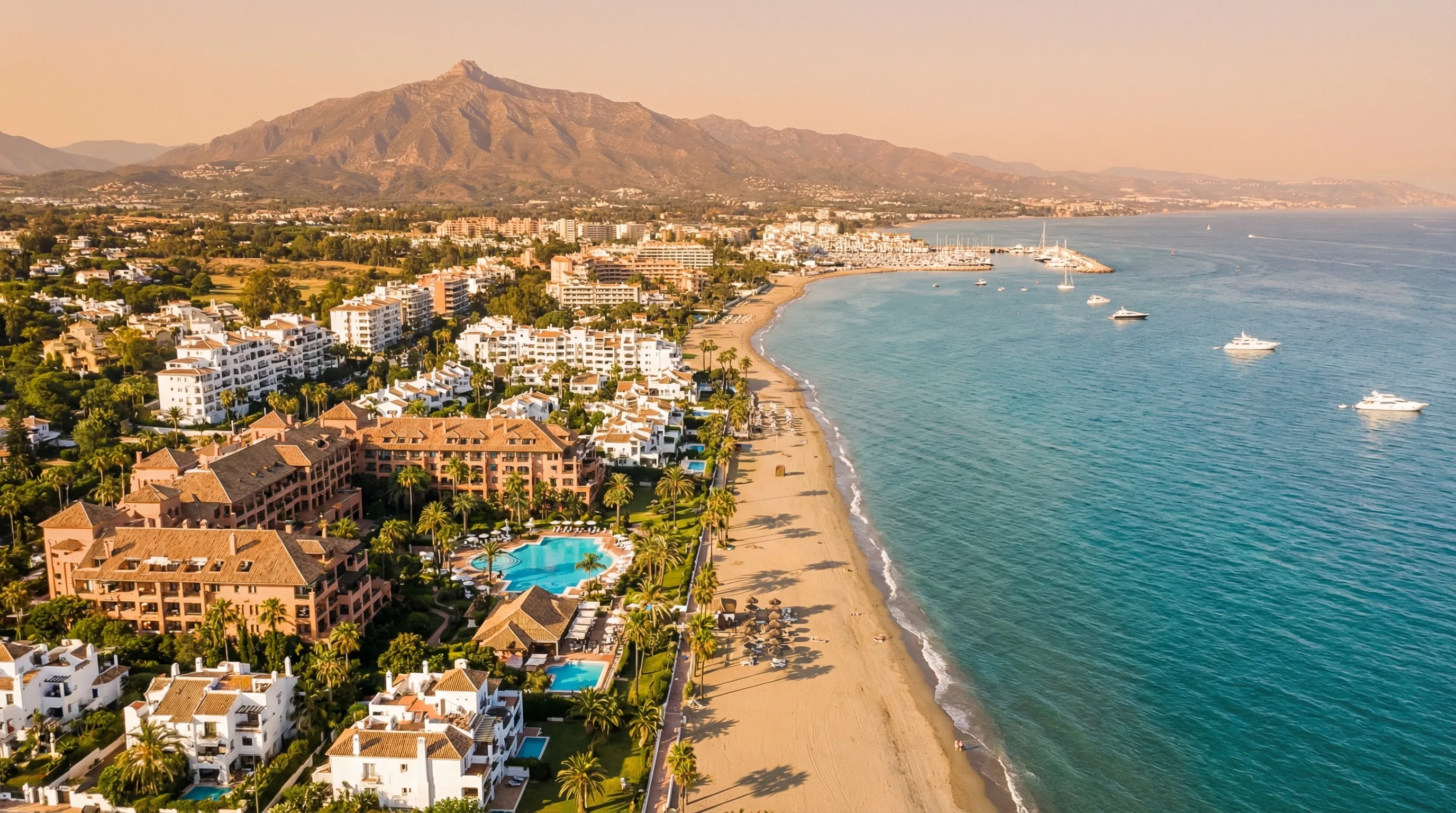
Complete guide to Marbella: Golden Mile, Puerto Banús, old town, property prices by area and why Marbella continues to attract international buyers.
19 min
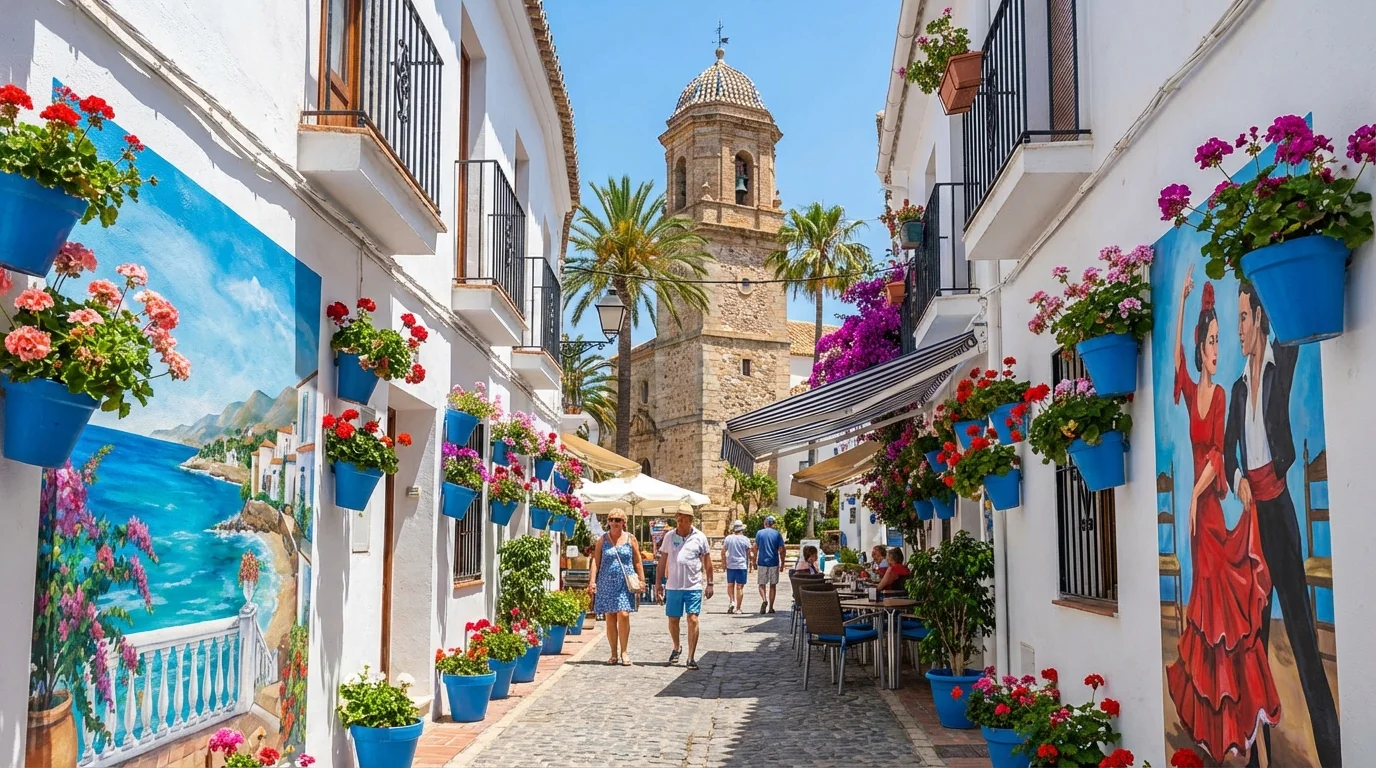
Complete guide to Estepona: murals, the orchid garden, old town, property prices and why it is called the Garden of the Costa del Sol.
Estepona is the small coastal town that became the Costa del Sol's most talked-about transformation. The average property price ranges from approximately €3,900 to €4,600 per square metre (2025/2026) depending on type and location, making the town 20 to 30 percent cheaper than neighbouring Marbella. The population grew from 73,700 to over 77,000 inhabitants between 2022 and 2023 — an increase of 4.6 percent that makes Estepona one of the fastest-growing municipalities in the province of Málaga. The town has over 60 large-scale murals, more than 23,000 flower pots in the old town and Europe's largest orchidarium — and that is why Estepona is called Jardín de la Costa del Sol, the Garden of the Costa del Sol.
This guide is for you if you are considering buying property in Estepona or simply want to understand why the town is attracting increasing numbers of Scandinavians, British and Germans. I cover property prices, the old town's transformation, beaches, climate, restaurants, healthcare and new construction — with honest pros and cons.
Estepona lies at the western end of the Costa del Sol Occidental, in the province of Málaga in Andalusia. The town sits at the foot of the Sierra Bermeja mountains and borders Casares to the west and Marbella to the east. The coastline stretches for 21 kilometres — an unusually long stretch for a municipality of this size.
Distances worth knowing:
From Sweden there are direct flights to Málaga from Stockholm, Gothenburg and other cities with SAS, Norwegian and Ryanair — both during high season and to some extent year-round. It is also possible to fly to Gibraltar with British Airways via London, but Málaga is the natural choice for most people.
The bus connection from Málaga airport to Estepona takes approximately 1 hour and 10 minutes with hourly departures. There is no train service yet — but a coastal rail connection is under study with results expected in 2026 to 2027. A car is in practice necessary if you live here permanently, but central Estepona is entirely walkable.
Information
Estepona is strategically positioned between Marbella and Gibraltar. The so-called New Golden Mile — the coastal strip eastwards towards San Pedro de Alcántara — has become one of the Costa del Sol's hottest areas for new construction, with luxury projects reaching €7,000 per square metre.
Estepona's old town has undergone one of Spain's most dramatic urban transformations. It began in 2012 when mayor José María García Urbano launched the Jardín de la Costa del Sol project — a vision to transform a fairly anonymous coastal town into a green, cultural promenade destination.
Estepona today has over 60 large-scale wall paintings that transform entire building facades into works of art. The project is called Ruta de los Murales and started as a way to bring life to forgotten neighbourhoods and dreary apartment blocks. Each mural tells a story — fishermen mending nets, flamenco dancers, local legends and abstract works by international artists. Walking through the centre feels like wandering through an open gallery, and new murals are added every year.
More than 23,000 flower pots adorn the streets of the old town, and each street has its own flower varieties and colour themes. Residents were asked to choose which flowers and pots should decorate their street — a clever move that created pride and engagement. The result is that every corner of the old town looks like a postcard, with geraniums, bougainvillea and jasmine against whitewashed walls.
Plaza de las Flores (the square of flowers) is the natural hub, surrounded by restaurants and cafés with outdoor seating under orange trees. From here a network of pedestrian streets radiates out with shops, tapas bars and galleries.
Estepona's Orchidarium was inaugurated in 2015 and is located in the town centre, in a futuristic glass building designed as three waterfalls of steel and glass. It houses over 1,300 orchid species and 5,000 plants in total from around the world — the largest orchidarium in Europe. Admission costs €3 (2025) and a visit takes approximately an hour. It is not somewhere you visit every week, but it says something about the town's level of ambition that it builds Europe's largest orchid house in a municipality of 77,000 inhabitants.
Tip
Visit Estepona's old town on a weekday morning. Tourist pressure is low, the light is perfect for photographing the murals and you can stroll at leisure through the flower streets. Plaza de las Flores is best in the morning — before the outdoor seating fills up.
Estepona has 17 beaches along a 21-kilometre coastline — ranging from lively town beaches to secluded natural coves. Here are the most important.
Estepona's main beach stretches 2.6 kilometres along the town centre and has Blue Flag status. The sand is fine and grey-gold, and the modern promenade runs along the entire stretch with restaurants, playgrounds and water activities. It is a genuine town beach — busy in summer, but its size means it never gets as crowded as in Marbella or Fuengirola.
The best family beach. Playa del Cristo is a sheltered cove just west of the marina with crystal-clear, calm water and fine golden sand. The cove is protected from wind and waves, making it perfect for children. The beach has Blue Flag status in 2025 and two chiringuitos (beach restaurants). Many locals call it the finest small beach on the Costa del Sol — and they are not entirely wrong.
A natural beach where the River Padrón flows into the Mediterranean. Here lush vegetation reaches all the way down to the sand, and the atmosphere is wilder and more unspoilt than in town. Popular with those seeking peace and wanting to avoid crowds.
Estepona's property market has seen a significant rise. Prices increased by 8 to 10 percent during 2024 and continue upwards into 2025/2026. The average price per square metre varies considerably depending on the type of property and location.
Apartments:
Townhouses:
Villas:
Average price per m² — compared with neighbouring municipalities
Estepona centre
€3,900–4,600/m²
2025/2026
New Golden Mile
€5,000–7,000/m²
Premium coastal strip
Marbella centre
€4,800–5,300/m²
Reference eastwards
San Pedro de Alcántara
€3,800–4,500/m²
Marbella municipality
Mijas Costa
€3,500–4,000/m²
Mijas coastal belt
Manilva / Sabinillas
€2,200–3,000/m²
Further west — lower entry point
Estepona thus positions itself between Marbella and the cheaper municipalities further west. What is driving prices is the enormous demand for new construction — Estepona has more construction cranes on the skyline than any other municipality on the Costa del Sol right now.
Note
Budget for 10–13 percent in additional costs on top of the purchase price. In Andalusia this means transfer tax (ITP, 7 percent for resale properties), notary fees, title registration and solicitor fees. New construction is subject to 10 percent VAT (IVA) plus 1.2 percent stamp duty (AJD).
Properties
Explore available properties in estepona
Estepona has a Mediterranean climate (Köppen Csa) with warm, dry summers and mild winters. The town's position at the foot of the Sierra Bermeja provides some protection from northerly winds, giving the microclimate a slightly milder character than other parts of the coast.
Temperatures throughout the year:
Key figures:
Compared with the northern Costa Blanca, Estepona is slightly rainier but also warmer in winter. Compared with Marbella, the climate is virtually identical — they are only 30 kilometres apart.
Estepona has grown explosively. The population exceeded 77,000 inhabitants in 2023 — an increase of 10,127 people since 2019. That makes Estepona one of the fastest-growing municipalities in the whole of Andalusia.
The proportion of foreign residents is around 25 percent, which is high but lower than for example Mijas (32 percent) or Torrevieja (40 percent). This means Estepona still has a clearly Spanish character — you hear Spanish in the cafés and the children attend Spanish schools.
Largest foreign groups:
The number of foreigners increased by nearly 3,000 people in 2023 alone, a rise of 15 percent. The growth is driven by a combination of climate, quality of life, property prices that are still lower than Marbella and the town's enormous investment in infrastructure and urban environment.
Estepona has a strong mix of retirees, families with children and remote workers. Unlike Puerto Banús or Torremolinos there is no dominant tourist culture — the town lives its own life year-round.
Estepona's restaurant scene has grown alongside the town and offers a blend of traditional Andalusian seafood, modern tapas bars and international options. Compared with Marbella, prices are noticeably lower — you eat really well without having to ration your evening outings.
Traditional and local:
Modern and creative:
Tapas in the old town: Plaza de las Flores and the streets Calle Santa Ana and Calle Castilla are full of tapas establishments of varying quality. Best strategy: go where the locals are sitting, not where the menus are in English.
Estepona has more active construction projects than any other municipality on the Costa del Sol. Between 2023 and 2025 new-build prices have risen by over 20 percent, and the luxury segment has reached the record level of €7,000 per square metre.
Key development areas:
New Golden Mile (eastwards towards Marbella): The hottest area with luxury beachfront projects. Everything from boutique apartments to gated communities with gym, spa and infinity pools is being built here. Prices start from €400,000 for a two-bedroom apartment upwards.
Estepona centre: Several projects in central locations near the beach and old town. One example is the Central Park Development with 43 apartments, gym and pool — planned delivery in the first quarter of 2026.
Estepona Golf area: Frontline golf properties with mountain and sea views. Perfect for those who want to combine golf with Mediterranean living.
Harbour area: Modern apartments just 100 metres from the beach and the picturesque harbour.
Properties
Explore available properties in estepona
Estepona has eight golf courses within the municipality or in immediate proximity — an impressive number for a town of this size. Here are the most important.
The golf climate in Estepona allows play year-round — even in January it is usually sunny and 15 to 17 degrees.
Estepona has good access to healthcare, both public and private.
Public healthcare:
Private healthcare:
You do not need to travel to Marbella or Málaga for healthcare — Estepona has its own private hospitals and a good health centre. The public hospital in Marbella functions as a backup for more serious cases.
Information
As an EU citizen you are entitled to public healthcare in Spain if you are registered on the municipal roll (empadronamiento) and enrolled in the Spanish health insurance system. Private health insurance costs from approximately €50 to €150 per month depending on age and level of cover.
Advantages:
Disadvantages:
Estepona vs. Marbella: Marbella is the glamour, the luxury and the high prices. The Golden Mile and Puerto Banús have a completely different atmosphere from Estepona's flower-clad old town. Marbella has better shopping, more nightlife and higher status — but you pay 20 to 30 percent more per square metre and rents are almost 60 percent higher. Estepona offers a more genuine Spanish urban feel, lower prices and a faster rate of price appreciation.
Estepona vs. San Pedro de Alcántara: San Pedro lies midway between Estepona and Marbella and has undergone its own transformation with a new boulevard and promenade. San Pedro has more of a neighbourhood character — it belongs to Marbella's municipality but functions as its own entity. Prices are similar to Estepona's but the supply of new construction is smaller. Choose San Pedro if you want to be closer to Marbella without paying Marbella prices; choose Estepona if you want a town with its own identity.
Estepona vs. Mijas: Mijas offers either the white hilltop village (Mijas Pueblo) or the modern coast (Mijas Costa). Mijas Pueblo has spectacular views but no beach; Mijas Costa has a beach but lacks the town centre that Estepona has. Estepona combines the best of both — a beautiful old town and a long coastline.
Estepona vs. La Cala de Mijas: La Cala de Mijas is a charming coastal village with a Scandinavian feel. It is considerably smaller than Estepona and has limited services outside the tourist season. Estepona is a full-service town that functions year-round — La Cala de Mijas suits better as a holiday destination.
Contact
We help Swedish buyers find the right property in Estepona and on the Costa del Sol. Tell us what you are looking for — new construction, an apartment in the old town or a villa with sea views — and we will come back to you with suggestions that match your wishes.
Book a free consultationLast updated: April 2026. Prices and regulations can change — contact us for current information.
Decision support
Genomsnittspriset i Estepona ligger på cirka 3 900 till 4 600 euro per kvadratmeter beroende på bostadstyp och läge (2025/2026). En tvårumslägenhet i centrum kostar från cirka 250 000 euro, medan strandnära lägenheter ligger på 300 000 till 600 000 euro.
Lyxiga nyproduktioner på New Golden Mile kan nå 7 000 euro per kvadratmeter.
Málagas flygplats (AGP) ligger cirka 80 kilometer från Estepona, vilket tar ungefär 50 till 55 minuter med bil via motorvägen AP-7. Det finns direktbussar som tar cirka 1 timme och 10 minuter.
Någon tåglinje finns ännu inte men utreds.
Estepona fick smeknamnet Jardín de la Costa del Sol tack vare en omfattande stadsomvandling som startade 2012. Kommunen planterade över 23 000 blomkrukor i gamla stan, skapade ett muralmuseum med över 60 storskaliga väggmålningar och byggde Europas största orkidarium.
Varje gata har sina egna blomsorter och färgteman.
Ja, Estepona är generellt 20 till 30 procent billigare än Marbella. Snittpriset per kvadratmeter i Estepona ligger runt 3 900 till 4 600 euro jämfört med Marbellas 4 800 till 5 300 euro.
Hyror i Marbella är närmare 60 procent högre. Dagliga utgifter som restauranger och matvaror är också märkbart billigare i Estepona.
Esteponas mest populära stränder är Playa de la Rada (2,6 kilometer lång stadsstrand med Blå flagg-status), Playa del Cristo (skyddad familjevik med kristallklart vatten) och Playa de El Padrón (naturstrand med flodmynning). Totalt har Estepona 17 stränder längs en 21 kilometer lång kuststräcka.
Sources

Las Chapas, Málaga

Paraiso Alto, Málaga

Paraiso Alto, Málaga

Playa del Cristo, Málaga

Playa del Cristo, Málaga

Playa del Cristo, Málaga
Local expertise
Complete guide to Marbella: Golden Mile, Puerto Banús, old town, property prices by area and why Marbella continues to attract international buyers.
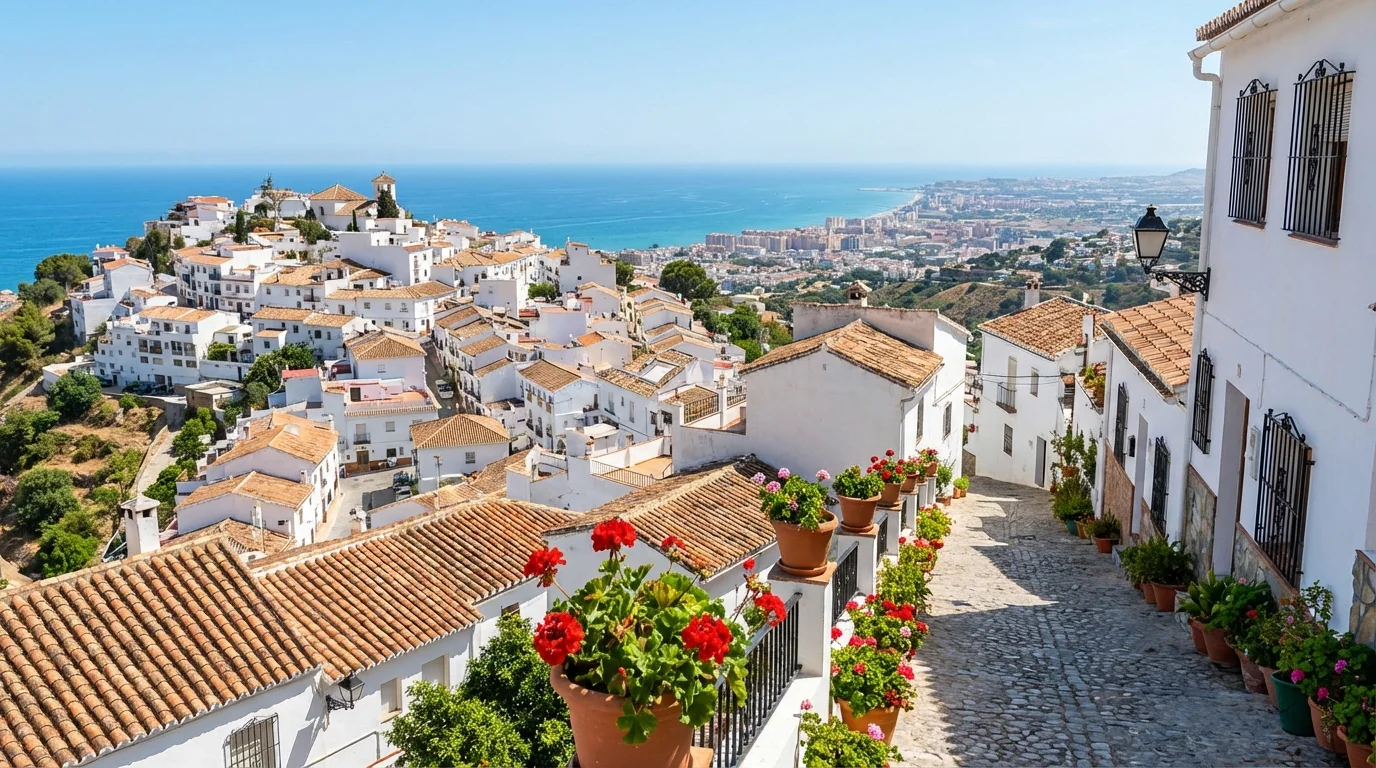
Complete guide to Mijas Pueblo: the white mountain village above Fuengirola with spectacular views, property prices, restaurants and tips for Swedish buyers.
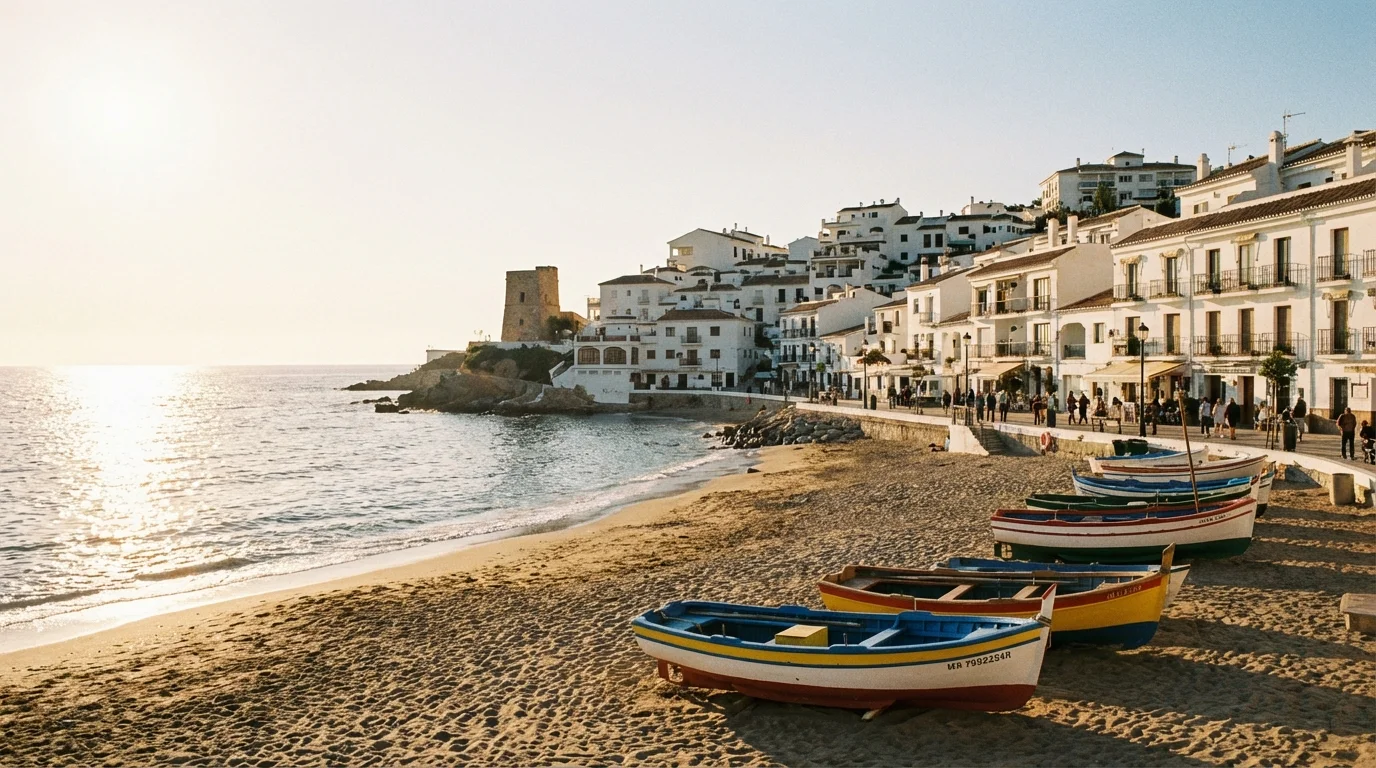
Complete guide to La Cala de Mijas on the Costa del Sol: beaches, property prices, restaurants and tips for Swedish buyers seeking charm without the tourist crowds.