


Lifestyle
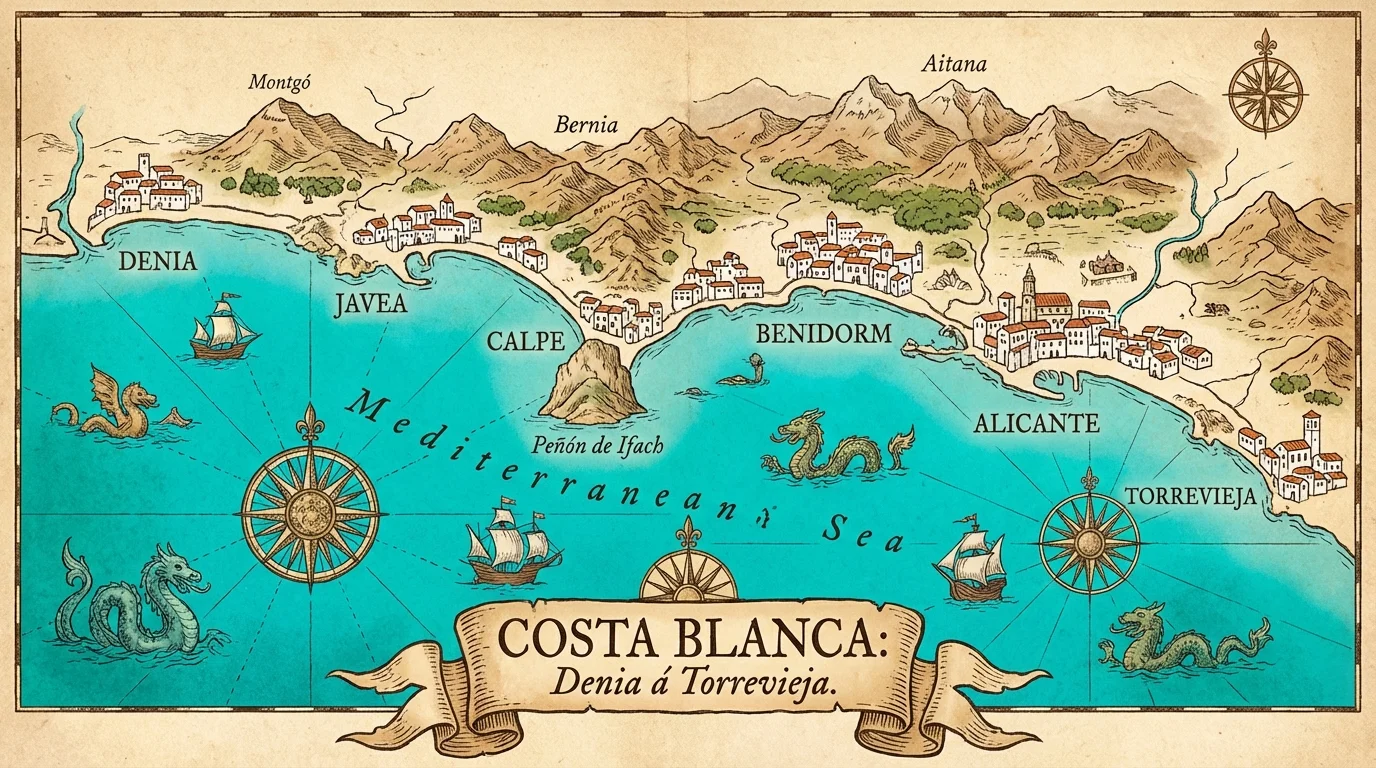
Costa Blanca – Map and overview of all areas 2026
Overview of the Costa Blanca: towns and areas from Dénia to Pilar de la Horadada — map, distances, prices and tips for Swedish buyers 2026.
16 min
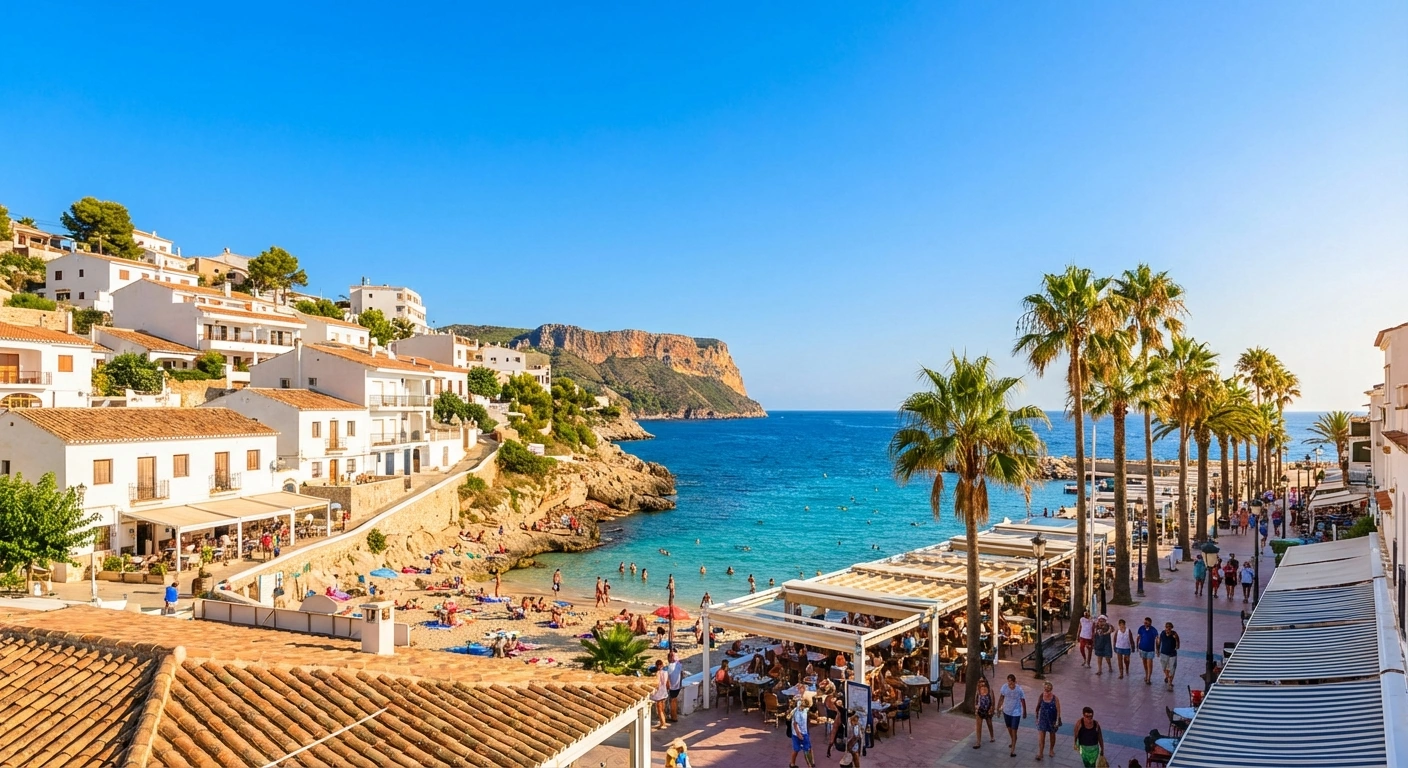
Guide to the climate on Costa Blanca: temperatures, sunny days, sea warmth, rain and which months suit residents, golfers and beach life best.
If you are searching for information about the Costa Blanca climate, the short answer is that the coast delivers what draws people here in the first place: mild winters, long dry periods and a daily life where outdoor living actually works for most of the year. Costa Blanca is usually described as a coast with around 300 to 320 sunny days per year, and that shows more in the rhythm of life than in the advertising images. You take a walk in January without freezing. You eat lunch outside in March. You swim well into autumn.
But the whole coast is not the same. Northern Costa Blanca is greener, slightly more humid and often more scenic in its landscape. The southern part is drier, flatter and simpler if you prioritise a stable winter daily life. In this guide I go through the weather month by month, the difference between north and south, when the sea is at its warmest and which periods actually suit permanent residents, beach life, golf and winter escapes best. I also include what is often forgotten: heatwaves, wind, humid late-summer nights and autumn's DANA downpours.
It is not just about the heat. It is about the weather being usable. Alicante averages around 16 degrees during the day in January and around 31 degrees in August, with relatively little rain over the year as a whole. Torrevieja follows almost the same pattern, but with even lower annual rainfall, around 302 millimetres. For someone coming from Sweden that does not mean summer all year round. It means that winter becomes shorter, lighter and much more social.
That is also why Costa Blanca works so well for longer stays. You do not have to plan your whole life around the weather. Outdoor restaurants, walks, padel, golf and seafront promenades work in November, February and April too. That is a bigger difference in everyday life than many realise before they have tried it.
Another thing is the light. Many people who move here talk first about the temperature but stay because of the daylight. When you get several hours of sunshine even during winter, your mood, routines and energy change. That sounds banal until you have lived through a dark Swedish November and then compare it with an ordinary November week on Costa Blanca.
Information
Costa Blanca is often sold as "eternal summer". That is the wrong picture. What is more accurate is an unusually kind Mediterranean climate where you get real seasons, but without the long cold winter that governs life in northern Europe.
This is the most important climate question if you are considering living along the coast. Northern Costa Blanca, with towns like Altea and the area around Benidorm, is greener and gets more precipitation. Benidorm receives around 415 millimetres of rain per year, while Alicante gets around 359 millimetres and Torrevieja around 302 millimetres. The difference is not noticeable every week, but it shows over time in the vegetation, the air and how often autumn feels unsettled.
The northern part also has more topography. The mountains create shelter, views and sometimes local microclimates. This is one of the reasons many people experience the north as more beautiful and a little fresher during the height of summer. At the same time the more varied terrain means that evenings and winter mornings can sometimes feel cooler than the thermometer suggests.
Southern Costa Blanca, with Torrevieja and Orihuela Costa, is drier and more predictable. That is a strong advantage if you want to live here for large parts of the year and prioritise a simple daily life over dramatic scenery. Here the landscape is more open, rain is less frequent and winter is usually a little more stable. The downside is that you also get more exposure to wind on open stretches of beach, and some late-summer days feel more oppressive than further north.
If you want to simplify it heavily: the north suits you better if you prioritise landscape, greenery and a more classic Mediterranean feel. The south suits you better if you want a drier winter, lower weather risk and a simpler daily life close to amenities. Alicante falls in between and is therefore one of the most balanced choices on the entire coast.
Properties
Explore available properties in Torrevieja
This is the practical part. The figures below should be read as indicative coastal values for Costa Blanca, with Alicante as the midpoint and Benidorm and Torrevieja as clear reference points for north and south respectively. Sea temperatures come from NOAA-based long-term series for Alicante, Benidorm and Torrevieja.
January is the month that most pleasantly surprises Swedes. During the day the coast usually sits around 16 to 17 degrees and nights around 8 to 9 degrees. The sea is cold, approximately 14.6 degrees in Alicante and 14.9 in Torrevieja, so swimming is for the few. The month is however excellent for walks, lunch outside in the sun and winter escapes.
February is often the coldest month for swimming but not the dullest. The air temperature resembles January, sometimes with slightly better light. The sea is around 14.2 degrees in Alicante and 14.4 in Torrevieja, which is roughly the year's lowest level. If you want to live here in winter, February is still perfectly workable. If you want to swim a lot, it is too early.
In March Costa Blanca starts to feel like itself again. Days around 19 to 20 degrees are common, evenings become less raw and the light changes everything. The sea is still cool, approximately 14.4 to 14.7 degrees, but the month is excellent for cycling, golf and long days outdoors. For many who are trying long-term living for the first time, March is a very smart month to start.
April is one of the coast's most pleasant months. You often get 21 to 22 degrees during the day, more greenery in the north and a daily life that feels light. The sea rises to around 16.3 degrees in Alicante and 16.6 in Torrevieja. The water is still brisk but not brutal. At the same time April can be more changeable than people think, especially if the wind swings and evenings become cool.
May is for many the first truly strong quality-of-life month. Days often move around 24 to 25 degrees and the sea reaches around 19 degrees in both Alicante and Torrevieja. That is enough for swimming for most Scandinavians, especially in the southern part. Tourist pressure is still manageable, making May one of the year's best months if you want to experience normal coastal life without summer's full tempo.
June is often better than July if you actually live here. The air sits around 28 to 29 degrees, the sea at approximately 22 to 22.6 degrees, and evenings are still usable. This is when Costa Blanca starts genuinely delivering beach life, but without every errand having to be planned around the heat. For me June is one of the most underrated months on the entire coast.
July is stable, dry and hot. Alicante receives only around 4.4 millimetres of rain in July and Torrevieja approximately 2.3 millimetres. During the day many coastal towns sit around 30 to 31 degrees, and the sea reaches approximately 24.7 to 25.1 degrees. That sounds perfect, and it can be — but this is also when crowds, late dinners because of the heat and warm nights start becoming a real part of daily life.
August is the hottest month. Alicante averages around 31 degrees during the day, Torrevieja approximately the same. The sea is at its warmest now, approximately 26.2 degrees in Alicante and 25.8 in Torrevieja. For a pure beach holiday it is top class. For permanent daily life it is more mixed. Nights can sit around 23 to 24 degrees, and that is when even people who love the heat start talking about air conditioning, shade and poor sleep.
September is one of the year's best months. You often get 28 to 29 degrees during the day, but the sea is still at high-summer warmth, approximately 25.2 degrees in Alicante and 24.9 in Torrevieja. At the same time September is the wettest month in both Alicante and Torrevieja in the data I have looked at, around 46 and 42 millimetres respectively. That does not mean the month is rainy in an everyday sense. It means that when precipitation does come, it can come hard.
October is the classic Costa Blanca month for people who want to live here rather than just holiday. The air often sits between 24 and 26 degrees, the sea around 22.4 to 22.6 degrees, and you can still swim without it feeling defiant. This is also when autumn's weather risks are most visible. Alicante and the southern coast can get short, intense downpours linked to DANA situations over the western Mediterranean.
November is better than its reputation. During the day the coast often sits around 20 to 22 degrees, and the sea is still close to 19.5 to 19.6 degrees. You do not swim every day, but you can still have genuinely fine beach days. For golf, walks and daily life it is one of the year's strongest months. The air becomes calmer, the pace slows and the coast feels more local again.
December is not a swimming month for most people, but a very good month for those who want to escape a Nordic winter. Days of 17 to 18 degrees are common and the sea sits around 16.5 degrees in Alicante and 16.9 in Torrevieja. Many find December psychologically stronger than February, precisely because Christmas, lights and outdoor life still function. It is not summer. But it is far from Swedish winter.
If you think as a resident rather than a tourist, there are really three different high seasons on Costa Blanca.
For permanent living April to June and September to November are best. Then you get warmth without daily life becoming heavy. You can run errands in the middle of the day, sleep better and use outdoor spaces more spontaneously. It is also during those months that the difference between an area you genuinely thrive in and one you just holiday well in becomes most apparent.
For beach life June to September is strongest, with September as the smartest compromise. In June the sea has had time to become pleasant but tourist pressure is still reasonable. In July and August you get the warmest water, approximately 25 to 26 degrees, but you pay with more people, warmer nights and less margin in the day. September gives almost the same swimming experience with a considerably better rhythm.
For golf and active winter daily life, October to April is the period that makes Costa Blanca so attractive for Scandinavians. Days of 16 to 24 degrees go a long way when you escape snow, ice and long dark weeks. That is also why so many winter residents return year after year. The climate does not do everything, but it reduces friction in almost every part of daily life.
For winter escapes I would say January to March is most relevant. That is when the contrast with Sweden is greatest. If you just want to come down and get light, walks and normal body temperature again, that period works excellently. If you dream of a lot of swimming you should wait until May or June.
Tip
If you want to try Costa Blanca before buying a property, May, June, October and November are the smartest months. You see daily life more clearly than in July and August, when almost everything feels more enjoyable simply because the sun is high and people are on holiday.
Properties
Explore available properties in Altea
This is the part that distinguishes a useful climate guide from a text that just sells sunshine. Costa Blanca has a very good climate. That does not mean it is always comfortable.
The first downside is heatwaves. The coastal location often saves you from the worst inland figures, but July and August can still be heavy. The problem is not just the maximum temperature. It is the nights. When the air stays warm past midnight and the bedroom never really cools down, it matters less that the beach is ten minutes away.
The second is late-summer humidity. Many people think that southern Costa Blanca is automatically dry all the time. It is not that simple. Low annual totals and dry July figures do not mean that every August evening feels light. Especially close to the sea you can get that sticky evening air that makes 29 degrees feel like more than 29.
The third is wind. Open southerly beaches and certain exposed parts of the coast get days when beach life does not feel as gentle as in the photographs. For surfers and sailors that can be a plus. For those planning calm everyday swimming it is a genuine downside, especially during the transitional periods of spring and autumn.
The fourth is DANA and autumn downpours. Costa Blanca is not a rainy coast, but it belongs to the western Mediterranean's weather system and can receive very heavy rain in a short time during early autumn. This matters most if you are looking at ground-floor properties, proximity to ravines or low-lying urbanisations. On most days nothing happens at all. When it does happen it is all the more noticeable.
The fifth is shoulder-season variation. April and May can be wonderful, but not every day. The same applies to October and November. If you move here with the idea that every spring day is automatically beach weather, you will be a little disappointed. If you move here to get many more usable days than at home, you will almost certainly be satisfied.
Note
Do not only look at average temperatures when choosing an area. Also ask about wind exposure, flood risk, how hot the property gets in August and whether the terrace is actually usable in the evenings during high summer. That is where climate moves from theory to daily life.
Yes, if you want a coast where the weather makes life easier for most of the year. Not perfect. Not tropical. But stable, bright and mild enough that daily life moves outdoors more often than in Sweden.
Choose northern Costa Blanca if you want greener surroundings, more topography and a more classic Mediterranean feel. Choose the southern part if you prioritise a drier winter, simpler logistics and more months where the weather just works without requiring much planning. And if you are unsure, the Alicante area is still the most balanced compromise.
That is really why the climate continues to be such a strong argument for Costa Blanca. Not because every day is spectacular. But because so many ordinary days become easier to live.
Contact
Get in touch and we'll guide you forward — whether you're just starting out or ready to buy.
Contact usLast updated: 2026-04-01. Climate data and sea temperatures are based on long-term series and annual averages. Individual seasons may differ.
Decision support
Costa Blanca brukar beskrivas som en kust med omkring 300 till 320 soldagar per år. Det exakta utfallet varierar mellan orter och år, men den stora bilden är stabil: mycket ljus, få långa regnperioder och milda vintrar.
Det är en av huvudorsakerna till att så många väljer området för längre vistelser eller permanent boende.
För de flesta börjar den bekväma badsäsongen i juni, när havet ligger runt 22 grader. Varmast är det normalt i augusti, cirka 26 grader i Alicante och strax under 26 grader i Torrevieja.
I september och ofta även i oktober är vattnet fortfarande behagligt, trots att luften blivit mjukare.
Södra Costa Blanca är oftast lite torrare och något enklare på vintern, medan norra delen är grönare och får mer regn. Skillnaden i temperatur är sällan dramatisk vid kusten, men den märks i kvällar, vegetation och luftfuktighet.
Torrevieja ligger runt 302 mm nederbörd per år, medan Benidorm ligger runt 415 mm.
April till juni och september till november är ofta de starkaste månaderna för vardagsliv. Du får varmt men sällan brutalt väder, fler användbara timmar utomhus och mindre turisttryck än i juli och augusti.
För många som jobbar på distans eller bor här större delen av året är just de månaderna Costa Blanca som mest balanserat.
De flesta höstdagar är helt vanliga, men när DANA slår till kan regnet bli intensivt på kort tid. Det påverkar främst september och oktober och är viktigast att förstå om du tittar på bostad i låglänta områden eller nära ramblas.
Fenomenet är inte vardag, men det är heller inget du ska vifta bort som en teoretisk risk.
Sources

Lago Jardín II, Alicante

Los Balcones, Alicante

San Luis, Alicante

San Agustín

Centro, Alicante

Centro, Alicante
Local expertise
Overview of the Costa Blanca: towns and areas from Dénia to Pilar de la Horadada — map, distances, prices and tips for Swedish buyers 2026.
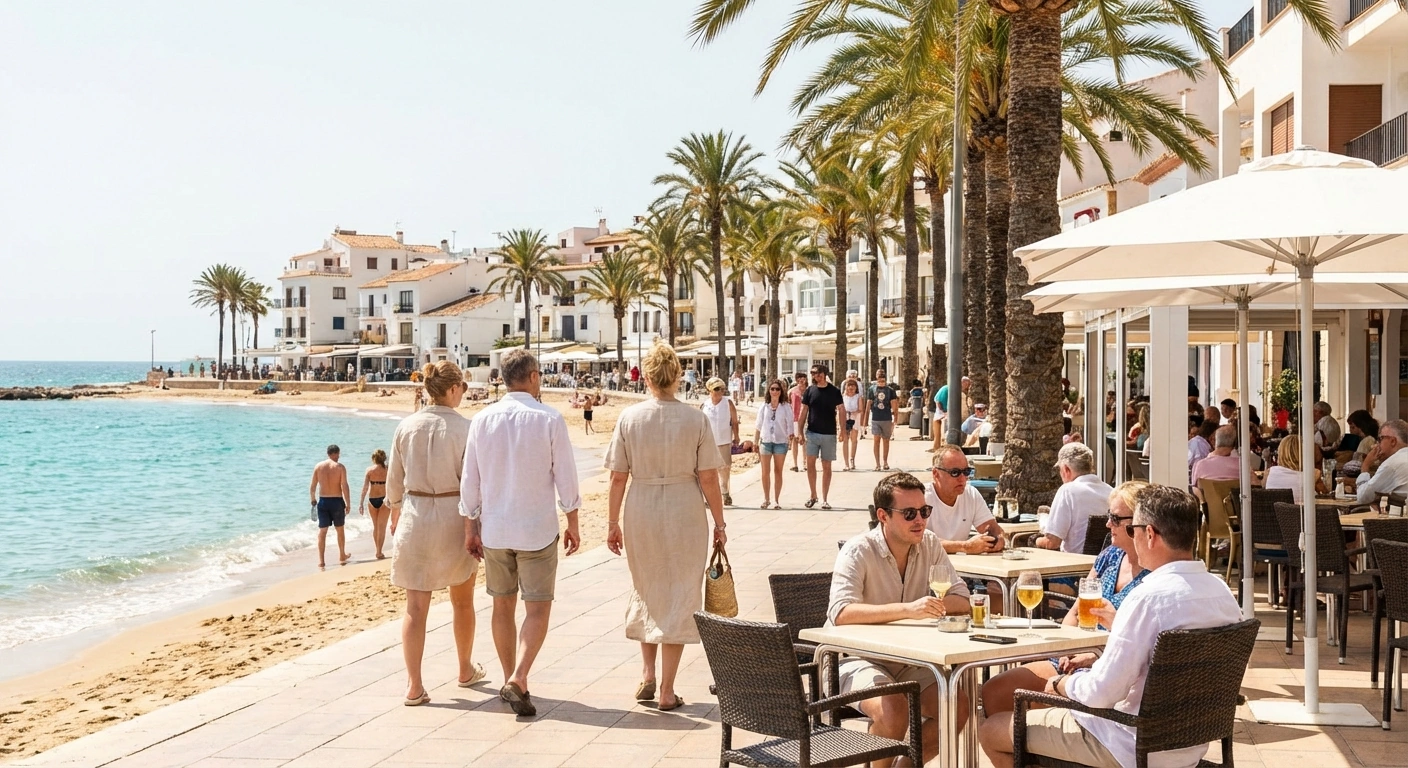
Guide to Costa Blanca's best beaches: family beaches, quiet coves, Blue Flag, parking, and which areas suit buyers who want to live near the sea.
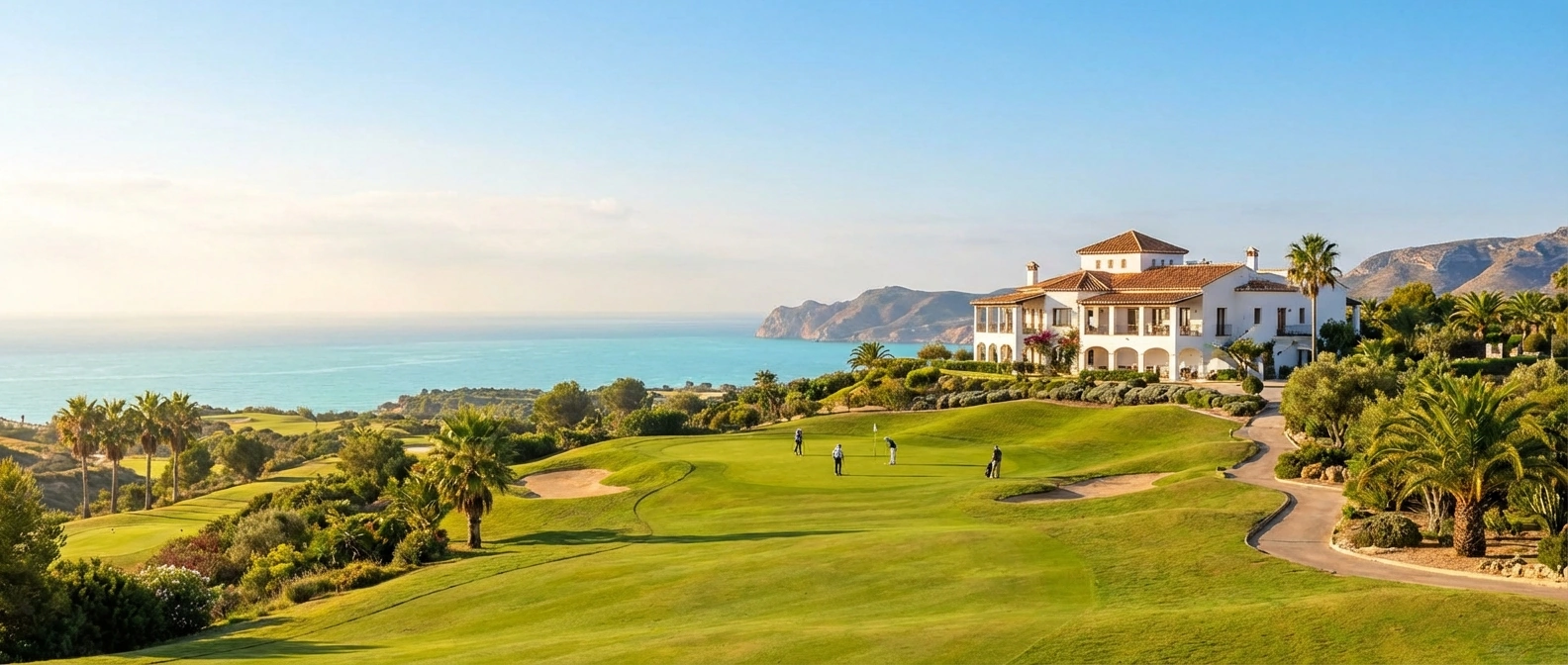
Complete guide to golf on the Costa Blanca: courses, areas, green fees, climate and where to live if golf is an important part of life in Spain.