

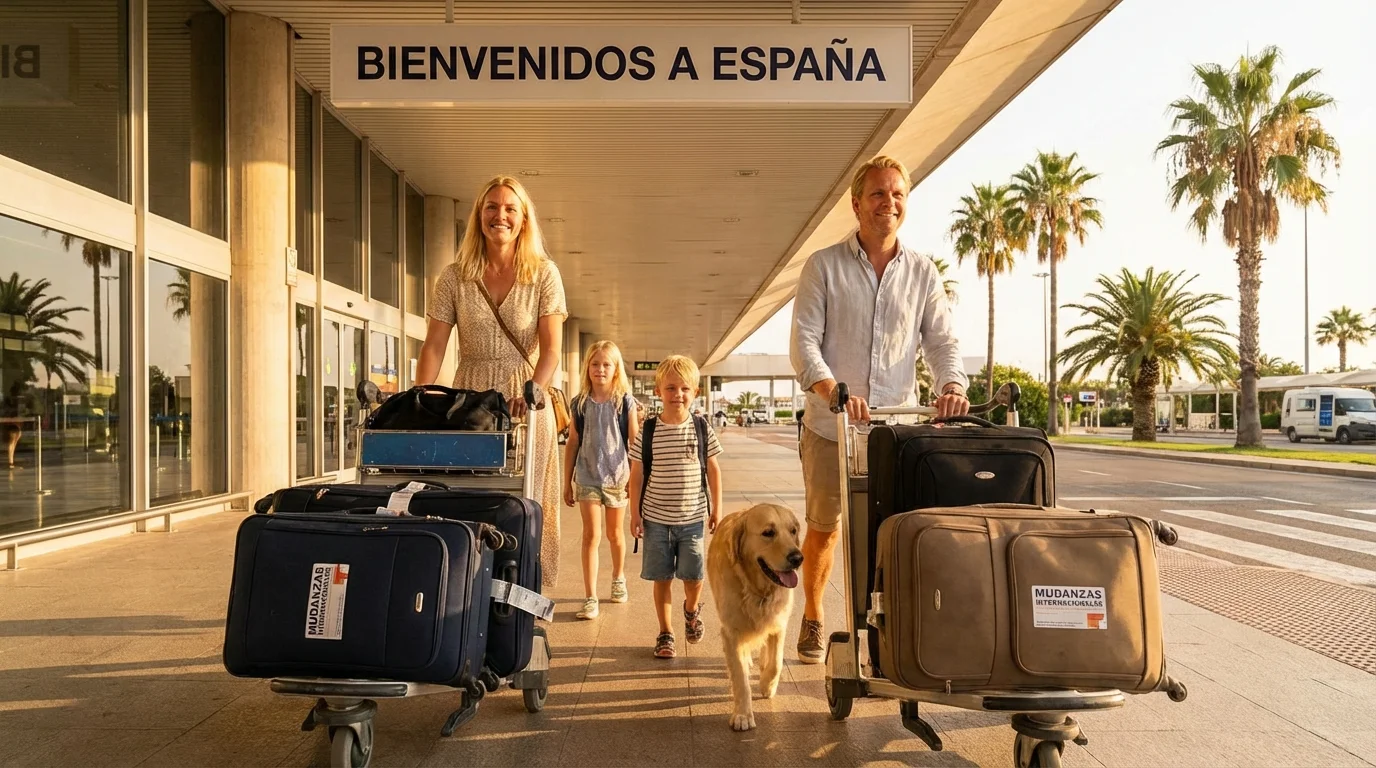
Moving & Living
Living in Spain as a Swede – Everyday Life and Practical Info 2026
What is it like to live in Spain as a Swede? Cost of living, healthcare, bureaucracy, social life and everything you need to know about everyday life in Spain.
17 min
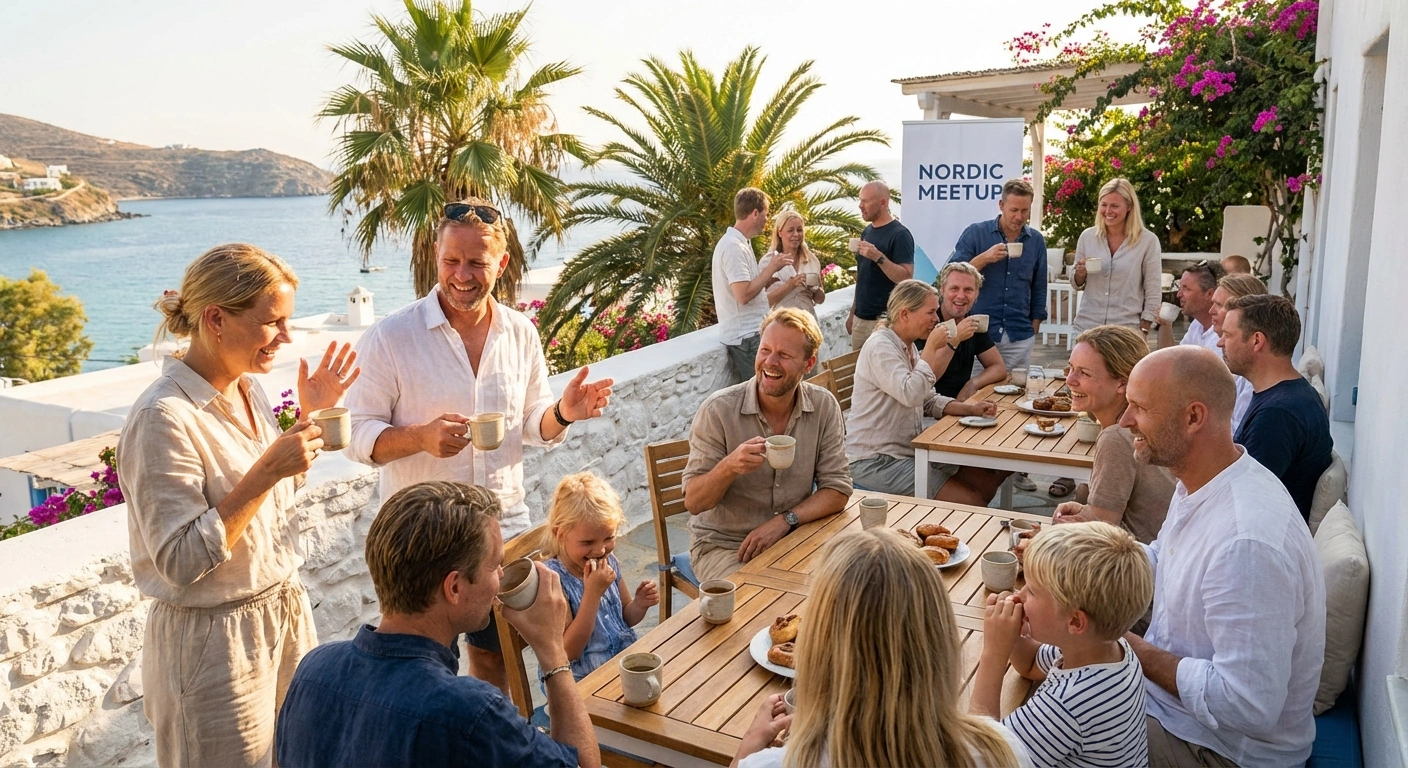
Guide to Swedish associations in Spain: networks, social life, help for newcomers and how to find the right community on Costa Blanca and Costa del Sol.
Yes, there are plenty of Swedish associations in Spain — particularly on Costa Blanca and Costa del Sol. In practice you can find community within your first week through the Swedish Church, SWEA, local clubs, schools, golf and padel groups or informal Facebook networks. For many newcomers this is the fastest route to everyday help, new friends and someone who has already made the mistakes on your behalf.
At the same time there is a catch. A Swedish network makes the start easier, but a good life in Spain does not happen automatically just because you can have coffee and chat in Swedish. If you let your entire daily life revolve around other Swedes, you easily become dependent on a small bubble, and then you miss much of what actually makes the move worthwhile.
In this guide we go through where the Swedish networks are strongest, what the associations actually help with, when Facebook groups are enough and when they are not, plus how to build a social life that works even after the novelty has worn off.
The short answer is: where Swedes have lived for a long time and in greater numbers. That means primarily southern Costa Blanca, Costa del Sol and to some extent islands like Mallorca and Tenerife. On the mainland the focus is clear. Around Torrevieja, Orihuela Costa, Fuengirola and Marbella you find both long-established associations, Swedish businesses, church activities, schools and a continuous influx of new Swedes.
The best-known international organisation is SWEA. SWEA describes itself as a global network of around 6,000 Swedish-speaking women, with more than 70 chapters in over 30 countries, and the organisation was founded in Los Angeles in 1979. On their own chapter page, SWEA also lists both Costa Blanca and Marbella among their Spanish chapters. That says something about where the Swedish networks are most established.
But Swedish associations in Spain are broader than SWEA. There are church communities, social clubs, bridge and golf groups, Swedish education for children, supplementary Swedish for pupils in international schools and pure everyday networks that help each other with doctor contacts, transport, forms and tips about good areas to live in.
Information
Good rule of thumb: Think of Swedish networks as a runway. They make the landing softer, but ideally they should not become your whole world after six months.
On Costa Blanca it is primarily the Torrevieja area that functions as a hub. There the combination is unusually strong: many Swedes, good flight connections via Alicante, Swedish service points, several social contexts and residential areas where it is easy to settle in even if you do not yet speak perfect Spanish. If you are looking at property in or near Torrevieja, you quickly notice that Swedish networks are part of daily life, not just something that appears at holidays.
One of the clearest institutions is Club Nórdico de Torrevieja. The association states that it was founded in 1980 and today has around 750 members. On their own page they highlight culture, contacts with authorities, social community, courses, golf, bridge, café and library — exactly what many newcomers are looking for when life in Spain still feels a little loose at the edges. That is a fairly typical model for Swedish associations abroad: not just coffee and parties, but also practical orientation.
Swedish Church Costa Blanca serves a similar function, though with a different tone. Their own information states that the congregation is in Torrevieja, has Tuesday prayers at 12:00 and a waffle café on Thursdays from 12:30 to 15:00. That kind of recurring schedule may sound small on paper, but means a lot in practice. If you are new, alone after a separation or simply do not yet know anyone, fixed meeting points are often worth more than grand words about community.
For families with children, the school is often the most important entry point. Skandinaviska Skolan Costa Blanca states that they have been operating since 1999, accept pupils between 3 and 18 years of age and offer Spanish for at least one hour per day. That makes the school more than an education question. Around schools there arise parent networks, car pools, after-school activities, spontaneous dinners and the kind of everyday contacts that make an area start to feel familiar.
This is also where you see the difference between formal and informal networks. Formal associations provide structure: membership, calendar, responsible people and often premises. Informal networks — Facebook groups, padel chats, neighbourhood groups and friends of friends — provide momentum. If you need an electrician this evening, a Spanish-speaking lawyer or someone who knows how the local health centre actually works, the informal networks are often the fastest.
Tip
Practical advice for the first month: start with a physical setting, not just a Facebook group. A church coffee morning, club or school contact almost always leads more quickly to real relationships than ten digital threads.
Properties
Explore available properties in torrevieja
Costa del Sol has a somewhat different character. The Swedish network is strong, but more spread out between Fuengirola, Mijas, Marbella, Benalmádena and Estepona. Here there are more people who combine permanent residence with running a business, remote working or schooling, and that is reflected in which networks have become important.
Svenska Skolan Costa del Sol is a good example. The school describes itself as the world's largest Swedish school abroad, with over 55 years of experience. On their information page the school also states 320 pupils, approximately 40 educators and an age range of 3–19 years. The history page also confirms that the school was founded in 1969 in Fuengirola. For a Swedish family moving to the coast, this is not just a school — it is an entire social ecosystem.
The Swedish Church on Costa del Sol plays a similar role for adults and older residents. Their own page states that a service is held every Sunday at 11:00, that the café is normally open Tuesday to Friday from 11:00 to 14:00 and that Solstrålarna is aimed at parents and children aged 0–3 on Tuesdays. That kind of activity means the church functions both as a spiritual place and as a social entry point for people who would otherwise struggle to find their way in.
SWEA Marbella is at the same time an example of how networks on the Costa del Sol often combine social community with professional and cultural activities. That suits particularly well if you are not looking for a traditional pensioners' association but prefer a network where people still work, run companies or travel between Sweden and Spain several times a year.
There is also a clear sports dimension on Costa del Sol. Padel, golf, hiking groups and lunch clubs create a low threshold. It is easier to get to know people when the activity is already decided. You do not need to invent the conversation from scratch each time. It is enough to turn up, play a match or have coffee afterwards. For many Swedes this is exactly how a circle of friends is built.
Most people who search for "Swedish associations Spain" are not really looking for association life in an abstract sense. They are looking for a first opening. Someone who can explain the area. Someone who knows how the healthcare system works. Someone who can say whether a certain urbanisation feels lively year-round or dies after September.
There are usually five things that are needed first.
First: practical orientation. Where do you shop? Which health centre works best? Who can help with empadronamiento, residencia or school? Here associations, the church and local groups are often unexpectedly valuable. Not because they know everything, but because they know who usually knows things.
Second: language support. You do not need to speak perfect Spanish to get started, but you gain a great deal from quickly learning everyday phrases. Skandinaviska Skolan Costa Blanca highlights for example that pupils receive Spanish for at least one hour per day. That also says something to adults: the language must come in early if life is to become larger than the Swedish zone.
Third: social rhythm. Loneliness in Spain is rarely about there being no people around. It is about not yet having any fixed points in the week. Sunday service, Thursday café, padel on Tuesdays or a club lunch once a month sounds simple, but it is often exactly that kind of routine that stops you feeling like a temporary visitor.
Fourth: honest advice about the area. Swedish networks are at their best when they are straightforward. Where is it windy? Where is it noisy in summer? Which urbanisations require a car for everything? Which parts feel too Swedish if you actually want to get into everyday Spanish life? That kind of information is rarely found in brochures.
Fifth: a way forward. A good network does not just help you find other Swedes. It helps you find Spain. A good contact says: "Try this market, take this Spanish course, have a coffee where the locals sit, join the club even if nobody speaks Swedish." That makes a big difference.
This section is important, because many articles about life abroad skip over it. Swedish networks in Spain are good. But they can also become comfortable in the wrong way.
The first risk is the echo chamber. If you only socialise with other Swedes you often get the same picture of Spain repeated over and over. Sometimes it is helpful. Sometimes it becomes skewed. "This is how things work here" can in practice mean "this is how our Swedish circle does things in this particular area." That is not always the same as how Spain actually functions.
The second risk is practical dependence. If every contact with an authority, every healthcare question or every tradesperson visit has to go through a Swedish intermediary, daily life becomes vulnerable. It works as long as you have the right person close by. It becomes difficult when that person moves back to Sweden, falls ill or simply gets tired of helping everyone else.
The third risk is social stagnation. It is easy to get stuck in the same weekly lunches, the same conversations about the weather back home in Sweden and the same recurring circle. Many people are happy with that, and there is nothing wrong with it in itself. But if you moved to Spain to get more life, more language and more variety, it can start to feel strange that everything still revolves around Sweden.
Note
The honest downside: a strong expat network can mean you manage for a long time without Spanish, without local contacts and without real roots. It feels comfortable at first, but for many people it becomes rather flat after a while.
That does not mean you should avoid Swedish contexts. On the contrary. They are often what makes people able to stay and feel happy. But they work best when used as a safe base, not as a completely closed system.
The most sustainable model is fairly simple: keep the Swedish elements where they help, but build the rest locally. That way you get both security and development.
A good first step is to choose one Swedish context and one Spanish or international context at the same time. It might be the church or a Swedish association on one side, and a padel club, language course, volunteer work or neighbourhood activity on the other. That way you will not be lonely, but you will not be trapped either.
The next step is to make daily life slightly less Swedish. Shop at the market sometimes. Book a haircut in Spanish. Go to the same café several times until the staff recognise you. Learn how your municipality works without always asking in the Facebook group first. This sounds small, but it is how a sense of place is built.
If you have children the route is often shorter. School, after-school activities and other families mean local contacts arise naturally. If you are retired or arrive alone you need to be a little more proactive yourself. Then it is wise to choose an area where things actually happen year-round, not just in July and August.
For many Swedish buyers the combination therefore becomes more important than the association itself. You might want to live near Swedish networks on Costa Blanca but still have access to more ordinary Spanish everyday life. Or the opposite: live on Costa del Sol where there are many international contacts but still have a Swedish church or club as a fixed point. There is no perfect answer. But there is a clear difference between merely "having Swedes around you" and actually feeling at home in Spain.
If you want to use Swedish networks wisely, think like this:
That is usually where life becomes best. You know you have support if something goes wrong. But you do not need it for every small thing.
Properties
Explore available properties in Costa del Sol
Browse current homes in the area and compare locations, price levels and property types at your own pace.
Contact
We are happy to help you weigh up more than just the property — also daily life, networks, schools and how the area works year-round. Book a free call and we can talk about what actually suits you.
Book free consultationLast updated: April 2026. Associations, opening hours and activities can change — always check directly with the organisation.
Decision support
Det beror på vad du behöver först. Behöver du snabb social kontakt fungerar Svenska kyrkan, SWEA och lokala klubbar ofta bäst eftersom de har återkommande träffar och personer som är vana vid nyinflyttade.
Behöver du vardagshjälp är Facebook-grupper och föreningar med mycket lokal erfarenhet ofta snabbast. Det bästa är vanligtvis att börja i ett svenskt nätverk men ganska snabbt lägga till spanska kontakter också.
Ja, ofta finns en medlemsavgift, men den är vanligtvis ganska låg jämfört med vad du får tillbaka i form av aktiviteter, lokalkännedom och socialt nätverk. Vissa träffar i kyrkan eller öppna Facebook-grupper är gratis, medan klubbar och föreningar ofta tar årsavgift eller aktivitetsavgift.
Kontrollera alltid vad som ingår innan du går med.
Ja. Svenska skolor, föräldranätverk, kyrkans familjeverksamhet, padelgrupper och lokala entreprenörs- eller kvinnonätverk gör att det inte bara är pensionärer som hittar gemenskap.
På Costa del Sol och Costa Blanca finns särskilt många ingångar för familjer, distansarbetare och säsongsboende som vill träffa andra i liknande situation.
Nej, sällan på egen hand. Facebook-grupper är bra för snabba tips om hantverkare, läkare, skolor och papper, men de ersätter inte riktiga relationer.
De fungerar bäst som en första kontaktväg. Om du vill känna dig hemma behöver du nästan alltid kombinera digitala grupper med återkommande möten i verkligheten, till exempel föreningar, sport eller kyrkans aktiviteter.
Se det svenska nätverket som en startplattform, inte som hela livet. Lär dig enkel vardagsspanska, handla lokalt, gå med i en spansk aktivitet och säg ja till sådant som inte är svenskt organiserat.
Då får du både tryggheten från svenska kontakter och ett mer förankrat liv i Spanien. Det är oftast den kombinationen som håller bäst över tid.
Sources

Lago Jardín II, Alicante

Los Balcones, Alicante

San Luis, Alicante

Centro, Alicante

Centro, Alicante

Centro, Alicante
Local expertise
What is it like to live in Spain as a Swede? Cost of living, healthcare, bureaucracy, social life and everything you need to know about everyday life in Spain.
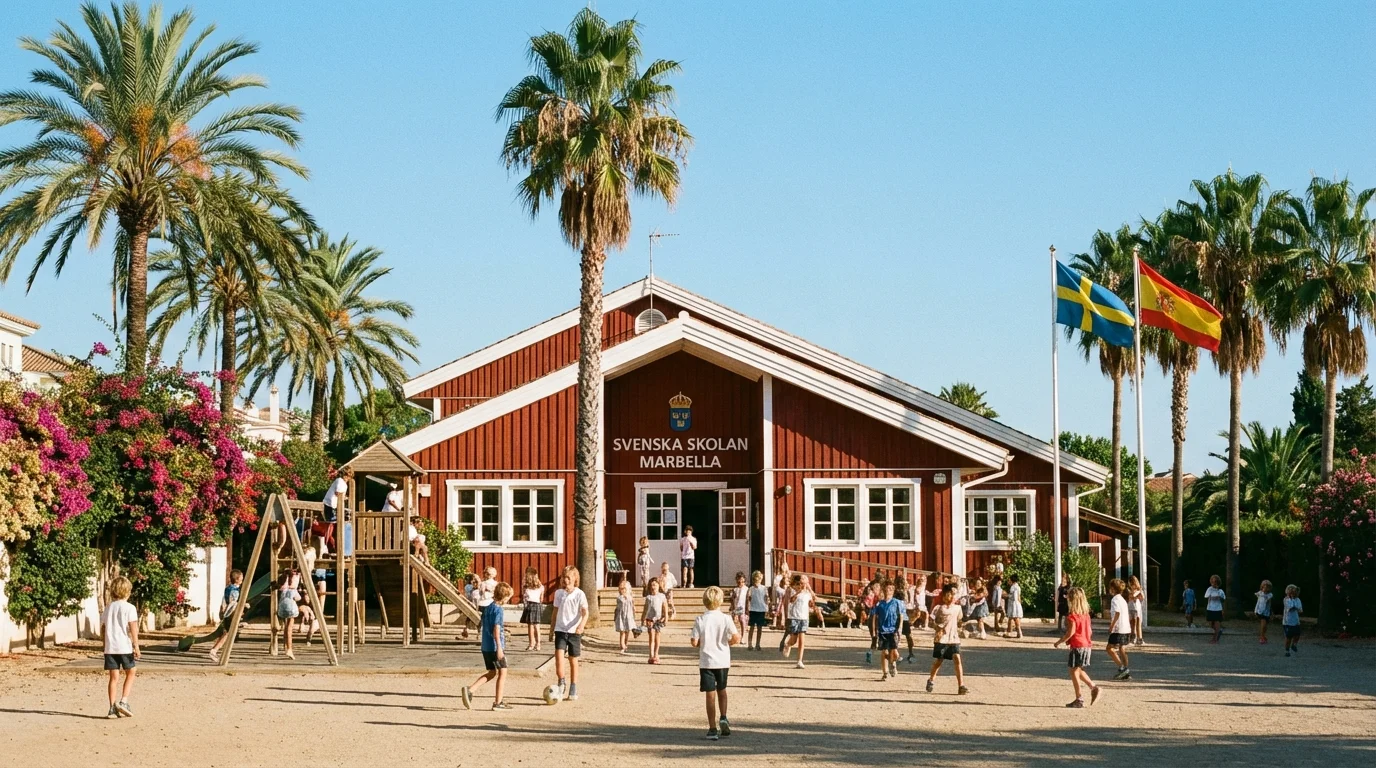
Swedish schools in Spain 2026: 5 Skolverket-approved schools in Fuengirola, Orihuela Costa and more. Fees, levels and how to choose and apply.
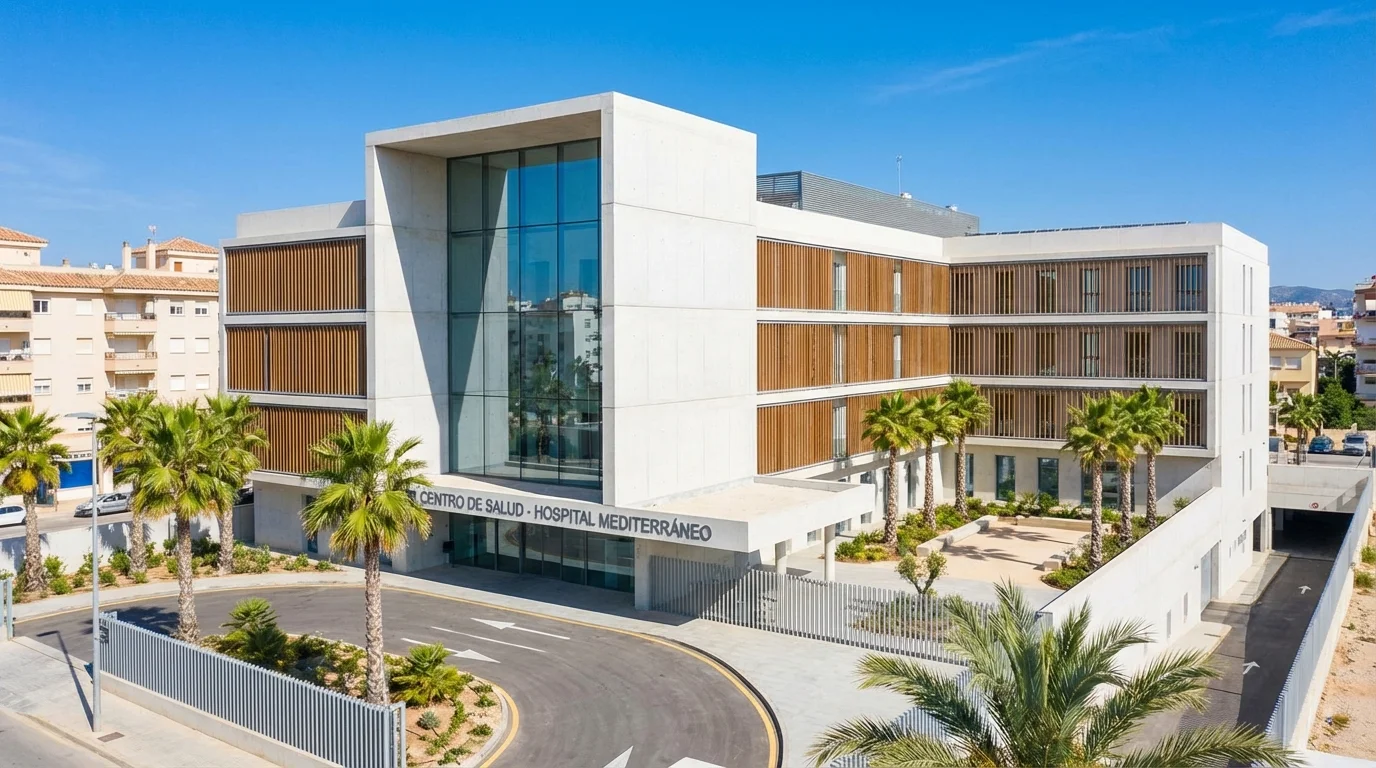
Complete guide to healthcare in Spain: public care, private options, EU card, SIP card and how to access healthcare as a Swedish resident.