
Moving & Living
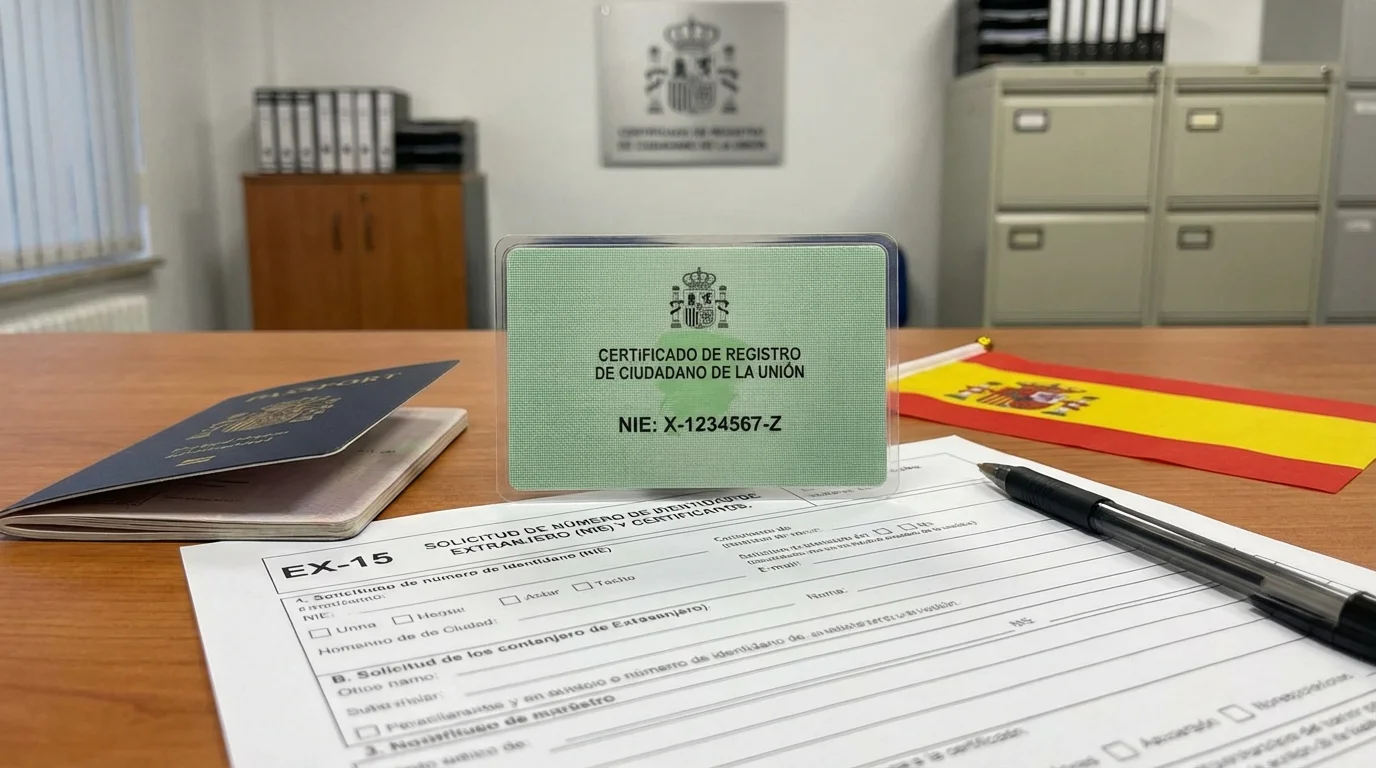
NIE Number in Spain – Complete Guide 2026 (Application, Forms, Waiting Times)
Spanish NIE number 2026: step-by-step guide from Sweden or Spain. EX-15 form, Modelo 790, €9.84 fee, waiting times and NIE/NIF/TIE explained.
15 min
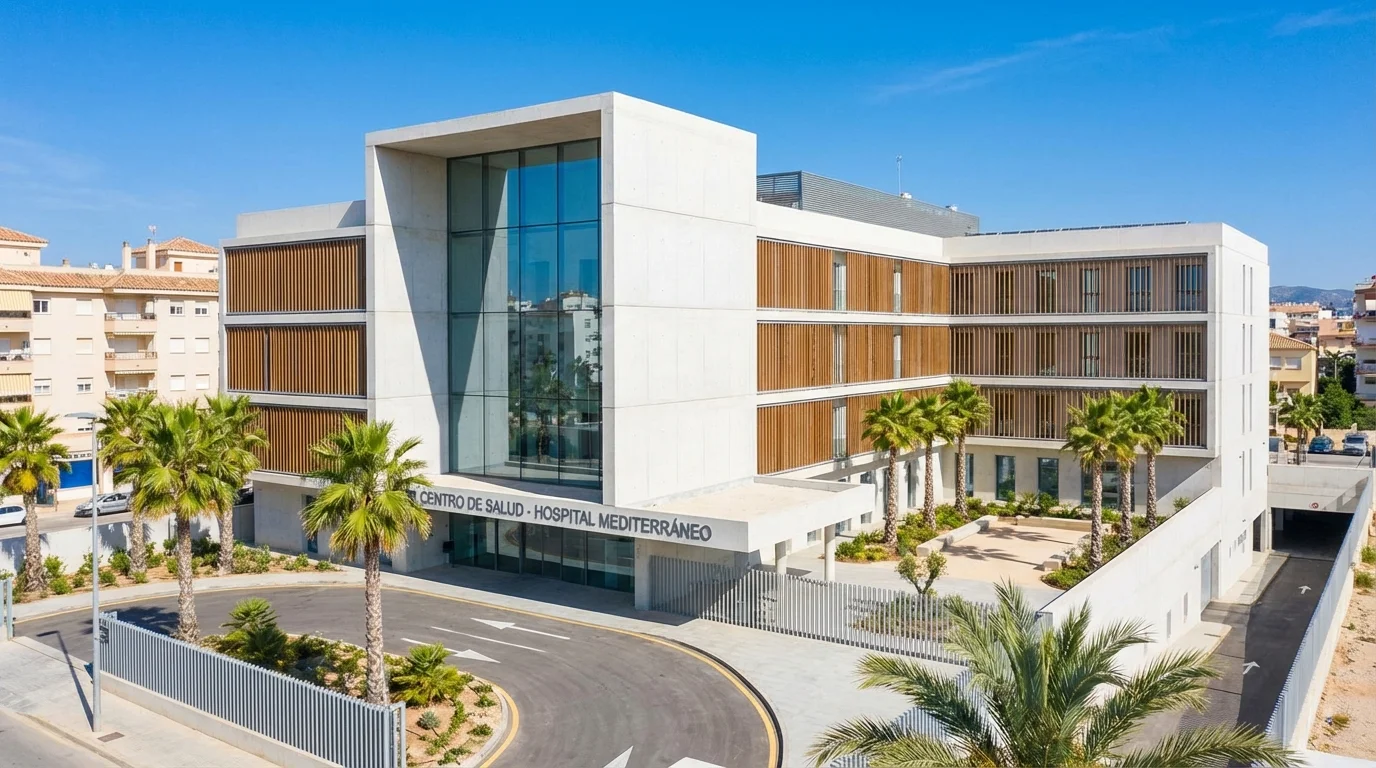
Complete guide to healthcare in Spain: public care, private options, EU card, SIP card and how to access healthcare as a Swedish resident.
Spain's healthcare system is ranked among the best in Europe. The system is universal, tax-based and essentially free at the point of treatment — but as a Swede you need to know what care you are entitled to and how to access it. The answer depends on whether you are a tourist, a pensioner or a permanent resident.
If you are a tourist, the EU card covers emergency care at public hospitals. If you are resident and registered (empadronado) you can get a SIP card giving you the same rights as a Spanish citizen. Pensioners with an S1 form from Försäkringskassan don't need private insurance at all. And if you want to avoid queues, private health insurance costs from 50 euros per month.
In this guide we go through everything: public and private care, EU card and SIP card, hospitals on the Costa Blanca and Costa del Sol, how pharmacies work, emergency care, dental care and the key differences from Swedish healthcare.
Spain's national healthcare system is called SNS (Sistema Nacional de Salud) and is built on the same basic principle as Swedish healthcare: universal access funded through taxes. The state spends approximately 99.3 billion euros per year on public healthcare, roughly 2,079 euros per resident.
The system is decentralised. Spain's 17 autonomous regions (comunidades autónomas) each manage their own healthcare. This means that waiting times, quality and organisation can differ between, for example, the Valencia region and Andalusia — just like the differences between Swedish county councils.
In practice it works like this: you are assigned a health centre (centro de salud) near your home and a GP (médico de cabecera). The GP is your first point of contact for everything that isn't an emergency. If you need specialist care the GP writes a referral. For emergency care you go directly to hospital emergency departments (urgencias).
Public healthcare covers GP visits, specialist care, hospital stays, operations, childbirth, cancer treatment and psychiatric care. Prescription medicines are subsidised — you normally pay 40–50% of the price at the pharmacy, while pensioners pay 10% with a monthly cap of 8–18 euros.
Information
Did you know? Spain is ranked number 7 in the world for healthcare quality according to the WHO Healthcare Access and Quality Index. The Spanish system receives particularly high marks for organ transplantation — Spain has been the world leader in organ donations per capita for over 30 years.
As a Swedish citizen (EU citizen) your right to Spanish healthcare depends on your situation. There are three main scenarios.
Your European Health Insurance Card (EHIC, or the EU card) covers medically necessary care during temporary visits. It applies at public hospitals and health centres, not private clinics. You are treated on the same terms as Spanish citizens — meaning with the same possible co-payments. The card is ordered free of charge from Försäkringskassan and is valid throughout the EU/EEA.
Important: the EU card does not cover planned care. If you travel to Spain specifically to have an operation, that is not covered. It also doesn't cover repatriation — for that you need travel insurance.
If you are a Swedish pensioner moving permanently to Spain you can request an S1 form (previously E121) from Försäkringskassan. The S1 form transfers your healthcare rights from Sweden to Spain. You register it with INSS (Instituto Nacional de la Seguridad Social) in Spain and then receive a SIP card giving full access to public healthcare — without paying Spanish social security contributions.
Sweden continues to pay for your care, but you are treated within the Spanish system. This is the most straightforward solution for pensioners.
If you work in Spain (as an employee or self-employed) and pay Spanish social security contributions you automatically have the right to full public healthcare. You and your family members are registered in the system and receive SIP cards.
Note
Note: If you are resident in Spain but are neither a pensioner, employee nor self-employed, you do not automatically have the right to public healthcare. You can take out a convenio especial (special agreement) with the Spanish healthcare system for approximately 60 euros per month (under 65) or 157 euros per month (over 65). Alternatively you take out private health insurance — which most residencia applications require anyway.
The SIP card (Tarjeta Sanitaria Individual) is your key card to Spanish public healthcare. Without it you cannot book a doctor's appointment, get prescriptions or visit your GP. The card is a plastic card with your name, SIP number and your assigned GP.
The process varies slightly between regions, but the basic steps are the same:
In the Valencia region (which includes the Costa Blanca) you can also handle parts of the process online via the GVA Sanitat website.
Public healthcare in Spain generally maintains high medical quality, but there are challenges — above all waiting times.
Your GP (médico de cabecera) at the nearest centro de salud is the first port of call for everything that isn't an emergency. You book an appointment by phone, app (in many regions) or in person. The waiting time to see the GP is normally 1–5 days, sometimes the same day.
The visit is free. The GP writes referrals to specialists, renews prescriptions and manages chronic conditions. The quality of primary care is generally good, and many centros de salud have a laboratory and X-ray on site.
This is where the major downside of public healthcare in Spain comes: waiting times. The average waiting time for specialist care is 95 days (2025), but it varies greatly. Orthopaedics, dermatology and neurology often have the longest queues — sometimes over 120 days. Cardiology and oncology are given higher priority and have shorter waiting times.
Once with the specialist, care is free and quality is generally high. Spanish specialist doctors have long training (6 years of initial study plus 4–5 years of specialisation) and hospital equipment is modern.
Hospital stays, operations and intensive care in the public system are free of charge. Spain has well-equipped hospitals with modern technology. The downside is the waiting time for planned operations — the average is 77 days for elective surgery.
Around 25% of Spain's population have private health insurance, often as a supplement to public healthcare. For Swedish expats, private insurance is especially popular — it eliminates waiting times and provides access to English-speaking doctors.
Prices vary with age, coverage and insurance company:
Private health insurance — approximate monthly prices
30–40 years
50–80 € (cuadro)
Reimbursement: 120–200 €/month.
40–55 years
75–120 € (cuadro)
Reimbursement: 180–300 €/month.
55–65 years
100–170 € (cuadro)
Reimbursement: 250–400 €/month.
65–75 years
150–250 € (cuadro)
Reimbursement: 350–550 €/month.
Cuadro médico is the most common type — you choose a doctor and hospital within the insurance company's network. Reembolso gives you freedom to choose any doctor and get reimbursed afterwards, but costs 2–3 times more.
The largest private insurance companies in Spain are Sanitas, Adeslas (SegurCaixa), Asisa, Mapfre and DKV. Sanitas and Adeslas have the largest networks with the most clinics and hospitals.
Tip
Tip: If you are applying for residencia (right of residence) most applications require private health insurance without a copago (co-payment). Check that your insurance meets the requirement before you apply. Cuadro médico plans without copago are usually the cheapest option that meets the requirement.
Properties
Explore available properties in Costa Blanca
Browse current homes in the area and compare locations, price levels and property types at your own pace.
The Costa Blanca has well-developed healthcare with both public and private hospitals. Here are the most important ones.
Hospital Universitario de Torrevieja — Torrevieja's public hospital with a full emergency department, operating theatres and specialist wards. The hospital has been run under a public-private partnership (concession) since 2006 and serves the entire southern Costa Blanca.
Hospital de la Vega Baja (Orihuela) — Regional hospital for the Vega Baja area with emergency care and the most common specialties.
Hospital General Universitario de Alicante — The largest public hospital in the Alicante region with advanced specialist care, a cancer centre and a trauma unit.
Hospital del Vinalopó (Elche) — Modern hospital opened in 2010, serving Elche and surroundings.
Hospital Quirónsalud Torrevieja — The most well-known private hospital on the Costa Blanca. Part of the Quirónsalud group, Europe's largest private healthcare chain. The hospital has over 400 doctors, 50+ specialties and an international department with staff speaking 11 languages — including Swedish. According to IEH 2025, it is ranked as the best private hospital in the Valencia region. 60% of patients are international.
Hospital Quirónsalud Alicante — Same chain, located in Alicante city with full specialist care.
Hospitales Vithas — Private hospital chain with clinics in Alicante and Benidorm.
The Costa del Sol also has excellent healthcare infrastructure, adapted for the large international population.
Hospital Universitario Costa del Sol (Marbella) — Regional hospital for the western Costa del Sol. Recognised by WHO and UNICEF as a leading centre for maternity care. The hospital has volunteer interpreters for international patients and sits along the A7 motorway just east of central Marbella.
Hospital Regional Universitario de Málaga — Málaga's university hospital, one of Andalusia's largest, with advanced specialist care and research.
Hospital Quirónsalud Marbella — Part of the Quirónsalud chain with English-speaking staff and a high international profile.
Vithas Xanit International (Benalmádena) — Modern international hospital with multilingual staff (English, German, Scandinavian languages). Particularly known for orthopaedics and rehabilitation.
HC Marbella International Hospital — Private hospital with a strong international profile and advanced cancer treatment.
Hospiten Estepona — The most modern private hospital in the area with operating theatres, intensive care and day surgery.
Spanish pharmacies (farmacias) differ from Swedish ones in a few important ways. They are easy to find — look for the green or red cross above the door.
Most pharmacies are open 09:30–14:00 and 17:00–21:30 on weekdays. Saturdays usually 09:30–14:00. Many are closed during the lunch break (14:00–17:00) in the Spanish tradition.
What sets Spain apart from Sweden: there is always an on-call pharmacy (farmacia de guardia) nearby, around the clock, every day. The on-call schedule rotates between pharmacies in each municipality and is posted on all pharmacy doors. You can also search online via your municipality's website.
In Spain you can only buy medicine at a pharmacy — not in supermarkets or petrol stations. Even paracetamol and ibuprofen are sold only at farmacias. Prescription medicines require a prescription from a doctor. Prescriptions are usually electronic — the pharmacist retrieves them directly with your SIP card or ID number.
Pharmacists in Spain have long training and may give medical advice. They can recommend over-the-counter medicines, check blood pressure and blood sugar levels and, in some regions, administer vaccinations.
The emergency number in Spain is 112 — it works from all phones, is free and has operators who speak English. Call 112 in life-threatening situations.
All public hospitals have emergency departments open around the clock. You don't need a SIP card, insurance or a booking — emergency care is given to everyone, regardless of nationality and insurance status. Show your EU card if you have one, otherwise you may be billed afterwards.
Patients are triaged on arrival (prioritised by severity). Life-threatening cases are treated immediately. Less acute matters can involve 2–4 hours of waiting, sometimes longer.
For urgent but not life-threatening matters — high fever, sprains, ear infections — there are out-of-hours clinics (Puntos de Atención Continuada, PAC) attached to health centres. They are open evenings, nights and weekends and take pressure off hospital emergency departments. Waiting times are often shorter here.
Dental care is essentially not included in the public system for adults. Children up to 15 years have some basic dental care. Acute dental problems (abscesses, jaw fractures) are treated in the emergency department, but routine care you pay for yourself.
Dental care in Spain is significantly cheaper than in Sweden — often 30–50% lower:
Dental care — approximate prices in Spain
Examination + cleaning
50–100 €
Filling
80–150 €
Implant
500–800 €
Crown
250–450 €
Fixed braces
2,000–3,500 €
Full denture
from 600 €
The quality of Spanish dental care is generally high. Many clinics on the Costa Blanca and Costa del Sol have English-speaking staff and market themselves to international patients.
Separate dental insurance is available from around 10–15 euros per month and provides discounts on treatments plus free check-ups. Sanitas and Adeslas offer popular dental plans.
Tip
Tip: Certain autonomous regions — including the Valencia region and the Canary Islands — allow you to deduct dental costs from your Spanish income tax return. Always keep receipts and invoices.
These are the most important differences that Swedes notice:
Waiting times: Primary care works similarly in both countries — you see your GP within days. Specialist care has longer queues in Spain (95-day average) compared with Sweden (on average shorter, but with major regional variation). Elective surgery takes an average of 77 days in Spain compared with approximately 50 days in Sweden.
Medication costs: In Sweden you pay a co-payment with a high-cost protection that resets after 2,600 kronor per year. In Spain working-age people pay 40–50% of medication costs, without a cap. Pensioners pay 10% with a cap of 8–18 euros per month depending on income.
Accessibility: Spanish pharmacies sell over-the-counter medicines that in Sweden may require a prescription. Pharmacists give more advice and screening services. On the other hand, digital care (video consultations with doctors) is not as developed in Spain as in Sweden.
Private care: In Sweden, private healthcare is used marginally. In Spain, 25% of the population have private insurance, and among expats the figure is even higher. The private system is well integrated and maintains high quality.
Language: The obvious challenge. In public healthcare the staff speak Spanish, sometimes Valencian/Catalan. English varies — at large hospitals in tourist areas it's available, at small health centres not always. Private hospitals with an international profile (Quirónsalud, Vithas Xanit) offer care in several languages.
Contact
We help Swedes find the right property on the Costa Blanca and Costa del Sol — and are happy to answer practical questions about life in Spain. Book a free call.
Book a free consultationLast updated: April 2026. Rules and fees can change — contact us for current information.
Decision support
Det beror på din situation. Är du turist täcker EU-kortet (EHIC) akut och nödvändig vård på offentliga sjukhus.
Är du permanent bosatt och folkbokförd (empadronamiento) med SIP-kort har du samma rätt till gratis offentlig vård som spanjorer. Pensionärer med S1-formulär från Försäkringskassan får också full tillgång.
Är du varken anställd eller pensionär kan du teckna convenio especial från cirka 60 euro per månad.
Genomsnittlig väntetid för specialistvård i den offentliga vården är 95 dagar (2025), men det varierar kraftigt mellan regioner och specialiteter. Ortopedi och dermatologi har längst köer.
I privat vård får du normalt tid inom 1-5 dagar. Många svenskar i Spanien använder offentlig vård för bassjukvård och akut, men privat försäkring för specialistbesök.
En privat sjukförsäkring kostar 50-150 euro per månad för en person under 50 år. För en 65-åring ligger premien på 150-250 euro per månad.
Priserna varierar beroende på försäkringsbolag, täckningsgrad och om du väljer cuadro médico (nätverksplan) eller reembolso (ersättningsplan). De vanligaste bolagen är Sanitas, Adeslas, Asisa och Mapfre.
Ja, det europeiska sjukförsäkringskortet (EHIC) gäller vid tillfälliga besök i Spanien. Det täcker medicinskt nödvändig vård på offentliga sjukhus och vårdcentraler, på samma villkor som för spanska medborgare.
Kortet gäller inte för planerad vård eller privata kliniker. Är du bosatt i Spanien mer än 90 dagar behöver du istället SIP-kort eller privat försäkring.
Nej, tandvård ingår i princip inte i det offentliga systemet för vuxna. Barn under 15 år har viss grundläggande tandvård, och akuta tandproblem (abscesser, trauma) behandlas på akutmottagningen.
Rutinkontroller, lagningar, implantat och tandreglering betalas ur egen ficka eller via separat tandvårdsförsäkring. En kontroll med rengöring kostar cirka 50-100 euro, ett implantat 500-800 euro.
Sources
Spanish NIE number 2026: step-by-step guide from Sweden or Spain. EX-15 form, Modelo 790, €9.84 fee, waiting times and NIE/NIF/TIE explained.
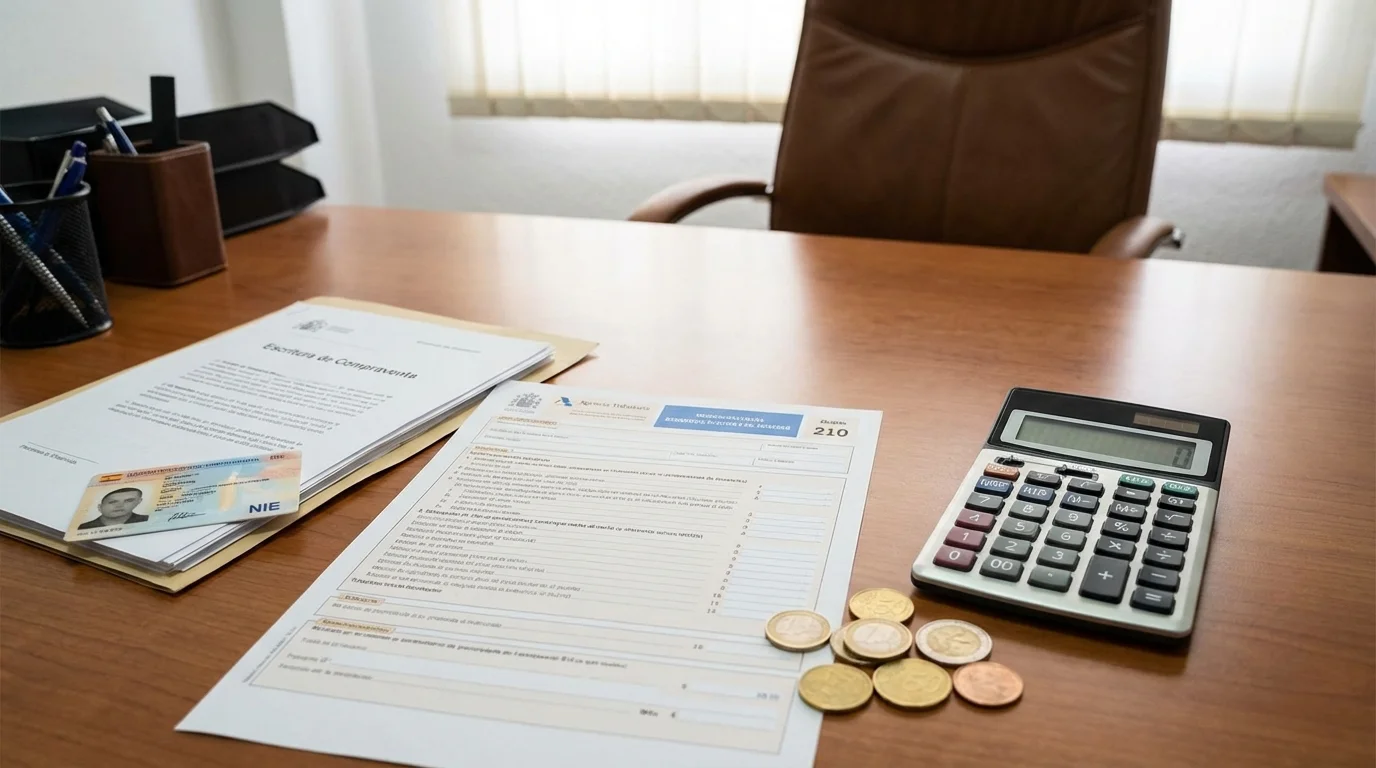
Complete tax guide for Swedes with property in Spain: IBI, IRNR, wealth tax, capital gains and the double taxation agreement. Updated 2026.

Buying a house in Torrevieja: prices by area, purchase process, taxes, NIE and mortgages — practical guide for Swedes who want to live on Costa Blanca 2026.