

Buying Guides
Cheap Houses in Spain for Sale 2026 – Where Do You Find the Best Prices?
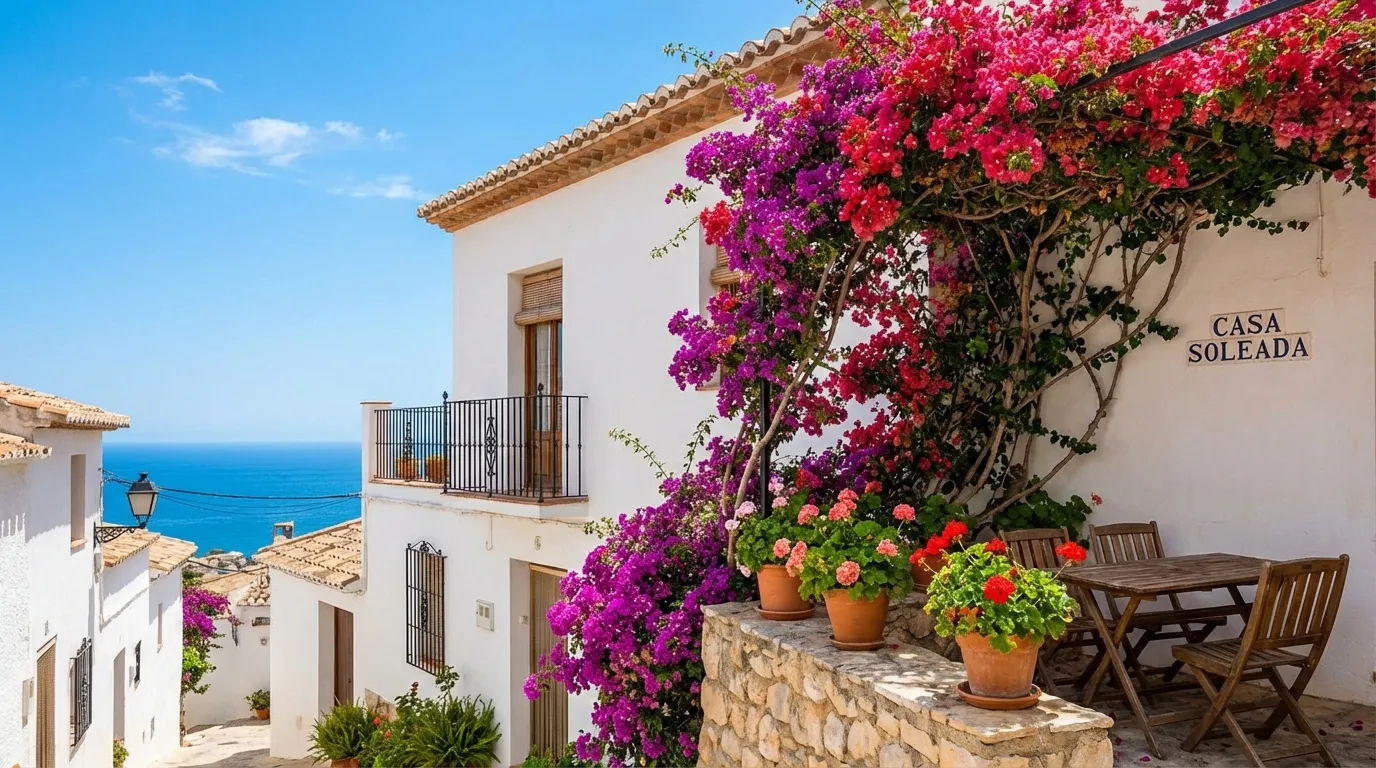
Cheap houses in Spain from 80,000 €: prices on Costa Blanca, Costa Cálida, Torrevieja and Mazarrón — hidden costs, risks and tips for bargains in 2026.
15 min
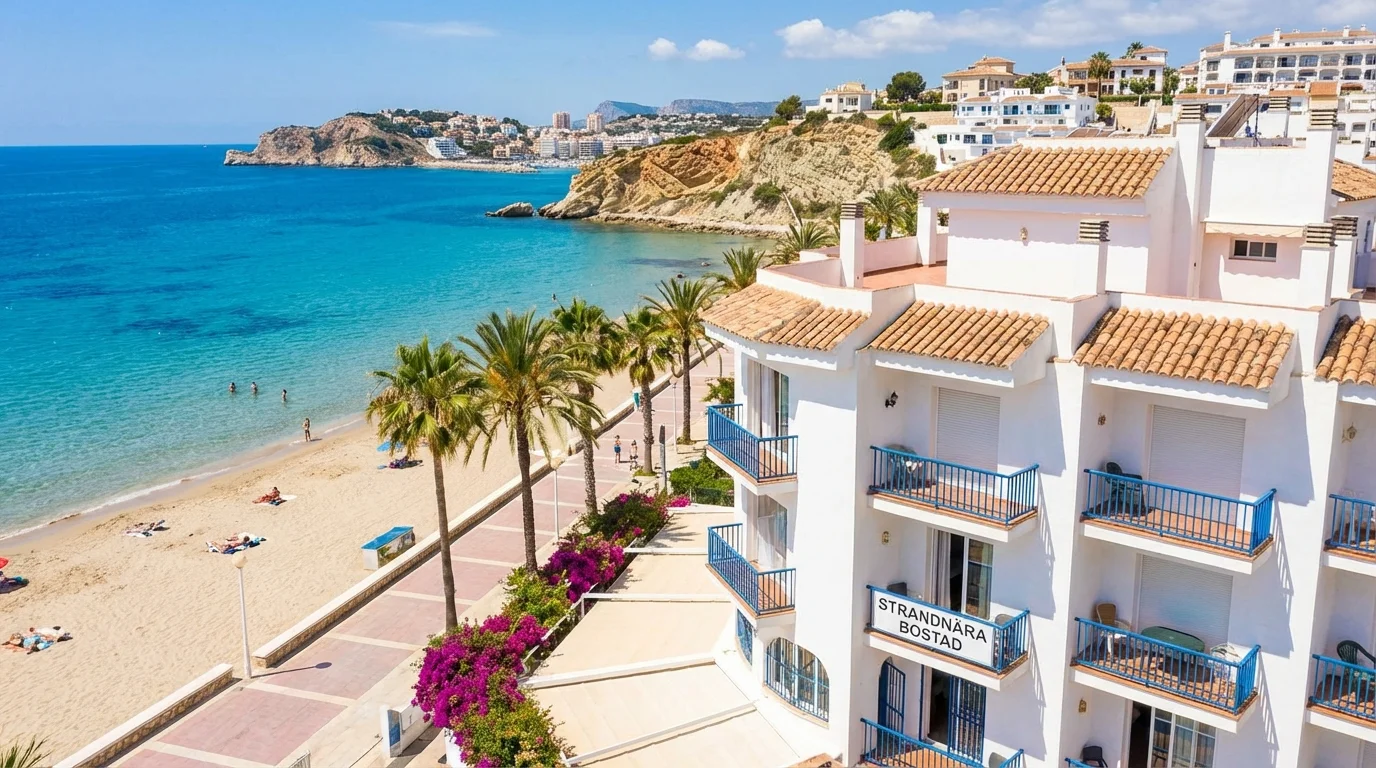
Find beachside property in Spain: the best areas, prices by region, what counts as beachside, the Ley de Costas and what to think about as a buyer in 2026.
A beachside apartment with sea views in Spain costs from €80,000 in the Murcia region to over €500,000 in Marbella — depending on the coast, distance to the water and type of property. On the Costa Blanca, which is most popular among Swedish buyers, you can find two-bedroom apartments within 500 metres of the beach from €130,000–€170,000 in Torrevieja and La Mata.
But beachside living in Spain involves more than just sun and swimming. You need to understand what "beachside" actually means in Spanish estate agent jargon, how the Ley de Costas (Coastal Law) can limit your rights, and why salt air and humidity drive up maintenance costs. This guide covers everything: definitions, prices by region, advantages, disadvantages and the legal pitfalls you need to know before you sign.
There is no official definition of "beachside" in Spanish legislation. But the property industry uses three established terms you should know:
Primera línea de playa (first beach line) means that no other building stands between your property and the beach. You can see the sea directly from your terrace or balcony. This typically refers to properties within 50–100 metres of the water. The first line is the most sought-after — and most expensive — category.
Segunda línea (second line) means there is a row of buildings between you and the beach. The distance is typically 100–300 metres. You may still have a glimpse of the sea from upper floors, and the beach is reached in a 2–5 minute walk.
Beachside (within 500 metres) is the broader category that most estate agents mean when they market properties as "close to the beach". Within 500 metres you can reach the sandy beach in under ten minutes on foot. Properties within this radius still carry a clear price premium compared with properties further inland.
Beyond 500 metres and up to one kilometre, one speaks more of "close to the sea" or "with sea views". The price difference compared with genuinely beachside properties diminishes significantly after the 500-metre mark.
Tip
Tip: Always ask the estate agent to specify the exact distance in metres to the nearest beach — not "walking minutes" or "close to the beach". Walking minutes vary depending on hilly terrain, steps and road crossings. Google Maps gives you the actual distance.
Three coastal regions dominate among Swedish buyers looking for beachside accommodation: the Costa Blanca, the Costa del Sol and the Costa Cálida. They differ considerably in price, character and supply.
Torrevieja and southern Costa Blanca have the largest concentration of Scandinavian residents in Spain. The average price in Torrevieja is €2,719 per square metre, but beachside properties (within 300 metres) cost 15–30% more. Northern Costa Blanca — Jávea, Dénia, Altea — is more expensive, with average prices of €3,700–€4,100 per square metre in beachside locations.
The advantages of the Costa Blanca are well-developed infrastructure, Alicante airport with direct flights from Stockholm and Gothenburg, and an established network of Swedish-speaking estate agents, lawyers and healthcare providers.
The Costa del Sol stretches from Málaga to Gibraltar and offers Spain's most established luxury market. Marbella topped out with an average price of €5,485 per square metre at the end of 2025, an increase of 9–10% compared with the previous year. Estepona (€4,116/m²) and Mijas (€3,569/m²) offer cheaper options with the same type of beachside accommodation.
The advantage of the Costa del Sol is Málaga's international airport with more departures and a broader cultural offering. The downside is that prices are 30–50% higher than southern Costa Blanca for comparable properties.
Costa Cálida in the Murcia region is the most affordable coastal region with an average price of €1,776 per square metre. Beachside apartments in Mazarrón and Águilas are available from €80,000–€120,000. The Mar Menor area (Los Alcázares, San Pedro del Pinatar) offers calm inland sea and prices from €120,000 for two-bedroom apartments.
The downside is that the infrastructure for international residents is not as developed. Fewer Swedes live here, and the supply of Swedish-speaking services is limited.
Properties
Explore available properties in Torrevieja
The price difference between beachside and inland is notable. A property on the first beach line costs on average 25–60% more than an equivalent property one kilometre from the sea, depending on the region. Here is an overview by coastal region.
Price overview
| Area | Apartment | Villa | Townhouse |
|---|---|---|---|
| Torrevieja (CB South) | €130,000 – €220,000 | €280,000 – €500,000 | €200,000 – €350,000 |
| Orihuela Costa (CB South) | €150,000 – €260,000 | €300,000 – €600,000 | €220,000 – €380,000 |
| Jávea / Dénia (CB North) | €220,000 – €450,000 | €450,000 – €1,200,000 | €300,000 – €550,000 |
| Marbella (CdS) | €300,000 – €700,000 | €600,000 – €3,000,000+ | €400,000 – €800,000 |
| Estepona (CdS) | €200,000 – €400,000 | €400,000 – €1,000,000 | €280,000 – €500,000 |
| Mazarrón (CC) | €80,000 – €150,000 | €180,000 – €350,000 | €120,000 – €220,000 |
| Los Alcázares (CC) | €110,000 – €200,000 | €220,000 – €400,000 | €160,000 – €280,000 |
Prices refer to beachside properties (within 500 metres of the beach) in acceptable condition. New construction is generally 15–25% above these levels. CB = Costa Blanca, CdS = Costa del Sol, CC = Costa Cálida.
Beachside accommodation in Spain comes in several formats, each with its own advantages and limitations.
The most common format for beachside accommodation. Modern complexes have a shared pool, garden and often a padel court. Apartments in 2–5 storey buildings with lifts dominate the supply in Torrevieja, Orihuela Costa and along the Costa del Sol. Community fees are €50–€150 per month depending on the facilities.
Penthouse apartments (áticos) with large terraces and sea views cost 20–35% more than regular apartments in the same complex but give significantly better sea views and more private outdoor space.
Terraced houses near the beach offer more living space and often a private rooftop terrace (solarium) with sea views. They are common in southern Costa Blanca and Costa Cálida. Prices are 30–50% above apartments in the same area, but you avoid lift dependency and get a feeling of owning your own house.
Detached villas in beachside locations are rare and expensive. The limited supply is due to the fact that Spanish coastal legislation (Ley de Costas) and urban planning make it difficult to build detached houses close to the beach. The villas that do exist are often in established urbanizaciones and command high prices — from €400,000 on the Costa Cálida to several million on the Costa del Sol.
Beachside living attracts with lifestyle and capital appreciation — but there are downsides that estate agent listings rarely mention.
Quality of life and daily beach access. The most obvious reason. Being able to walk to the beach in five minutes transforms everyday life. Morning swims, evening walks along the promenade and the sea breeze make a big difference to wellbeing.
Better rental potential. Beachside properties generate 30–50% higher rental income during the summer season compared with equivalent properties further inland. A two-bedroom apartment within walking distance of the beach in Torrevieja can generate €600–€900 per week in July–August.
Stronger capital appreciation. Beachside properties have historically held their value better during downturns and risen faster during upturns. The supply of land close to the beach is limited and cannot be increased — this drives long-term upward price pressure.
Higher purchase price and maintenance cost. You pay 25–60% more at purchase and 15–25% more in ongoing maintenance. Salt air and humidity wear harder on materials.
Tourism and seasonal variation. Beachside areas can be overcrowded June–September and almost deserted November–February. Noise from beach businesses, restaurants and nightlife can be significant during peak season.
Limited parking. Beachside zones often have poor parking availability, especially during summer. Many older complexes lack garage spaces.
Ley de Costas restrictions. Properties in the coastal law's protection zone have limitations that may affect rebuilding and long-term value (see next section).
Spain's Coastal Law (Ley de Costas, Ley 22/1988) is the most important legislation to understand before buying beachside. The law was created to protect the coastline from unplanned development and ensure public access to beaches.
The law divides the coast into several zones with different restrictions:
Dominio Público Marítimo-Terrestre (public land) encompasses the beach, cliffs and a belt closest to the sea. No private individual can own land here. Existing buildings on public land may have time-limited concessions (up to 75 years) but ultimately belong to the state.
Servidumbre de tránsito (transit zone) is a 6-metre-wide strip closest to the public land (can be extended to 20 metres in hard-to-access terrain). No construction is permitted. The strip must be kept clear for pedestrian and emergency traffic.
Servidumbre de protección (protection zone) extends 100 metres inland from the beach boundary. In areas that were classified as urban before 1988, the zone is reduced to 20 metres. Within the protection zone: no new residential construction, no extensions in volume or height to existing buildings, and no change of use.
Zona de influencia (influence zone) covers a further 400 metres (500 metres total from the beach). Milder restrictions on urban planning and building density apply here.
Note
Warning — Ley de Costas: Always check with an independent lawyer (abogado) whether a beachside property is affected by the Coastal Law before signing any contract. A property in the protection zone cannot be rebuilt or extended, and concession rights may have an expiry date. The Land Registry (Registro de la Propiedad) and the municipal urban planning office can provide information, but an experienced lawyer will interpret it for you. Budget: €1,000–€1,500 for legal review.
If you buy an apartment in a complex built after 1988 that lies within 100 metres of the beach — verify that the building has valid permits. The majority of modern complexes in urbanised areas are in the reduced 20-metre zone and have correct permits. But older buildings, individual beach villas and converted fishermen's cottages may be in a legal grey area.
The most important things to verify:
Properties
Explore available properties in costa-blanca
Browse current homes in the area and compare locations, price levels and property types at your own pace.
Salt air and high humidity are the hidden cost of beachside living. Problems increase significantly the closer you are to the sea — within 300 metres the exposure is greatest.
Salt combined with moisture creates an electrolyte solution that accelerates corrosion on metals. Iron balcony railings, the outdoor unit of the air conditioning, door and window fittings and water pipes are subject to accelerated wear. Studies show that the corrosion rate within 100 metres of the shoreline can be up to ten times higher than one kilometre inland.
Information
Did you know? Humidity in beachside properties on the Costa Blanca is often 65–80% on summer evenings. A dehumidifier (deshumidificador) costs €200–€400 and significantly reduces the risk of mould in wardrobes and storage areas. It is one of the smartest investments you can make in a beachside property.
Here is a realistic breakdown based on what you can actually buy beachside (within 500 metres of the beach) in different price ranges.
Costa Cálida is your best bet. In Mazarrón you can find two-bedroom apartments with a shared pool from €80,000–€120,000, and terraced houses with a rooftop terrace from €120,000. Águilas and Puerto de Mazarrón have beachside accommodation in similar price ranges. In the Mar Menor area (Los Alcázares, San Pedro del Pinatar), two-bedroom apartments near the calm inland sea cost from €110,000.
In southern Costa Blanca you can find studio apartments beachside in La Mata or central Torrevieja from €110,000–€140,000. The condition varies — the cheapest properties often require renovation at €10,000–€20,000.
This is where the most attractive options open up. A well-maintained two-bedroom apartment with sea views and a shared pool in Torrevieja or Orihuela Costa costs €160,000–€230,000. In La Mata you can find beachside apartments within walking distance of a Blue Flag beach from €150,000.
On the Costa del Sol, €200,000–€300,000 gives you a two-bedroom apartment beachside in Fuengirola or Estepona — but not in Marbella, where you end up too far from the beach in that price range.
In Costa Cálida you can buy terraced houses or even smaller villas with a pool near the beach for under €250,000.
With this budget you have access to penthouse apartments with sea views in Torrevieja and Orihuela Costa, beachside villas in Mazarrón, modern newly built apartments in Estepona, and villas with lake views at Mar Menor.
In northern Costa Blanca, €300,000–€500,000 gives you a two-bedroom apartment beachside in Jávea or Dénia. First-line villas on the Costa del Sol start from €600,000 in Estepona and from over a million in Marbella.
Contact
We help Swedish buyers find the right beachside accommodation on the Costa Blanca and Costa Cálida. Book a free video meeting where we go through your wishes, budget and the best options — no obligations.
Book a free consultationLast updated: March 2026. Prices and regulations can change — contact us for current information.
Decision support
Det finns ingen officiell definition, men i den spanska fastighetsmarknaden betyder 'primera línea de playa' (första linjen) att ingen annan byggnad ligger mellan dig och stranden — vanligtvis inom 100 meter. 'Segunda línea' (andra linjen) innebär ett kvarter från stranden, ofta 100–300 meter. Bostäder inom 500 meter från vattnet brukar generellt marknadsföras som strandnära.
Prispremien varierar kraftigt per region. På Costa Blanca kostar första linjens bostäder 25–40 % mer än likvärdiga objekt en kilometer från stranden.
På Costa del Sol kan skillnaden vara 40–60 % i orter som Marbella. I Costa Cálida (Murcia) är premien lägre, runt 15–30 %, tack vare lägre efterfrågan och större utbud.
Ley de Costas (kustlagen) från 1988 skyddar Spaniens kustlinje. Lagen definierar en offentlig strandzon där privat ägande är förbjudet, plus en skyddszon (servidumbre de protección) på 20–100 meter inåt land där nybyggnation inte tillåts.
Befintliga fastigheter i zonen får inte byggas ut eller höjas. Kontrollera alltid om en strandnära bostad berörs av kustlagen innan köp.
Saltluft och fukt sliter hårdare på strandnära fastigheter. Räkna med ommålning av fasad vart 3–5 år istället för vart 7–10 år.
Luftkonditionering, balkongräcken och metalldetaljer behöver mer frekvent underhåll. Totalt bör du budgetera 15–25 % högre underhållskostnader jämfört med en likvärdig bostad en kilometer från havet.
Community-avgifterna är också ofta högre i strandnära komplex.
Costa Cálida i Murcia-regionen har Spaniens lägsta priser för strandnära boende, med lägenheter från 80 000 euro i orter som Mazarrón och Águilas. Södra Costa Blanca (Torrevieja, La Mata) erbjuder strandnära lägenheter från 110 000–140 000 euro.
Costa de Almería är ett annat prisvärt alternativ med genomsnitt under 1 500 euro per kvadratmeter.
Sources

Los Balcones, Alicante

Lago Jardín II, Alicante

San Luis, Alicante

Centro, Alicante

Centro, Alicante

Centro, Alicante
Local expertise
Cheap houses in Spain from 80,000 €: prices on Costa Blanca, Costa Cálida, Torrevieja and Mazarrón — hidden costs, risks and tips for bargains in 2026.
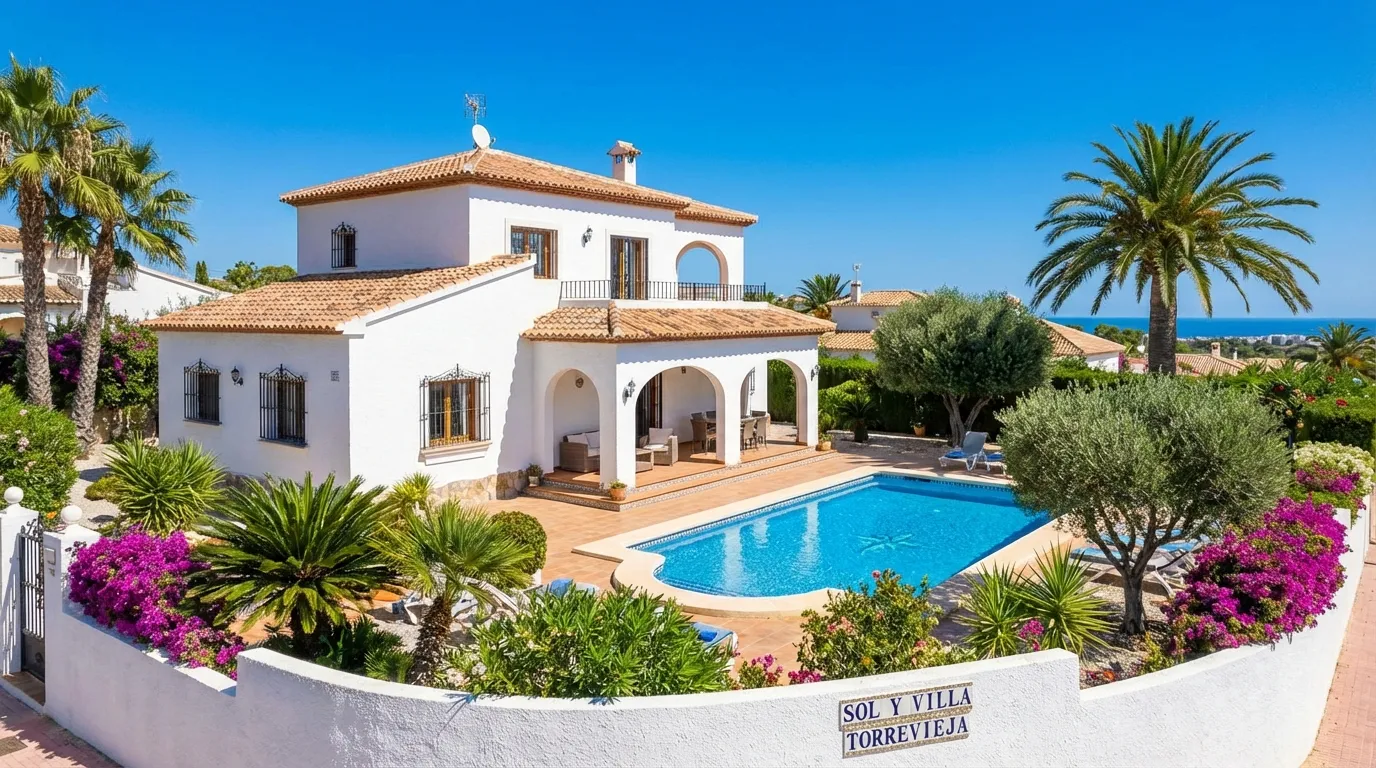
Buying a house in Torrevieja: prices by area, purchase process, taxes, NIE and mortgages — practical guide for Swedes who want to live on Costa Blanca 2026.
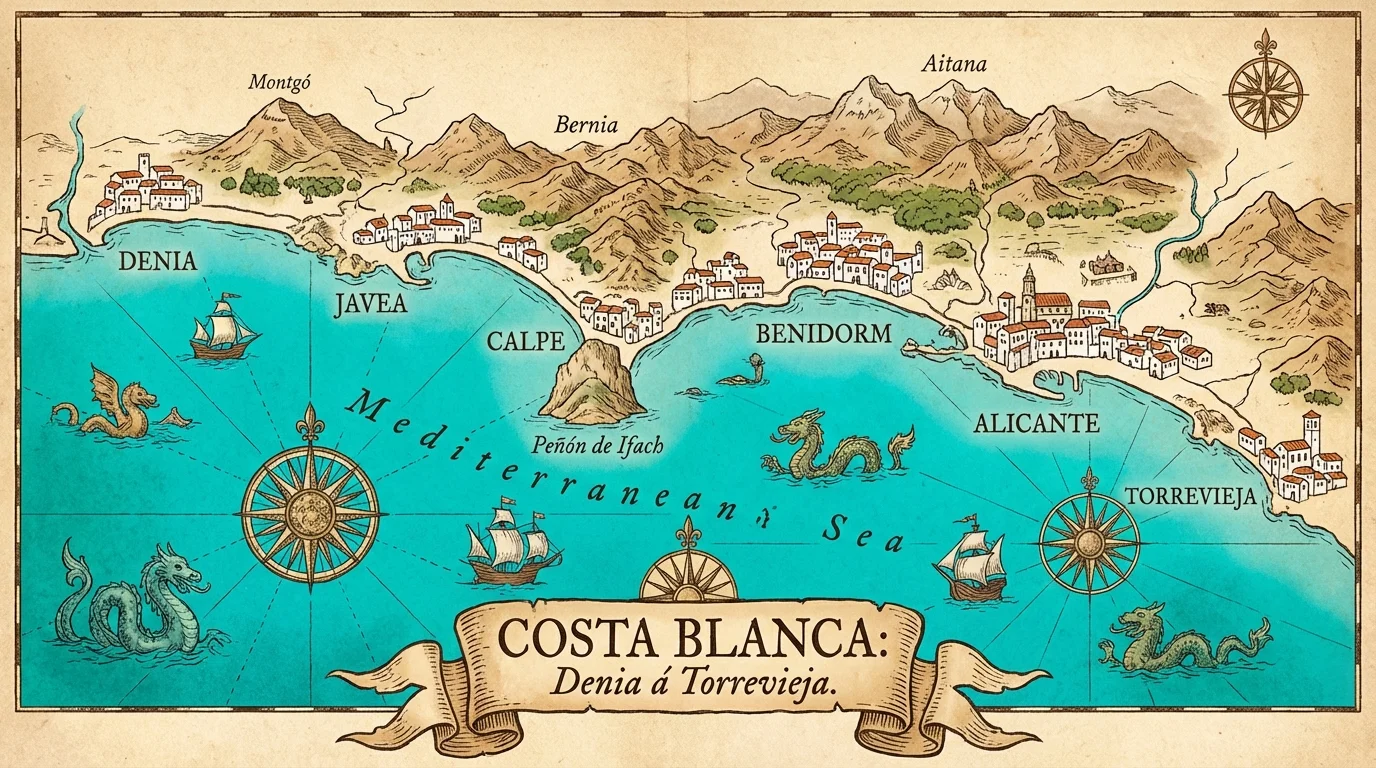
Overview of the Costa Blanca: towns and areas from Dénia to Pilar de la Horadada — map, distances, prices and tips for Swedish buyers 2026.