


Buying Guides
Buying Property in Spain 2026 – Apartments, Houses, NIE & Mortgages
Complete guide to buying a property or apartment in Spain for Swedes: purchase process, taxes, costs, mortgages, regional differences and risks — updated 2026.
19 min
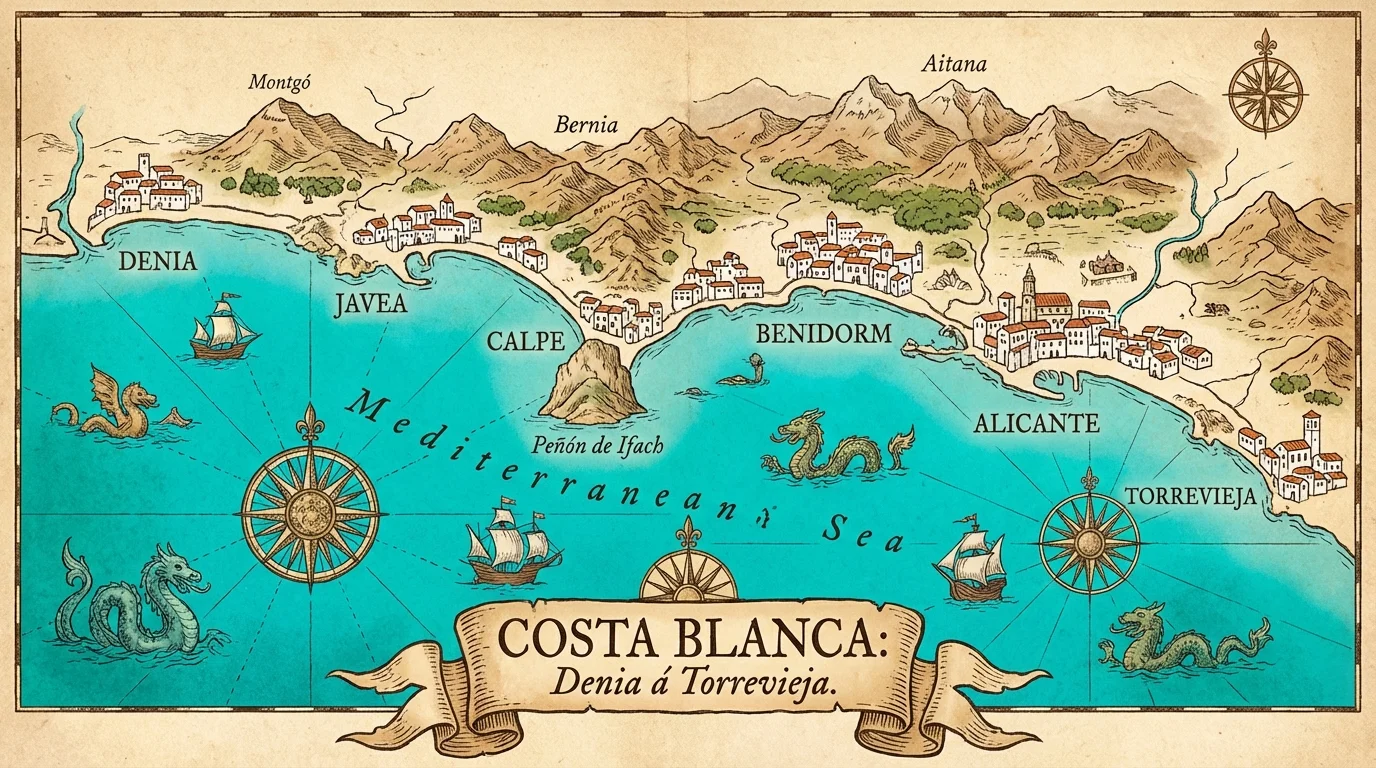
Overview of the Costa Blanca: towns and areas from Dénia to Pilar de la Horadada — map, distances, prices and tips for Swedish buyers 2026.
The Costa Blanca is the 244-kilometre stretch of coastline in the province of Alicante, from Dénia in the north to Pilar de la Horadada in the south. It is Spain's most popular coastal region among foreign property buyers — during the first half of 2025 more than 20,000 property transactions were completed by international buyers in this area alone. Prices vary enormously: from 1,800 euros per square metre in central Torrevieja to over 5,000 euros in Jávea's best locations.
The coast is traditionally divided into two halves — Costa Blanca Norte (north of Alicante city) and Costa Blanca Sur (south of Alicante) — and choosing between them is about entirely different lifestyles, budgets and priorities. This guide gives you a complete overview of all the important towns, distances, price differences and practical information you need to find your bearings along the entire coast.
The Costa Blanca lies on Spain's south-eastern Mediterranean coast and belongs entirely to the province of Alicante within the autonomous community of Valencia (Comunitat Valenciana). The coast begins at Dénia in the north — where Alicante province meets Valencia province — and stretches southward to Pilar de la Horadada, at the border with the Murcia region.
Along these 244 kilometres you will find more than 170 beaches and coves, from wide sandy beaches like Playa de San Juan to hidden rocky inlets near Cabo de la Nao. The landscape varies dramatically: in the north the mountains rise straight out of the sea with peaks exceeding 1,000 metres, while the southern coast is flat and open with salt lakes and sand dunes.
Alicante city, with its 358,000 inhabitants, serves as the region's capital and natural centrepoint. It is also where the Costa Blanca's main airport is located — Alicante-Elche Miguel Hernández (ALC), which set a new record in 2025 with nearly 20 million passengers.
Information
Costa Blanca literally means "the white coast" in Spanish — a name that comes from the bright cliffs and white sand that characterise parts of the coastline. The entire coast belongs to Alicante province and should not be confused with Costa del Sol (Málaga) or Costa Cálida (Murcia).
The most common division is Costa Blanca Norte — from Dénia down to Alicante city — and Costa Blanca Sur — from Alicante southward to Pilar de la Horadada. The differences are marked.
Northern Costa Blanca is characterised by mountainous terrain, charming fishing villages and a more traditional Spanish atmosphere. The towns are often smaller, the landscape greener and the development more spread out. It attracts buyers seeking peace, nature and exclusivity. Prices are generally higher, and there are fewer large-scale new-build projects.
Southern Costa Blanca is flatter, drier and more distinctly international. Here you find large urbanisations, golf courses and shopping centres aimed at foreign residents. Torrevieja and Orihuela Costa have among Spain's largest Scandinavian and British communities. Prices are lower, the supply of new builds greater and the infrastructure adapted for international buyers.
In brief: the north offers more nature and Spanish authenticity at a higher price; the south offers more convenience and a lower entry price with a more international everyday environment.
Here are the most important towns from north to south, with their character and approximate price levels.
Dénia (43,000 inhabitants) lies furthest north and is the gateway to the Costa Blanca. The city has a historic castle, an active fishing harbour and was named a UNESCO Creative City of Gastronomy in 2015. Ferries to Ibiza and Mallorca also depart from here. Dénia has a long sandy beach to the south (Las Marinas) and rocky coves to the north (Las Rotas). Property prices are around 2,050–3,200 euros per square metre depending on location.
Jávea lies 10 kilometres south of Dénia and is one of the most sought-after towns on the Costa Blanca. The town has three distinct zones: the historic old town, the harbour with restaurants, and Arenal beach with the liveliest bathing water. The microclimate — sheltered by the Montgó mountain — gives milder winters than surrounding towns. Prices range from 3,000–5,000 euros per square metre, and exclusive villas with sea views can reach close to one million euros.
Moraira is a small, exclusive town (12,000 inhabitants) with a beautiful promenade and charming fishing harbour. No mass tourism, no tower blocks — just villas, restaurants and a relaxed atmosphere. Prices range from 2,500–4,500 euros per square metre, with villas being the most common property type.
Calpe is known for its iconic rock Peñón de Ifach (332 metres high) that juts straight out into the sea. The town has good beaches on both sides of the rock and an active urban life with a large international population. Prices are around 2,800 euros per square metre, but seafront apartments with views can reach 4,500 euros per square metre.
Altea is often called the most beautiful village on the Costa Blanca — and with good reason. The whitewashed old town with its blue-domed church, cobblestones and sea views is unforgettable. Altea attracts artists, retirees and buyers who want charm over size. Prices have risen sharply and now stand at 3,000–4,100 euros per square metre in central locations.
Benidorm (72,000 inhabitants) is the only real seaside city on the Costa Blanca, with skyscrapers, entertainment venues and two wide city beaches — Playa de Levante and Playa de Poniente. The city has a reputation as a concrete jungle, but actually offers Europe's best climate (WHO has named Benidorm as having one of the world's best microclimates), a functioning year-round urban life and surprisingly affordable housing. Apartments cost 2,500–3,500 euros per square metre on the seafront.
Villajoyosa, with its colourful fishermen's houses along the river mouth, is an underrated gem south of Benidorm. It combines genuine Spanish urban life with chocolate manufacturing (the Valor factory), a beautiful beach and significantly lower prices than its neighbour. Apartments can be found from 1,800–2,500 euros per square metre.
Properties
Explore available properties in altea
South of Alicante city the landscape changes — it becomes flatter, drier and more distinctly international. Here are the most important towns.
Alicante (358,000 inhabitants) is the regional capital and the Costa Blanca's only genuine city with full-scale infrastructure: university, hospital, tram, high-speed train to Madrid and one of Spain's most vibrant food scenes. Prices range from 2,500–3,500 euros per square metre in the most popular neighbourhoods such as Playa de San Juan and Cabo de las Huertas.
El Campello is located five kilometres north of Alicante and is connected to the city centre by a tram line along the coast. A fishing village that has developed into an attractive residential area with the beach, harbour and all necessary services. Prices are around 2,800–3,600 euros per square metre.
Santa Pola (35,000 inhabitants) is an active fishing town with salt flats, the island of Tabarca as a day-trip destination and good beaches. The town has a more Spanish feel than its neighbours to the south and attracts both Spanish and international buyers. Prices range from 1,900–2,600 euros per square metre.
Guardamar stands out with its expansive sand dunes and pine forests that protect the beach. The town sits at the mouth of the Segura river and has a calm pace. Prices have risen rapidly in recent years to 2,300–2,750 euros per square metre, and Guardamar is singled out as one of the Costa Blanca's most interesting emerging areas.
Torrevieja (100,000 inhabitants) is the best-known city on Costa Blanca Sur and one of Spain's most international municipalities — approximately 40 percent of residents are foreign nationals. Swedish buyers accounted for 18 percent of foreign property viewings in Torrevieja during 2025. The city has a hospital, one of Spain's largest Friday markets and complete year-round services. The average price is around 2,300–2,500 euros per square metre, but varies widely: the centre around 2,050 euros while beachfront locations like Los Balcones reach 2,990 euros.
Orihuela Costa is the 16-kilometre coastal strip south of Torrevieja, with sub-areas including Punta Prima, Playa Flamenca, La Zenia, Cabo Roig and Villamartín. This is the heart of the international property market on Costa Blanca Sur — with shopping centres, golf courses and beachside urbanisations adapted for foreign residents. Prices range from 1,600 to 2,800 euros per square metre depending on the sub-area and proximity to the beach.
Pilar de la Horadada is the Costa Blanca's southernmost municipality — the next step south is the Murcia region. The town is less well known but has fine beaches (Torre de la Horadada and Mil Palmeras) and lower prices than Torrevieja. A good base if you are looking for peace and low prices close to the sea.
Properties
Explore available properties in torrevieja
One of the most common questions is how to find your bearings along the coast. Here are approximate driving distances via the AP-7 or N-332 motorway:
Driving times along the coast (approximate)
Dénia → Jávea
10 km
approx. 15 min
Dénia → Calpe
35 km
approx. 30 min
Calpe → Altea
12 km
approx. 15 min
Altea → Benidorm
10 km
approx. 12 min
Benidorm → Alicante city
45 km
approx. 35 min
Alicante city → Torrevieja
50 km
approx. 40 min
Torrevieja → Orihuela Costa
10 km
approx. 12 min
Orihuela Costa → Pilar de la Horadada
12 km
approx. 15 min
Dénia → Alicante city (northern coast)
95 km
approx. 75 min
Alicante city → Pilar (southern coast)
72 km
approx. 55 min
Dénia → Pilar (entire Costa Blanca)
165 km
approx. 120 min
The AP-7 motorway runs along the entire coast and has been toll-free since 2020. During high season (July–August) journey times can increase by 20–30 percent, particularly around Benidorm and Alicante.
Price differences along the Costa Blanca are significant. Here is an overview of average prices per square metre by town (2025–2026):
The most expensive towns (3,000+ euros/m²):
The mid-range segment (2,000–3,000 euros/m²):
The most affordable towns (under 2,000 euros/m²):
Tip
Always budget for 10–14 percent in purchase costs on top of the price: transfer tax (ITP, 9 percent in the Valencia region since June 2026), notary fee, property registration and legal advice. New builds are subject to 10 percent VAT (IVA) instead of ITP.
The Costa Blanca has excellent flight connections with Scandinavia. There are two relevant airports.
Alicante-Elche airport (ALC) is the main airport and Spain's fifth largest. In 2025 nearly 20 million passengers travelled through the airport, and a planned expansion will increase capacity to 26 million. From Sweden there are direct flights with SAS, Norwegian and Ryanair from Stockholm Arlanda and Gothenburg Landvetter. The flight time is approximately four hours.
Murcia airport (RMU) can be an option if you are heading to southern Costa Blanca. The airport is 25–30 minutes from Orihuela Costa, compared with 40–50 minutes from Alicante-Elche. Fewer direct routes from Sweden, but Ryanair flies here seasonally.
Distances from Alicante-Elche airport:
The entire Costa Blanca has a Mediterranean climate with warm summers and mild winters, but there are nuances. The annual average temperature is around 18 degrees Celsius, and the coast records 300–320 sunny days per year — among the highest in Europe.
Northern Costa Blanca receives slightly more rain (400–500 mm/year) due to the mountain ranges that capture moisture from the sea. Winters can be a couple of degrees cooler, especially in the evenings. The mountains create microclimates however — Jávea and Moraira, sheltered by the Montgó massif, often have milder winters than more exposed towns.
Southern Costa Blanca is drier (250–300 mm rain/year) and somewhat warmer during the winter half of the year. Torrevieja and Orihuela Costa have one of Europe's driest coastal climates. The flat landscape does bring more wind, and summer days can feel somewhat more oppressive without the shade of mountains.
In practice the difference is small — you can expect mild winters around 12–16 degrees in January and warm summers of 28–32 degrees in July–August wherever you are.
Information
WHO has specifically identified southern Costa Blanca as one of the areas in the world with the healthiest climate, thanks to the stable temperature, low humidity and high number of hours of sunshine.
Swedish buyers make up a significant group on the Costa Blanca — and preferences vary depending on budget, lifestyle and whether the property is to be a holiday home or permanent residence.
If you are looking for lower prices and a Scandinavian community: Torrevieja and Orihuela Costa are the most popular areas. Here you will find Swedish restaurants, Scandinavian shops and an established social network. Prices start from around 120,000 euros for a two-bedroom apartment with a pool.
If you want urban living with a Spanish atmosphere: Alicante offers genuine city life with a university, tram and cultural life — without being a pure tourist destination. Prices are higher but still reasonable compared to Northern European cities.
If you prioritise nature and exclusivity: Jávea, Altea or Moraira in the north offer mountain scenery, charming villages and a quieter atmosphere. Budget from 250,000 euros for an apartment and up to one million euros for a villa with sea views.
If you enjoy golf: Southern Costa Blanca has more than 10 golf courses within a 30-minute radius of Torrevieja — including Las Colinas, Villamartín and Lo Romero. The northern coast has fewer but high-quality courses such as La Sella near Dénia.
If you want to invest: Alicante city and Torrevieja have the strongest rental demand. Gross yields range from 4–6 percent depending on location and whether you rent short or long term.
Hospitals: Alicante has the regional hospital Hospital General Universitario along with several private hospitals. Torrevieja has University Hospital of Torrevieja. Benidorm has Hospital Clínica Benidorm. Dénia has Hospital de Dénia. In the north healthcare is somewhat more concentrated around Benidorm and Dénia.
Golf: In total there are around 20 full-size golf courses along the Costa Blanca, with the highest density in the southern section around Orihuela Costa and Torrevieja.
Public transport: Alicante's tram line (TRAM) connects the city with Benidorm via El Campello — one of Europe's most beautiful coastal tram lines. The bus network (Costa Azul) connects most coastal towns. Alicante also has a high-speed train (AVE) to Madrid.
International schools: British School of Alicante, El Limonar International School (Torrevieja/Villamartín), King's College (Alicante) and Xàbia International College.
Contact
Our estate agents know the Costa Blanca inside out and speak English. Tell us what you are looking for — budget, lifestyle, permanent home or holiday property — and we will help you find the right area. Book a free video meeting with no obligations.
Book a free consultationDecision support
Costa Blancas kustlinje sträcker sig ungefär 244 kilometer från Dénia i norr till Pilar de la Horadada i söder, hela vägen inom Alicante-provinsen. Längs kusten finns över 170 stränder och vikar, allt från breda sandstränder till dolda klippvikar.
Hela kusten tillhör den autonoma regionen Valencia (Comunitat Valenciana).
Alicante-Elche flygplats (ALC) är Costa Blancas huvudflygplats och hanterade nästan 20 miljoner passagerare under 2025. Från flygplatsen tar det 15 minuter till Alicante stad, 40 minuter till Torrevieja och 90 minuter till Dénia.
Från södra Costa Blanca kan även Murcia-flygplatsen (RMU) vara ett alternativ, cirka 25 minuter från Orihuela Costa.
Södra Costa Blanca är generellt billigare. I Torrevieja och Orihuela Costa hittar du lägenheter från cirka 1 800–2 500 euro per kvadratmeter, medan orter som Jávea, Altea och Moraira i norr ligger på 3 000–5 000 euro per kvadratmeter.
Skillnaden beror på att södra kusten har mer storskalig bebyggelse och plattare landskap, medan norra kusten har bergsmiljö och mer exklusiv karaktär.
I Alicante stad fungerar det bra utan bil tack vare spårvagn, stadsbuss och tåg. Torrevieja och Benidorm har också fungerande lokaltrafik.
Men på de flesta mindre orter, särskilt i norra Costa Blanca och i urbanisationer som Villamartín eller Ciudad Quesada, är bil i praktiken nödvändig för dagliga ärenden och sjukvårdsbesök.
Costa Blanca har i genomsnitt 300–320 soldagar per år, vilket gör det till en av Europas soligaste kuststräckor. Medeltemperaturen ligger på cirka 18 grader Celsius årligen.
Vintrarna är milda med 12–16 grader i januari, och somrarna varma med 28–32 grader i juli och augusti. Regnmängden är låg, omkring 300 millimeter per år i söder.
Sources

Lago Jardín II, Alicante

Los Balcones, Alicante

San Luis, Alicante

Centro, Alicante

Centro, Alicante

Centro, Alicante
Local expertise
Complete guide to buying a property or apartment in Spain for Swedes: purchase process, taxes, costs, mortgages, regional differences and risks — updated 2026.
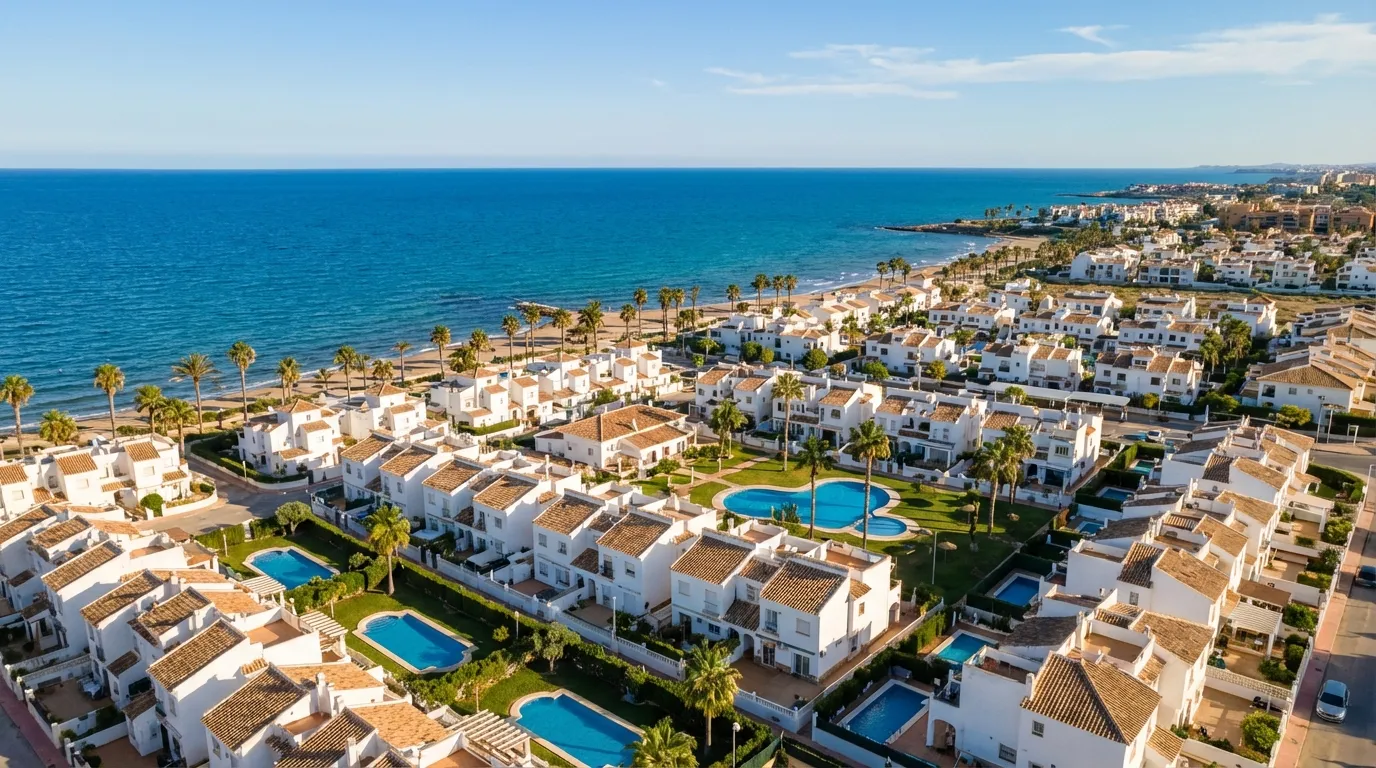
Everything you need to know about Orihuela Costa on Costa Blanca: areas, property prices, climate, beach life and tips for buying property in southern Spain.
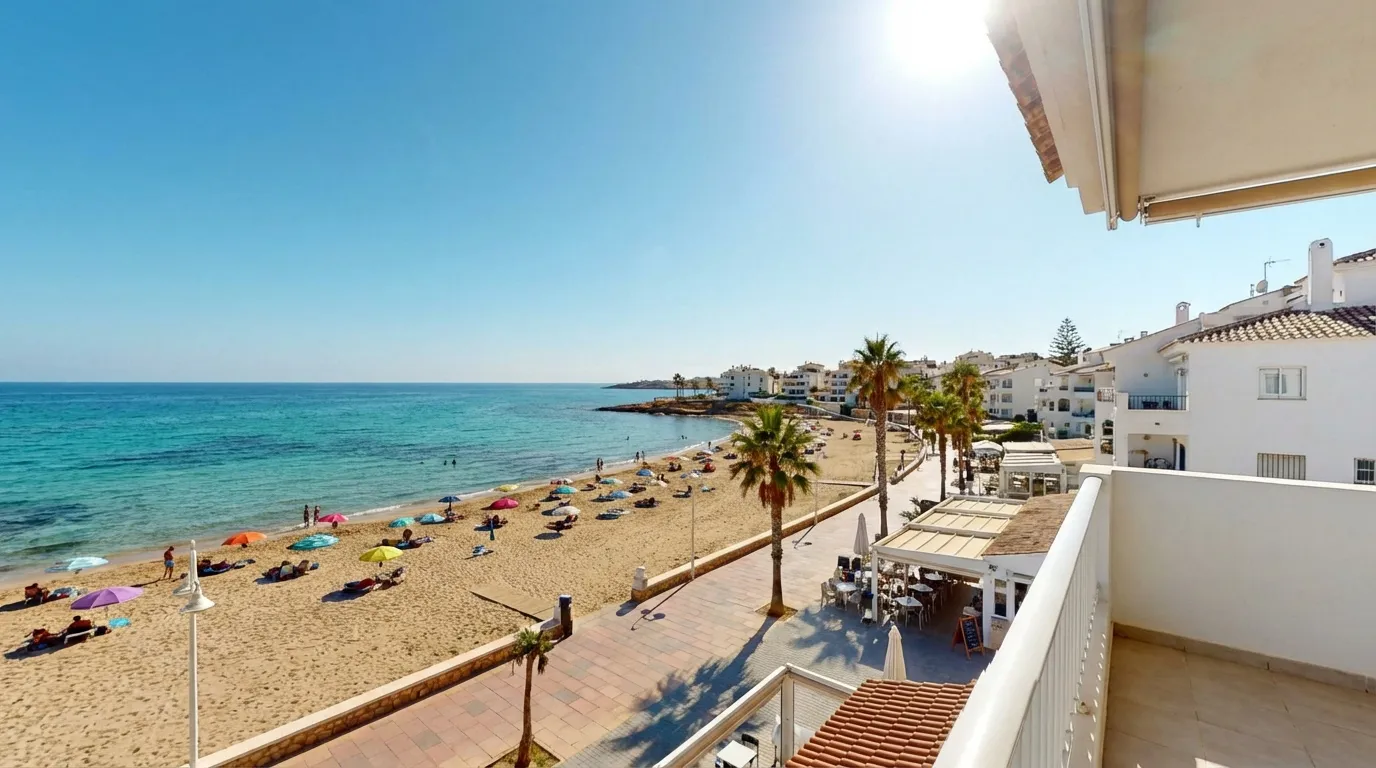
Everything you need to know about Playa Flamenca on Costa Blanca — beaches, property prices, amenities and lifestyle. An honest guide from Swedish estate agents who know the area.