

Area Guides
Orihuela Costa – Complete Guide for Swedish Buyers 2026
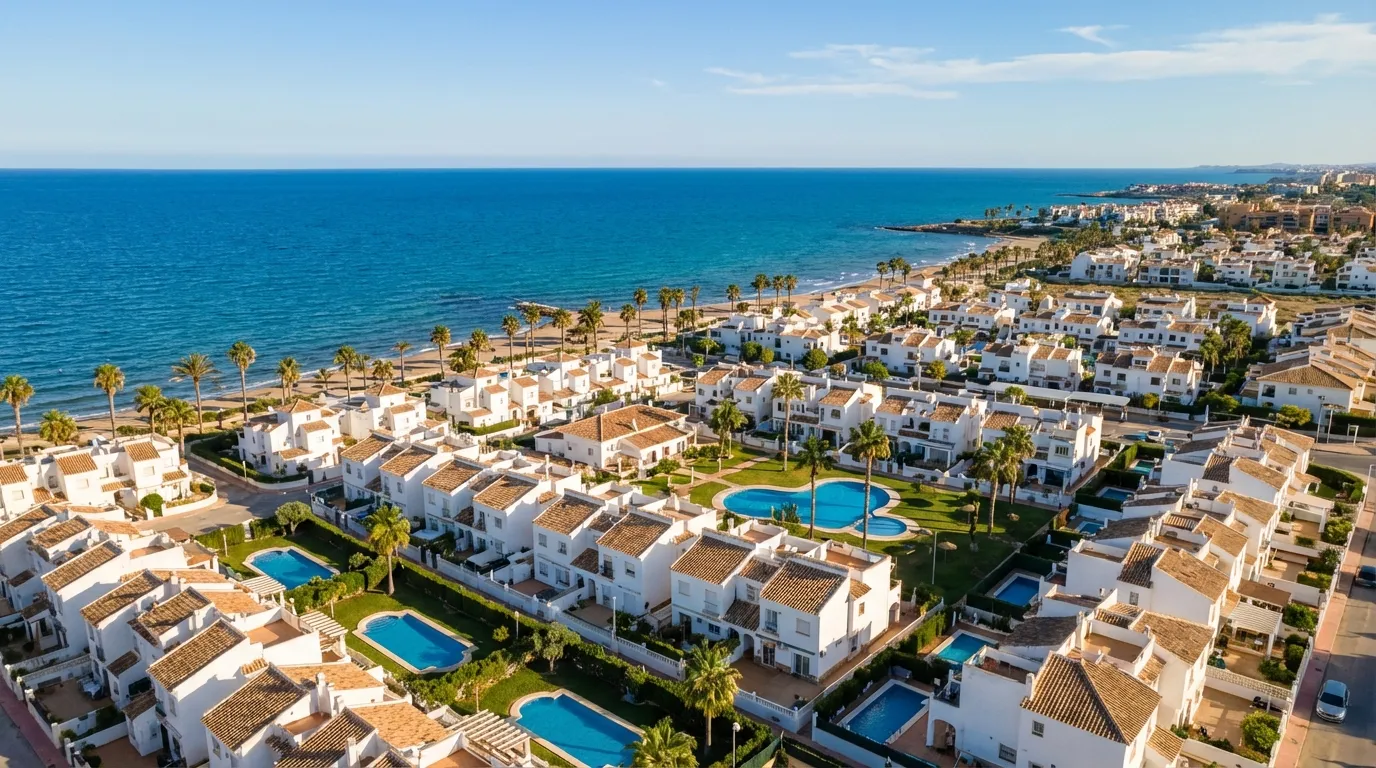
Everything you need to know about Orihuela Costa on Costa Blanca: areas, property prices, climate, beach life and tips for buying property in southern Spain.
16 min
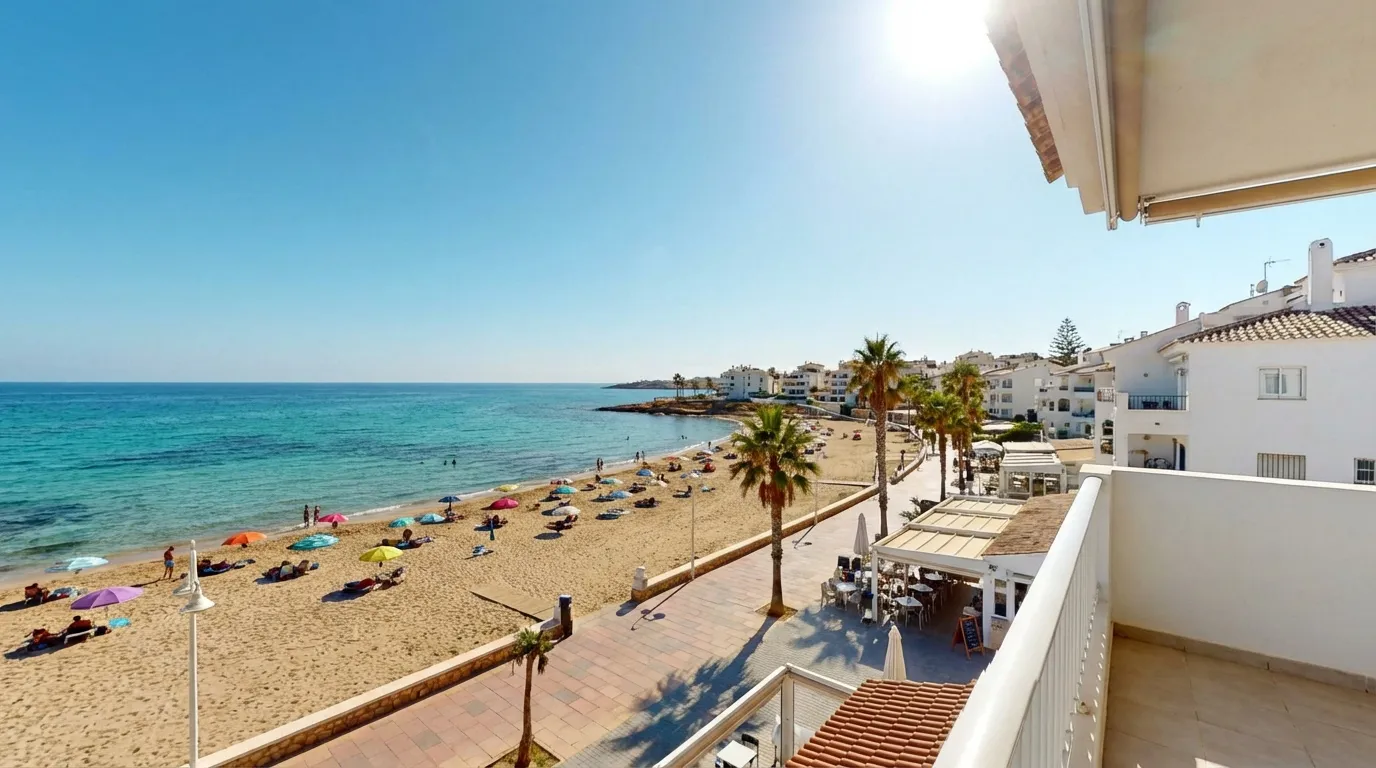
Everything you need to know about Playa Flamenca on Costa Blanca — beaches, property prices, amenities and lifestyle. An honest guide from Swedish estate agents who know the area.
Playa Flamenca is one of the most popular areas on all of southern Costa Blanca, and it is not hard to understand why. Located in the heart of Orihuela Costa, with two Blue Flag beaches, Spain's largest shopping centre just around the corner and a vibrant international community, the area offers a complete lifestyle for both year-round residents and holiday visitors. Prices start from around 140,000 euros for a two-bedroom apartment, making it one of the more affordable options along the Spanish Mediterranean coast. For Swedish buyers it is particularly appealing that there is an established Scandinavian community, a Scandinavian school and services in multiple languages.
Information
Playa Flamenca belongs to the municipality of Orihuela and is located along the coastal strip known as Orihuela Costa. The area lies approximately 55 km south of Alicante airport and 4 km south of Torrevieja. Coordinates: 37.94N, 0.73W.
Playa Flamenca is an urbanisation stretching along the coast in the southern part of Costa Blanca, in the province of Alicante. It belongs to the municipality of Orihuela, one of Spain's largest municipalities by area, and is part of what is called Orihuela Costa — the coastal strip where the municipality's seaside communities are located.
Geographically Playa Flamenca is surrounded by other popular areas. To the north it borders La Zenia with its famous shopping boulevard, to the south lies Punta Prima with its calm coastal promenade, and a little further away you find Torrevieja with its wide range of amenities and the famous salt lakes.
What distinguishes Playa Flamenca from many other coastal areas is that it genuinely lives throughout the year. It is not deathly quiet in winter as in some purely tourist resorts. Over 70 per cent of the population in the area are foreign nationals from more than 100 countries, and many live here permanently. This creates a daily life with open restaurants, active associations and an atmosphere that feels alive whatever the month.
The beaches are perhaps the main reason many people fall in love with Playa Flamenca. Unlike the long, straight sandy beaches found further north, Playa Flamenca has a different character: sheltered coves (calas) with rocks, turquoise water and intimate sandy beach sections.
The northern of the two main coves. Cala las Estacas is a Blue Flag beach with fine sand and calm water thanks to natural rock formations that provide protection from currents. There are lifeguards in summer, showers and access to restaurants along the coastal promenade. Perfect for families with young children.
The southern main cove, also with Blue Flag status. Cala Mosca is somewhat larger and has a more spacious sandy area. The water is shallow near the shore, making it ideal for bathing. The rocks around the cove provide both wind protection and opportunities for snorkelling.
For those seeking nature and seclusion. Cala Cabo Penas is an unspoilt small beach at the southern end, accessible via a path over the rocks. Since 2021 it has been Orihuela Costa's official dog beach, so dog lovers are welcome here with their four-legged companions.
The two main beaches are connected by a lovely coastal promenade that is perfect for walks and jogging. Along the promenade you find both cafés and viewpoints over the sea.
Tip
Visit the beaches in the morning before 10am during high season (July–August) to get the best spots. During the low season you almost have the beaches to yourself — and the water is still swimmable in October.
The property market in Playa Flamenca is active and has shown steady growth in recent years. The area offers a wide price range that suits both first-time buyers and those looking for something more exclusive.
| Property type | Price range (EUR) | Typical price |
|---|---|---|
| Two-bedroom apartment | 140,000 – 200,000 | ~170,000 |
| Three-bedroom apartment | 180,000 – 280,000 | ~225,000 |
| Townhouse / quad | 190,000 – 320,000 | ~250,000 |
| Detached villa | 350,000 – 650,000 | ~450,000 |
The average price per square metre in Orihuela Costa (which Playa Flamenca is part of) is around 2,800–3,200 euros/sqm (2025 data), an increase of approximately 17 per cent compared to the previous year. Even so, prices are noticeably lower than on northern Costa Blanca or Costa del Sol, where prices per square metre often exceed 4,000 euros.
Demand is high, particularly for beachside apartments and new builds. Foreign buyers account for almost 46 per cent of all property transactions in the province of Alicante, and forecasts point to a further 3–4 per cent annual price growth through to 2028.
Note
Always budget for 10–14 per cent in additional costs on top of the purchase price. This includes transfer tax (ITP, 9% in the Valencia region since June 2026), notary fees, land registry registration and legal fees. For new builds, VAT (IVA) of 10% applies instead of ITP.
Playa Flamenca has excellent rental potential thanks to its popularity among tourists and long-stay guests. The occupancy rate in the region is around 77–78 per cent during high season. A two-bedroom apartment near the beach can generate 8,000–12,000 euros per year in rental income, depending on standard and location.
Properties
Explore available properties in playa-flamenca
One of the area's major strengths is its proximity to Zenia Boulevard — one of Spain's largest open-air shopping centres with over 150 shops, restaurants, cinemas and supermarkets. It is literally on the doorstep of Playa Flamenca, just a few minutes by car or a short walk from the northern parts of the area.
Within Playa Flamenca itself you also find local supermarkets (Mercadona, Aldi, Consum), pharmacies, banks and a wide range of restaurants — from tapas and paella to Scandinavian home cooking and British pub food.
Playa Flamenca's Saturday market is an institution. Every Saturday between 10am and 2pm, Calle Nicolas de Bussi fills up with stalls selling everything from fresh fruit and vegetables to clothing, leather goods, spices and local crafts. It is a perfect traditional experience and a great way to feel part of the local community.
The range is genuinely international. Spanish tapas sit side by side with Indian, Chinese, British and Scandinavian restaurants. Evening life is relaxed — no nightclub-heavy streets, but rather peaceful terraces where you enjoy the sunset with a glass of wine. For those who want more buzz there are plenty of options in nearby Torrevieja and La Zenia.
There are multilingual medical clinics in the area, and Torrevieja hospital is just 10 minutes away by car. Private clinics with Scandinavian-speaking staff are also available in the immediate area. A new private hospital is planned in the Villamartín area, which will further strengthen healthcare access.
Short answer: yes, it is one of the best areas on the entire coast for families. Longer answer:
Scandinavian school — There is a Scandinavian school in the Playa Flamenca area that teaches in Swedish, Norwegian, Finnish and Spanish. For families who want their children to maintain contact with their home country's language while also learning Spanish, this is a major advantage.
Safe beaches — Blue Flag certification means not just clean water but also lifeguards, wheelchair access and first aid stations. The sheltered coves mean children can swim without you worrying about strong currents.
Leisure activities — There is a municipal sports centre with swimming pool, padel courts, football pitches and playgrounds. The go-kart track is popular among older children.
International environment — Children grow up in a genuinely international setting where they naturally learn to mix with people from different cultures and languages. That is a life experience that is hard to replicate back in Sweden.
The climate is, to use a well-worn expression, wonderful. Playa Flamenca has a typical Mediterranean climate with a semi-arid character that means extremely little rain and an unusually high number of sunny days.
| Period | Average temperature | Note |
|---|---|---|
| Winter (Dec–Feb) | 12–17°C | Cooler evenings, 8–10°C at night |
| Spring (Mar–May) | 16–23°C | Pleasant, perfect for outdoor activities |
| Summer (Jun–Sep) | 25–32°C | Hot but sea breeze cools |
| Autumn (Oct–Nov) | 17–23°C | Still bathing weather in October |
325+ sunny days per year — this is not just a marketing slogan. The province of Alicante genuinely has one of Europe's most stable climates. Annual rainfall is only 250–300 mm (compare with Stockholm's 550 mm), and when it does rain it is usually short intense showers rather than all-day grey drizzle.
For Swedish "climate refugees" — a term actually used in the property industry — the sunshine and mild winters are the biggest draw. When it is -15 and dark in Sweden in January, you are sitting here on your terrace in a light jacket with 15 degrees of sunshine.
Alicante-Elche airport (ALC) is the nearest international airport, located approximately 55–60 km to the north. Journey time is 45–60 minutes by car via the AP-7 motorway.
From Sweden there are direct flights from Stockholm Arlanda, Gothenburg Landvetter and sometimes Malmö/Sturup, primarily with Norwegian and Ryanair. During high season there are departures almost daily, and in the low season at least 2–3 times per week. Flight prices vary between 50 and 200 euros one way depending on season and how early you book.
Murcia-San Javier airport (RMU) is an alternative located approximately 35–40 km to the south. It is smaller but can offer good connections depending on season.
A car is the most convenient way to get around in daily life, but it is possible to manage without. Bus lines connect Playa Flamenca with Torrevieja and other coastal towns, and within the area itself most things are within walking or cycling distance.
Tip
Hire cars from Alicante airport cost from 150–200 euros per week during low season. For year-round residents it is common to buy a used car locally — the Spanish used car market in the 5,000–10,000 euro range is well-supplied.
Playa Flamenca is one of Europe's most international places. The demographic composition bears no comparison to a typical Swedish suburb — here people from over 100 nationalities live side by side.
The largest group is British, followed by Scandinavians (Swedish, Norwegian, Danish and Finnish), Germans, Dutch and French. Many are retirees who have sought the sun, but in recent years more and more younger families and remote workers (digital nomads) have found their way here.
The Swedish community is not as large as in, for example, Alfaz del Pi on the northern coast, but it is definitely present. Swedish associations, informal coffee groups and the presence of the Scandinavian school mean you never feel entirely cut off from Swedish life.
English works as a lingua franca in almost all situations — from the bank to the restaurant to the hospital. Spanish is of course a bonus to know, but it is absolutely not a requirement for thriving and managing daily life.
Honesty is important. No area is perfect, and what suits one person may not suit another. Here is a balanced overview:
Playa Flamenca is the perfect base for exploring the rest of southern Costa Blanca. Here are your neighbours:
La Zenia — The neighbouring area to the north, known for Zenia Boulevard and La Zenia Beach. A few minutes' walk from Playa Flamenca. Slightly higher prices but also more buzz.
Punta Prima — South of Playa Flamenca with a calm, wide coastal promenade and a slightly more peaceful atmosphere. Popular among couples and retirees seeking seclusion.
Orihuela Costa — The umbrella name for the entire coastal strip from Punta Prima to Dehesa de Campoamor, including Playa Flamenca. Understanding Orihuela Costa means understanding the context Playa Flamenca is part of.
Torrevieja — The large neighbouring city, 10 minutes to the north. It has a full hospital, a wide range of shops, restaurants and an active Spanish city life. A perfect complement to Playa Flamenca's calmer atmosphere.
Visit during the low season — January–February gives you the most honest picture of what daily life looks like. If you enjoy it then, you will enjoy it year-round.
North vs south of the N-332 — Areas north of the main road are often calmer and greener, while the south side is closer to the beach and the activity. The price difference can be 15–20 per cent.
Check community fees — Many properties are part of an urbanisation with pool, gardens and communal areas. Fees vary from 50 to 300 euros per month, and this can significantly affect your total monthly cost.
Use a Swedish-speaking estate agent — The buying process in Spain is different from the Swedish one. An agent who speaks your language and understands both the Swedish and Spanish system will save you time, money and unnecessary stress.
Think about rental from the start — If you plan to rent out when you are not there, choose a property close to the beach with a pool and terrace. These are the features that give the highest occupancy rates and best returns.
Contact
Get in touch and we'll guide you forward — whether you're just starting out or ready to buy.
Contact usDecision support
Priserna for lagenheter i Playa Flamenca borjar runt 140 000 euro for en tva-rumslagenhet och uppat till 350 000 euro for storre strandnara alternativ. Snittpriset per kvadratmeter ligger runt 2 800-3 200 euro, vilket ar lagre an manga andra kustomraden langs Medelhavet.
Det ar cirka 55-60 kilometer fran Playa Flamenca till Alicante-Elche flygplats (ALC), vilket tar ungefar 45-60 minuter med bil via AP-7 motorvagen. Flygplatsen har direktflyg fran Stockholm, Goteborg och flera andra skandinaviska stader.
Playa Flamenca har tre huvudstrander: Cala las Estacas och Cala Mosca som bada har Bla Flagg-certifiering med fin sand och lugnt vatten, samt Cala Cabo Penas som ar en mer naturlig och avskild strand. Stranderna ar forbundna med en fin strandpromenad.
Ja, Playa Flamenca ar ett av de mest familjevanliga omradena pa Costa Blanca. Har finns trygga strander med Bla Flagg, en skandinavisk skola, lekplatser, sportanlaggningar och en lugn atmosfar.
Manga skandinaviska familjer har valt att bosatta sig har just for den trygga miljon.
Playa Flamenca har ett typiskt medelhavsklimat med over 325 soldagar per ar. Sommartemperaturen ligger runt 28-32 grader (juni-september) och vintrarna ar milda med 12-17 grader (december-februari).
Arsnederborden ar bara 250-300 mm, sa det ar sallsynt med langvariga regnperioder.
Sources

Los Balcones, Alicante

Lago Jardín II, Alicante

San Luis, Alicante

Centro, Alicante

Centro, Alicante

Centro, Alicante
Local expertise
Everything you need to know about Orihuela Costa on Costa Blanca: areas, property prices, climate, beach life and tips for buying property in southern Spain.
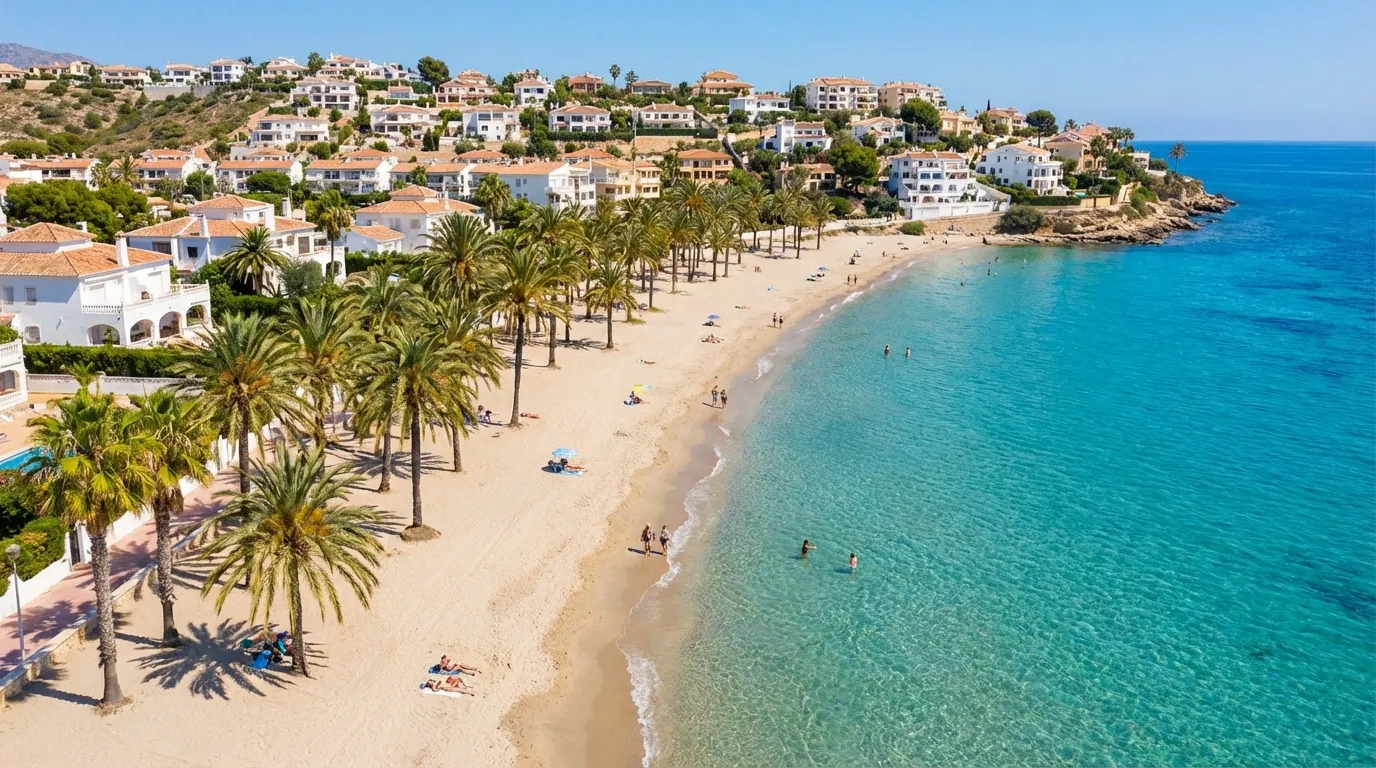
Property in Mil Palmeras: prices, beaches, services and what you should know before buying in this coastal resort on the southern Costa Blanca — for Swedish buyers.
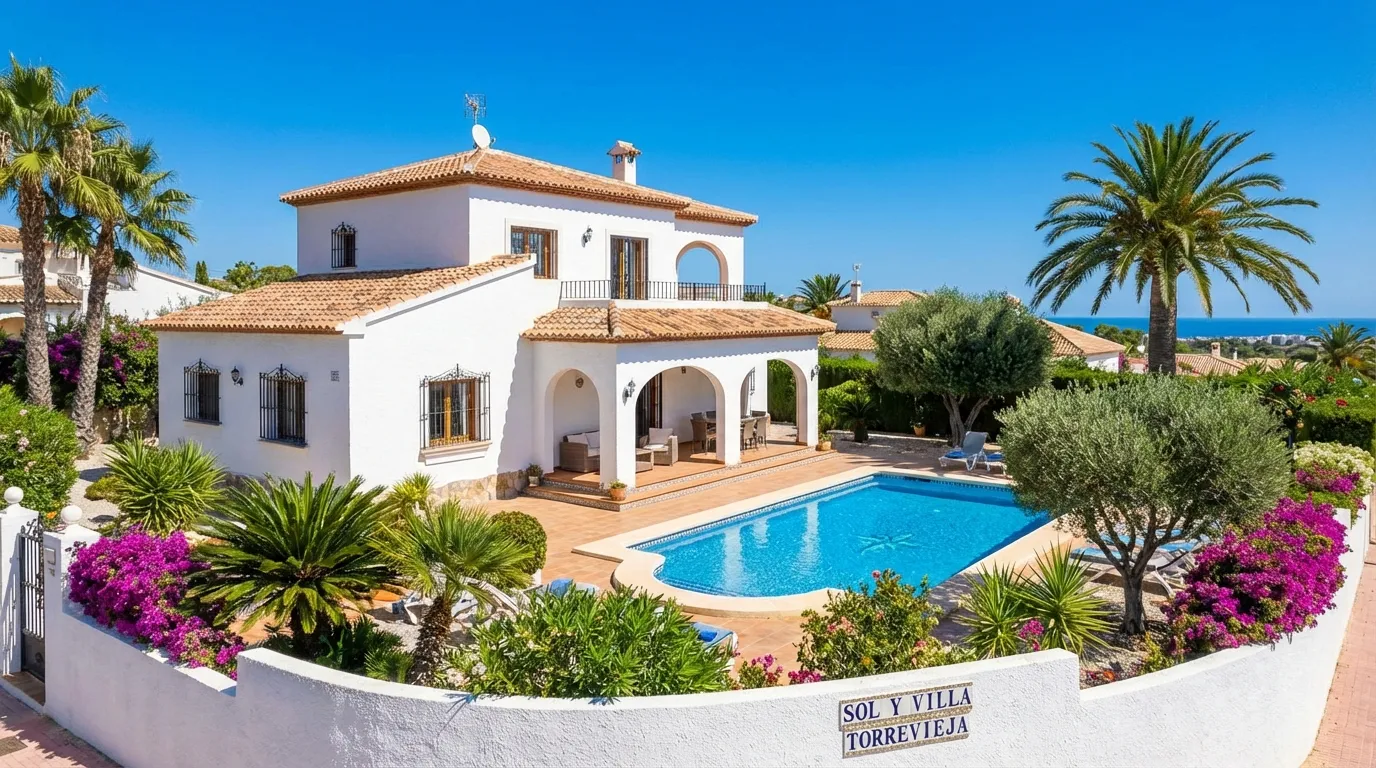
Buying a house in Torrevieja: prices by area, purchase process, taxes, NIE and mortgages — practical guide for Swedes who want to live on Costa Blanca 2026.