
Moving & Living
Living in Spain as a Swede – Everyday Life and Practical Info 2026
What is it like to live in Spain as a Swede? Cost of living, healthcare, bureaucracy, social life and everything you need to know about everyday life in Spain.
17 min
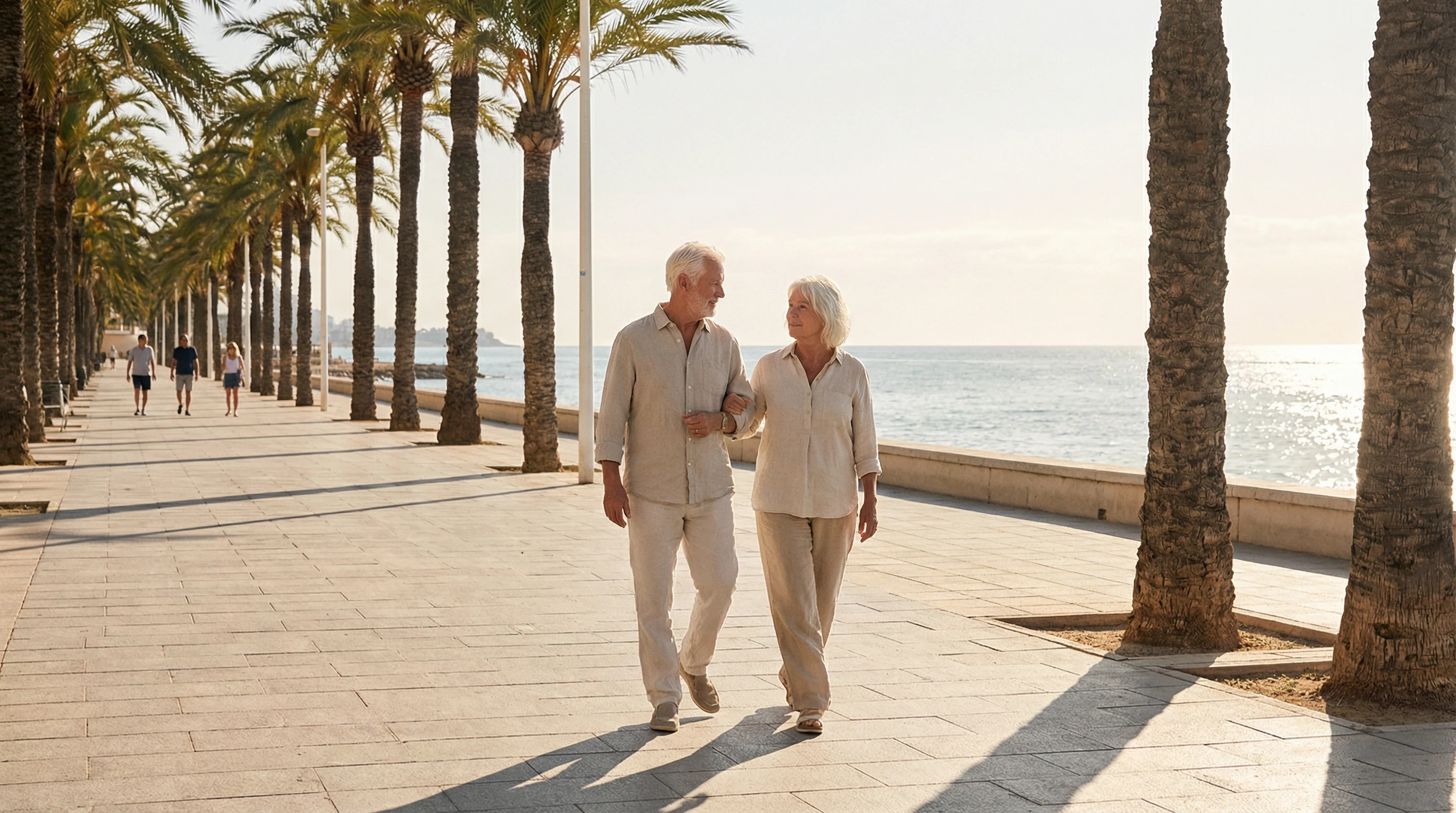
Considering retiring in Spain? Here is an honest guide about costs, taxes, healthcare, areas, risks and what daily life actually requires.
Retiring in Spain can be a good choice if you want to get more out of your pension, live in a milder climate in winter and spend more time outdoors. For many Swedish retirees the main appeal is straightforward: day-to-day living costs are often lower than in Sweden, the climate makes a real difference to quality of life, and healthcare works well once you have the right paperwork in place. A couple can live quite comfortably in southern Spain for approximately 2,000–3,200 euros per month, and if you own your home outright it is often possible to manage on 1,200–2,000 euros.
That does not mean Spain is automatically right for everyone. You need to understand how tax, the S1 certificate, residencia and the 183-day rule affect you. You also need to be honest about what you want from daily life. Some people love the calm, the sunshine and the long lunches. Others tire of the bureaucracy, the summer heat and the distance from children and grandchildren.
In this guide we go through what actually applies to Swedish retirees in Spain: finances, healthcare, taxes, which areas suit best, common mistakes and the downsides you should weigh up before making a decision.
Spain suits you best if you want to use your pension more efficiently, enjoy spending more time outdoors and accept that everyday life works a little differently from Sweden. For many Swedish retirees the move is less about luxury and more about having breathing room. The same pension often goes further, particularly in areas where housing costs are still reasonable.
The typical Swedish retiree who thrives in Spain usually recognises themselves in at least three things: you want mild winters, you want to avoid long dark periods, and you appreciate a daily life where it is easy to take a walk, have a coffee outside and be social even in the middle of January. Along much of the coast winter days are often around 15–18 degrees and the number of sunny days exceeds 300 per year.
But there are different types of retirement life in Spain. Some move permanently and build an entirely new daily life. Others live six to eight months a year in Spain and the rest in Sweden. The latter model suits many people better than they initially expect, particularly if they want to maintain close contact with family, access Swedish healthcare and keep a summer home at home.
In practice Spain tends to suit you particularly well if you:
It suits you less well if you are strongly dependent on close family life in Sweden, dislike heat, or want everything to work as quickly and digitally as at home.
Information
Short version: Spain works best for retirees who see the move as an everyday project, not a long holiday. It is only when you work through the finances, healthcare, language and social life that you can see whether it genuinely suits you.
The short answer is that Spain is often cheaper than Sweden, but not as cheap as many hope. Numbeo's comparisons show that living costs in Spain average 30–40 per cent below Sweden. For retirees the difference is most noticeable in rent, restaurants, local services and everyday groceries. Electricity and private health insurance can, however, run away if you do not plan wisely.
A realistic budget for a retired couple renting a two-bedroom apartment in a coastal area often looks like this:
Monthly costs for a retired couple (renting)
Rent, 2 bedrooms
800–1,200 €
Electricity and water
100–155 €
Internet and mobile
50–70 €
Groceries
500–650 €
Restaurants and cafés
200–350 €
Private health insurance
150–250 €
Car, insurance and fuel
200–300 €
Miscellaneous and leisure
100–225 €
Total
2,100–3,200 €
If you own your home outright the picture changes considerably. The biggest expense disappears, and many retired couples manage on 1,200–2,000 euros per month. At the same time it is important not to be blinded by low advertised property prices. With an older property, air conditioning, damp, community fees and minor renovations can quickly prove more expensive than expected.
This is often more important than the actual decision to move. Costa Blanca tends to be the first choice for retirees who want to keep costs down while still living near the sea. The southern part, with areas such as Orihuela Costa and Torrevieja, generally has a lower total cost than many parts of Costa del Sol. Costa del Sol offers more international networks and a more active winter social scene, but typically costs 20–30 per cent more than southern Costa Blanca.
Food and restaurants, however, are one of the big everyday gains in almost any area. A menú del día often costs 10–14 euros including a drink and dessert. For many retirees that social everyday life makes a real difference: you do not have to budget as carefully as in Sweden to be able to eat out once a week.
Properties
Explore available properties in Costa Blanca
Browse current homes in the area and compare locations, price levels and property types at your own pace.
This is the core question. Many Swedish retirees are drawn in by the sunshine first and deal with the administration later. That is the wrong order. If you plan to stay long term in Spain you need to understand three things early on: when you become tax resident, how your Swedish pension is taxed, and how you gain access to public healthcare.
If you spend more than 183 days in a calendar year in Spain you normally become tax resident there. Spain then taxes your global income, which also includes your Swedish pension. At the same time, Sweden can continue to deduct SINK tax on pensions paid out from Sweden. From 1 January 2026 SINK stands at 22.5 per cent.
The important point is that the double taxation treaty between Sweden and Spain is designed to prevent you paying full tax twice on the same pension. In practice you still often need to file a correct declaration in Spain and offset Swedish tax there. This is therefore not an area where you want to guess.
For many retirees the wisest approach is to take professional advice before the first full calendar year in Spain. Not because the rules are impossible, but because they are expensive to correct retrospectively if you get them wrong.
As a Swedish retiree, the S1 form is often your most important document after your passport. You request the S1 from the Swedish Social Insurance Agency (Försäkringskassan), register it with INSS in Spain and then receive a SIP card that gives you access to Spain's public healthcare system on essentially the same terms as Spanish nationals.
This is a significant practical advantage. You do not need to take out private insurance solely to meet the residencia requirement, and you gain access to a public system that is ranked highly internationally. Spain spends approximately 99.3 billion euros per year on public healthcare, equivalent to around 2,079 euros per inhabitant. Prescription medicines are also subsidised, and retirees normally pay 10 per cent of medication costs up to a cap of approximately 8–18 euros per month.
Many retirees still choose to supplement with private insurance. This is rarely because public healthcare is poor, but because of waiting times. The average waiting time to see a specialist in the public system is around 95 days. For a retiree who wants quick access to an orthopaedic surgeon, cardiologist or ophthalmologist, private insurance can therefore feel worth the cost.
Yes, if you stay for more than three months as a Swedish EU citizen you must register and obtain residencia. The fee is around 12 euros and processing usually takes 1–3 weeks once you have secured an appointment and have all documents ready. For retirees the typical requirements are a pension statement, empadronamiento, passport, NIE and S1 or other approved health insurance.
Tip
Tip for retirees: Request the S1 before you move, not afterwards. It reduces the risk of getting caught between Swedish and Spanish administration and makes the residencia process considerably smoother.
There is no objectively "best" area for retirees in Spain. It depends on the daily life you want. If you prioritise low costs, a large Swedish community and straightforward logistics you will often choose differently than if you are looking for restaurant life, more direct flights and a more international environment.
Southern Costa Blanca remains one of the most logical choices for Swedish retirees who want to get a lot of everyday life for their money. Areas around Torrevieja and Orihuela Costa combine relatively reasonable housing costs with good amenities, private hospitals, Swedish networks and flat terrain that makes daily life manageable even as you get older.
This is also where many retirees land when they do not want to drive long distances every day. You have grocery shops, pharmacies, coastal promenades and cafés close at hand. The downside is that some parts are distinctly international and feel less authentically Spanish. If you are looking for a genuine small Spanish town rather than convenience it can feel a bit too adapted for foreigners.
Costa del Sol attracts retirees who want a wider range of options, more flights, more restaurants and more activity year-round. Areas such as Mijas and La Cala de Mijas often work well for Swedish retirees who want a calmer daily life but still want to be near Málaga, the airport and a broader range of services.
The advantage here is that winter social life tends to feel more vibrant. It is easier to find international networks, cultural activities and services in English. The main downside is financial. Both housing and everyday expenses are often higher than on Costa Blanca, particularly if you want to live really close to the sea.
Think less about what looks best during a viewing trip and more about what works in February, June and November. For retirees the following questions often prove decisive:
Many Swedish retirees do wisely to rent for the first season instead of buying immediately. It gives you a chance to see how the area works in practice, not just in sunshine and holiday mode.
Properties
Explore available properties in Costa del Sol
Browse current homes in the area and compare locations, price levels and property types at your own pace.
This section is more important than the advantages, because this is often where expectations come unstuck.
The first risk is the bureaucracy. Spanish administration works, but not quickly and rarely very transparently. If you wait until after the move to arrange your NIE, residencia, S1 and tax situation the first six months can become unnecessarily chaotic.
The second risk is underestimating how much of daily life still requires language. You get far with English in many areas, but not everywhere. Municipal letters, tradespeople, local health centres and older neighbours often work best in Spanish. If you do not learn even a basic level you quickly become dependent on others.
The third risk is the heat. Many retirees dream of the winter climate but think less about July and August. In large parts of southern Spain temperatures regularly reach 35–40 degrees during midsummer. This affects daily life, sleep, electricity bills and how much you actually use your home.
The fourth risk is loneliness. Sweden has family, old friends and established routines. Spain may have sunshine and a social scene, but it does not automatically replace a network. This is particularly true for retirees living alone. If you do not actively build community through associations, activities and language, daily life can become quieter than you imagined.
The fifth risk is financial miscalculation. A cheap property is not the same as a low total cost. Older apartments can have damp problems, poor insulation and higher maintenance costs. And taxes do not become lower just because the sun is stronger. If you exceed 183 days in Spain without understanding the tax consequences it can be expensive to put right.
Note
Warning: The most common mistake is treating the move like a decision to take a long holiday. For a retiree it is wiser to see Spain as a new everyday system with its own tax, its own healthcare logic, its own language and its own bureaucracy. When you approach it that way, decisions are almost always better.
The most sustainable way to retire in Spain is rarely to do everything at once. Those who are happiest tend to make the move in stages.
A sensible approach looks like this:
For many retirees it is also wise to decide whether the goal is a permanent move or a two-country arrangement. The latter can offer the best of both worlds: better winter climate in Spain and a Swedish summer near family. It also reduces the pressure for everything to work perfectly straight away.
Socially, it is wise to establish routines early. Take a Spanish course. Find a café you come back to. Join a Swedish or international association. Use the health centre, pharmacy and local services in your immediate area so you see how life works in practice. Retirement life in Spain is best when it takes the shape of normal weeks, not just days off.
Yes, for many Swedes it is a genuinely good country for retirement. The combination of climate, lower day-to-day living costs, good healthcare and social freedom is strong. If you have your tax situation, healthcare and housing in order, Spain can give you more active years with more movement, more daylight and less financial pressure in daily life.
But Spain is not a shortcut to a problem-free retirement. You are exchanging Swedish predictability for more administration. You are exchanging proximity to family for proximity to sunshine. And you need to build a life that works once the novelty has worn off.
If you think soberly, start at the right end and choose an area based on daily life rather than dreams, the chances are good that Spain will turn out to be one of your better life decisions.
Contact
We help you compare areas on Costa Blanca and Costa del Sol and answer practical questions about housing, daily life and next steps before a longer-term move.
Book free consultationLast updated: April 2026. Rules, tax rates and healthcare conditions may change. Always check your own situation before moving permanently.
Decision support
Ofta ja, men det beror på var du vill bo och om du hyr eller äger bostad. Ett par kan leva relativt bekvämt i södra Spanien för cirka 2 000-3 200 euro per månad, medan du kan komma ner mot 1 200-2 000 euro om bostaden är avbetald.
Costa del Sol och norra Costa Blanca är generellt dyrare än södra Costa Blanca och Costa Cálida.
Som svensk pensionär kan du begära S1-formulär från Försäkringskassan och registrera det hos INSS i Spanien. Därefter får du ett SIP-kort och tillgång till offentlig spansk sjukvård på i stort sett samma villkor som spanjorer.
Många kompletterar ändå med privat försäkring för snabbare specialistvård.
Du kan behöva deklarera i båda länderna, men dubbelbeskattningsavtalet ska förhindra att samma pension beskattas fullt ut två gånger. Sverige tar SINK på 22,5 procent från 2026 för många utlandsbosatta pensionärer, medan Spanien beskattar dig som resident om du vistas där mer än 183 dagar per år.
Avräkning sker normalt i den spanska deklarationen.
Det beror på vad du prioriterar. Costa Blanca passar många som vill ha lägre kostnader och stor skandinavisk gemenskap, medan Costa del Sol passar dig som vill ha fler internationella nätverk, bättre vinterliv och fler direktflyg.
Lugna områden som Orihuela Costa, Torrevieja, Mijas och La Cala de Mijas återkommer ofta i svenska pensionärers val.
Den vanligaste missen är att underskatta byråkratin och överskatta hur enkelt vardagen blir utan spanska. Många ordnar bostad först men väntar för länge med S1, residencia, empadronamiento och skatteplanering.
Det skapar onödiga problem med vård, bank, försäkring och deklaration under det första året.
Sources

Lomas de Campoamor, Alicante

Lomas de Campoamor, Alicante

Dehesa de Campoamor, Alicante

Playa Flamenca, Alicante

Dehesa de Campoamor, Alicante

Punta Prima, Alicante
Local expertise
What is it like to live in Spain as a Swede? Cost of living, healthcare, bureaucracy, social life and everything you need to know about everyday life in Spain.
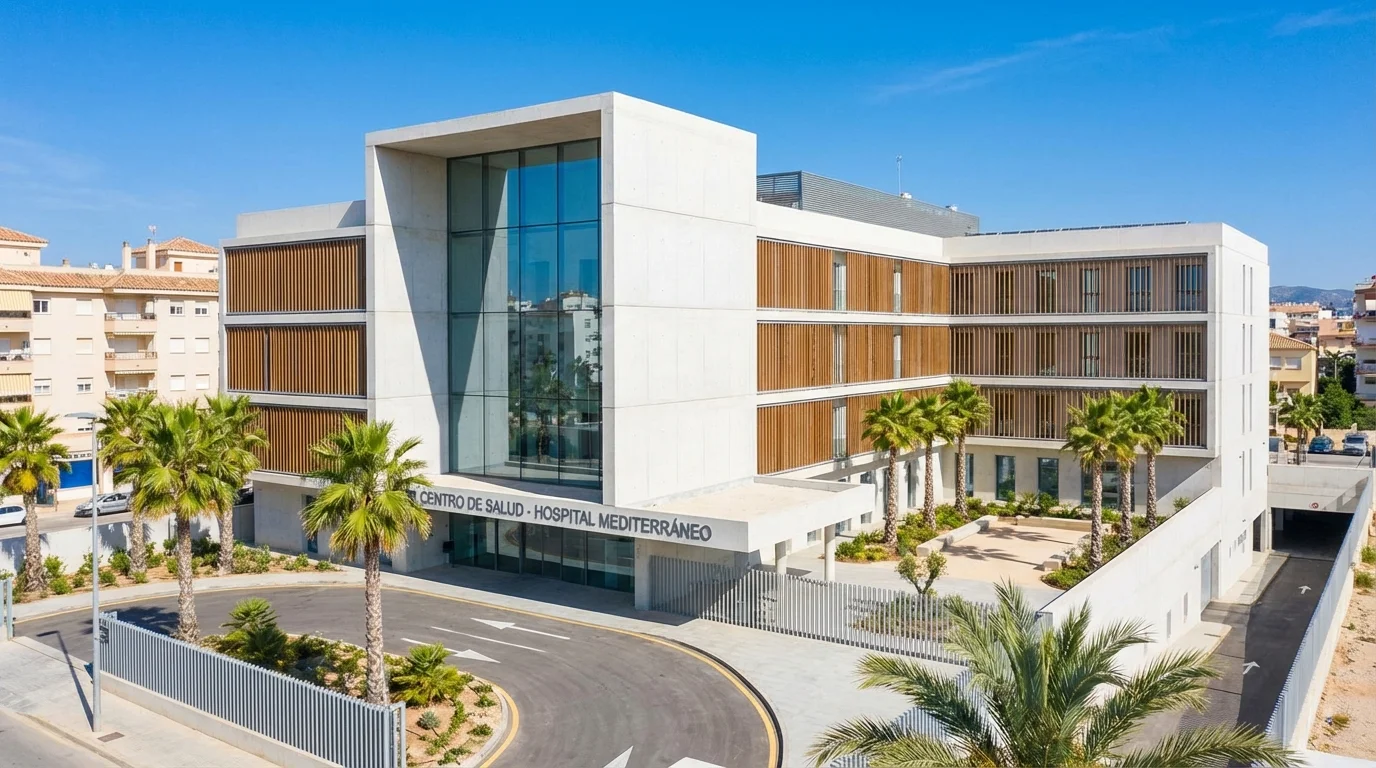
Complete guide to healthcare in Spain: public care, private options, EU card, SIP card and how to access healthcare as a Swedish resident.
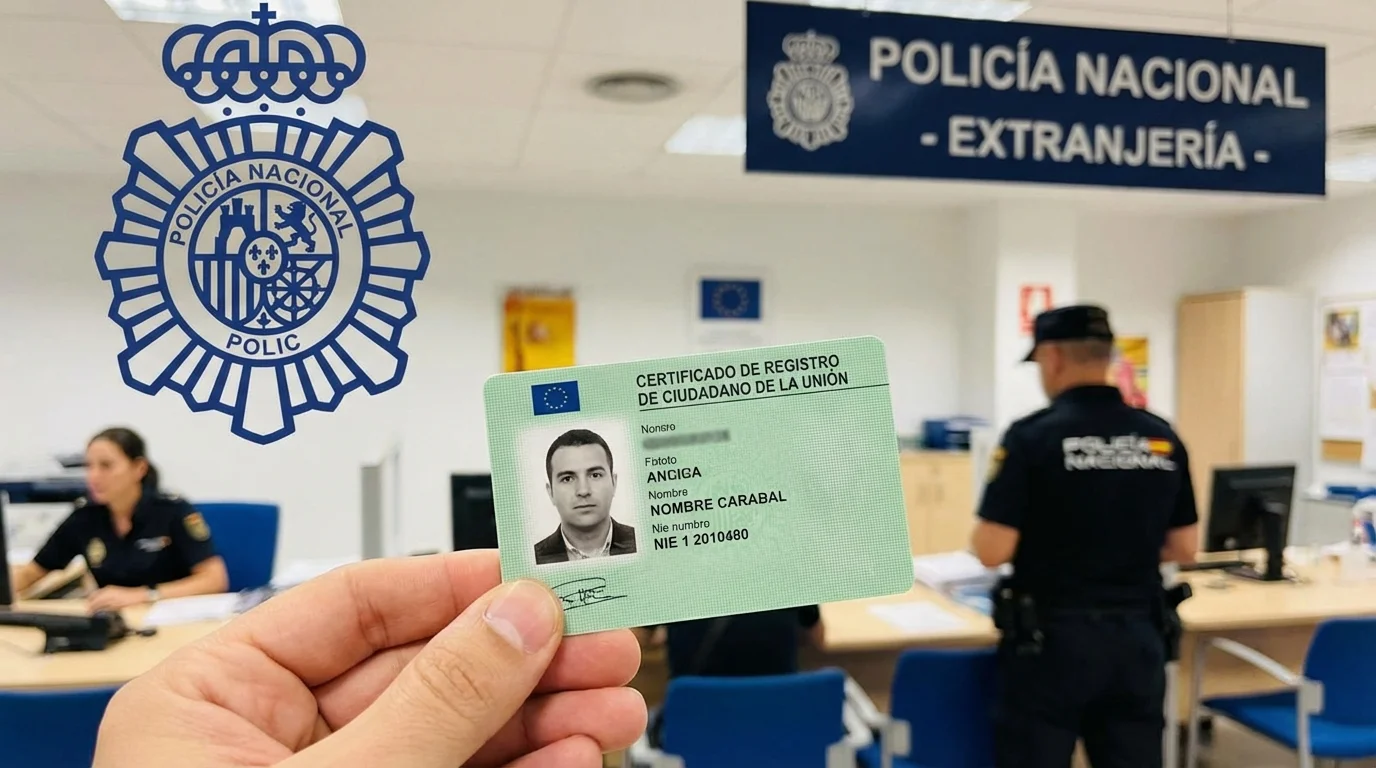
Complete guide to residencia in Spain: requirements, documents, application and what it means for your taxes. Step-by-step for Swedish citizens.