


Area Guides
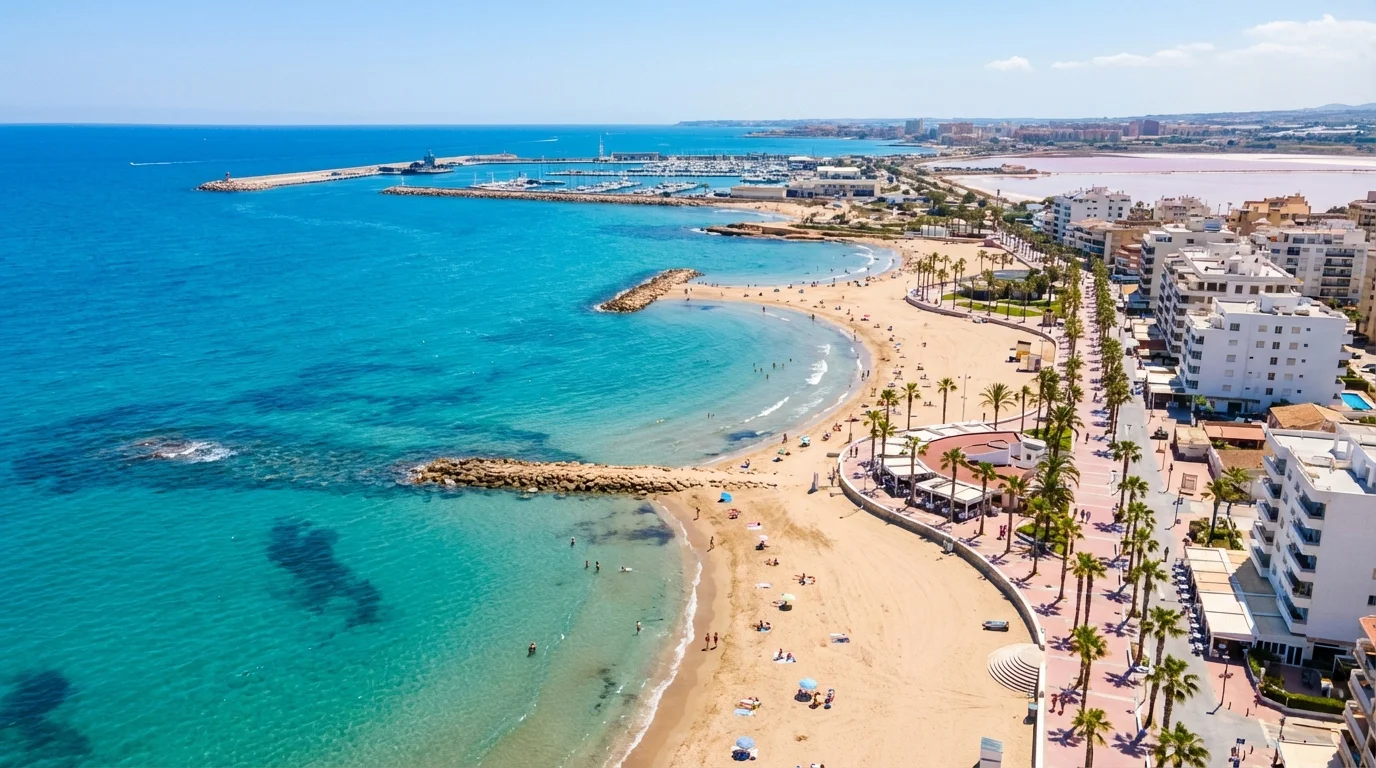
Torrevieja's beaches – Complete beach guide 2026
All beaches in Torrevieja: Playa del Cura, La Mata, Los Locos, Cabo Cervera and more. Facilities, Blue Flag status and tips for Swedish visitors.
19 min
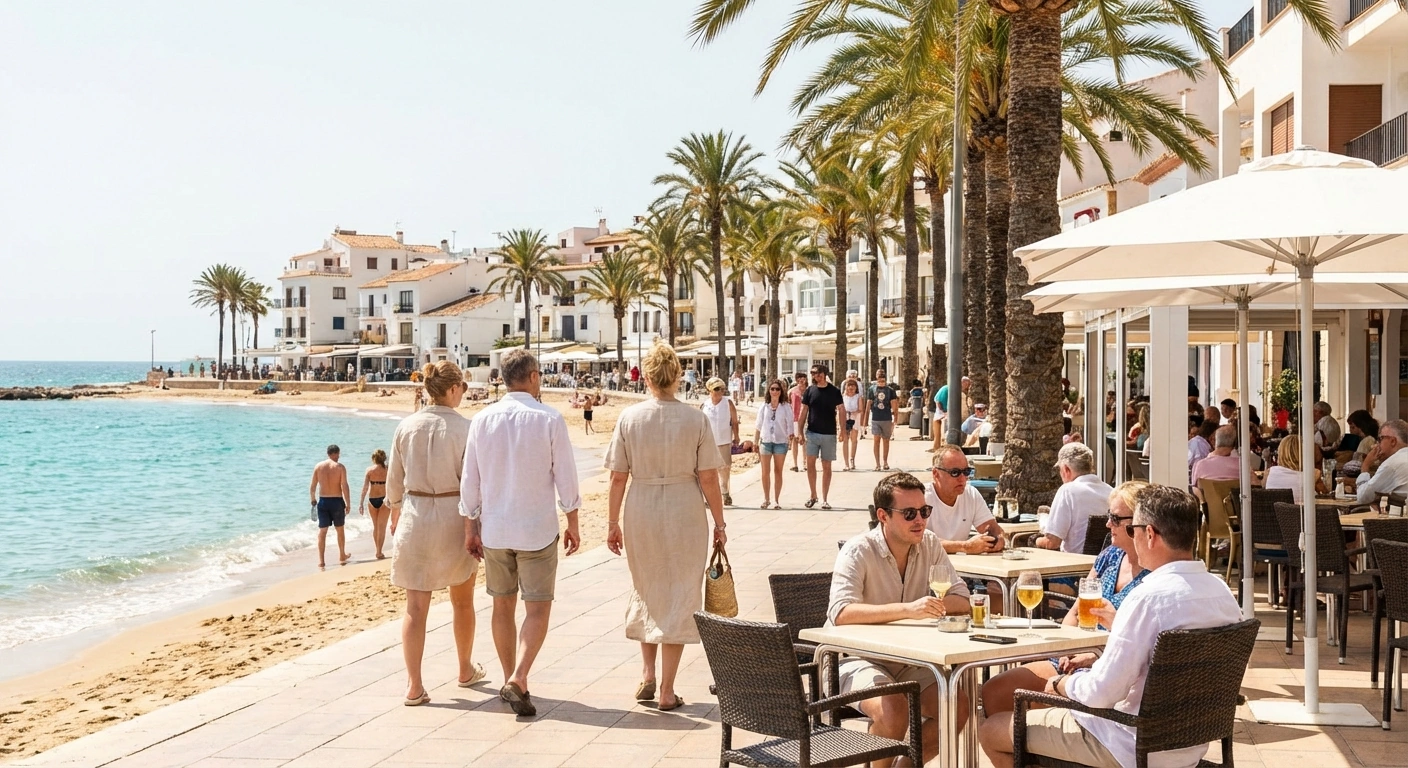
Guide to Costa Blanca's best beaches: family beaches, quiet coves, Blue Flag, parking, and which areas suit buyers who want to live near the sea.
If you're looking for the best beach on Costa Blanca, the short answer is that you shouldn't look for a single winner. Costa Blanca is too long and too varied for that. In the north you get more dramatic coves, clear water and more impressive topography. In the south you get longer sandy beaches, easier daily life and lower property prices near the sea. That means "best beach" depends more on how you want to live than on which cove looks best in a photo.
For families with children, wide beaches like San Juan, Guardamar and La Mata are usually the strongest choices. For those who want to snorkel and swim in smaller coves, Xàbia and parts of the northern coast are better. For those who want to buy property and actually use the beach every week, Torrevieja, Orihuela Costa and Alicante are often more practical than the most photogenic locations. In this guide I go through beaches from north to south, how the north and south differ, which areas suit different buyers, and which drawbacks you genuinely need to account for.
If you want to get a quick overview of the coast, the easiest way is to think of a band from north to south, where each section serves a distinct purpose.
In northern Costa Blanca, Xàbia stands out. Cala Granadella is only 160 metres long, has crystal-clear water and receives Blue Flag status every year. It is one of the most talked-about coves on the entire coast, and it shows. It suits those who prioritise swimming, snorkelling and nature over easy parking. Playa del Arenal in the same municipality is the opposite: fine sand, shallow water and the most restaurants and nightlife of all beaches in Xàbia.
Around Moraira and Calpe you find a good mix of smaller coves and more comfortable town beaches. It is rarely the cheapest part of Costa Blanca, but it works well if you want sea views, attractive surroundings and a daily life that feels more classically Mediterranean than a pure holiday resort.
In central Costa Blanca, San Juan beach in Alicante is one of the clearest all-round choices. It is 2,900 metres long and 85 metres wide, with fine sand, sports facilities, beach bars, public transport connections and accessibility features. This is the beach for those who don't want to choose between city life and beach life. You can live in or near Alicante and still have a beach that genuinely works for everyday use, not just holiday weeks.
Further south, Guardamar becomes one of the coast's most underrated areas. The municipality has 11 kilometres of sandy beach, several stretches of which still feel natural and open, and four beaches with Blue Flag status. That makes Guardamar unusually strong if you want a long beach, walks, and less concrete than in many other coastal towns.
In southern Costa Blanca, Playa de La Mata in Torrevieja is the most complete sandy beach. It is 2,500 metres long and covers almost 127,000 square metres of sand. Its great strength is not that it is the most exclusive, but that it works. You get width, services, shallow water and a daily routine that is easy even if you live here for longer periods.
Information
If you only have time to visit three beach environments before choosing an area, San Juan, Guardamar and La Mata are smart reference points. They show three different versions of beach life on Costa Blanca: city, nature and affordable everyday living.
This is the most important question if you are considering property near the sea. Many people look at photos and fall for a single beach. It is almost always better to understand the whole picture first.
Northern Costa Blanca is greener, more hilly and visually stronger. The mountains come closer to the sea. The coves become smaller. The water often feels clearer, especially in smaller rocky coves. You get more places that look exclusive, and often a calmer atmosphere outside July and August. The downside is that daily life becomes less straightforward. Parking near popular coves is often poor, walking distances less logical and property prices higher in the most attractive areas. In towns like Jávea, Altea and Moraira, price levels are typically well above those in the south.
Southern Costa Blanca is flatter, drier and more practical. The beaches are often longer, wider and easier to use with a pram, a bicycle or just an ordinary daily routine. Here it is also easier to find properties where you can actually walk to both the beach, a shop and a restaurant without your entire life depending on a car. That is a major advantage that many people underestimate at first.
The difference is also visible in the climate. Costa Blanca has an average of around 300 to 320 sunny days per year, but the southern part is normally drier and somewhat easier if you prioritise a stable winter routine. The northern part wins on landscape and character instead.
If you want to simplify it sharply: choose the north if you prioritise more beautiful swimming environments and can accept higher prices and more summer pressure in small coves. Choose the south if you prioritise long sandy beaches, simpler logistics and more beach per euro.
For families, a good beach is rarely about Instagram appeal. It is about space, shallow water, toilets, parking and how easy it is to sort out lunch without the whole day becoming a project.
San Juan in Alicante is strong because it combines length, width and services. There are play areas, sports zones, beach bars, public transport and accessibility services for people with disabilities. That makes it unusually flexible. You can be there with small children, teenagers or grandparents without needing to switch beach type.
Guardamar is perhaps even better if you prioritise space and peace. The municipality's long continuous stretch of beach means that even on busy days it rarely feels as packed as smaller town beaches. La Roqueta and Centre are most practical if you want services nearby, while the longer natural stretches to the south suit those who want space and less noise.
La Mata in Torrevieja is the third clear family choice. It is wide, long, sandy and easy to understand. You do not need to be an expert on the area to have a good beach day there. That is also an advantage if you are considering property. That type of beach works just as well for a grandchildren's week as for an ordinary Tuesday in October.
The most common mistake is choosing a small cove because it looks nicer in photos. Cala Granadella is beautiful, but it is not the first choice if you have small children, a cool box, beach toys and want to park without stress. The same applies to several smaller coves in the north. They can be fantastic for a half-day in June. They are not always enjoyable in peak season with family logistics.
Properties
Explore available properties in torrevieja
It is in the north that you find the most talked-about coves. Xàbia is clearest here. Cala Granadella is still one of the coast's strongest swimming coves if you want clear water and snorkelling. Xàbia also has two beaches with Blue Flag — La Grava and Cala Granadella — which says something about how the municipality prioritises water quality and beach management.
But there is an important catch. The most beautiful coves are not automatically the most peaceful places in summer. On the contrary. The more well-known and smaller the cove, the faster it fills up. That particularly applies to Granadella. If you dream of peace and quiet in July, you almost have to either arrive very early or choose a less well-known spot with lower expectations.
Moraira often works better than its reputation if you want a balance between beautiful swimming environments and slightly less stress. It is not cheap, but you get a coast where several beaches and coves feel well maintained without everything being pure urban environment. Altea is weaker if you demand a perfect sandy beach, but strong if you want to live by the sea and be able to combine swimming with a small-town atmosphere.
In the south you rarely get the same dramatic cove feeling, but instead more open beach life. For some buyers that is genuinely better. They think they want the most spectacular cove, but in practice they use wide sandy beaches far more often.
Tip
If you prioritise clear water and snorkelling, look at northern Costa Blanca. If you prioritise many spontaneous beach days per year, the south is often a better buy, even if the beaches are less dramatic.
This is really as much a property question as a beach question. A good town beach makes a big difference to how often you actually use the sea.
San Juan is the best example on Costa Blanca. You get a real beach, not just a small strip next to the city centre. At the same time you have Alicante close at hand with restaurants, trams, schools, healthcare and a larger urban life than in most other coastal towns. For many buyers who want to live in Spain long-term, it is a stronger combination than they initially think.
In Torrevieja, Playa del Cura and Playa de los Locos serve a different purpose. They are smaller and more urban than La Mata, but they mean that a central location genuinely feels close to the beach. That is why Torrevieja continues to attract buyers who prioritise everyday life and price. You do not get the same elegance as in Altea or the same panoramic cove environment as in Xàbia. But you get beach life that is easy to use.
Guardamar's Centre and La Roqueta also work well if you want to live near services without ending up in too intense an urban environment. La Roqueta is 1,164 metres long, accessibility-adapted and has Blue Flag status. That makes it unusually strong as a compromise between a practical beach and a quieter town.
If you ask me which areas suit buyers who truly prioritise beach life year-round, the answer is often three names: Altea if you want charm and a higher budget, Alicante if you want city plus beach, and Torrevieja or Orihuela Costa if you want the most beach-close daily life for your money.
Here you need to be honest about what "beach life" means to you.
If beach life means a walk to the sea every day, easy swimming and everyday services, Torrevieja, Orihuela Costa and Guardamar are almost always the most logical candidates. They are not as visually striking as the best postcard spots on the northern coast, but they work better for more people. You can buy closer to the sea at a lower price, and it is easier to find areas where the beach becomes part of daily life rather than a weekend project.
If beach life means a more aesthetic environment, less resort feel and a greater sense of exclusivity, you should look northward. Jávea, Moraira and Altea are strong here. But you must also accept higher price levels and often more frustrating summer logistics.
If you want the best compromise between city and beach, Alicante is hard to beat. Alicante-Elche airport handled almost 20 million passengers during 2025, which says something about how accessible the region is. That does not mean everything around Alicante is quiet. But it means the location works very well for those who alternate between Sweden and Spain and don't want the travel chain to feel heavy.
In practice, I tend to think of it like this:
Properties
Explore available properties in altea
Here comes the part that is often missing from simpler guides. Costa Blanca is good for beach life, but it is not without problems.
The first drawback is summer crowds. This affects almost the entire coast, but hits differently depending on location. Small coves in the north quickly become overloaded. Town beaches in the south fill up but are at least built for more people. If you only see a cove in April and then buy based on that impression, you may be disappointed in July.
The second is parking and access. At smaller coves, parking is often the real problem, not the beach itself. At wide sandy beaches in the south there is more space, but then you get more people and more traffic instead, especially around the N-332 and access roads.
The third is wind and seagrass. Guardamar and the open southern coastal stretches can get more wind than many expect. Some days you barely notice it. Other days it completely changes the beach experience. Posidonia and other seagrass accumulation is moreover not always a sign of a poor beach. But it can make the beach look less attractive in the short term, especially after windy weather.
The fourth is seasonal services. Chiringuitos, hire services and certain accessibility facilities are often much better from late spring to early autumn than during winter. San Juan and the larger town beaches work best year-round. Smaller coves and heavily seasonal areas can feel quite empty outside the season.
The fifth is the gap between dream and reality. Many people want that view over a perfect cove. But when they calculate the daily costs they realise that a slightly simpler beach in Alicante, Guardamar or Torrevieja gives more beach days per year and less stress overall.
Note
The beach that looks best in photos is not always the one that gives the best quality of life once you actually live here. Small coves, difficult parking and large summer crowds are the most common combination behind poor property purchases along Costa Blanca.
Yes, if you want variety. That is really Costa Blanca's greatest strength. You can choose between clearly different beach experiences without leaving the same coastal strip: small coves in the north, long city-adjacent beaches in the middle, and open family beaches in the south.
But you should choose which part of the coast you live in just as carefully as you choose your property. Northern Costa Blanca suits you better if you prioritise swimming environment, clearer water and a more attractive setting. Southern Costa Blanca suits you better if you prioritise actually using the beach often, want lower price levels and appreciate daily life that works without everything needing to be planned.
That is why I would rarely recommend the same area to everyone. San Juan, Guardamar, La Mata, Altea and Xàbia are all good answers to the question of the best beaches on Costa Blanca. They simply answer different versions of the same question.
Contact
We help Swedish buyers compare areas based on daily life, budget and beach type — not just photos. Tell us whether you are looking for a family beach, a quiet cove or walking distance to the sea, and we will help you reason through the right choice.
Book free consultationLast updated: April 2026. Beach services, Blue Flag status and local parking rules can change between seasons.
Decision support
Det säkraste allround-valet är ofta Playa de La Mata i Torrevieja eller de breda stränderna i Guardamar. De har långgrunt vatten, gott om plats och tydlig service.
Om du vill bo närmare en stad fungerar även San Juan i Alicante bra, men där blir det mer folk och högre prisnivå nära stranden.
Om du prioriterar lugn ska du titta på mindre vikar i norra Costa Blanca, särskilt runt Xàbia och Moraira. Cala Granadella är den mest kända, men också en av de mest belastade mitt på sommaren.
För verkligt lugn är det ofta smartare att välja mindre vikar utanför högsäsong eller bo nära Guardamars längre naturstränder.
Norra Costa Blanca har fler dramatiska vikar, klippor och grönare landskap. Södra Costa Blanca har längre sandstränder, flackare terräng och mer praktisk vardag för den som vill gå till strandpromenad, butiker och service.
Norr känns ofta snyggare och lugnare. Söder är enklare och billigare för fler köpare.
Blå Flagg är ett bra tecken på vattenkvalitet, säkerhet, service och strandförvaltning, men det är inte hela sanningen. En strand utan Blå Flagg kan fortfarande vara fin, särskilt om du söker natur och mindre kommers.
Däremot är certifieringen praktisk om du prioriterar livvakter, tillgänglighet, toaletter och tydlig skötsel.
Det beror på budget och vardag. Alicante och Altea passar dig som vill kombinera strand med stad eller charmig småstad.
Torrevieja och Orihuela Costa passar dig som vill ha mycket strandliv för pengarna och enkel vardag året runt. Guardamar är starkt om du prioriterar långa naturstränder framför mest möjliga stadspuls.
Sources

Lago Jardín II, Alicante

Los Balcones, Alicante

San Luis, Alicante

San Agustín

Centro, Alicante

Centro, Alicante
Local expertise
All beaches in Torrevieja: Playa del Cura, La Mata, Los Locos, Cabo Cervera and more. Facilities, Blue Flag status and tips for Swedish visitors.
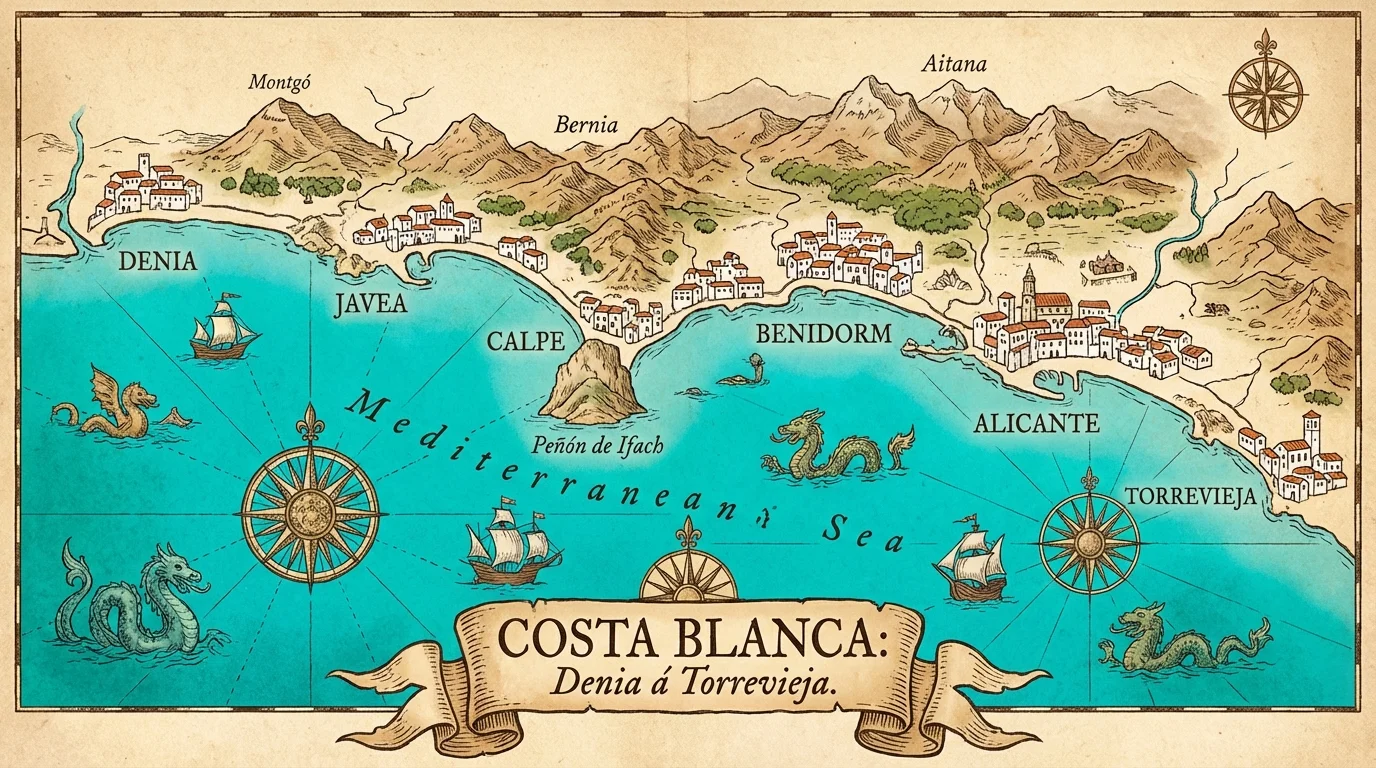
Overview of the Costa Blanca: towns and areas from Dénia to Pilar de la Horadada — map, distances, prices and tips for Swedish buyers 2026.
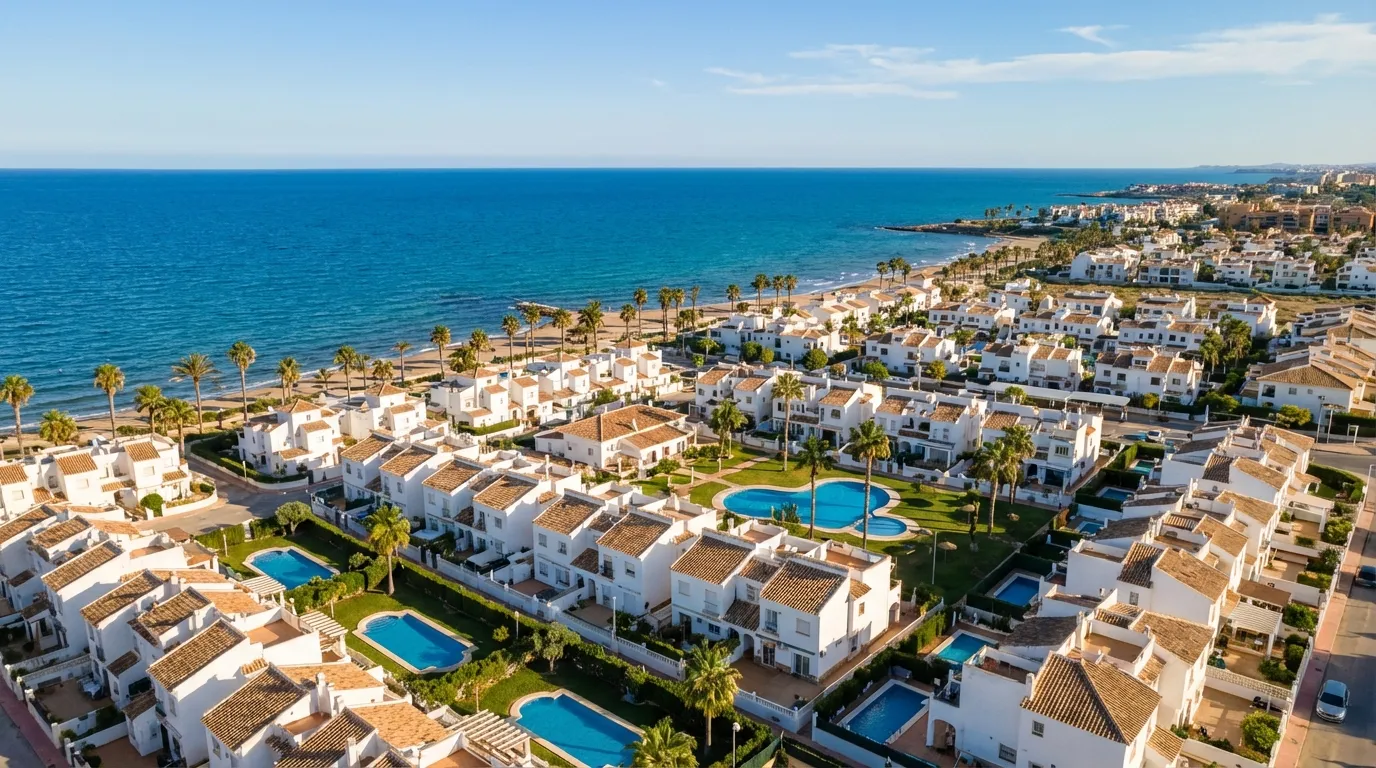
Everything you need to know about Orihuela Costa on Costa Blanca: areas, property prices, climate, beach life and tips for buying property in southern Spain.