


Lifestyle
Golf courses in Torrevieja and surroundings – Complete guide 2026
All golf courses near Torrevieja: green fees, holes, facilities and tips. Villamartín, Las Ramblas, Campoamor, Las Colinas and more.
16 min
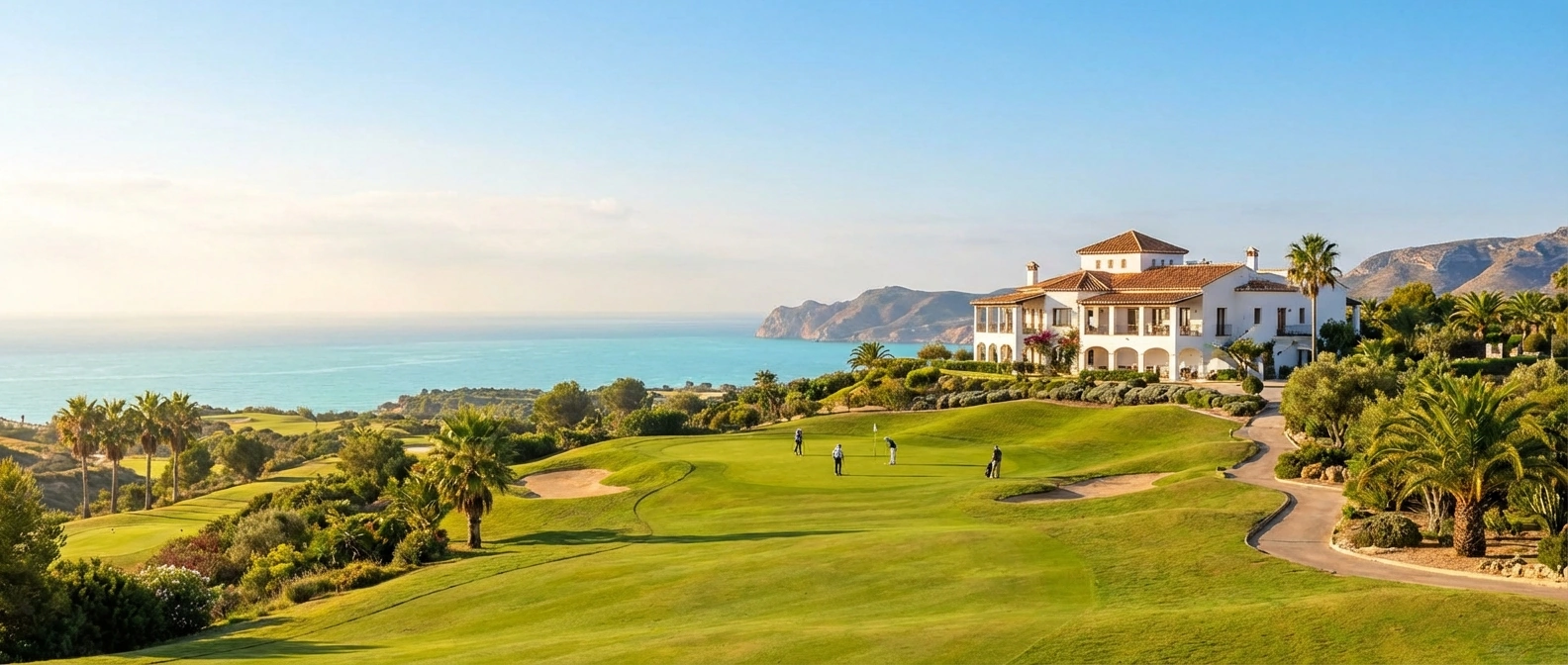
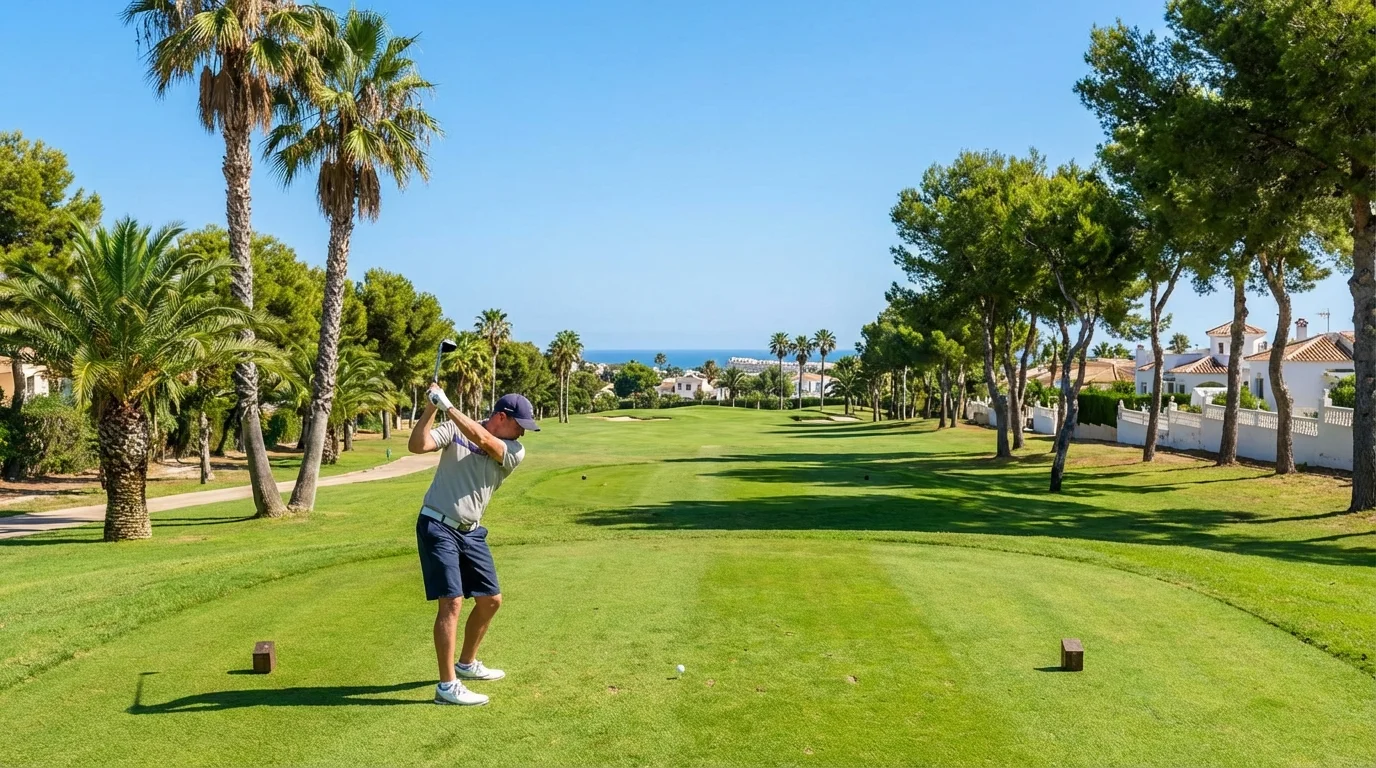
Complete guide to golf on the Costa Blanca: courses, areas, green fees, climate and where to live if golf is an important part of life in Spain.
Golf on the Costa Blanca is a strong choice if you want to play frequently, almost year-round, while also having many different living environments to choose from. The southern part around Torrevieja, Orihuela Costa and Algorfa has the highest course density and the most residential areas built with golf as part of everyday life. The northern part around Dénia, Jávea, Altea and Oliva is less dense but often more scenic, quieter and more appealing if you want to combine golf with a more classic Mediterranean lifestyle.
The important thing is to understand that "golf Costa Blanca" is not one single area. You can live ten minutes from four courses in the south, or choose fewer but more resort-oriented options in the north. In this guide I go through which courses matter most, how north and south differ, what green fees typically come to, and which part of the coast suits different types of buyers.
The short answer is climate, accessibility and variety. The Costa Blanca has around 300–320 sunny days per year and winter days that often stay around 12–16 degrees, while the summer season normally runs around 28–32 degrees. This does not mean every day is perfect golf weather, but it does mean the season in practice never closes in the same way as in Sweden.
Accessibility helps too. Alicante-Elche Airport handled nearly 20 million passengers in 2025. For a Swedish buyer that matters. You do not want to own a golf property that feels smooth in theory but awkward in practice. On the Costa Blanca you get onto the AP-7 or N-332 quickly, and from there you can reach both coastal courses and inland club resort environments without the whole day disappearing in travel.
The third reason is the variety. Here you find older club courses like Villamartín and Campoamor, modern resort courses like Las Colinas and La Finca, family-friendly options like La Marquesa and large resorts in the north like La Sella and Oliva Nova. That makes the region unusually flexible.
Information
The Costa Blanca works best as a golf region from October to April. That is when the temperature is comfortable, the grass is normally in best condition and most Scandinavian owners are actually using their properties. In summer it is also possible to play, but early tee times almost always make more sense than lunchtime rounds.
The southern Costa Blanca is more practical. The northern Costa Blanca is more scenic. That is simplified, but not wrong.
In the south lie many of the courses Scandinavians know best: Las Colinas, Villamartín, Las Ramblas, Campoamor, La Finca, Lo Romero, Vistabella and La Marquesa. They are close enough to each other that you can vary the course without changing your everyday life. If you live in Orihuela Costa, Torrevieja or Ciudad Quesada you can build a whole golf winter without long car journeys.
In the north golf is more spread out. You get fewer courses packed close together, but often more attractive topography, more elevation changes and a different kind of surroundings. La Sella is set in a landscape that feels clearly northern Costa Blanca, with mountains, more greenery and more of a resort feel. Oliva Nova has a more open, more coastal layout. Bonalba and Alenda are in the zone where Alicante city meets the inland and work well if you want to live closer to a city than to an urbanisation.
This also affects the property choice. In the south it is easier to find urbanisations where golf is a natural part of everyday life and where English or Swedish is heard as often as Spanish. In the north you more often find a more mixed international environment, fewer pure golf enclaves and a life that is not as clearly built around the course.
If you ask me which part is easiest for most Swedish buyers, the answer is the south. If you ask which part often feels most harmonious once you are settled there, the answer more often tilts north.
The southern Costa Blanca is the core of the region's golf market. This is where you get the clearest combination of many courses, large residential areas and everyday life that actually works for someone who wants to play more than just a few holiday weeks.
Las Colinas Golf & Country Club is still the course most people name first. The championship layout is 6,935 metres from the back tee, par 71. It is modern, well maintained and feels more resort than local club. You can tell in the price too. During peak season green fees are often in the upper range of the region. If you are a serious player who appreciates a practice facility and wants the overall feel to be high quality, Las Colinas is hard to avoid.
Villamartín Golf is older, more classic and for many more suitable as an everyday course. The course opened in 1972 and measures 6,132 metres from the white tee. Its great strength is not that it is most spectacular. It is that it is still enjoyable to play often and sits in the middle of an area where it is easy to buy a property with golf as a natural part of life.
Real Club de Golf Campoamor is longer and more traditional in feel. It measures 6,277 metres and attracts players who like a more classic course without everything feeling resort-packaged. It suits experienced golfers better than purely tourist rounds with a casual warm-up.
Then you have Las Ramblas, which many find more fun than comfortable. The undulating terrain makes the round more physical but also more memorable. La Finca in Algorfa is attractive, modern and often a good choice for low- and mid-handicappers who want a bit more resort feel without going all the way to Las Colinas. Lo Romero is strategic, consistent and a strong option for those who want to live further south towards Pilar de la Horadada. La Marquesa in Ciudad Quesada is often best for families and more relaxed everyday golfers. Vistabella works well for those living on the inland side who do not need to have the sea close every day.
The nice thing about the south is that you can mix courses depending on your mood without living on an expensive resort. But you almost always need a car.
Properties
Explore available properties in orihuela-costa
The northern Costa Blanca does not have the same density, but it should not be underestimated. For some buyers it is actually better, especially if golf is important but not the only factor driving the property choice.
La Sella Golf near Dénia is the clearest example. The facility has 27 holes and is linked to resort living in a way that makes it easy to use both as a holiday base and for longer-term living. If you want to live around Dénia or Jávea and play regularly without moving to a golf urbanisation in the south, La Sella is the most obvious anchor.
Oliva Nova further north is also significant. It is coastal, open and suits you if you want resort structure without the same international density as in the south.
Bonalba Golf and Alenda Golf are more interesting as living choices than as great prestige addresses. They work for you if you want quick access to Alicante, the airport and everyday city or near-city life without giving up golf entirely.
This is also where the north wins on character. If you want golf plus restaurants, a marina, hiking, mountains, more Spanish everyday life and less of a pure expat environment, then the north has a weight that the south does not quite match.
For buyers, travel time is often more important than the course list itself. You will not play more just because the region has many courses. You play more if it is easy to get there on a normal Tuesday.
From central Torrevieja it normally takes around 10–15 minutes to Villamartín and Las Ramblas, around 20 minutes to Campoamor and approximately 25–30 minutes to Las Colinas or La Finca depending on your exact property location and traffic. If you live in Ciudad Quesada, La Marquesa is effectively on your doorstep, while La Finca and Vistabella still feel reasonable as everyday rounds.
From Alicante city the map looks different. From there you can reach Bonalba in approximately 20–25 minutes and Alenda in about 20 minutes. You can also drive south to La Finca or north towards La Sella, but then it is no longer the same spontaneous everyday golf. Alicante therefore suits you best if you want the city first and golf as a strong bonus, not the other way round.
From Dénia or Jávea, La Sella is normally within 15–25 minutes depending on where you live. Oliva Nova requires a bit more driving, often 25–35 minutes from the most popular northern residential zones. That is perfectly reasonable, but it does not give the same "I'll pop in for nine holes" feeling as in the south.
This is why many active retirees and winter residents end up in southern Costa Blanca. Not because every course is better, but because the logistics work more smoothly week after week.
Tip
If you are thinking of playing two to four times a week, it is worth choosing a property based on actual travel time to your most likely home course, not based on the course you dream of playing occasionally. It sounds obvious, but many buyers get their priorities wrong here.
Golf is playable year-round, but that does not mean every month feels equally good. For most Swedes, October to April is the clear main season. That is when the temperature is comfortable, the courses are well visited and life around golf properties is most lively.
Winter is strongest in the south, where the climate is drier, with approximately 250–300 millimetres of rainfall per year, while the northern Costa Blanca receives closer to 400–500 millimetres. The north is not bad for golf. It is just a little greener, a little wetter and sometimes a little more weather-sensitive.
Summer works too, but you want to play early. For permanent residents this is rarely a problem. For those flying down to maximise golf weeks in July the heat can be more draining than expected.
You should expect clear price differences depending on the course, season and tee time. It is still possible to play at relatively good value, but the Costa Blanca is no longer a budget region for golf in the winter half of the year.
A reasonable working range looks like this:
Green fees (indicative range)
Older club courses / low season
€50–75
Good mid-range / typical winter day
€75–110
Premium courses / peak demand
€110–140
In the south, Villamartín and Las Ramblas are often in the lower range, while Campoamor, La Finca and Vistabella move in the middle. Las Colinas more often goes up into the premium segment. In the north, La Sella and Oliva Nova are rarely cheap during peak season, especially if you book popular times.
Then there are the additional costs. A golf buggy often costs €20–45 and hire clubs around €25–40. If you play from October to March you also notice that the best tee times go early, and late bookings often mean a worse selection or higher price.
Membership exists but does not suit everyone. Full annual memberships work best if you live permanently or spend long periods in Spain. For many Swedish buyers, 10 or 20-round packages are smarter. Campoamor, Vistabella and several other courses have such arrangements. This can reduce the cost per round noticeably without tying up money in a membership you end up using too little.
This is also where the downside of resort living shows. Many buyers budget for the property but not for the fact that ongoing golf costs can actually run to €400–900 per month if you play often during peak season. The house itself may feel good value. The lifestyle around the house is not always equally cheap.
Resort living can be very good, but only if you use the property enough. If you are on-site for several months at a time, membership, multi-round passes and a home course can give both rhythm and better cost control.
If on the other hand you come down for a few weeks at a time, exclusive memberships are often less smart. Then flexible green fee packages usually work better. Many buyers also realise after a while that they want more than just clubhouse life. The beach, restaurants and everyday errands take up more space than they first thought.
This is where Alicante becomes interesting. If you live closer to the city you get less of a pure resort life but more freedom. You can play often without your entire everyday life revolving around the same club.
If you are an active retiree who wants to play frequently with simple everyday logistics, southern Costa Blanca is almost always easiest. Villamartín, Campoamor, Ciudad Quesada and parts of Algorfa work well because golf, services and an international network are already there.
If you are a holiday golfer who wants to combine golf with beach and restaurants, Orihuela Costa or the Alicante area often works better. If you are a serious low-handicap player, Las Colinas, La Finca and La Sella tend to be the most interesting names. If you are a family you need to weigh in schools, beach and everyday services, which makes Alicante, Playa de San Juan and parts of Orihuela Costa more logical than pure golf resorts.
If you want golf plus a more scenic environment and less of a tourist feel, look carefully at the north: Altea, Dénia, Jávea and the zones around La Sella or Oliva Nova. There you get fewer courses close to each other, but often a more balanced everyday life if golf is just one part of life.
Properties
Explore available properties in alicante
There is no generally correct answer here, but the differences are clear.
Living near a course suits you if you prioritise peace and quiet, a green view, easy access to tee times and an everyday life where the sport actually happens. You often get more property for your money than at the beach, especially in inland locations like La Finca, Vistabella or Alenda. It is usually easier to find parking, quieter nights and less pure tourist traffic.
Living near the beach suits you better if you want to be able to walk to restaurants, the promenade and services even on days when you are not playing. Rental potential is often stronger. Life feels less car-dependent. The downside is that you more often get less floor space, a higher price per square metre and a longer journey to the best courses.
Many people think they want to live "on golf" but in practice use the beach more than the course after the first year. Others do the opposite and realise they would rather have lived further from the sea if it meant five minutes to the first tee. Be honest with yourself here: how often will you actually play, and how often do you want to be able to go out for dinner without taking the car?
Here comes the less glamorous part. Golf properties on the Costa Blanca can be very good. But they have some recurring disadvantages that should not be swept under the carpet.
First: car dependency is greater than many realise. This applies especially to southern resort areas and the urbanisations of inland clubs. You can absolutely live well there, but everyday life often relies on a car. If you want to be able to walk to a café, the beach, a pharmacy and dinner in the same way as in a central coastal location you will easily get frustrated.
Second: peak golf season is also the most pressured period for bookings. October to April is fantastic for play, but it is also when the most Scandinavians, British and northern Europeans want to play. That means more full start sheets, higher green fees and less spontaneity.
Third: the water question is real. The Costa Blanca is in a dry area. Many courses use recycled water and have improved at this, but during dry years or periods of regional water pressure you may notice a difference in the colour of the grass, the condition of the rough and how the course plays. It does not have to be a problem. But you should not expect every course to look like its marketing images every week throughout the year.
Fourth: community fees and resort surcharges can mount up. If you buy in a premium area you are not just paying for the property but for the whole package around it. It is usually pleasant. But it is still a cost.
Note
Golf-adjacent property on the Costa Blanca is rarely problem-free "cheap Spain" any more. The purchase price itself may still be reasonable compared with Sweden, but if you add up green fees, golf buggies, community fees, a car and restaurant life, the ongoing monthly budget quickly becomes higher than many first calculate.
Yes, if you want to play a lot, appreciate a mild winter, accept car dependency in many areas and see the value in being able to choose between several types of course without changing region. Then the Costa Blanca is still one of the most practical golf areas in southern Europe.
No, or at least "not necessarily", if you want to walk everywhere, prioritise city life over resort life, or believe that everything with a golf address automatically gives a better everyday life. For some buyers a beachfront location in Alicante or a more urban property in Torrevieja is actually wiser than living right next to the course.
The best conclusion is fairly simple. Choose southern Costa Blanca if you want the most courses and the easiest golf everyday life. Choose northern Costa Blanca if you want fewer but strong options in more scenic and quieter surroundings. And do not choose a property based on brochure feel. Choose based on how you are actually going to live from November to April.
Contact
We help Swedish buyers compare golf areas properly — travel times, everyday services, price levels and which part of the coast suits your lifestyle best. Book a free call if you want to think it through before you start viewing properties.
Book a free consultationLast updated: 1 April 2026. Green fees, availability and local rules can change faster than many expect, especially before the winter peak season.
Decision support
Ja, i praktiken går det att spela året runt på Costa Blanca. Kusten har omkring 300-320 soldagar per år och vintertemperaturer som ofta ligger runt 12-16 grader dagtid.
Den mest efterfrågade säsongen är normalt oktober till april, när temperaturen är behaglig och banorna är som mest bokade.
Södra Costa Blanca passar bäst om du vill ha många banor inom kort bilavstånd och ett stort internationellt bostadsutbud. Norra Costa Blanca passar bättre om du prioriterar vackrare topografi, lugnare tempo och några starka resortbanor som La Sella och Oliva Nova.
Valet handlar mer om livsstil än om ren golfkvalitet.
Räkna ungefär med 50-75 euro på enklare eller äldre banor i låg- eller mellansäsong, 75-110 euro på de flesta välskötta resortbanor och upp mot 120-140 euro på de mest eftertraktade anläggningarna under högsäsong. Golfbil, hyrklubbor och hög vinterefterfrågan kan snabbt höja dagskostnaden.
Det beror på hur du faktiskt lever. Golfnära boende ger lugnare miljö, mer grönska och snabb access till tee times, men det innebär ofta större bilberoende.
Strandnära boende ger fler restauranger, promenadavstånd till service och starkare uthyrningspotential, men ofta mindre boyta och högre pris per kvadratmeter.
Oftast ja. Det gäller särskilt områden som Villamartín, Las Colinas, La Finca, Vistabella och Alenda där vardagsservice finns, men sällan på gångavstånd på samma sätt som i centrala kustlägen.
Alicante stad och vissa delar av Benidorm är undantag, men för de flesta golfboenden är bil det praktiska standardvalet.
Sources

Los Balcones, Alicante

Lago Jardín II, Alicante

San Luis, Alicante

San Agustín

Centro, Alicante

Centro, Alicante
Local expertise
All golf courses near Torrevieja: green fees, holes, facilities and tips. Villamartín, Las Ramblas, Campoamor, Las Colinas and more.
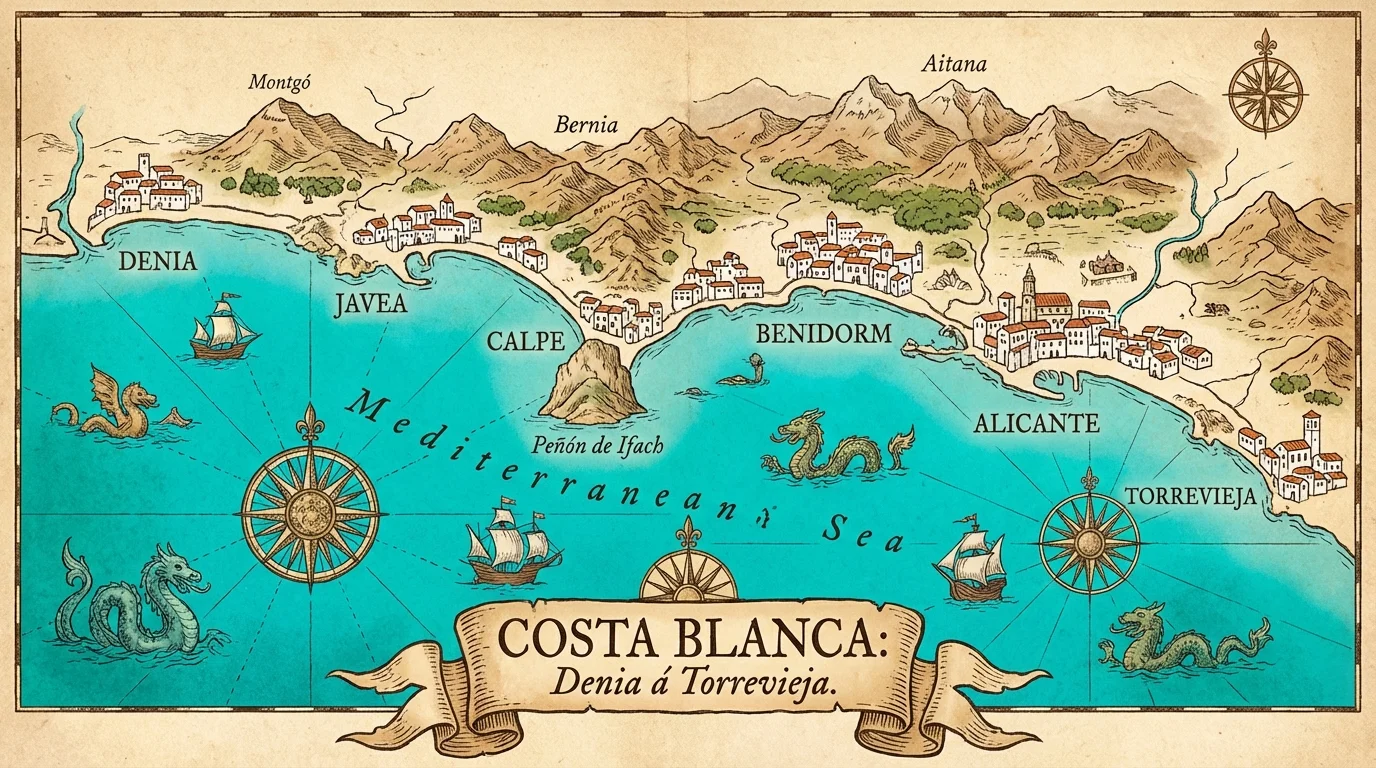
Overview of the Costa Blanca: towns and areas from Dénia to Pilar de la Horadada — map, distances, prices and tips for Swedish buyers 2026.
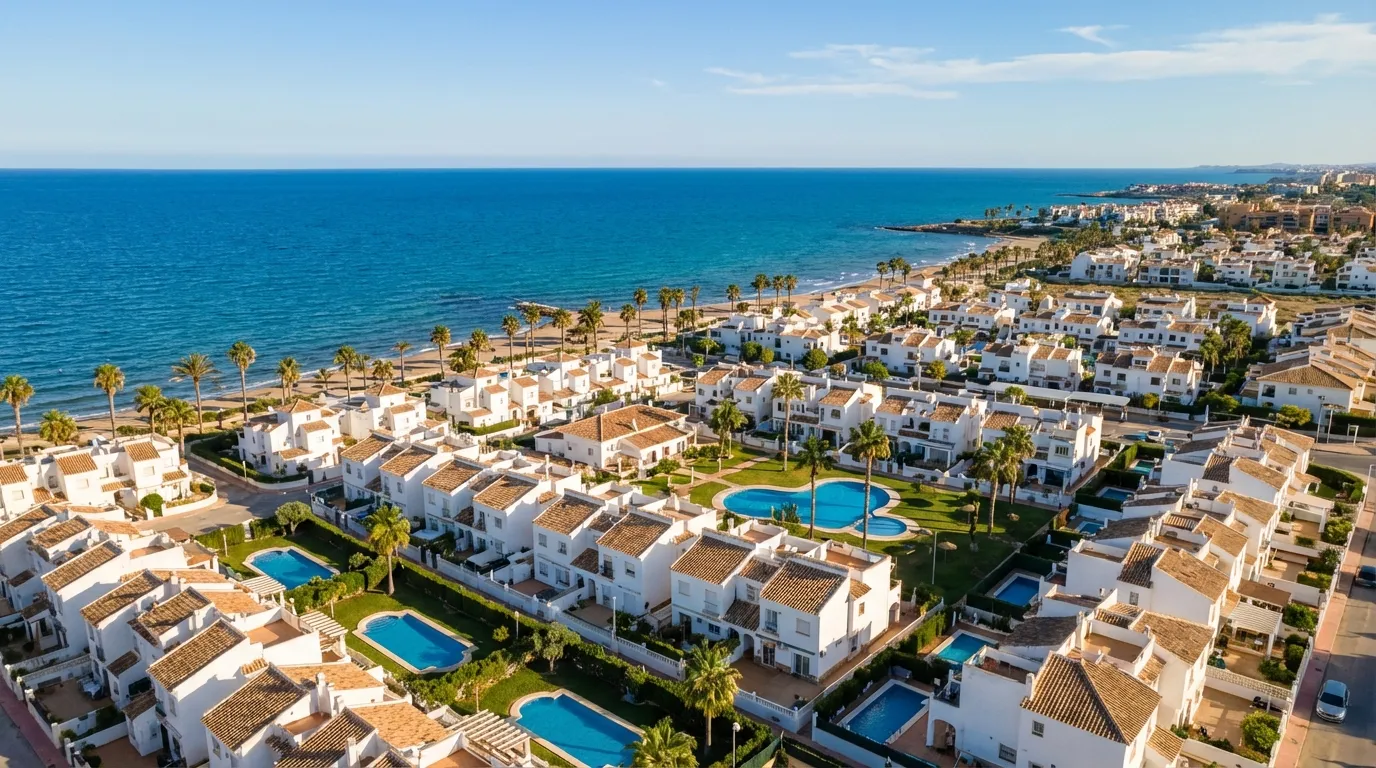
Everything you need to know about Orihuela Costa on Costa Blanca: areas, property prices, climate, beach life and tips for buying property in southern Spain.