

Area Guides
Benissa – Charming Hill Town with Coastline 2026
Complete guide to Benissa on the Costa Blanca: charming old town, hidden coves, property prices and why this is an alternative to Moraira and Calpe.
15 min
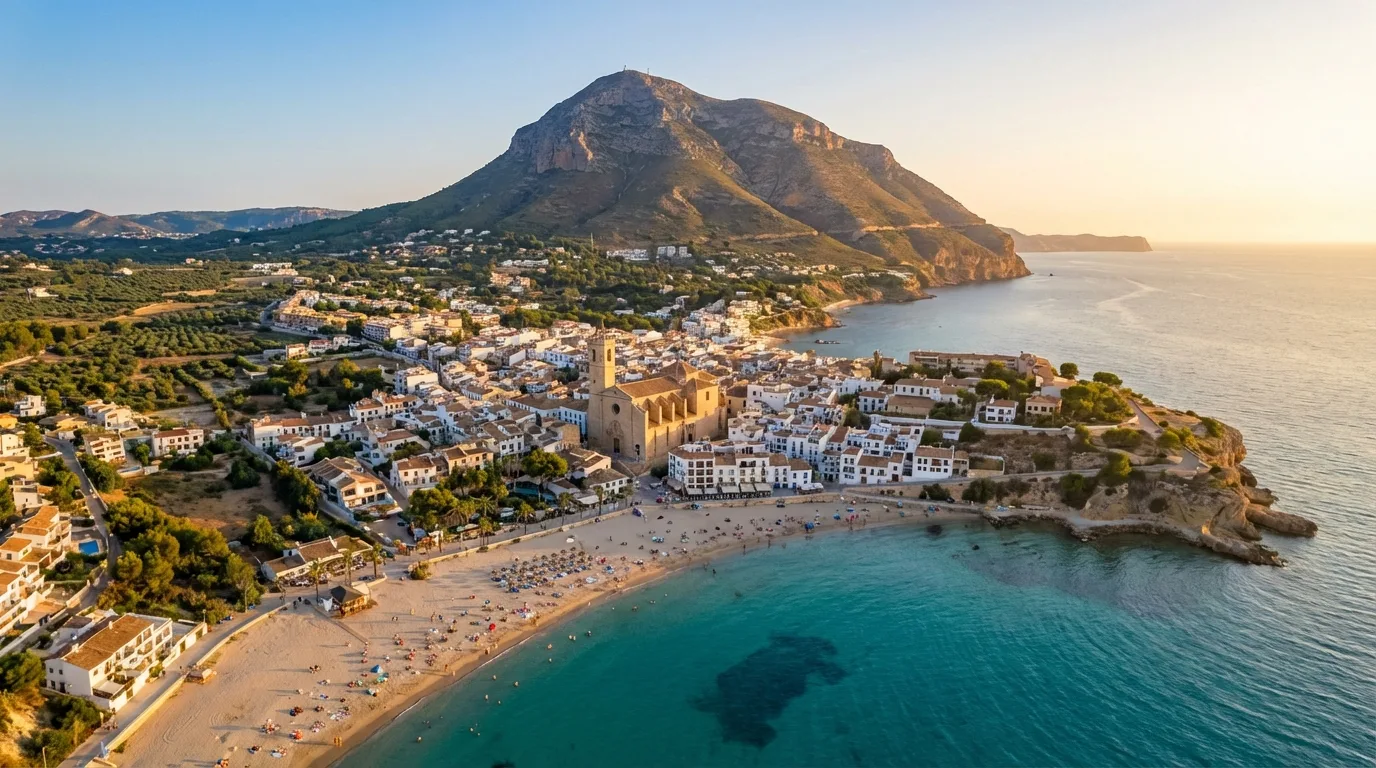
Complete guide to Jávea: Arenal beach, the old town, Montgó, property prices and why it is one of northern Costa Blanca's most sought-after communities.
Jávea is northern Costa Blanca's most expensive and sought-after coastal town — and there are good reasons for that. With an average price per square metre of around €3,900 it is not cheap, but you get something most coastal towns lack: a microclimate classified by the WHO as one of the world's healthiest, 25 kilometres of coast ranging from sandy beach to secret coves, three Michelin-starred restaurants and a population where more than half are foreign nationals from 85 countries. Jávea — or Xàbia in Valencian — is tucked between the 753-metre Montgó mountain and the Mediterranean, protected from cold northerly winds and with a coastal charm that neither Benidorm nor Torrevieja can match.
Prices have risen 50–85 percent since 2016, driven by steady northern European demand. During 2025 the annual price increase was just over 16 percent. For 2026 analysts predict a calmer but still positive trend of 4–6 percent. This guide gives you everything you need to know: where in Jávea you should buy, what it costs, which beaches are best and what to watch out for.
Jávea is on northern Costa Blanca, in the northern part of the province of Alicante, roughly halfway between Alicante city and Valencia. Geographically you are on a headland jutting out into the Mediterranean, with Cap de Sant Antoni to the north and Cap de la Nao — the easternmost point of the Spanish Mediterranean coast — to the south.
The distances are manageable but not short:
Jávea has no rail connection. The nearest train station is Dénia (Tram Alicante L9). Buses run to Alicante and Valencia but with limited frequency. A car is in practice necessary — especially if you live outside the Arenal area.
Information
Cap de la Nao is the easternmost point of the Mediterranean coast on the Iberian Peninsula. From the lighthouse you can see Ibiza on clear days — 90 kilometres directly to the east. This gives Jávea a geographical uniqueness that affects both climate and coastal landscape.
Jávea is not a single unified town — it consists of three clearly distinct neighbourhoods, each with its own character, price level and type of buyer.
Jávea's historic core lies two kilometres from the coast, on a hillside overlooking the sea. Here you find the impressive Gothic-inspired church Iglesia de San Bartolomé, built in local sandstone (tosca), a lively Tuesday market and narrow streets with traditional stone houses. The old town is Jávea's Spanish soul — here you hear more Spanish and Valencian than English.
Prices in the old town are lower than at the coast: €2,800–3,500 per square metre for apartments, with renovation-ready stone houses from €180,000. The downside is that you lack proximity to the beach and parking can be a challenge. The advantage is authentic charm, lower running costs and a genuinely Spanish neighbourhood.
Jávea's harbour is the gastronomic heart. Here is the fish market where fishing boats unload the day's catch, the restaurants serving arroz a banda (rice cooked in fish stock — Jávea's signature dish), and a wide waterfront promenade with rock bathing and turquoise water. The harbour is quieter than Arenal and appeals to buyers who prioritise food, calm and a maritime atmosphere.
Prices in the harbour area are €3,200–4,000 per square metre. Apartments with sea views from €280,000. The harbour is a choice for couples and retirees who want to live close to the sea without Arenal's commercialism.
Playa del Arenal is Jávea's only sandy beach — 480 metres of golden sand with shallow, family-friendly water. Around it spreads a commercial area with restaurants, bars, shops and most of Jávea's nightlife. Arenal is where most international buyers end up, and prices reflect that: €3,500–4,500 per square metre.
A two-bedroom apartment near Arenal costs €280,000–360,000. For beachfront new builds prices go higher. Arenal suits those who want the beach and amenities within walking distance.
Jávea has 25 kilometres of coast but only one sandy beach. The rest are dramatic rocky coves with crystal-clear water — something that makes Jávea unique on the entire Costa Blanca. Here are the most important ones.
Playa del Arenal is the sandy beach. 480 metres wide, Blue Flag certified, with beach restaurants, water sports and lifeguard service. The water is shallow and calm — perfect for children. It is also the most crowded beach in summer, which can be a drawback if you are seeking peace and quiet.
Cala Granadella is regularly voted one of Spain's most beautiful beaches. A sheltered cove surrounded by high cliffs with turquoise water and Blue Flag certification since 1989. The spot is small — arrive before 10 a.m. in summer or expect queues. A simple restaurant and car park are available.
Cala Portitxol (Barraca) is the fishermen's huts cove — whitewashed cottages against the backdrop of the island Illa del Portitxol. Rocky beach with deep blue-green water. More adventurous and less serviced than Granadella. Snorkelling is excellent here.
Cala Ambolo was one of Jávea's most spectacular coves but is currently closed due to landslide risk. Always check current status with the municipality before attempting to visit.
La Grava is the harbour's own pebble beach — wide, with a promenade and restaurants. Less touristy than Arenal, with a local feel and toddler-friendly water when it is calm.
Tip
Jávea's coves are best on weekdays during the early morning or late afternoon. On weekends in July–August, Granadella is packed before 11 a.m. If you live in Jávea permanently: avoid high season and enjoy the coves in September–October when the water is still 24 degrees but the tourists have gone home.
Montgó is the mountain that defines Jávea — both visually and climatically. The 753-metre peak rises like a whale (others say elephant) directly north of the town and separates Jávea from Dénia on the other side.
Montgó Natural Park (Parque Natural del Montgó) protects 2,117 hectares and is home to over 650 plant species, including rare orchids and endemic species found only here. The hiking trail to the summit takes 3–4 hours return and rewards with 360-degree panorama: Ibiza to the east, Valencia to the north, the Alicante coast to the south.
For property buyers Montgó matters for two reasons:
One thing to be aware of: the Montgó area is periodically affected by wildfires during dry summers. Check fire history and evacuation plans for specific urbanisations if you are considering a villa on the hillside.
Jávea is one of the most expensive property markets on the entire Costa Blanca. The average price for all property types is around €3,900 per square metre, but variation is large depending on area and property type.
Here is an overview of price levels by area:
Price overview
| Area | Apartment | Villa | Townhouse |
|---|---|---|---|
| Old town (Pueblo) | €2,800–3,500/m² | from €350,000 | Charm, lower prices |
| Harbour (Puerto) | €3,200–4,000/m² | from €450,000 | Gastronomy, quiet |
| Arenal | €3,500–4,500/m² | from €550,000 | Beach, nightlife |
| Montgó / Tosalet | €3,800–5,000/m² | from €600,000 | Views, exclusivity |
| Balcón al Mar | €4,200–5,500/m² | from €800,000 | Premium, cliff coast |
| Cap Martí / La Corona | €4,500–7,000/m² | from €1,000,000 | Top class, sea panorama |
Prices refer to current 2026 listings. Allow 10–13 percent in additional costs on top of the purchase price: transfer tax (ITP, 9 percent in the Valencian region since June 2026), notary fee, land registry and legal advice.
During 2025 the annual price increase in Jávea was 16.4 percent. For 2026 a more subdued but still positive increase of 4–6 percent is expected. The limited supply of land — Jávea is surrounded by sea, natural park and mountain terrain — drives prices upward.
Note
Jávea's market is illiquid compared to larger cities. Sale times are longer and room to negotiate is limited — especially for properties below €500,000. Be prepared to act quickly when you find the right property, but never buy without independent legal advice and a technical survey.
Properties
Explore available properties in javea
Jávea's climate is special — even by Spanish standards. The Montgó mountain blocks northerly winds, Cap de la Nao creates a sheltered bay, and the Mediterranean acts as a heat reservoir. The result is a microclimate with mild winters and warm but not oppressive summers. The WHO has named Jávea's climate one of the world's healthiest.
Temperatures throughout the year:
Jávea receives around 325 sunny days per year and rain falls concentrated in late autumn — especially October and November. The DANA phenomenon with intense downpours occurs — avoid ground floor properties in low-lying areas and always check a property's elevation.
Jávea's population is 30,249 inhabitants, but the figure tells only half the story. More than 54 percent are foreign nationals from 85 nationalities — one of the highest proportions in all of Spain.
The largest groups:
Scandinavians are a smaller but growing group. There is no established Swedish community in Jávea in the same way as in Torrevieja or L'Alfàs del Pi, but the broader northern European infrastructure — English-speaking doctors, international schools, social networks — makes it easy to settle in.
Jávea appeals to a different type of buyer than southern Costa Blanca. Here you find digital nomads, retired entrepreneurs, artists and families seeking quality over quantity. It is less "Little Britain" and more a cosmopolitan European mix.
Jávea's food scene is unusually strong for a town of 30,000 inhabitants. Three restaurants have Michelin distinctions — something neither Dénia, Moraira nor Calpe can match.
BonAmb — two Michelin stars and three Repsol suns. Chef Alberto Ferruz serves creative Mediterranean cuisine built on local produce. Price range €120–180 per person.
Tula — one Michelin star at the Arenal beach. Modern Mediterranean menu with emphasis on seafood and rice. More accessible price range, around €60–90.
La Perla de Jávea — one Michelin star and two Repsol suns. Classic Mediterranean cooking with sardines, king prawns and lobster soup.
But Jávea's real gastronomic pride is rice. Arroz a banda — rice cooked in fish stock, traditionally served separately from the fish — is Jávea's flagship dish. Restaurant Trencall is known for its 25 different rice dishes. La Cantina at the harbour serves the day's catch directly from the fish market.
For everyday lunch: expect €12–18 for a menú del día with two courses, dessert and a drink. Jávea's restaurants are generally more expensive than in Torrevieja but cheaper than Altea and Moraira.
Advantages:
Disadvantages:
Jávea, Dénia and Moraira form northern Costa Blanca's "golden triangle" — all three are popular among northern European buyers, but they attract different types of people.
Dénia is larger (45,000 inhabitants), cheaper (average price €3,200/m²) and has better infrastructure: rail connection to Alicante via tram, a ferry terminal to Ibiza and Mallorca, and a vibrant Spanish town centre. Dénia suits those who want more of an urban feel and a lower entry level. Jávea wins on beaches (Dénia has a long sandy beach but lacks Jávea's dramatic coves), microclimate and gastronomic prestige.
Moraira is smaller (15,000 inhabitants), more expensive (average price €4,100/m²) and more exclusively focused on Belgian and Dutch buyers. It is quieter and has a strong yacht club culture. Moraira suits those seeking total peace and exclusivity. Jávea offers more variety — from the popular harbour to a luxury villa on Montgó — and a wider range of restaurants, shops and activities.
Jávea, Dénia and Moraira — three profiles
Most variety — harbour, Arenal and Montgó — and the strongest gastronomy in the triangle.
Larger city, lower average price and better public transport (train/tram).
Smallest and most exclusive — yachts and tranquillity, often higher average price.
Properties
Explore available properties in javea
Contact
Get in touch and we'll guide you forward — whether you're just starting out or ready to buy.
Contact usDecision support
Genomsnittspriset i Jávea ligger på cirka 3 900 euro per kvadratmeter (2026). En tvårumslägenhet på 80 kvadratmeter kostar från 260 000 euro i utkanten till över 360 000 euro nära Arenal-stranden.
Villor börjar på 450 000 euro för renoveringsobjekt och når över 1,5 miljoner euro för modern lyxstandard med havsutsikt.
Ja. Jávea har cirka 30 000 invånare varav över halva befolkningen är utländska medborgare.
Till skillnad från många turistorter fungerar Jávea året om med öppna restauranger, aktiva föreningar och milt vinterklimat tack vare Montgó-bergets skydd. WHO har klassat Jáveas mikroklimat som ett av världens hälsosammaste.
Alicante-Elche flygplats (ALC) ligger 90 kilometer söderut och Valencias flygplats 110 kilometer norrut. Båda har direktflyg från Stockholm och Göteborg.
Från Alicante flygplats tar bilresan cirka 75 minuter via motorvägen AP-7. Hyrbil är det smidigaste alternativet då Jávea saknar tågförbindelse.
Det beror på livsstil. Arenal-området passar dig som vill ha strand och uteliv.
Gamla stan (Pueblo) erbjuder charm och lägre priser. Hamnen är bäst för gastronomi och lugn.
Montgó och Tosalet ger havsutsikt och exklusivitet men kräver bil. Balcón al Mar är premiumvalet med direkt klippkust.
Jávea ligger prismässigt mellan Dénia och Moraira. Dénia är cirka 20 procent billigare med snittpris runt 3 200 euro per kvadratmeter.
Moraira är 5-10 procent dyrare än Jávea, särskilt för villor med havsutsikt. Jávea erbjuder mer variation i prisklasser än båda grannorterna.
Sources

Cucarres, Alicante

Gran Sol, Alicante

Altea Hills, Alicante

Playa de La Almadraba, Alicante

Gran Sol, Alicante

Gran Sol, Alicante
Local expertise
Complete guide to Benissa on the Costa Blanca: charming old town, hidden coves, property prices and why this is an alternative to Moraira and Calpe.
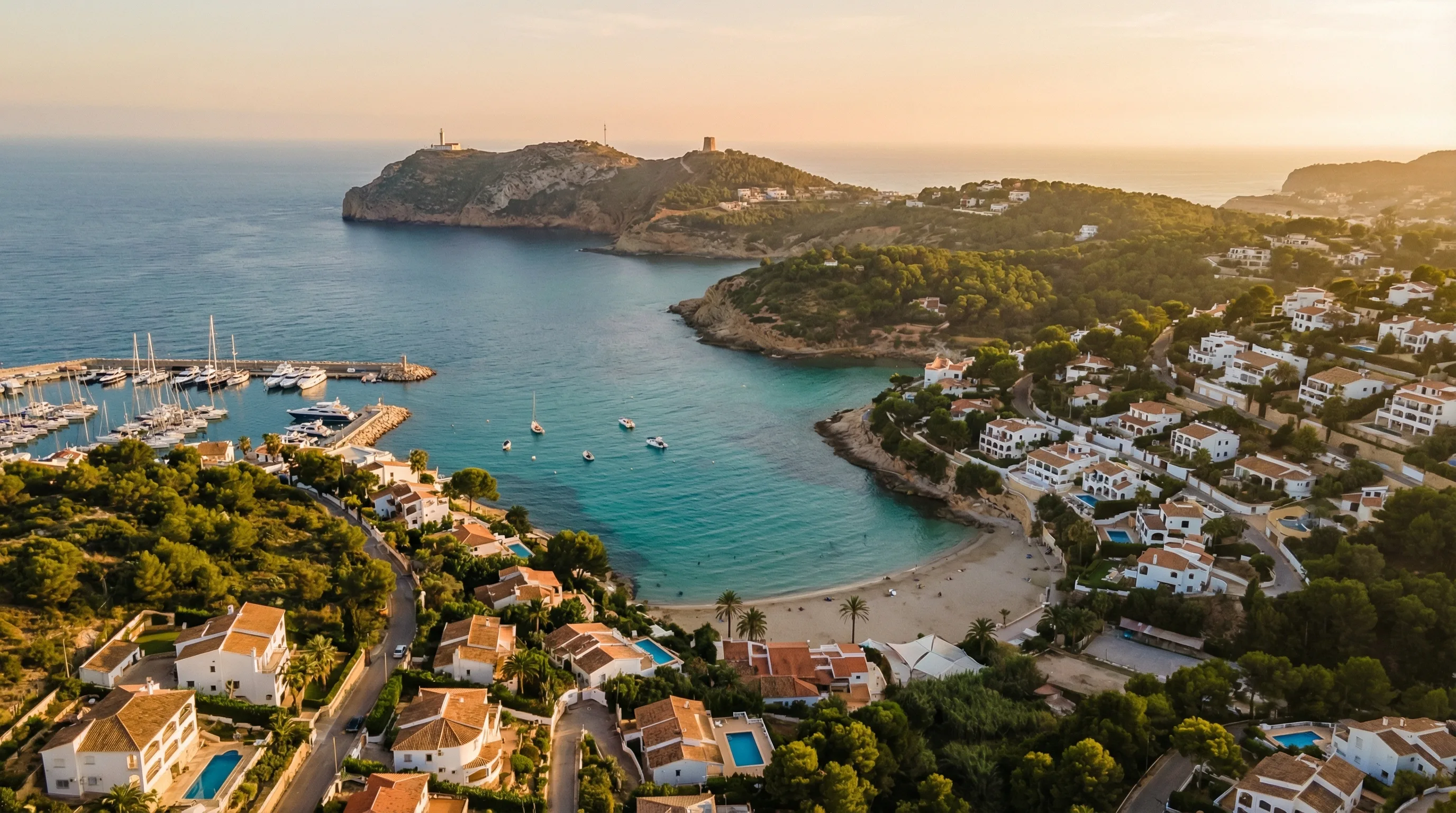
Complete guide to Moraira: exclusive villas, crystal-clear coves, property prices and why Teulada-Moraira attracts buyers with larger budgets.
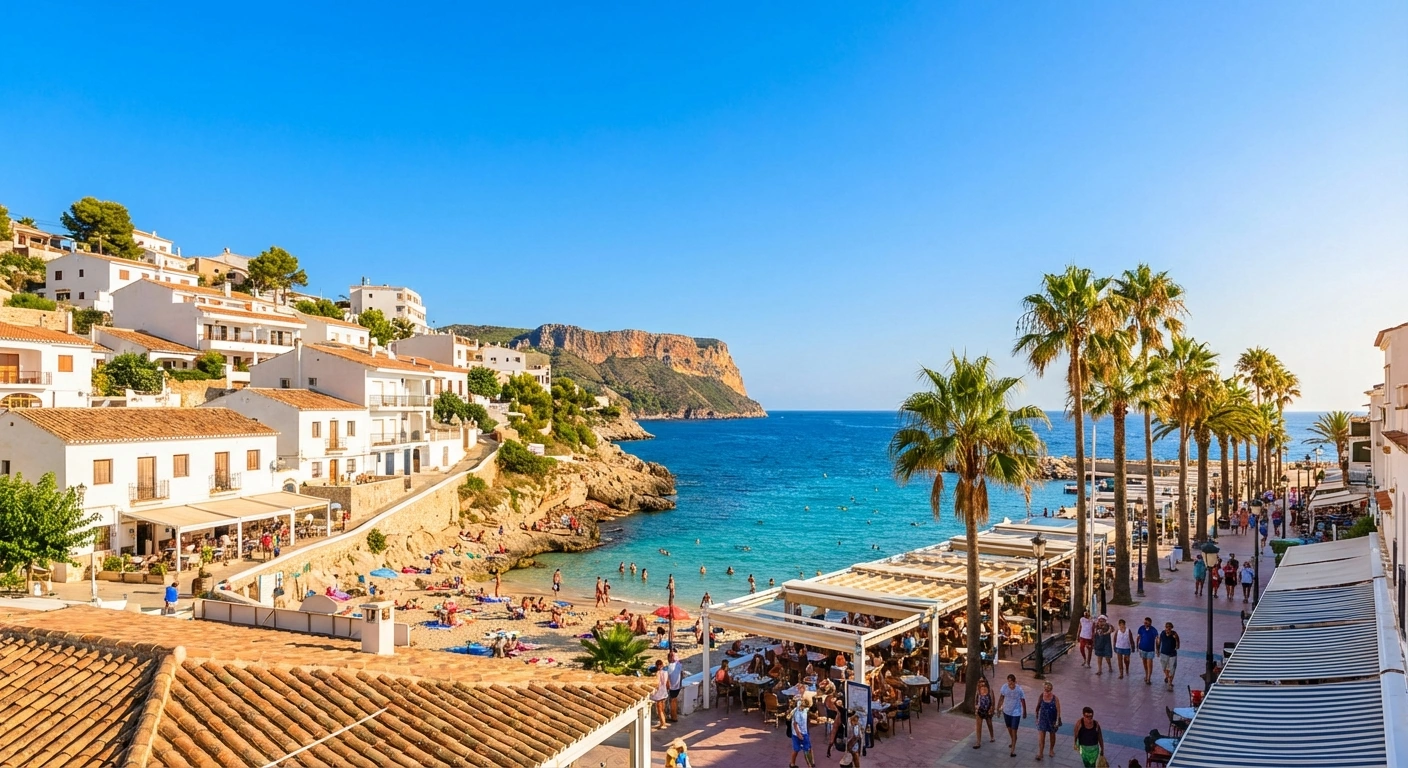
Guide to the climate on Costa Blanca: temperatures, sunny days, sea warmth, rain and which months suit residents, golfers and beach life best.