


Lifestyle
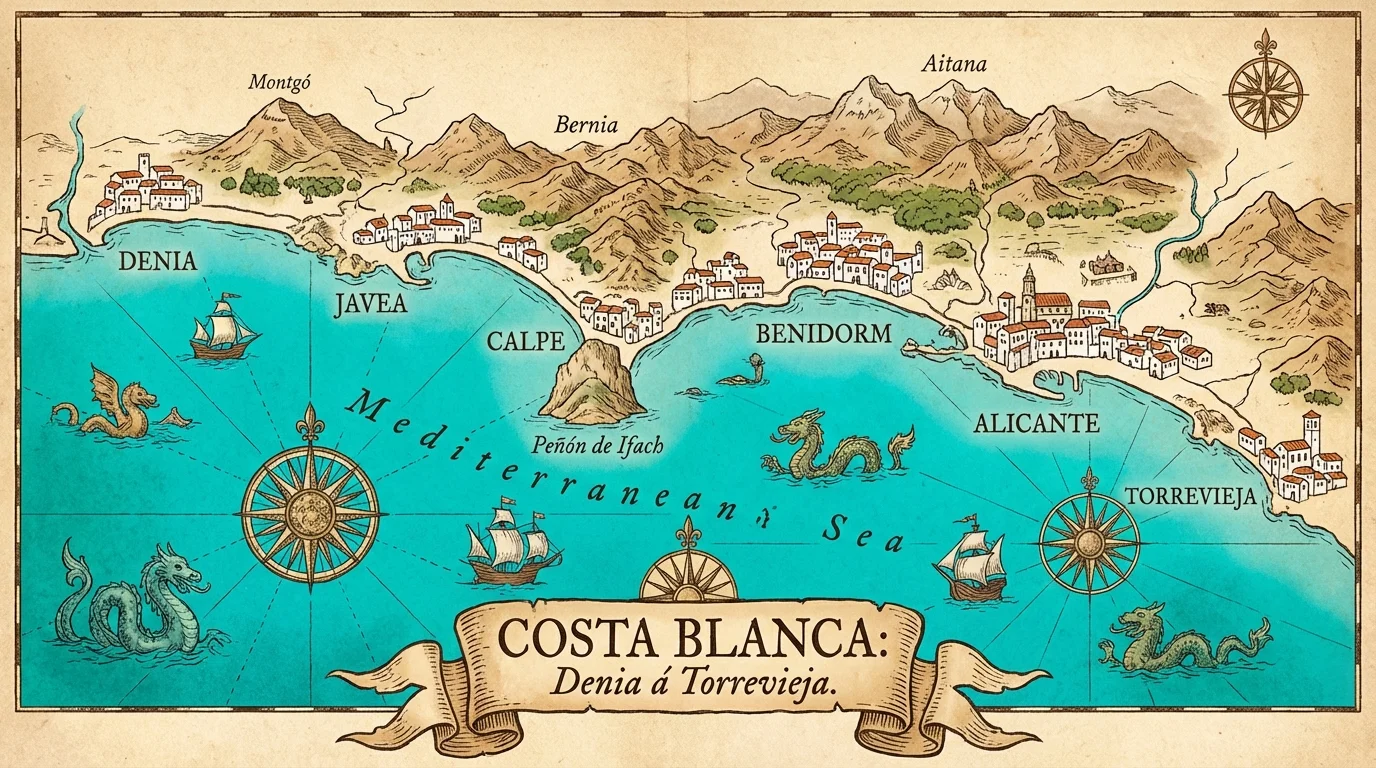
Costa Blanca – Map and overview of all areas 2026
Overview of the Costa Blanca: towns and areas from Dénia to Pilar de la Horadada — map, distances, prices and tips for Swedish buyers 2026.
16 min
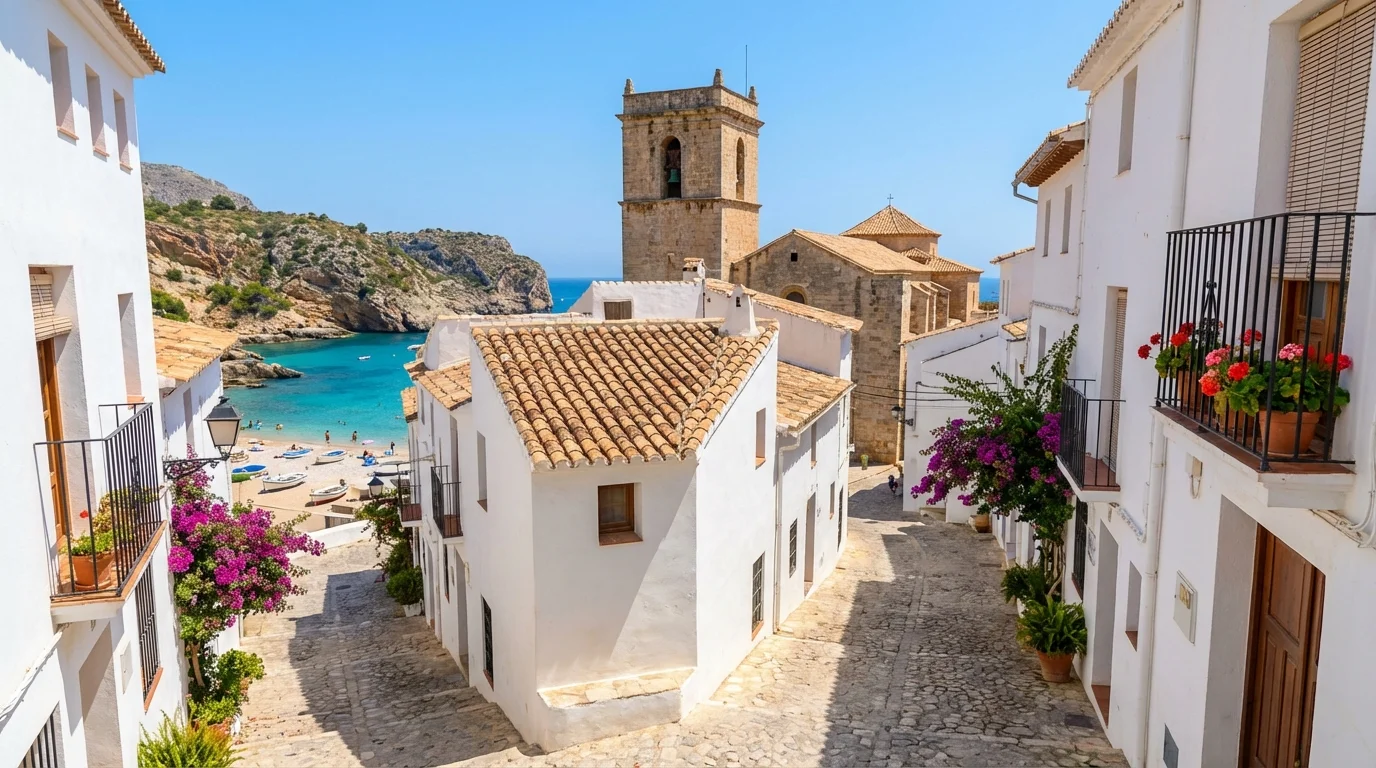
Complete guide to Benissa on the Costa Blanca: charming old town, hidden coves, property prices and why this is an alternative to Moraira and Calpe.
Benissa is the place on northern Costa Blanca that most buyers drive through on their way to Moraira or Calpe — and that is precisely why it is worth stopping at. The municipality has 14,000 inhabitants, one of the Costa Blanca's best-preserved medieval old town centres and four kilometres of coastline with hidden coves and crystal-clear water. The average property price in Benissa is around 3,100 euros per square metre for houses and 3,580 euros per square metre for apartments — lower than neighbouring municipalities Moraira and Calpe for comparable properties in the pueblo part.
This is a place for those seeking something other than the obvious tourist spots. Here you find medieval architecture, local markets, an ecological cliff walking trail and a gastronomy that is still about local produce rather than fish and chips. In this guide I go through Benissa's two faces — pueblo and coast — prices, beaches, the old town and what makes it a serious option for Swedish buyers on northern Costa Blanca.
Benissa is situated on the northern Costa Blanca in Alicante province, between Calpe to the south and Moraira (which belongs to Teulada municipality) to the north. The distance to Alicante-Elche airport is around 70 kilometres — just over an hour's drive via the AP-7 motorway. From Valencia airport it is approximately 110 kilometres.
The village of Benissa pueblo itself lies 3–4 kilometres from the coast, on a plateau 270 metres above sea level with views over the Mediterranean and the Sierra de Bernia mountains. This is an important distinction to understand: Benissa is not a coastal town in the traditional sense. The village is an inland community with a medieval character, while the coastal strip of Benissa Costa has a separate residential area with villas and beach access.
The AP-7 motorway (toll-free since 2020) runs through the municipality and makes it easy to reach Alicante to the south and Valencia to the north. Local buses connect the pueblo with the coast and neighbouring towns, but a car is in practice essential for everyday life.
This is the most important question to understand before you start looking at properties in Benissa. The two parts have entirely different character, prices and lifestyle.
Pueblo is the historic centre where ordinary life takes place. Here you find food shops, pharmacies, banks, restaurants, a health centre, schools and the town hall. The streets are cobblestoned, the houses are from the 17th and 18th centuries and the atmosphere is genuinely Spanish — not adapted for tourists. On Saturdays a market is held in the main square.
Properties in the pueblo are primarily terraced houses (casas de pueblo), apartments in older buildings and some newer apartment blocks on the outskirts. Prices are markedly lower than at the coast — an apartment in the pueblo costs 120,000–220,000 euros, terraced houses from 150,000 euros and detached villas with land on the outskirts from 250,000 euros.
Pueblo suits those seeking authentic Spanish living, lower prices and a community that lives year-round. The downside is that you do not have the beach on your doorstep — it takes 5–10 minutes by car to the nearest coves.
The coastal area stretches along four kilometres between Calpe and Moraira and consists almost exclusively of villas on large plots with sea views, private pools and tropical gardens. This is one of the most exclusive residential areas on northern Costa Blanca.
Prices at the coast are an entirely different world. Villas with sea views start at 400,000–500,000 euros for older properties that may need renovation. Modern luxury villas with infinity pools and panoramic views are 800,000–2,000,000 euros and above. The average price per square metre on Benissa Costa is 3,500–5,000 euros depending on location and condition.
Benissa Costa suits those seeking calm, nature and exclusivity — and who have the budget for it. It is a consistently quiet area without significant commercial activity, which is both the advantage and the disadvantage.
Tip
Benissa pueblo and Benissa Costa are two entirely different property markets. Decide first which lifestyle you are looking for — village character with a Spanish everyday life or coastal luxury with sea views — before you start searching. The price difference is often 200–400 percent for comparable floor areas.
Benissa offers a wide price range thanks to the large difference between the pueblo and the coast. Here is an overview of current price levels:
Price overview
| Area | Apartment | Villa | Townhouse |
|---|---|---|---|
| Benissa pueblo — apartment | 120,000–220,000 € | — | — |
| Benissa pueblo — terraced house | — | — | 150,000–300,000 € |
| Benissa pueblo — villa | — | 250,000–450,000 € | — |
| Benissa Costa — villa (renovation) | — | 400,000–600,000 € | — |
| Benissa Costa — modern luxury villa | — | 800,000–2,000,000+ € | — |
| Benissa Costa — Montemar sub-area | — | 3,500–4,800 €/m² | — |
| Benissa Costa — Pinos sub-area | — | 3,800–5,000 €/m² | — |
Prices have risen around 4–5 percent over the past year, in line with northern Costa Blanca in general. Benissa Costa shows higher price increases — up to 10–12 percent per year — thanks to limited supply and high demand from international buyers.
Allow 10–14 percent in additional costs on top of the purchase price: transfer tax (ITP, 9 percent in the Valencia region since June 2026), notary fee, land registry registration and solicitor's fee. For new construction 10 percent VAT (IVA) applies instead of ITP.
Properties
Explore available properties in benissa
Benissa's coastline is only four kilometres long — but they are four of the most spectacular kilometres on the entire Costa Blanca. Instead of wide sandy beaches, Benissa has rocky coves with crystal-clear water surrounded by pines and dramatic cliff formations. All the coves are connected by the Paseo Ecológico, a five-kilometre ecological walking trail along the cliff edge with information signs about local flora and fauna.
Baladrar is Benissa's main cove with a mix of sand, stone and rock ledges. The cove is naturally sheltered from wind and has a popular chiringuito (beach bar) where live music is often played in summer. The water is shallow and clear, and the cliff La Polida (30 metres high) rises dramatically at one side of the cove. Parking and toilets are available.
Advocat is the most family-adapted cove thanks to a breakwater that makes the water almost pool-still. Small steps along the breakwater make it easy to get in and out of the water. There is a small sandy beach, snorkelling possibilities and shallow water suited to small children. Full service with toilets, showers and parking.
Pinets is a compact cove with golden sand and very shallow, calm water. It is perfect for families seeking a traditional beach experience on a small scale. Less developed than Advocat but with a more natural character.
Llobella is for those seeking undisturbed nature. A rock and boulder beach with no facilities whatsoever — no bars, no showers, no parking in direct connection. The water is deep and clear, perfect for snorkelling. You reach it on foot via the Paseo Ecológico or via a narrow road.
Information
The Paseo Ecológico is a five-kilometre walking trail connecting all of Benissa's coves along the cliff edge. The walk takes around an hour and offers sea views, cliff formations and information about local wildlife. Start at Cala Advocat and walk south for the best light in the morning.
Benissa's old town (casco antiguo) is one of the best-preserved on the northern Costa Blanca — and surprisingly few buyers know about it. While Altea gets all the attention for its whitewashed cobbled old town, Benissa has an equally interesting historic centre with 700 years of history.
The place name Benissa comes from the Arabic tribal name Beni-Hisa (Sons of Christ). After the Christian reconquest in 1248 under James II of Aragon, the town was populated by settlers from the Pyrenees, Catalonia and Aragon. In the 15th and 16th centuries the town suffered repeated pirate raids from North Africa, which shaped the architecture — thick walls, narrow streets and defensive positions.
The historic centre was carefully renovated in the 1980s and 1990s. Today you can stroll through cobblestoned alleys, past 17th and 18th-century mansions, to the church square with the Purísima Xiqueta church (built 1902–1929) — locally known as La Catedral de la Marina. The neo-Gothic church rises 35 metres above the village and is visible from far away.
Other sights in the old town include the Torres-Orduña palace, the Franciscan monastery with a museum dedicated to Fray Pedro Esteve and the ethnographic museum showing local crafts and traditions. Every Saturday a market is held in Plaza del Portal, where local producers sell fruit, vegetables, cured meats and cheese.
For buyers who value history, architecture and a genuine Spanish village environment, Benissa's old town is one of the strongest selling points — it is not a reconstruction or a tourist trap but a living community.
Benissa has a typical Mediterranean climate with warm, dry summers and mild winters. The average annual temperature is 17.7 degrees. The pueblo lies 270 metres above sea level, which gives a few degrees' coolness compared with the coastal areas on hot summer days.
Temperatures through the year:
Rainfall falls mainly in autumn, with September as the wettest month (75 mm). July is driest with only 8 mm. Be aware of the DANA phenomenon — heavy downpours in autumn that can cause flooding in low-lying areas.
Benissa has a mixed population of around 14,000 inhabitants. The pueblo itself is predominantly Spanish with a strong local identity — both Spanish and Valencian (the local variant of Catalan) are spoken here. On the coast the situation is reversed: Benissa Costa is dominated by northern European immigrants, mainly British, Dutch, German, Belgian and Scandinavian.
Unlike Calpe — where foreign immigrants have been in a majority since 2024 with 53 percent of the population — Benissa still has a predominantly Spanish character. That is one of the reasons the town appeals to buyers seeking a genuine Spanish village environment rather than an international expat enclave.
The annual festival of Moros y Cristianos is celebrated at the end of June around San Pedro's Day (29 June) with parades, theatrical performances and music that take over the entire old town. It is not a tourist attraction — it is a real popular festival where the whole community participates.
Advantages:
Disadvantages:
Note
Benissa's old town has steep streets and steps. If you have mobility issues you should focus on newer properties on the outskirts of the pueblo or at the coast. Always check accessibility during a viewing — many older buildings lack lifts.
Properties
Explore available properties in costa-blanca
Browse current homes in the area and compare locations, price levels and property types at your own pace.
Benissa, Moraira and Calpe lie in a row along the northern Costa Blanca, but the three towns offer entirely different experiences.
Calpe is the most urban of the three — a city with 27,000 inhabitants, the iconic rock Peñón de Ifach, wide sandy beaches and a well-developed infrastructure with hospital, supermarkets and both Spanish and international street life. More than half of residents are foreign nationals. Apartment prices are higher than in Benissa pueblo but lower than on Benissa Costa.
Moraira is the exclusive neighbour — a small coastal town with a harbour, highly rated restaurants and a market that draws the whole region. Moraira appeals mainly to Belgian and Dutch buyers and has higher average prices than both Benissa and Calpe. The atmosphere is calm and refined — some call it a "retirees' paradise" in a positive sense.
Benissa is the middle ground. You get Moraira's calm and closeness to nature but at lower prices in the pueblo. You get good access to Calpe's services without living in the middle of them. And you get something that neither Moraira nor Calpe has — a real medieval Spanish old town centre where local life still dominates over tourism.
For Swedish buyers wanting to be close to both beach and Spanish culture — without paying Moraira prices or living in Calpe's more hectic environment — Benissa is the logical third option.
Contact
We help Swedish buyers find the right property on the northern Costa Blanca — from apartments in Benissa's old town to villas with sea views on the coast. Tell us what you are looking for and we will come back with a selection that matches your wishes.
Book free consultationLast updated: March 2026. Prices and regulations may change — contact us for current information.
Decision support
Alicante-Elche flygplats ligger cirka 70 kilometer från Benissa. Med bil tar resan drygt en timme via AP-7 motorvägen.
Det finns även direktbuss från flygplatsen med fyra avgångar per dag. Från Sverige flyger SAS, Norwegian och Ryanair direkt till Alicante på 3,5–4 timmar.
Ja, Benissa pueblo är generellt billigare än både Moraira och Calpe. En lägenhet i Benissa pueblo kostar 120 000–220 000 euro, medan Moraira och Calpe ligger högre.
Benissa Costa (kusten) är dock i samma prisklass som Moraira, med lyxvillor från 500 000 euro. Skillnaden är störst för lägenheter och radhus i inlandet.
Ja, bil är i praktiken nödvändigt. Benissa pueblo har viss lokal service och busförbindelser, men för att nå stränderna (4 km bort), storhandla eller ta sig till sjukhus i Dénia eller Calpe behöver du bil.
Det finns ingen spårväg som i Alicante. Många köpare ser det som en liten nackdel vägt mot de lägre bostadspriserna.
Benissas fyra kilometer långa kustlinje har ett halvdussin vikar. Cala Baladrar är störst med chiringuito och lugnt vatten.
Cala Advocat har vågbrytare som gör den barnvänlig. Cala Pinets har gyllene sand och grunt vatten.
Cala Llobella är den vildaste och mest orörda. Alla förbinds av den ekologiska promenaden Paseo Ecológico.
Ja, Benissa är en levande spansk kommun med 14 000 invånare, skolor, vårdcentral, butiker och restauranger som är öppna året om. Till skillnad från rena turistorter har Benissa en autentisk spansk atmosfär även vintertid.
Medeltemperaturen i januari är 11 grader med sol de flesta dagar. Många skandinaver och nordeuropéer bor här permanent.
Sources

Cucarres, Alicante

Gran Sol, Alicante

Altea Hills, Alicante

Gran Sol, Alicante

Gran Sol, Alicante

Empedrola, Alicante
Local expertise
Overview of the Costa Blanca: towns and areas from Dénia to Pilar de la Horadada — map, distances, prices and tips for Swedish buyers 2026.
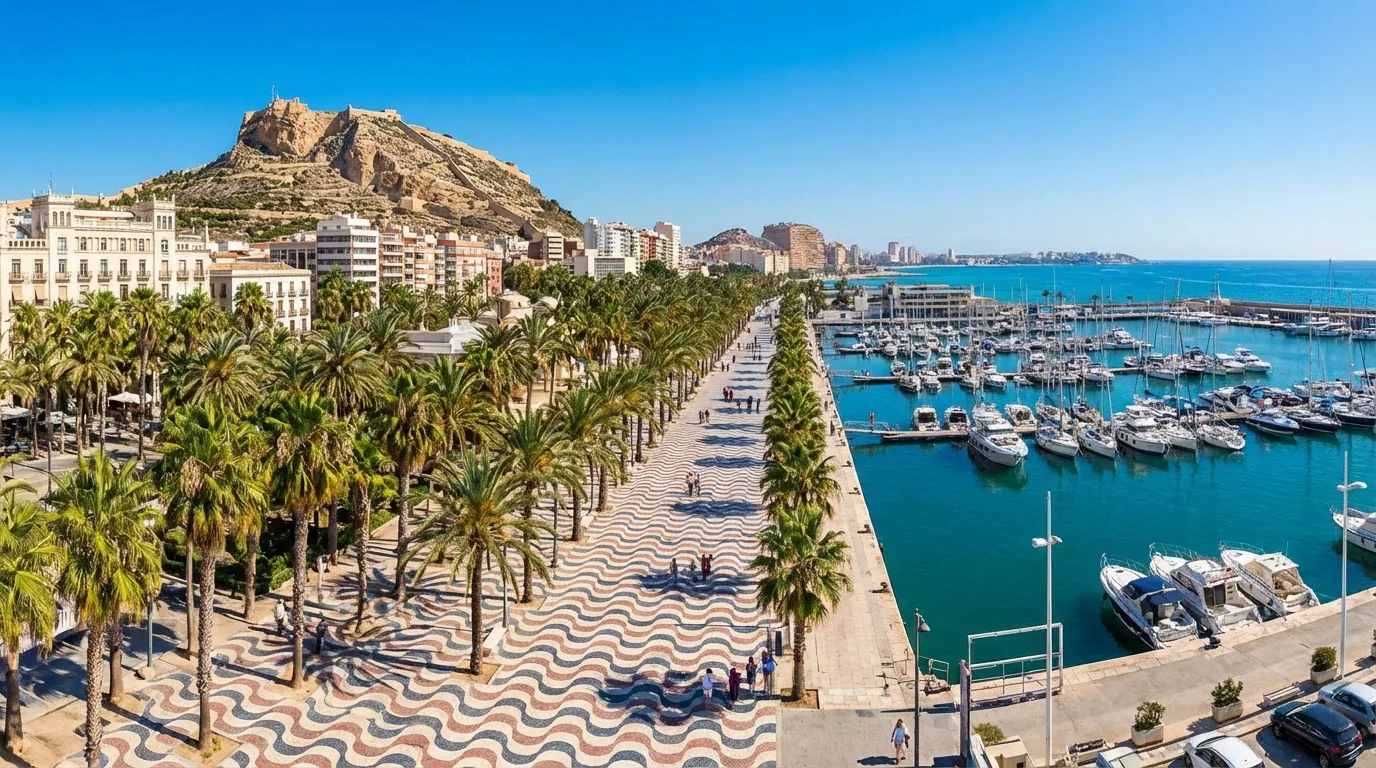
Alicante city as a property market: neighbourhoods, prices, beach, public transport, and flights — practical guide for Swedish buyers looking to buy an apartment in 2026.
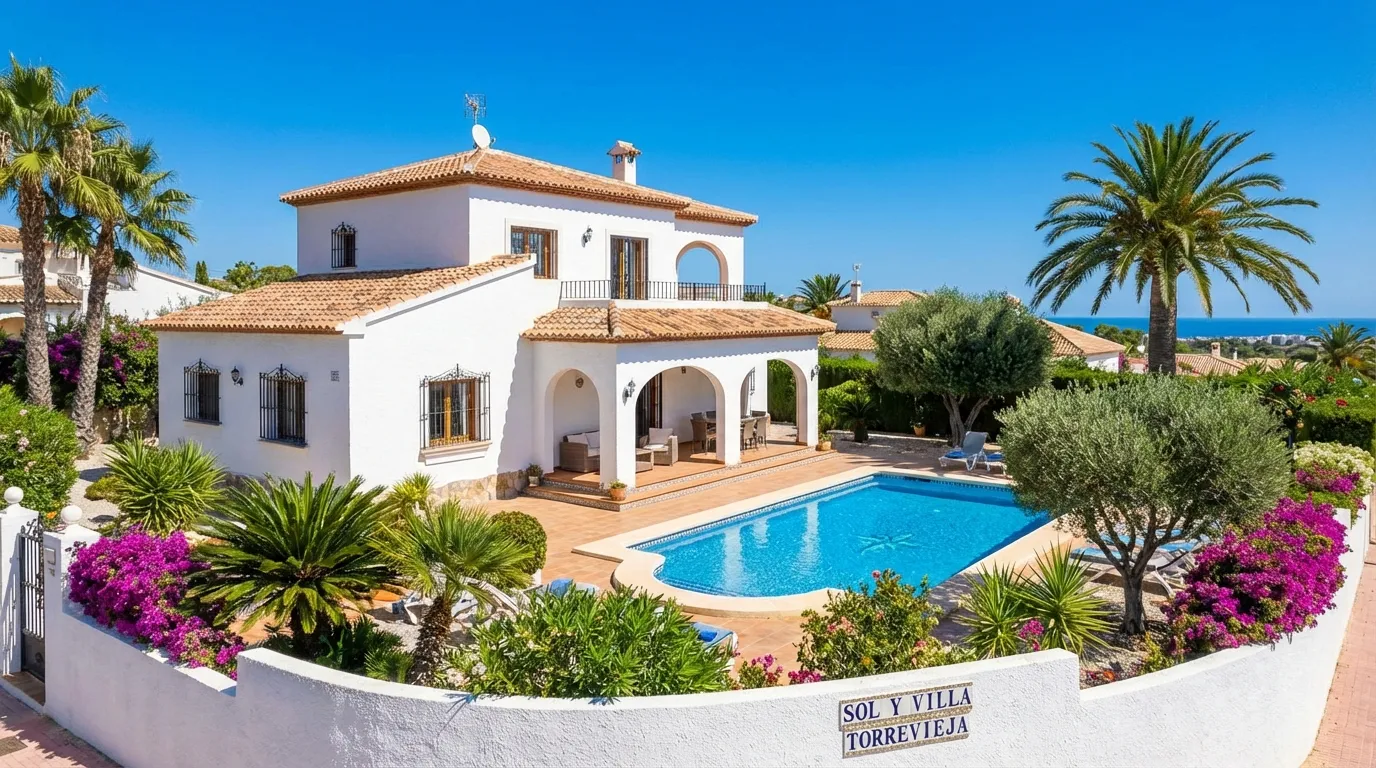
Buying a house in Torrevieja: prices by area, purchase process, taxes, NIE and mortgages — practical guide for Swedes who want to live on Costa Blanca 2026.