
Moving & Living
Living in Spain as a Swede – Everyday Life and Practical Info 2026
What is it like to live in Spain as a Swede? Cost of living, healthcare, bureaucracy, social life and everything you need to know about everyday life in Spain.
17 min
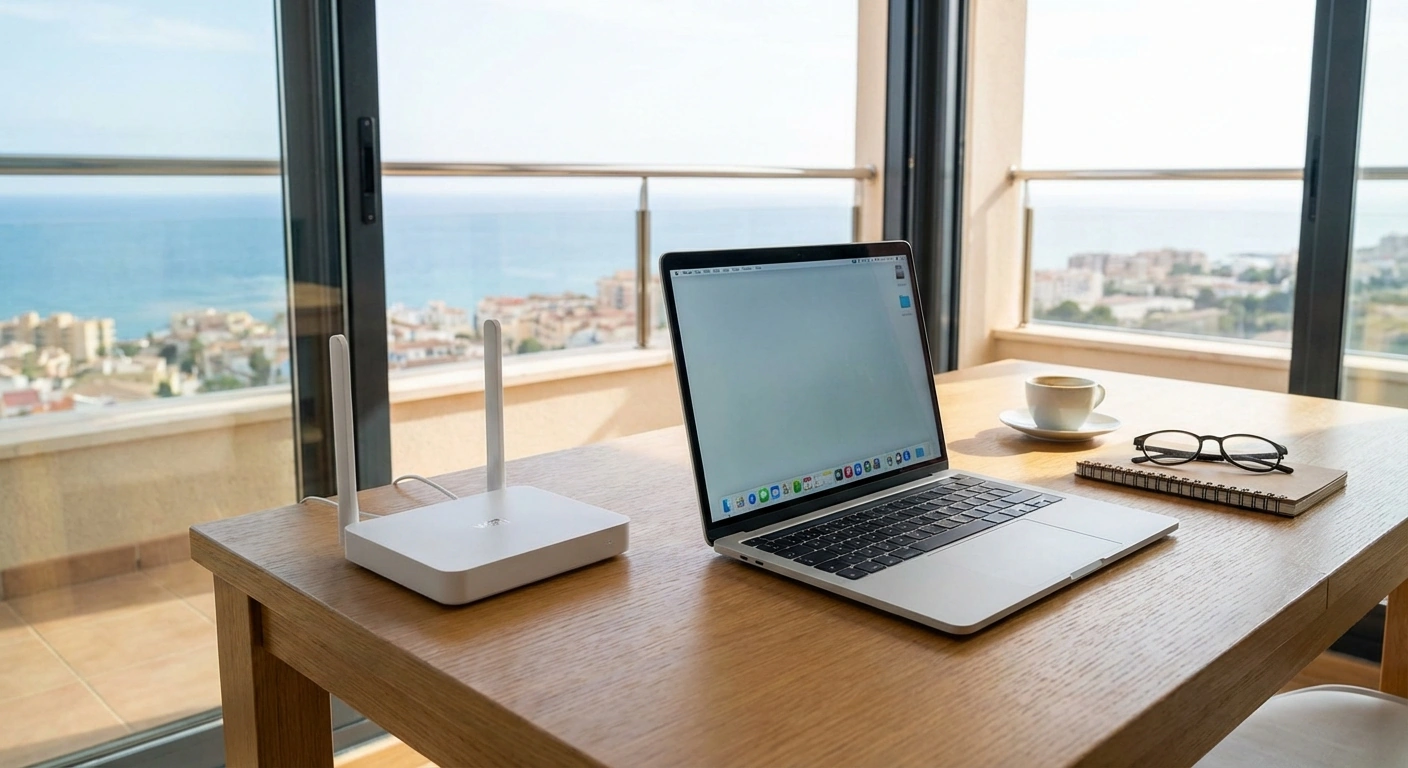
Internet in Spain 2026: 95% fibre coverage, Digi 500 Mbps from €10/mo. Guide to providers, prices, NIE rules and watching Swedish TV via VPN.
Internet in Spain is fast, cheap and widely available. More than 90% of all Spanish households have access to fibre (FTTH), and prices start at €10 per month for 500 Mbps — a fraction of what the equivalent costs in Sweden. Spain ranks sixth in the EU for fibre coverage and has one of the world's highest connection rates.
That is good news if you are planning to move to Spain or already live there part-time. But there are practical hurdles: you need a NIE number and a Spanish bank account to sign a contract, providers' customer service is almost exclusively in Spanish, and promotional prices that look attractive can double after 12 months.
In this guide we cover fibre coverage and speeds, compare the five major providers with current prices, explain how to get internet step by step, and give concrete tips on mobile plans, watching Swedish TV via VPN and solutions for those who only live in Spain part of the year.
Key takeaways
- Spain has 95.2% fibre coverage, sixth in the EU and far above the 64% average
- Digi: the cheapest option – 500 Mbps for €10/mo, 1 Gbps for €20/mo (own network)
- You need a NIE number and a Spanish bank account for most fibre contracts
- Promotional prices can double after 12 months – read the fine print
- SVT Play and TV4 Play require a VPN with a Swedish IP address to work from Spain
Spain has invested massively in fibre infrastructure since the 2010s and the result is impressive. The country has 95.2% fibre population coverage — far above the EU average of 64%. Even in rural areas the coverage rate reaches 79%, which is among the highest in Europe.
In practice this means that the vast majority of homes along Costa Blanca and Costa del Sol have access to symmetrical fibre with speeds of 300 Mbps to 1 Gbps. In major cities like Madrid, Barcelona and Valencia, Digi already offers 10 Gbps — ten times faster than what most Swedish households have access to.
Compared with Sweden, Spain is actually a step ahead when it comes to fibre availability. While Sweden has good coverage in urban areas, Spain has managed to reach smaller communities and coastal towns like Torrevieja, Guardamar and Nerja with full-value fibre. This is because Telefónica (Movistar) invested early in FTTH instead of copper, and because competitors like Digi, Orange and MásMóvil have built their own parallel networks.
The mobile network is also of a high standard. 5G coverage is expanding rapidly and 4G works practically everywhere except in the most remote mountain areas. If you are in an area without fibre — which is unusual — a 4G/5G router can be a fully adequate alternative with speeds of 50–300 Mbps.
Information
Did you know? Spain has the highest FTTH connection rate in the EU — 91% of households with access to fibre are actually connected. In Sweden and Germany the corresponding figure is considerably lower. Spaniards chose early on to abandon copper and ADSL in favour of fibre.
The Spanish market is dominated by five operators: Movistar, Orange, Vodafone, Digi and the MásMóvil group (which includes the brands Yoigo, Pepephone and Lowi). Each operator has its strengths — and weaknesses.
Movistar (owned by Telefónica) is Spain's largest operator and has the most extensive fibre network. They cover virtually the entire country, including smaller towns and rural areas. Customer service is available in Spanish and English. The downside is that they are usually the most expensive and that prices rise after the promotional period.
Orange is Spain's second-largest operator and offers competitive packages with fibre, mobile and TV. They have their own fibre network in major cities and use Movistar's infrastructure in smaller towns. Orange's Love packages are popular among expats who want everything in one place.
Vodafone is the natural choice if you do not speak Spanish. They have Spain's best English-language customer service and offer stable fibre connections. Prices are on a par with Movistar and Orange, but you pay for the reassurance of being able to communicate in English.
Digi (a Romanian telecoms company) has revolutionised the Spanish market with aggressive pricing. Where their own network (Fibra SMART) is available they offer 500 Mbps for €10 per month and 1 Gbps for €20 — roughly half of what Movistar charges. Digi is expanding rapidly but is not yet available everywhere. In areas without their own network they use Movistar's infrastructure, and then 1 Gbps costs €30.
MásMóvil owns the brands Yoigo, Pepephone and Lowi. They position themselves as the middle option: cheaper than Movistar but with better customer service than Digi. Pepephone has a strong reputation for transparency and no hidden charges. Lowi (the budget brand) is popular among younger Spaniards.
Prices vary considerably depending on the operator and whether you choose a promotional or standard price. Here is a comparison of the most common fibre subscriptions (fibre only, without mobile or TV) in March 2026:
Fibre prices (March 2026) — benchmarks
Lowest price per Mbit — often the same promotional and standard price.
Largest network — higher standard price after promotion.
Mid-segment — always compare against bundles (fibre + mobile).
Digi's prices stand out. They did not raise prices in January 2026 — unlike Movistar (+2.2%), Vodafone (+6.7%) and Orange (+4–5%) which all implemented price increases at the start of the year.
Most operators include free installation, a WiFi 6 router and a fixed phone number with unlimited calls to Spanish landlines. Movistar and Orange also include a certain number of minutes to Spanish mobile phones. Digi includes 50 GB of cloud storage.
Often — yes. Most Spaniards sign bundle subscriptions (tarifas convergentes) with fibre, mobile and sometimes TV. A typical package with 600 Mbps fibre plus a mobile plan with unlimited calls and 30–60 GB of data costs €35–55 per month. That can be €10–15 cheaper per month compared to having separate contracts.
Properties
Explore available properties in Costa Blanca
Browse current homes in the area and compare locations, price levels and property types at your own pace.
Signing a fibre contract in Spain requires a little more preparation than in Sweden. Here is the process step by step.
The vast majority of operators require a NIE number (Número de Identificación de Extranjero) to sign a contract. You need a NIE for everything administrative in Spain — bank account, property purchase, electricity contract and internet. Apply well in advance: processing time is 4–8 weeks via the Spanish consulate in Sweden, or 2–4 weeks directly at the Policía Nacional in Spain.
Direct debit (domiciliación bancaria) is the standard payment method. Most operators require a Spanish bank account linked to your contract. You can open an account at for example CaixaBank, BBVA or Sabadell — all require NIE, passport and proof of address in Spain.
Before ordering: go to the operator's website and enter your address to check what type of fibre is available. Movistar has the broadest coverage. Digi has the best price but is not available everywhere. Compare at least two operators.
You can order online or visit a shop (tienda). If your Spanish is limited, a shop visit is preferable — bring a Spanish-speaking friend or neighbour. In major cities fibre is installed within 48–72 hours. In coastal towns like Torrevieja or Nerja it normally takes 5–10 working days.
A technician comes to your home and installs the router. If fibre is already connected to the apartment, installation takes 30–60 minutes. If the technician needs to run new fibre it can take 2–3 hours. Installation is usually free with a contract of at least 3 months.
Tip
Tip: Ask the technician to change the WiFi password and network name during installation — the default passwords on Spanish routers are often weak. Also check that you are getting the promised speed by running a speed test (fast.com or speedtest.net) while the technician is still there.
As a resident of Spain you need a Spanish mobile number. There are two options: contract subscription (contrato) or prepaid SIM (prepago). Prepaid SIMs only require a passport — contract subscriptions require NIE and a bank account.
The cheapest contract subscriptions start at €5–7 per month with MVNO operators like Pepephone, Lowi and Simyo. For €10–15 per month you get unlimited calls within Spain and 20–50 GB of data. They use the same master networks as the major operators (Movistar, Orange or Vodafone) and the quality is equivalent.
Digi offers 50 GB data plus unlimited calls for €10 per month — hard to beat if you just need a standard subscription. Lobster (MVNO on Movistar's network) specifically targets English speakers and has English-language customer service, but costs €12–24 per month.
Lycamobile, Lebara and Orange offer prepaid SIMs that are activated immediately in-store. You buy a SIM card for €10–15 including a starter data allowance (5–15 GB). No contract, no bank account required — but you need to show a passport or ID when purchasing. Prepaid SIMs are practical if you are only in Spain for a few months per year.
Since 2017 you can use your Swedish mobile subscription in Spain without roaming charges (EU roaming). But there is a limitation: operators can cap data when you are continuously outside your home country. If you live permanently in Spain you risk being charged extra after 4–6 months of continuous roaming. A Spanish subscription is cheaper and more stable in the long run.
Watching Swedish TV is one of the most common questions among Swedes who move to Spain. SVT Play, TV4 Play and most Swedish streaming services are geographically blocked — they only work with a Swedish IP address. But there are solutions.
A VPN (Virtual Private Network) encrypts your internet traffic and lets you connect via a server in Sweden. From the Spanish side it looks as though you are browsing from Stockholm. SVT Play, TV4 Play, Discovery+ and Viaplay all work with a good VPN.
The most recommended VPN services for Swedish TV are:
Install the VPN app on your Smart TV, Apple TV, Fire TV Stick or directly on the router. Router installation is most convenient — then all devices in the home are protected automatically.
SVT Play (free with Swedish IP), TV4 Play (free with ads, or TV4 Play Premium), Discovery+ (subscription), Viaplay (subscription) and C More (subscription). Netflix, Disney+ and HBO Max work with your existing account but show Spanish content without VPN — with VPN connected to Sweden you get the Swedish library.
YouTube works without restrictions. Netflix, Disney+ and HBO Max work but show the Spanish library (which often contains different films and series than the Swedish one). Spotify works normally. The SVT News app shows news but not the full SVT Play catalogue.
Note
Please note: Using a VPN to bypass geographic restrictions violates most streaming services' terms of use. In practice it is rare for accounts to be suspended, but services can block known VPN IP addresses. Choose a VPN provider that actively maintains its Swedish servers — cheap or free VPNs rarely work with SVT Play.
Spain has a rich TV offering — both free and via pay channels.
Spain's equivalent of over-the-air digital TV is called TDT (Televisión Digital Terrestre). You get around 30 free channels including TVE (public service), Antena 3, Telecinco, La Sexta and Cuatro. A digital TV receiver costs €20–40. Most modern TVs have a built-in TDT tuner.
Movistar+ is Spain's largest pay-TV platform with sport (La Liga, Champions League), films and series. It costs €10–25 per month depending on the package, and is often included in Movistar's fibre packages. Orange TV offers a similar catalogue and is included in Orange's Love packages. Vodafone TV complements their fibre packages.
International streaming services such as Netflix (€5.49–17.99/month), HBO Max (€5.99–9.99/month), Disney+ (€5.99–11.99/month) and Amazon Prime Video (€4.99/month) work with a Spanish or Swedish account. The catalogue differs slightly from Sweden, but most international series and films are available.
If you only live in Spain for part of the year — for example November to April — there are smarter solutions than paying for a full annual subscription.
Movistar offers fibre without a fixed term (sin permanencia). You can cancel the contract at any time without a penalty fee. The downside is that the installation charge (normally free with a fixed-term contract) may apply with a short contract. Digi has only a 3-month contract period — if you are in Spain for at least three months per year, it is the cheapest solution.
A 4G/5G mobile router (Mi-Fi) costs €50–100 and can be connected to a prepaid SIM with a data allowance. Orange and Vodafone offer data plans with 50–100 GB per month for €15–25. That is enough for everyday browsing and email but not for streaming films in HD daily. The advantage: no installation, no contract, no bureaucracy.
If you live a maximum of 3–4 months per year in Spain you can use your Swedish mobile subscription as a hotspot via EU roaming. Check with your operator what applies for long-term roaming — Telia, Tele2 and Tre have different rules. Combine with a cheap prepaid plan from Lycamobile or Lebara as a backup.
In residential communities (comunidades) on the Costa Blanca, many Swedish part-time residents share a fibre subscription. One person signs the contract and shares the password. It is not ideal for security, but it is common and works if few people are sharing.
Properties
Explore available properties in Costa del Sol
Browse current homes in the area and compare locations, price levels and property types at your own pace.
Contact
We help Swedes find the right property on Costa Blanca and Costa del Sol — and are happy to answer practical questions about internet, electricity and other everyday details. Book a free call.
Book a free consultationLast updated: April 2026. Prices and provider terms may change — contact the operator directly for current offers.
Decision support
Ja, de flesta internetleverantörer i Spanien kräver NIE-nummer för att teckna ett fiberkontrakt. Du behöver också ett spanskt bankkonto för autogiro.
Vissa budgetoperatörer som Digi accepterar pass tillfälligt för mobilabonnemang, men för fiberinstallation i bostaden är NIE i praktiken ett krav. Ansök om NIE i god tid innan flytten — handläggningstiden är normalt 4-8 veckor.
I stadsområden tar fiberinstallation normalt 3-7 dagar från beställning. I Madrid, Barcelona och Valencia kan det gå på 48-72 timmar.
I mindre kuststäder som Torrevieja eller Estepona räkna med 5-10 dagar. En tekniker kommer hem till dig, installerar routern och drar fiber om det behövs.
Installationen är oftast gratis vid avtal på minst 3 månader.
SVT Play och TV4 Play är geografiskt spärrade och kräver svensk IP-adress. Med en VPN-tjänst (exempelvis NordVPN, ExpressVPN eller Surfshark) som kostar 3-12 euro per månad kan du ansluta via en svensk server och se SVT, TV4, Discovery+ och andra svenska tjänster.
Netflix, HBO Max och Disney+ fungerar med ditt svenska konto men visar spanskt innehållsbibliotek om du inte använder VPN.
Digi erbjuder Spaniens lägsta fiberpriser: 500 Mbps för 10 euro per månad och 1 Gbps för 20 euro per månad via deras eget nätverk (Fibra SMART). I områden utan Digis eget nätverk kostar 1 Gbps 30 euro via Movistars infrastruktur.
De stora operatörerna Movistar, Orange och Vodafone har kampanjpriser från 20 euro per månad det första året, men ordinarie pris är 30-45 euro.
Spanien har en av Europas högsta fibertäckningar — över 90 % av alla hushåll har tillgång till FTTH (fiber till hemmet). Även på landsbygden når täckningsgraden 79 %, högst i EU.
I avlägsna bergsbyar eller mycket glest befolkade områden kan fiber saknas, men 4G/5G-täckning är god och Starlink erbjuder satellit-internet från 40 euro per månad som alternativ.
Sources
What is it like to live in Spain as a Swede? Cost of living, healthcare, bureaucracy, social life and everything you need to know about everyday life in Spain.
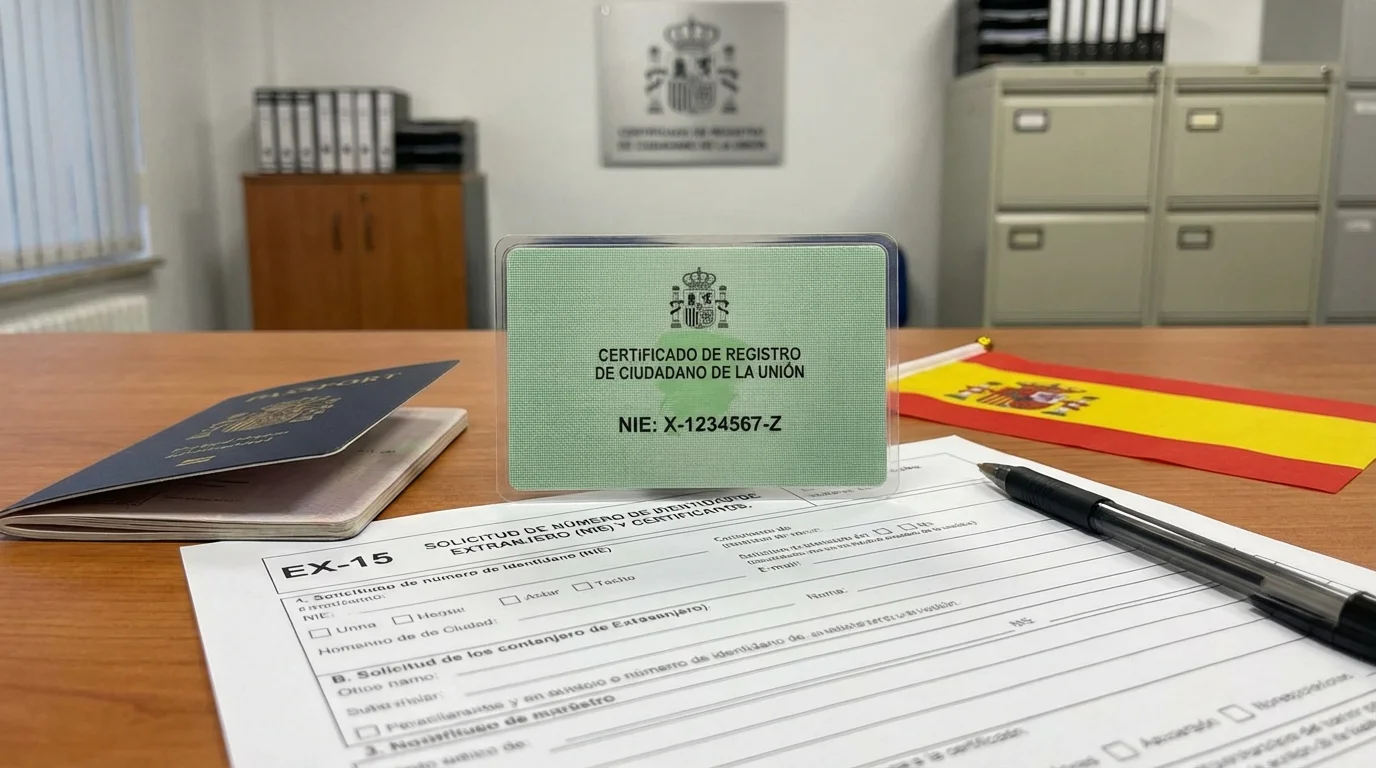
Spanish NIE number 2026: step-by-step guide from Sweden or Spain. EX-15 form, Modelo 790, €9.84 fee, waiting times and NIE/NIF/TIE explained.
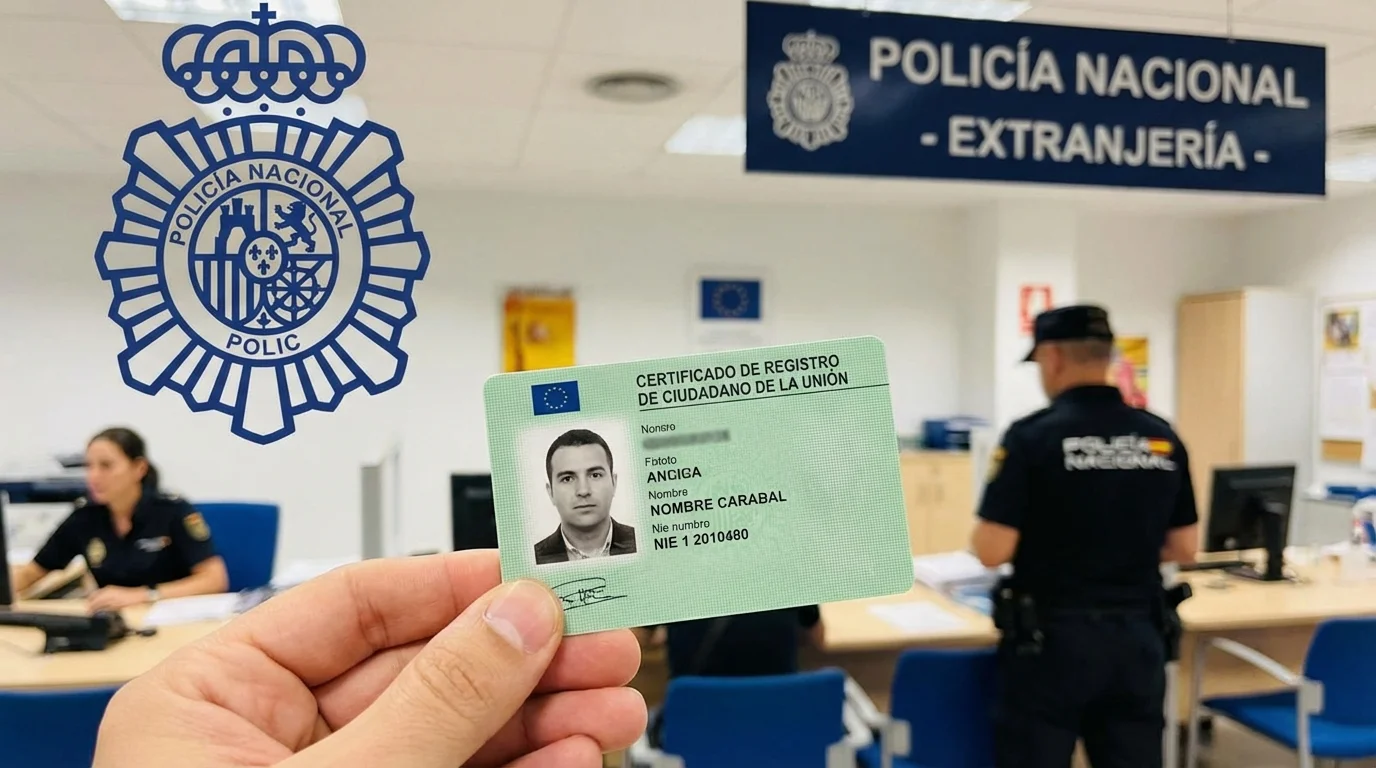
Complete guide to residencia in Spain: requirements, documents, application and what it means for your taxes. Step-by-step for Swedish citizens.