

Finance & Law
Tax in Spain – Guide for Swedish Property Owners 2026
Complete tax guide for Swedes with property in Spain: IBI, IRNR, wealth tax, capital gains and the double taxation agreement. Updated 2026.
16 min
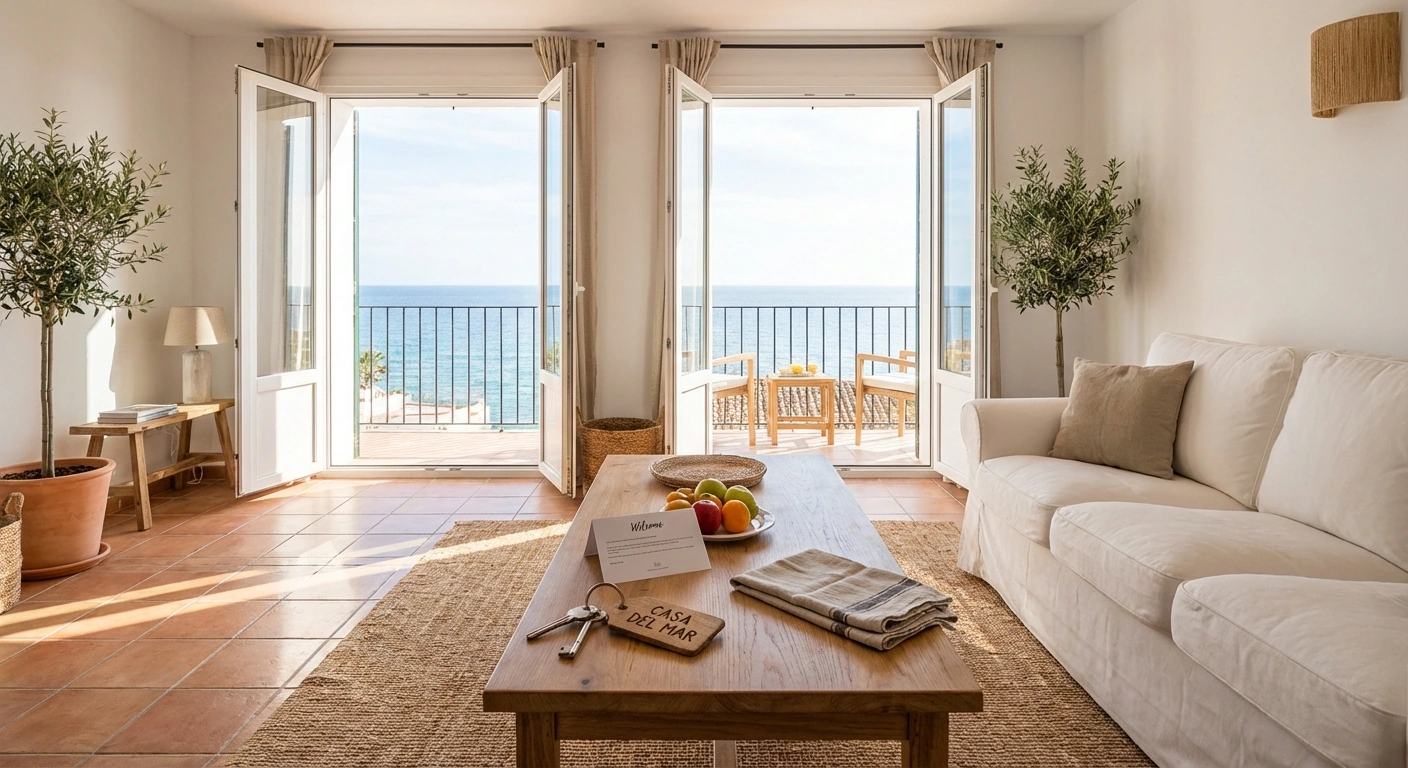
How to rent out your property in Spain correctly: tourist licence, long-term rental, tax, deductions, community rules and common mistakes to avoid.
Yes, you can rent out your property in Spain and get a good boost to your income. But "renting out" does not mean just one thing. The difference between long-term rental, seasonal rental and tourist rental determines which rules apply, whether you need a licence, how you are taxed and how easy it will be to end the arrangement later.
For Swedish owners this is the most important rule of thumb: if you want flexibility and the ability to use the property yourself at short notice, be careful with long-term contracts. If you want to run short-term via Airbnb or Booking you must first check three levels: the region, the municipality and your community. Then tax needs to be set up correctly from day one. For a non-resident living in Sweden the main route is normally Modelo 210 and 19% tax on net income.
In this guide we cover what actually applies in 2026, what distinguishes Costa Blanca from Costa del Sol, which costs you can usually deduct, how community rules work and what mistakes Swedish owners often make. Rules vary between regions and sometimes between municipalities, so use this article as a map — not as the final word. Always confirm locally before you publish a listing or sign a contract.
This is the first decision you have to make, because everything else follows from it. In Spain, a tourist guest and an ordinary residential tenant are not treated the same way.
A long-term rental is normally a property intended to cover the tenant's permanent home. It falls under the Ley de Arrendamientos Urbanos, LAU. The basic protection there is strong: if the landlord is a private individual, a short contract is in practice extended up to five years, and up to seven years if the landlord is a company. You cannot count on "trying it for a year" and then easily reclaiming the apartment for summer.
Tourist rental works the opposite way. It normally falls outside the LAU when the whole property is let temporarily, is furnished, is marketed through tourist channels and is covered by regional tourist legislation. That is why tourist rental is more flexible in theory, but more strictly regulated in practice. You often need to register the property, show the registration number in the listing and comply with local requirements regarding standard, a contact person and sometimes reporting.
Between the two sits seasonal rental. This is the arrangement many people misunderstand. A property rented out for a few months to a student, remote worker or someone temporarily working in Spain is not automatically tourist rental. But it also does not become ordinary permanent housing just because the guest stays longer than a week. Here the purpose of the contract is decisive, and it must be possible to show why the accommodation is temporary. If you write "11 months" but in practice rent out someone's permanent home, the contract can still be assessed as residential tenancy.
This is why many Swedish owners get it wrong from the start. They think that short-term rental gives a higher nightly rate, but forget that the administration is greater, the rules more numerous and the occupancy more seasonally dependent. Or they write long-term contracts to "avoid the hassle" and only later realise that the property is no longer free for their own use.
Information
Short version: Long-term rental usually means less management but stronger tenant protection. Tourist rental gives more control over the calendar but requires more administration, more local compliance and more patience with rules, cleaning and guest handling.
If you rent short-term on Costa Blanca or Costa del Sol you need to start at the regional level. There is no single Spanish tourist licence that applies everywhere.
In the Comunidad Valenciana the rules have been clearly tightened. An important development in the 2025 regulations is that stays of 10 days or less are normally counted as tourist rental in the regional model. For many Swedish owners that is the practical threshold that determines whether an arrangement should be treated as tourist accommodation or not. The region also requires registration via a declaración responsable, and the property needs to be correctly identifiable, including with property details and the correct use in the listing.
This is particularly noticeable in areas like Torrevieja and Orihuela Costa, where many purchases are made with rental in the budget. There it is not enough to just "put it on Airbnb". You first need to check whether the property meets regional requirements, whether the community permits the arrangement and whether the municipality requires additional documentation. In Valencia the penalty levels have also become high. For serious or repeated violations the fine ranges are well above what many private owners expect — in some cases from 10,000 euros up to 600,000 euros.
In Andalusia regional registration also applies to tourist rental, but the model is not exactly the same. The Junta de Andalucía revised the regulations during 2024 and gave municipalities more scope to act in areas under high pressure. In practice that means you should not just ask "does Andalusia have licence requirements?" but also "what does the municipality where the property is located say?" In parts of Costa del Sol additional urban or municipal checks may be needed before you start, especially in densely built areas where the pressure from tourist rentals is high.
For long-term rental the picture is simpler. Then you normally need no tourist licence at all. But that does not mean you can skip documentation. You still need a clear contract, an inventory list, evidence of condition at move-in and a plan for deposit, insurance and key handling.
This is also a good place to be honest with yourself. If the whole deal only works economically if you get a tourist licence straight away, the investment is more risky than many agents suggest. Do not buy the property first and check the rules afterwards.
Properties
Explore available properties in Costa Blanca
Browse current homes in the area and compare locations, price levels and property types at your own pace.
Yes — and this is a point Swedish buyers often underestimate.
In Spain it is not enough that the property "is yours". If you live in an urbanización or a building with a comunidad de propietarios, there are bylaws, internal rules and shared interests that play a major role. This applies especially to short-term rental with high guest turnover.
Since 3 April 2025 express approval from the community is required for tourist rental covered by Article 5 e) of the LAU, and the decision requires a three-fifths majority of both owners and ownership shares. The same majority can also decide on special charges or increased common costs for these properties, up to 20%. For you this means two things. First: new tourist rentals in blocks of flats have become harder to start without support in the building. Second: even if you get a yes, the economics can worsen if the community adds higher charges.
That does not mean the community can freely ban everything. But it can set real limits. And even when an express ban is absent, the community can act against noise, overcrowding, improper use of the pool, late check-ins or other disruptive activity. Spain's law on horizontal property gives the community the right to demand that prohibited or disruptive activities cease, and in serious cases it can proceed legally.
Long-term rental is normally easier to get through in practice, precisely because it creates less turnover. But even there you should read the bylaws. Some communities have specific rules about pets, moving times, terrace use, air conditioning, recycling or parking that become your responsibility as owner even if someone else lives there.
My recommendation is simple: ask for the bylaws before you buy if rental is an important part of your plan. Also ask for the most recent AGM minutes. There you will quickly see whether the building is already tired of short-term guests, whether there have been complaints and whether tourist rental is on the agenda.
Note
Practical warning: Do not buy an apartment for Airbnb if the community is already discussing bans, surcharges or security problems. It is a classic Swedish mistake to only look at the sea view and the nightly rate, but skip the association's minutes.
Tax depends first on whether you are a tax resident in Spain or not. This is where many people confuse ownership with tax residency. You can own property in Spain for ten years without being a resident. You can also become a resident without owning anything at all.
If you live in Sweden and only own the property in Spain you are in most cases a non-resident. Then the main route is IRNR and declaration via Modelo 210. For Swedish owners the usual tax rate is 19% on net income, provided costs have a direct connection to the rental and can be documented. Agencia Tributaria also confirms that rental income from 2024 can be grouped annually in a single declaration, filed during the first 20 calendar days of January the following year.
This is an important change. Previously many people thought in quarters. Now a Swedish private owner in the right situation can plan more collectively, which makes administration easier — but only if you genuinely meet the conditions for grouping the income. If you do not, separate declarations per income occasion are still used within the usual periods.
If you are a resident in Spain you normally declare rental income in your Spanish IRPF, the ordinary income tax return. Then income is taxed in a broader context with progressive tax levels, and the rules become more individual. It is not possible to give a single percentage that suits everyone. Therefore do not assume that "resident" automatically means lower tax — but not higher either. It depends on your other income, region and type of rental.
There is also a VAT question that many miss. Ordinary residential rental for permanent housing is usually exempt from IVA. Shorter rentals without hotel-type services are also often treated without VAT. But if you start selling more than just the property — for example reception, meals, repeated cleaning during the stay or other typical hotel services — the VAT question can change and become significant. That is why it is wise to think carefully before packaging the rental as a holiday service.
Another detail that is easy to miss: if the property is only rented out for certain months and stands empty the rest of the year, the empty time can still have a tax effect for non-residents. Then rental income is mixed with so-called imputed income for the part of the year the property is not rented out. This is yet another reason why good bookkeeping and calendar discipline is worth more than most people think.
Properties
Explore available properties in Costa del Sol
Browse current homes in the area and compare locations, price levels and property types at your own pace.
For Swedish non-residents the deductions are a major part of the whole calculation. It is not enough to know what you earn per night or per month. You need to know what can actually be deducted and how the cost should be allocated.
The most common deductible costs are IBI, community charges, insurance, loan interest, repairs, cleaning, management fees, platform commissions and other costs with a direct and indivisible link to the rental. In practice this means much of your ongoing running costs can be relevant — but only for the part that actually relates to the rental.
This is where Swedish owners often go wrong. Some common examples:
For residents in Spain the picture becomes more individual. There certain rentals of a primary residence can have different effects in the IRPF than tourist rental. That is exactly why resident owners should be extra careful about copying arrangements from other Swedes in the area. Two neighbours with identical apartments can get different tax outcomes depending on whether they live in Sweden, Spain or divide the year between the two countries.
Another practical tip: keep private use and rental separate from day one. Have a simple spreadsheet or bookkeeping app where you mark rented days, own days, empty days and every cost with date and type. It takes a quarter of an hour a week and saves you hours later.
This section sounds less exciting than tax and licences, but this is where many rental arrangements actually fall apart.
If you rent short-term you need to sort five things before the first guest arrives:
This is also where platforms come in. Airbnb and Booking do not do the job for you just because you have a listing. In areas requiring a licence you are often expected to show the registration number correctly. In addition, the calendar, prices, cleaning fee and cancellation policy must all be accurate. If the listing promises more than the property delivers you will quickly get bad reviews, and then high occupancy suddenly becomes much harder to achieve.
For long-term rental the checklist looks different. There the focus is more on the contract, deposit, identification of the tenant, inventory list, meter readings and what happens in case of late payments. You also need to think about whether the rent is to include electricity, water and internet or not. Many Swedish owners keep it simple and include everything in the rent — but then get an unpleasant surprise when the AC runs around the clock in July and August.
Tip
Good rule of thumb: If you live in Sweden and rent out short-term for more than a few isolated weeks per year you almost always need local help on the ground. Either a reliable key holder or a property manager. Without that, the rental is often more vulnerable than profitable.
Here comes the honest part. Renting out in Spain can work well, but it is not passive income in the romantic sense that is often sold.
The biggest legal risk in long-term rental is that you lose flexibility. Once you have rented out as permanent housing, Swedish holiday home instincts no longer apply. You cannot simply tell the tenant to leave because the children want to use the apartment in July. Tenant protection for residential tenants is considerably stronger than for tourist rental, and a dispute over unpaid rent or eviction can be both slow and expensive.
The biggest financial risk in tourist rental is the opposite: you retain control, but have uncertain income. Occupancy can be strong in July and weak in November. The community can become more negative. Rules can tighten. A new municipal interpretation can suddenly make the process more cumbersome than when you bought the property. If the economics only work at peak season prices and nearly full occupancy, the margin is often too thin.
There is also a middle ground that many people do not think about: seasonal rental to "winter guests" or remote workers. This can be a good arrangement, but only if the contract is correctly structured and the purpose is clear. If you do it carelessly you can end up in a grey area where you think you have flexibility, but the tenant perceives the property as their home.
Common Swedish mistakes in practice are:
There are also situations where the answer really is: do not rent out at all. If you use the property often yourself, if you do not want to be contacted by guests or managers, if the community is openly negative, or if your finances can manage without the rental income, then it can be wiser to keep the property as a pure holiday home. That is not always most profitable on paper. But it can be the most peaceful — and in the long run the best — decision.
Yes, but only if the arrangement matches how you actually want to use the property.
Do you want stability, less management and are you comfortable with the property not being available whenever you feel like it? Then long-term rental is often the cleanest route. Do you want to maximise flexibility and be able to block weeks for your own use? Then tourist rental is more logical, but only if licence, community and local management are in place from the start.
The most important thing is not to confuse calculation with reality. A high nightly rate in the listing says almost nothing about the net after cleaning, charges, taxes, empty weeks and headaches. So make the decision in the right order: check the rules locally, read the community documents, calculate the net — and only then decide whether to rent, how and when.
And one last time, because it really matters: rules vary between regions and municipalities. Always confirm with a local gestor, abogado or registration authority before renting, especially in the Valencia region and Andalusia where regulation has moved quickly in recent years.
Contact
We help you understand the difference between a good holiday home and a good rental property — with honest advice on area, community, management and what actually works in practice.
Book free consultationLast updated: April 2026. Rules for tourist rental, tax and community decisions change regularly and differ between regions and municipalities. Always confirm locally with a gestor, abogado or competent authority before renting. This guide is information, not individual legal or tax advice.
Decision support
Om du hyr ut korttid till semestergäster behöver du ofta någon form av turistregistrering eller licens, men kraven skiljer sig mycket mellan regioner och kommuner. I Comunidad Valenciana och Andalusien finns egna regionala regler, och en community eller kommun kan dessutom lägga på fler villkor.
Kontrollera alltid både region, kommun och förening innan du publicerar annonsen.
För en svensk som inte är skatteresident i Spanien är huvudregeln att hyresintäkter från spansk bostad deklareras i Spanien via Modelo 210. För EU- och EES-bosatta är skattesatsen normalt 19 procent och du får dra av kostnader som har direkt koppling till uthyrningen.
Sedan inkomstår 2024 kan du i många fall gruppera hyresinkomster årsvis och deklarera i januari året efter.
Ja, särskilt för ny turistuthyrning i flerbostadshus. Sedan den 3 april 2025 krävs uttryckligt godkännande från communityn för viss turistuthyrning som omfattas av turistreglerna, och beslutet fattas med tre femtedelars majoritet av ägare och andelar.
Communityn kan också besluta om högre gemensamma avgifter för dessa bostäder, upp till 20 procent.
Långtidsuthyrning avser normalt en bostad som ska vara hyresgästens stadigvarande hem och omfattas av Spaniens hyreslag med starkare hyresgästskydd. Turistuthyrning är i stället kortare vistelser som marknadsförs som semesterboende och regleras ofta av regional turistlagstiftning, inte av samma regler som vanlig bostadshyra.
Det spelar stor roll för både skatt, licens och hur lätt du kan avsluta upplägget.
Det är ofta bättre att låta bli om du använder bostaden mycket själv, om communityn är skeptisk till korttidsgäster, om du inte vill hantera städning, nycklar och sena samtal, eller om ekonomin bara går ihop vid full beläggning. Långtidsuthyrning passar också dåligt om du vill kunna komma och gå fritt, eftersom hyresgästens skydd är betydligt starkare än många svenska ägare tror.
Sources
Complete tax guide for Swedes with property in Spain: IBI, IRNR, wealth tax, capital gains and the double taxation agreement. Updated 2026.
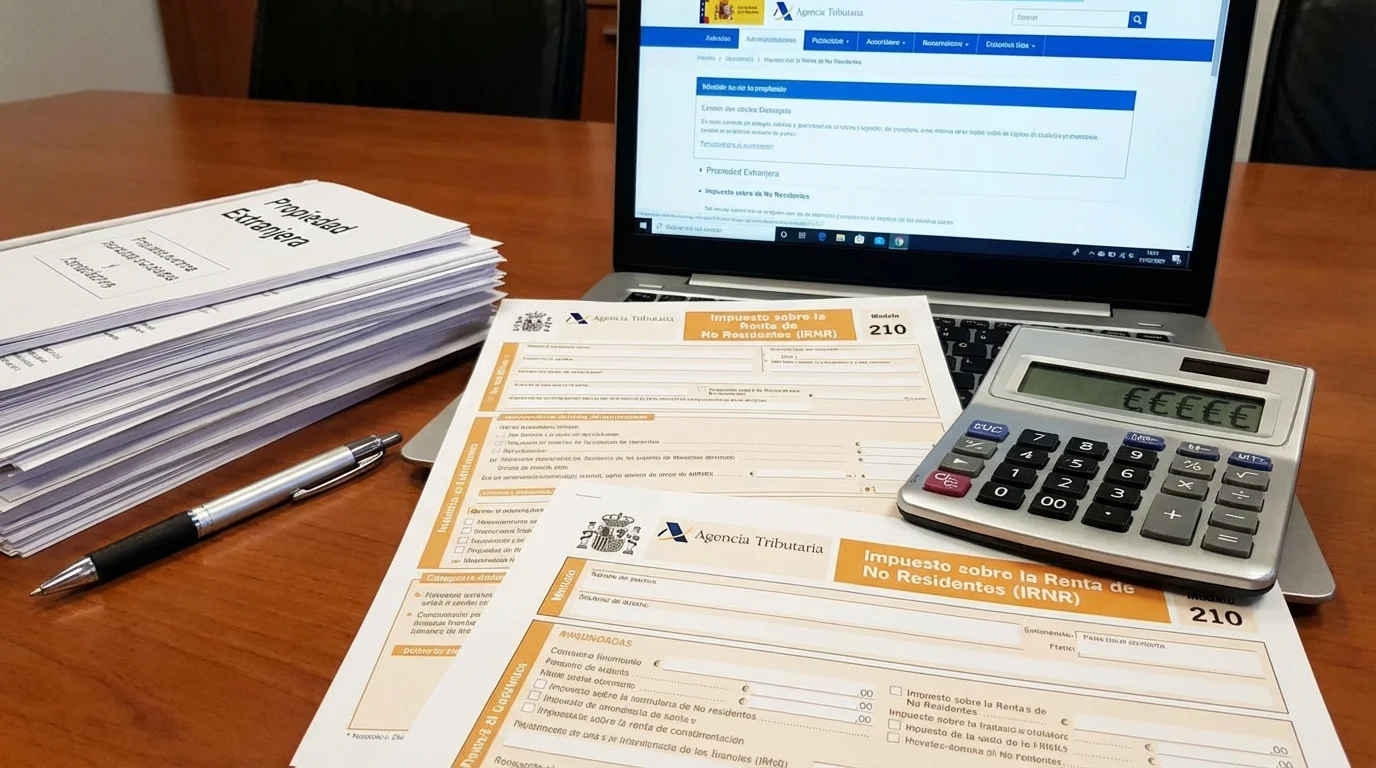
Complete guide to tax for non-residents with a property in Spain: IRNR, Modelo 210, imputed income and how to file your return as a Swede.
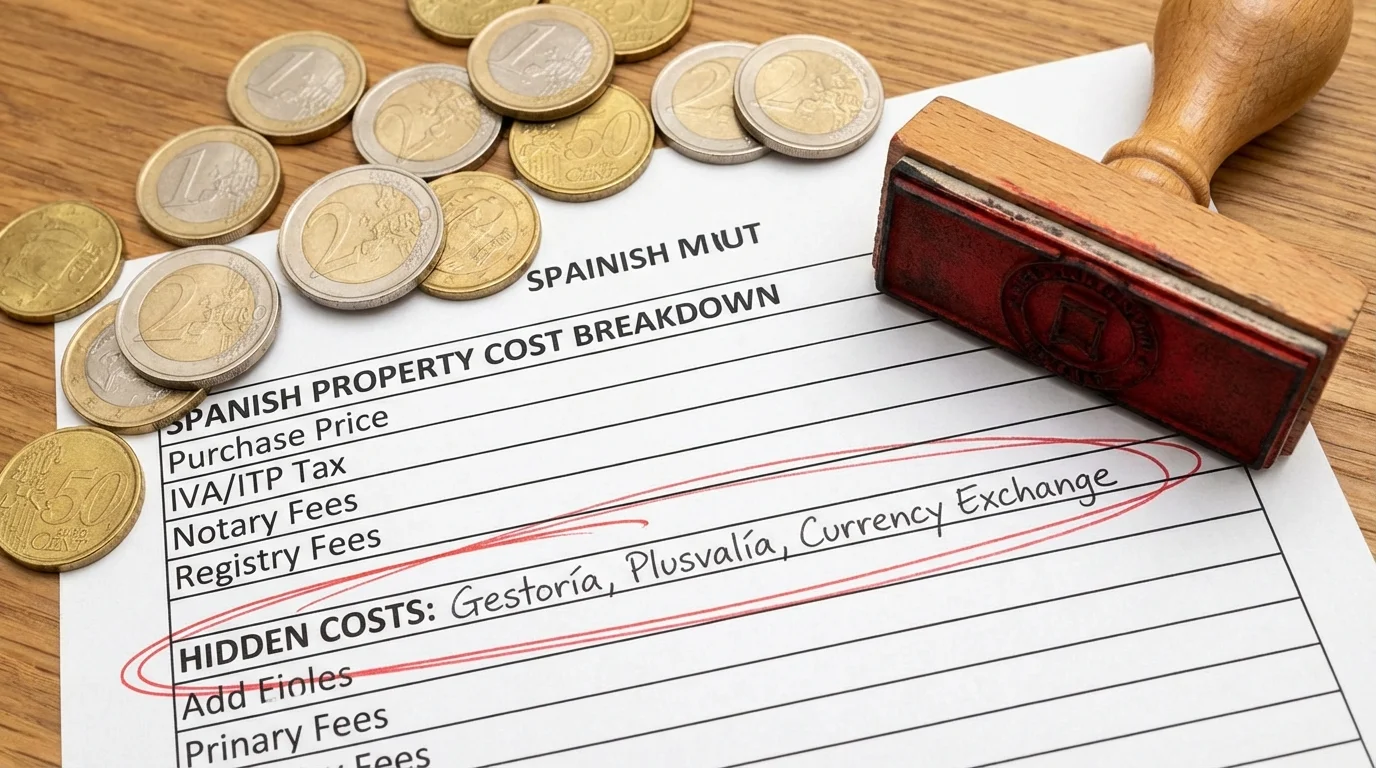
Buying property in Spain costs 10–14% on top of the price: ITP, notary, land registry, lawyer and more. Calculation examples and a region comparison.