
Moving & Living
Living in Spain as a Swede – Everyday Life and Practical Info 2026
What is it like to live in Spain as a Swede? Cost of living, healthcare, bureaucracy, social life and everything you need to know about everyday life in Spain.
17 min

Thinking of moving to Spain? Here is a practical guide for Swedes covering finances, paperwork, healthcare, regions, risks and what to sort out first.
Moving to Spain as a Swede is entirely doable, but it rarely works out well if you just book a one-way ticket and hope the rest sorts itself out on arrival. The short version is: start with a realistic budget, get your NIE as early as possible, find an address so you can do your empadronamiento, and then plan residencia, healthcare and tax in the right order. The actual government fees are small — the NIE costs €9.84 and residencia around €12 — but it is the time involved and the logistics that tend to cause problems.
For many Swedes the move is still rational. The cost of living is often 30–40% lower than in Sweden, especially if you choose the Costa Blanca or Costa Cálida rather than the most expensive parts of the Costa del Sol. At the same time you get a climate with around 300 sunny days per year across much of south-eastern Spain, high-quality public healthcare and a daily life that many find easier to build around an outdoor lifestyle than at home.
There are also drawbacks. Bureaucracy is slower than in Sweden. The heat in July and August can reach 38–42 degrees in coastal areas, which affects both daily life and electricity costs. And if you move without understanding the difference between NIE, empadronamiento, residencia and tax residency, you risk a considerably more chaotic start than you need.
This guide covers what to sort out before the move, what the first months typically look like, what the move actually costs, which regions suit different types of Swedish households and which risks you should take seriously before making a decision.
The most important thing is to divide the move into two parts: what must be in place before departure, and what can be handled after you arrive. Many people mix these up and get stuck in unnecessary stress.
Before the move you should in practice have answers to five questions:
If you plan to live in Spain for more than 90 days, as a Swedish EU citizen you need to register in the country, and at that point income and health insurance become central parts of the documentation. This does not mean you need a Spanish job. But you must be able to show that you can support yourself without becoming a burden on the system.
A common benchmark in the residencia process is at least €7,200 per year for a single applicant and an additional €5,400 per family member. This is an administrative minimum level, not a sensible daily budget. In reality you almost always need more than that for the move to be comfortable.
If you are a pensioner you should also check whether you can obtain an S1 certificate from the Swedish Social Insurance Agency. This can entitle you to public healthcare in Spain without having to build the whole solution through private insurance from the outset. If you are not a pensioner, private health insurance is often the smoothest route in the initial phase.
Tip
Good starting rule: Do not try to sort everything at once. Start with a 90-day moving plan, not a five-year plan. When the first three months are stable everything else becomes much easier to build on.
This is the practical core of the entire move. Most problems arise not because the rules are impossible, but because things are done in the wrong order.
The most common and most effective sequence for Swedish arrivals looks like this:
The NIE is your identification number as a foreigner. It is permanent, and you need it for a bank account, property purchase, contracts and tax-related matters. The fee is €9.84 and in smaller towns the number can sometimes be arranged on the same day, while the application through Sweden often takes 2–4 weeks.
Empadronamiento is municipal registration. It is free, normally takes 15–30 minutes once you are there, and the certificate is needed in the next step for residencia and often for healthcare and schools. You will normally need your passport, NIE and address proof in the form of a rental contract or purchase deed.
As a Swede you have the right to live in Spain, but after three months you must register as an EU citizen. The fee is around €12, and in popular areas the wait for a cita previa appointment is often longer than the actual processing.
Pensioners often go via the S1 and public healthcare. Those employed in Spain go via Seguridad Social. Others often use private insurance or the convenio especial depending on the situation. The convenio especial costs approximately €60 per month if you are under 65 and €157 if you are over 65.
Once you know you are staying, you need to review tax residency, banking arrangements, car, insurance and any Swedish income. This is where many people make mistakes because they focus on the property first and finances later.
It is also here that many discover that a base in Alicante, Torrevieja or Orihuela Costa is often easier at the start than a more isolated small town. You have better access to government offices, healthcare, transport and everyday services when something does not go as planned.
Note
Common pitfall: The NIE is not the same as residencia. Many people think they are "done" once they have their NIE, but that number only gives you the ability to identify yourself in the system. It does not replace registration, a healthcare arrangement or tax planning.
This is the question most people ask too late. Most people calculate the monthly running costs once they are living there, but forget that the move itself has its own financial layer.
For a couple renting accommodation, a realistic monthly running budget is often €2,000–3,200 in southern Spain depending on the area and lifestyle. Over a year that amounts to €24,000–38,400. But the first year is almost always more expensive because there are also start-up costs.
A reasonable first-year budget example for two people renting looks like this:
First-year budget for a couple renting accommodation
Deposit + first month's rent
€1,600–3,600
Furniture, household goods, small purchases
€1,000–4,000
Electricity, water, internet, connection fees
€200–500
Car purchase or re-registration
€1,200–8,000
Private health insurance
€1,200–3,600 per year
Ongoing everyday costs
€24,000–38,400 per year
Government fees
€25–100
This means a couple often ends up somewhere between €29,000 and €50,000 in the first year, depending on how much needs to be built from scratch. If you already have accommodation, furniture and a car it will be considerably less. If you are moving with children, pets or long-term storage in Sweden it will be more.
Surprisingly small. The NIE costs €9.84 and residencia approximately €12. So it is not the government offices that make the move expensive. What costs money instead is the deposit, temporary accommodation while you look for a permanent home, insurance, transport, overlapping subscriptions and the fact that some weeks are simply not productive.
More than many people think. The southern Costa Blanca is often noticeably cheaper than the most expensive parts of the Costa del Sol. The Costa Cálida can be cheaper still, while the northern Costa Blanca and areas near Marbella quickly push up both rents and purchase prices. That is why it is rarely right to decide on "Spain" first and then look at the finances. You should do the opposite: decide on a sensible daily budget and then choose the region.
Properties
Explore available properties in Costa Blanca
Browse current homes in the area and compare locations, price levels and property types at your own pace.
It depends entirely on what kind of daily life you want to build. There is no national standard model for a successful move, only different trade-offs.
The southern Costa Blanca often works best. Areas around Torrevieja and Orihuela Costa have a large international presence, good flight connections via Alicante, plenty of private healthcare and an established Swedish network. That makes the adjustment period short. You also find a larger supply of rental properties and simpler everyday logistics than in more exclusive areas.
Alicante is often underrated. There you get a university, functioning city transport, a broader range of employment, a wider healthcare offering and a city that functions year-round. This can suit you better than pure resort areas if you want to live permanently rather than in a holiday atmosphere.
The Costa del Sol is strong, especially around Fuengirola, Mijas and the Marbella area. But it costs more. For many Swedes the Costa del Sol is a good choice if you want more international schools, more international work contacts and easier access to Málaga. The downside is that both rents and purchase prices quickly spiral upwards in prime locations.
The Costa Cálida and parts of the Murcia region deserve more attention than they usually receive. There you often get more property for your money, lower taxes in some purchase situations and less tourist pressure than on the most exposed parts of the Costa Blanca. But you also need to accept a smaller Swedish network and sometimes weaker public transport.
The best arrival strategy is often to start in an area with simple everyday logistics and then reassess after 6–12 months. It is considerably better to move once within Spain than to lock yourself in too early to a town that does not suit your daily life.
This is the part that determines whether the move feels sustainable or just appealing in photos. Quality of daily life is not just about sunshine, but about how easy it is to get life to work on a Tuesday in November.
Spain's public healthcare is fundamentally strong. Public healthcare costs virtually nothing at the point of treatment; the state spends approximately €99.3 billion per year on the system and expenditure runs at around €2,079 per inhabitant. It is not a weak backup system but a central pillar of society.
What you do need to factor in is waiting times. Specialist care averages around 95 days and planned surgery around 77 days. That is why many Swedish arrivals choose a combination: public healthcare as the foundation and private insurance for faster specialist access.
Families with children need to be clear about the school route early. Spanish state schools require empadronamiento on enrolment, and school places are largely determined by the address. Swedish schools exist in some locations, primarily on the Costa Blanca and Costa del Sol, but the supply is limited compared with Sweden. If you have children of secondary school age the planning is more complex than if the children are in primary school.
More than many people think, but less than people often fear. You can get a long way with English in some areas. But it remains the case that many official letters, medical contacts and tradespeople work best in Spanish. Those who treat Spanish as a practical everyday tool rather than a prestige project tend to get a much better start.
Quite different. Lunch is later, dinner is later, more errands require physical presence and more processes cannot be "speeded up" digitally. For some this is a relief. For others it feels inefficient. Either way, it is wise to arrive with the expectation that Spain works well — but not in the Swedish way.
Information
Realistic comparison: What people typically experience as better in Spain is climate, outdoor life, restaurant culture and everyday costs. What people typically experience as worse is bureaucratic efficiency, predictable service and how long things take when multiple government agencies are involved.
Do not skip this section. Most people who end up satisfied with the move have not ignored the downsides — they have simply understood them in advance.
The most common mistake is to think that a few documents are just a detail. In practice, the wrong document, the wrong copy or the wrong booking category can cost you several weeks. This is especially common in connection with residencia and healthcare registration.
If you move on exactly the minimum level, every delay becomes a problem. A deposit, temporary accommodation, an extra trip to Sweden or a car that needs to be replaced can quickly blow the budget. Administrative minimum levels are not the same as financial security in daily life.
A town can feel wonderful during a long weekend and still be wrong for everyday life. Summer atmosphere, a beachfront location and a dense restaurant scene do not tell you much about how winter works, how healthcare is positioned, how much you need a car or how easy it is to build a social life when you are not in holiday mode.
If you spend more than 183 days in Spain you can become tax resident there, and then you are normally required to declare global income in Spain. If you have Swedish pension, your own limited company, dividends or rental income back home, this needs to be thought through before the move, not after.
Yes, the sunshine is a major advantage. But the same climate also means a long hot summer, higher electricity use for air conditioning and properties that are sometimes less well insulated than Swedish homes. Winter dampness in older properties is a recurring problem that many northern Europeans do not anticipate.
This does not mean you should not move. It just means you should move with your eyes open. Spain works best for those who appreciate the advantages without being surprised by the downsides.
Properties
Explore available properties in Costa del Sol
Browse current homes in the area and compare locations, price levels and property types at your own pace.
Yes, for many Swedes it is still a good time — but not for the same reasons for everyone. If you are a pensioner the move can give longer reach in your finances, a milder climate and functioning healthcare. If you work remotely, Spain can offer a better quality of life without having to leave your profession. If you are a family with children it can be a strong lifestyle change, but only if the school question and everyday logistics are properly thought through.
The important thing is not to see the move as a single decision. See it as a chain of decisions: region, budget, accommodation, healthcare, registration, tax and language. When each step can be made concrete, the move tends to feel considerably less dramatic and much more achievable.
If you want to sum everything up in one sentence, it goes like this: move to Spain once you can answer clearly how you will live, support yourself, access healthcare and handle your paperwork during the first three months. That greatly increases the chances of Spain becoming everyday reality — not just an idea.
Contact
We help Swedes compare regions, understand daily life and find a property that works even after the holiday is over. Book a free call to discuss your plan.
Book a free consultationLast updated: April 2026. Rules, fees and local procedures can change. Always check current requirements in your municipality and with the relevant Spanish authority before moving.
Decision support
Räkna med 1-3 månader om du menar en faktisk flytt och inte bara en testvistelse. Själva bostaden kan du ordna snabbt, men NIE, empadronamiento, bankkonto, sjukförsäkring och residencia kräver ofta flera separata bokningar.
I populära områden är väntan på cita previa ofta det som försenar processen mest.
Nej. Som svensk EU-medborgare får du flytta till Spanien utan spanskt jobb, men stannar du längre än 90 dagar behöver du kunna visa att du kan försörja dig och att du har sjukförsäkring.
Ett vanligt riktmärke i residencia-processen är minst 7 200 euro per år för en person, plus mer för medföljande familj.
För ett par som hyr bostad är ett rimligt förstaårsintervall cirka 24 000-38 000 euro inklusive hyra, drift, mat, transport, försäkring och startkostnader. Själva myndighetsavgifterna är små - NIE kostar 9,84 euro och residencia cirka 12 euro - men deposition, möbler, bil och tillfälliga dubbla boendekostnader gör stor skillnad.
Nej, men det underlättar mer än många tror. Du kan klara vardagen på engelska i delar av Costa Blanca och Costa del Sol, men myndighetsbrev, vårdkontakter och hantverkare fungerar ofta bäst på spanska.
De flesta som trivs långsiktigt lär sig åtminstone grundläggande vardagsspanska under första året.
De vanligaste misstagen är att underskatta byråkratin, vänta för länge med residencia, tro att NIE räcker för allt och att inte ha en tydlig plan för sjukvård och skatt. Många budgeterar också för lågt för de första månaderna och räknar inte med deposition, översättningar, försäkring eller extra resor tillbaka till Sverige.
Sources
What is it like to live in Spain as a Swede? Cost of living, healthcare, bureaucracy, social life and everything you need to know about everyday life in Spain.
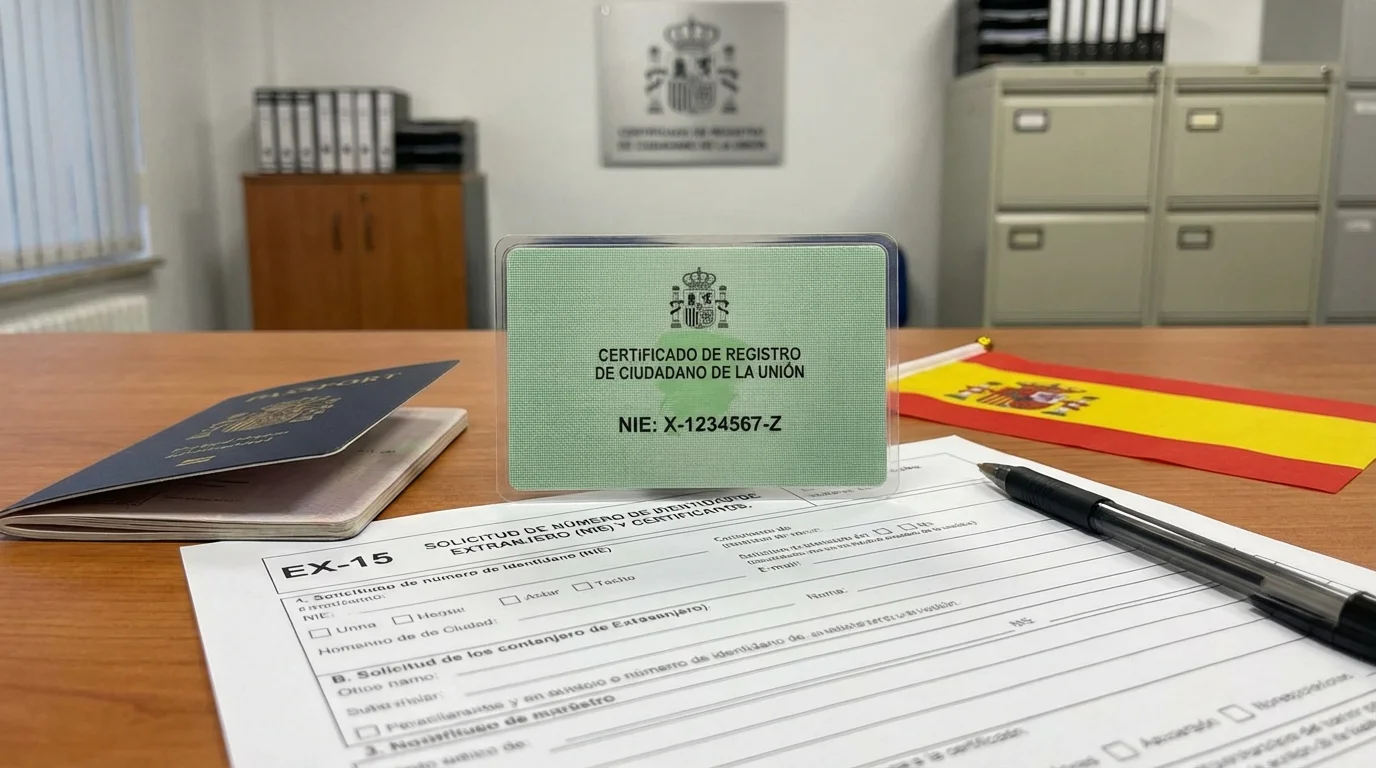
Spanish NIE number 2026: step-by-step guide from Sweden or Spain. EX-15 form, Modelo 790, €9.84 fee, waiting times and NIE/NIF/TIE explained.
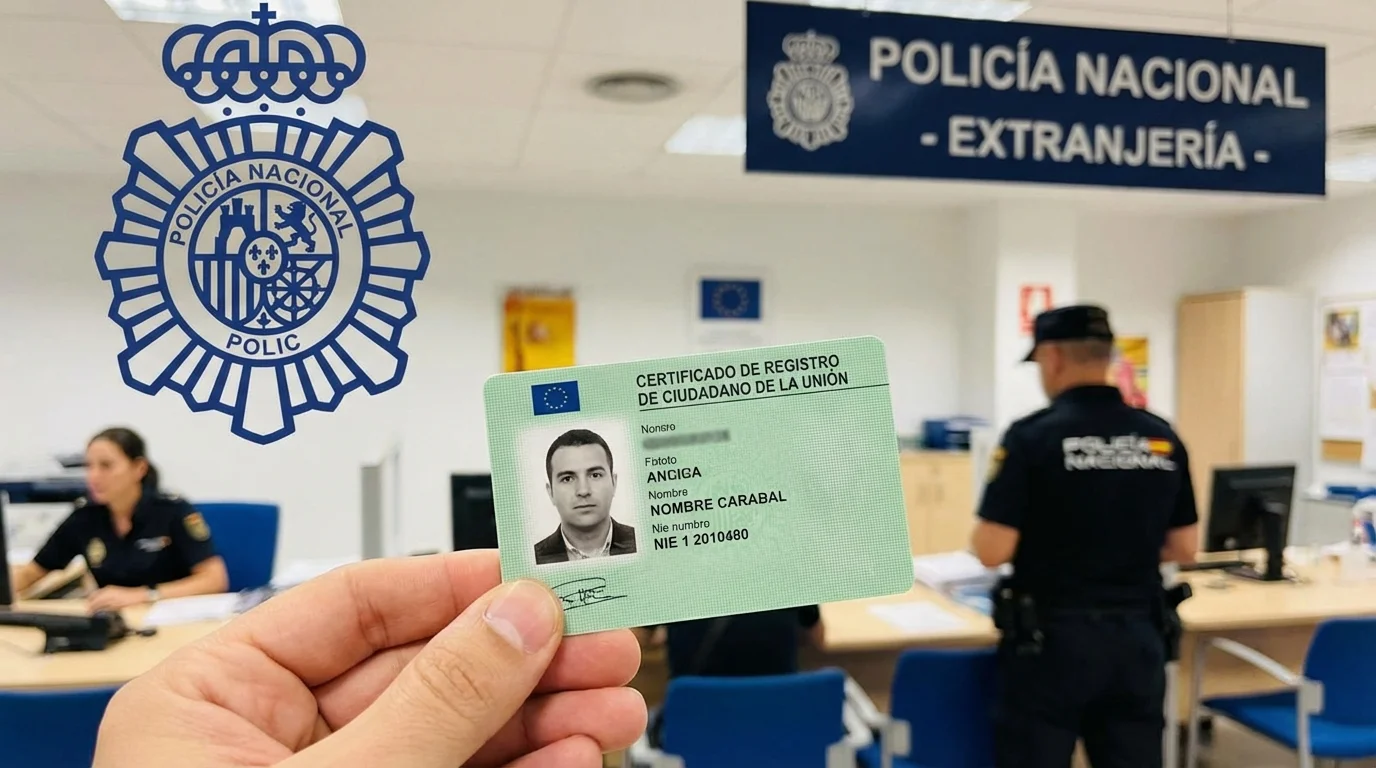
Complete guide to residencia in Spain: requirements, documents, application and what it means for your taxes. Step-by-step for Swedish citizens.