
Moving & Living
Internet and TV in Spain – Providers and Prices 2026
Internet in Spain 2026: 95% fibre coverage, Digi 500 Mbps from €10/mo. Guide to providers, prices, NIE rules and watching Swedish TV via VPN.
16 min
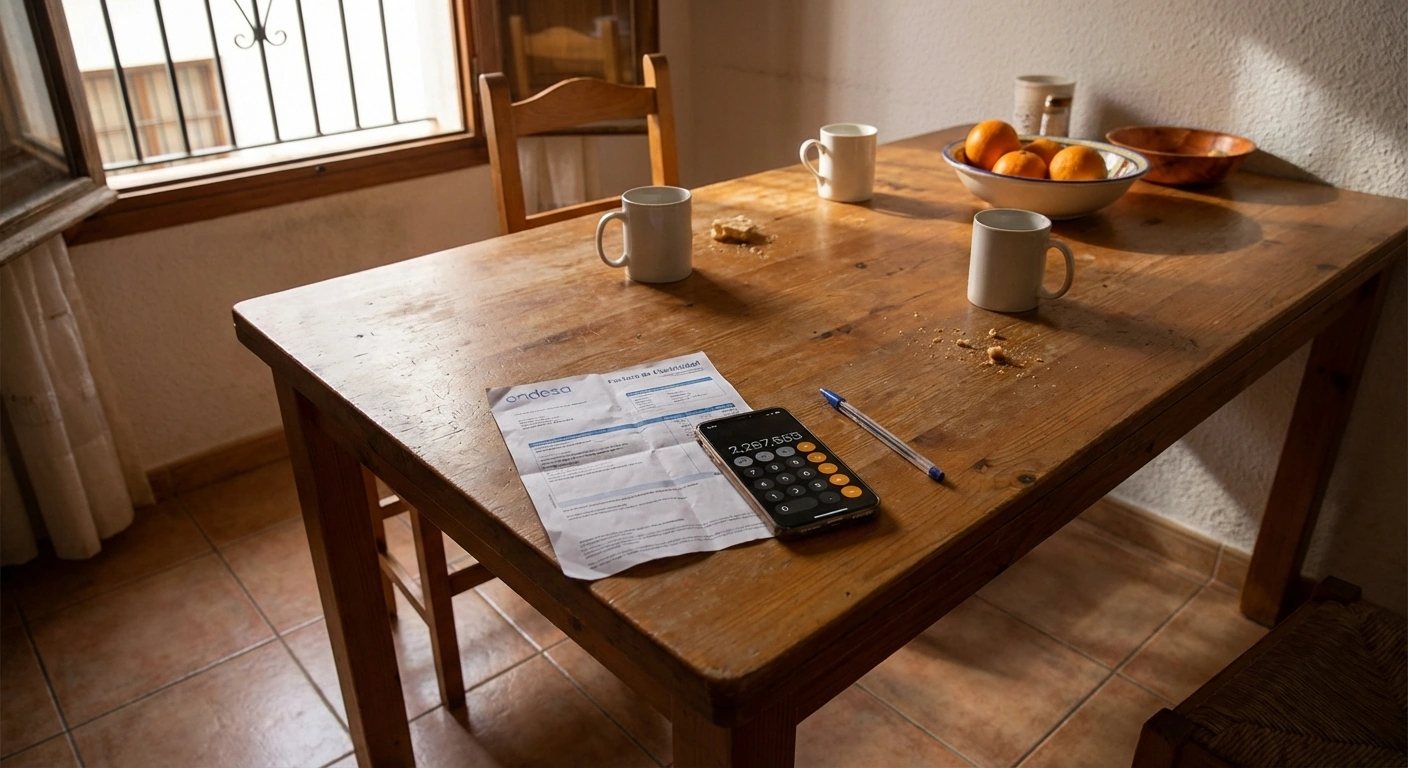
How electricity works in Spain: providers, electricity bills, contracted power, time-of-use tariffs and smart saving tips for Swedish property owners.
Electricity in Spain is not difficult once you understand the model, but it is easy to pay more than necessary if you just sign the first contract you come across. For those searching for information about electricity in Spain, the basic rule is simple: you need to distinguish between a regulated price and the free market, keep track of your potencia contratada and understand why the same property can receive completely different electricity bills depending on when and how electricity is used.
The practical side for Swedish buyers is that the market does not work like it does at home. You will encounter network companies, commercial suppliers, different time-of-use tariffs and a bill where fixed charges, energy consumption, taxes and meter rental are all mixed together. Add air conditioning, a water heater and sometimes a pool pump, and electricity quickly becomes a bigger expense than many people expect.
This guide covers how the electricity market works, the difference between PVPC and mercado libre, what is actually on the electricity bill, typical costs for apartments, townhouses and villas, and the mistakes Swedish buyers make time and time again.
The first thing you need to know is that there are usually two different parties in the background: a distributor and a supplier. The distributor owns the network in your area and cannot be chosen freely. The supplier — the one who invoices you — is your choice.
For ordinary households with low-voltage supply and up to 10 kW of contracted power, there are three main contract options: PVPC, a fixed price from a reference supplier or the free market via mercado libre. It sounds bureaucratic, but in practice it comes down to a single question: do you want a price that follows the market hour by hour or a more predictable price?
That is also why two neighbours in the same urbanisation can pay completely different amounts despite similar consumption. One has an hourly price and runs the washing machine at night. The other has a convenient but expensive fixed-price contract and too high a contracted power level. Both often believe the problem is "expensive electricity in Spain", when in reality it is the contract that is causing the trouble.
PVPC stands for Precio Voluntario para el Pequeño Consumidor. It is the regulated model for smaller households and is only available for installations up to 10 kW. The price varies throughout the day and closely tracks the market. It can be beneficial if you live permanently in Spain, know your habits and can shift consumption to cheaper hours.
Mercado libre is the free market. There companies offer fixed prices, promotional prices, bundled contracts and sometimes extra services such as maintenance, apps or discounts if you combine electricity, gas and insurance with the same group. It is easier to budget for but not automatically cheaper.
My rule of thumb is this: PVPC suits you if you are proactive, price-conscious and comfortable with variation. The free market suits you if you want to know roughly what the month will cost and do not plan to run your life around hourly prices. For many Swedish holiday homes, mercado libre is often simpler, since the property sits empty for part of the year and consumption then mainly consists of fixed costs and occasional air conditioning.
Information
Worth knowing: PVPC is not sold by regular commercial brands but by designated reference suppliers. This means big names such as Iberdrola and Endesa can have both standard free-market contracts and separate companies for regulated products. Do not just compare logos — compare the exact contract type.
The big names you will most often encounter are Iberdrola, Endesa, Naturgy, Repsol and Octopus Energy España. For Swedish buyers, here is the practical difference:
The most important thing is not to choose the most famous name. What matters is checking four things: whether the price is fixed or variable, how long the promotional price lasts, whether the contract includes extra services you do not need, and what power level you are actually signing up for. That is where the difference between a reasonable and an unnecessarily expensive electricity bill usually lies.
The Spanish electricity bill often looks more complicated than it needs to be. Essentially it consists of four parts: a fixed power charge, energy consumption, taxes and meter rental. CNMC's consumer guide describes precisely these building blocks as the core of the household invoice.
The fixed part is based on your potencia contratada. You pay it even when the property is almost empty. The variable part depends on how many kWh you use. Then taxes and charges are added on top.
The data points worth knowing are fairly concrete:
In practice this means many Swedes fixate on the kWh price and miss the fixed part. If your contracted power is too high or you have an expensive service package, you can end up paying unnecessarily high amounts even in a property that is barely used.
There is no perfect national average that helps here, because costs are heavily influenced by climate, insulation, hot water, air conditioning, pool and whether you live there year-round. It is therefore better to think in realistic ranges than in one magic average price.
For Swedish buyers, these levels tend to be a reasonable starting point:
Indicative monthly electricity costs
Smaller apartment
€40–80
High usage: €90–130
Townhouse
€70–120
High: €130–180
Villa without pool heating
€110–180
High: €180–280
Villa with pool, heavy AC or electric heating
€160–250
High: €250–400
Apartments on the Costa Blanca often fall in the lower part of the range if used as holiday homes and if gas is used for hot water or cooking. In larger villas on the Costa del Sol, it is almost always air conditioning, hot water and pool-related running costs that push up the bill.
It is also common for the first summer to be more expensive than expected. Many new owners run air conditioning around the clock, cool down a property that has been closed up, and then discover that July and August stand out sharply from the rest of the year. That is normal. The important thing is to understand whether it is seasonal consumption or whether the contract itself is poor.
Properties
Explore available properties in Costa Blanca
Browse current homes in the area and compare locations, price levels and property types at your own pace.
If you have a contract where time of day matters, you need to know the three periods punta, llano and valle. For the standard 2.0TD tariff, valle normally applies from 00:00–08:00 on weekdays and all day on weekends and national public holidays.
Punta covers the more expensive hours, usually 10:00–14:00 and 18:00–22:00 on weekdays. Llano falls between these blocks: 08:00–10:00, 14:00–18:00 and 22:00–00:00.
This matters more than many people think. If you run the washing machine, dishwasher and water heater at night, the difference becomes noticeable over the course of a year. For a holiday home the effect is less dramatic, but for permanent residents it can be significant. I would not build my entire life around these hours, but I would definitely schedule heavy loads outside punta if the contract rewards it.
Potencia contratada is the power level you subscribe to — how much electricity you can use simultaneously before the installation trips. It is not the same as total annual consumption. You can have low annual consumption but still have too high a contracted power level, and then you are overpaying every month anyway.
In Spanish properties, 3.45 kW, 4.6 kW and 5.75 kW are common levels. A smaller apartment without electric heating can usually manage on 3.45 or 4.6 kW. A townhouse with several AC units and electric hot water often lands around 4.6 or 5.75 kW. In a villa with a pool, many appliances and several people at home simultaneously you sometimes need more.
This is a classic Swedish pitfall. You buy a property, leave the previous owner's power level in place and do not think any more about it. But the previous owner may have had six people in the house, a pool heater, old equipment or completely different habits from yours. If you live alone or only use the property part-time, this is often where the easiest saving can be found.
Tip
Practical tip: Do not just look at the most recent invoice. Look at how the property is actually used. If you almost never run the oven, water heater and several AC units simultaneously, it may be worth reducing the power level by one step and testing it. It is often less risky than chasing an exotic new electricity contract.
When you buy or rent in Spain there are two common scenarios: you take over an existing active subscription, or you need to open a new one. A straightforward ownership transfer is easiest. You will normally need ID, the sale contract or rental agreement, bank details, the full address and ideally the property's CUPS code — the installation's unique ID in the electricity system.
If the electricity is already switched on, the process is mostly administrative. But if the installation has been disconnected, or if you are buying new construction in for example Alicante city, you may need installation certificates, technical details and sometimes extra connection or reactivation fees.
It is also important to distinguish between supplier and distributor here. The supplier writes the contract with you. The distributor gets involved if something technical needs to be changed in the network connection. That is why a "simple supplier change" can go smoothly while a new connection takes longer and requires more documents.
As a guideline, it is smart to request these documents before taking possession:
If you have all of this you save a great deal of time. Without it, the process often starts with telephone queues, Spanish customer service and guesswork about what is actually installed.
For many homeowners in Spain, the answer is yes. Not because panels automatically make electricity free, but because solar irradiation is strong, the need for air conditioning often coincides with daytime and self-consumption can therefore be quite good. IDAE's professional guide on autoconsumo was updated in July 2024 and covers both individual and collective solutions.
The practical reality is that solar panels work best when you can use a large proportion of the output yourself: during the day, in your own house, with air conditioning, a pool pump or a hot water system that can be scheduled. For apartments, the calculation is harder unless the owners' association already has a solution for shared or collective self-consumption.
There is also a common misconception among Swedish buyers: that panels are automatically most profitable in holiday homes. Often it is the opposite. If the property sits empty for long periods and you are not using the electricity when the sun is producing, the value is lower than in a house that is actually occupied during the day.
Properties
Explore available properties in Costa del Sol
Browse current homes in the area and compare locations, price levels and property types at your own pace.
This is the section I think is most important, because it is rarely the actual electricity price that causes problems. It is almost always the details surrounding it.
The first mistake is to accept the supplier's first proposal without checking the power level, service package and contract type. Many people end up with an expensive free-market contract with maintenance services they never use.
The second is to underestimate the fixed cost. A property that sits empty can still have an annoyingly high monthly bill if the contracted power is too high and the meter is being rented as normal. That is why it sometimes feels like "we use no electricity but still pay a lot." Often that is true.
The third is to forget the climate. In Spain costs do not only rise in winter. They can just as easily spike in July and August when two AC units are running all day. In a villa with a pool, an otherwise reasonable contract can look expensive just because usage surges during a few hot months.
The fourth is not asking for the most recent invoice before buying. Without it you miss the CUPS code, the power level, the current supplier and sometimes clear signs that something is wrong. It can be anything from an unusually high power level to old debts or a subscription already being cancelled.
The fifth is believing that solar panels solve everything. They help, but not if the roof faces the wrong direction, the owners' association is blocking the project, or the property is mostly locked up when the sun is producing at its best.
Note
What often goes wrong: The buyer focuses on the kWh price but misses hidden costs such as contracted power that is too high, extra service contracts, reactivation fees and high summer consumption from air conditioning or the pool. Always ask for the most recent invoice before taking possession. It is the quickest way to see whether the electricity is set up reasonably.
It is both. The energy itself can be reasonably priced, especially if you choose the right contract and use electricity smartly. But the total cost quickly mounts up if the property is large, poorly insulated or cooled like a hotel room in August.
For most Swedish buyers the goal is not to find the absolute cheapest hour in Spain. The goal is to have a contract that suits how you actually live. A smaller apartment with the right power level and a sensible contract is rarely a problem. A villa with high contracted power, a pool and a casually chosen supplier quickly becomes expensive.
If you start by checking the contract type, the power level, the components of the bill and the property's actual usage pattern, you are already ahead of many other buyers. That goes a long way.
Contact
We help Swedish buyers understand the full picture — area, property type, ongoing costs and what actually becomes expensive after taking possession. Book a free call if you want to think it through before you buy.
Book a free consultationLast updated: April 2026. Taxes, tariffs and supplier terms can change — always check current terms before signing a contract.
Decision support
Ofta ja, men inte alltid från dag ett. Om du köper bostad brukar leverantören vilja se NIE eller pass, köpekontrakt eller hyresavtal, adress, bankkonto och helst den tidigare anläggningens CUPS-kod.
Vid ett enkelt ägarbyte räcker underlagen normalt. Vid ny anslutning eller återinkoppling kan leverantören dessutom kräva installationsintyg och fler tekniska uppgifter.
Nej. PVPC kan bli billigast om du kan styra förbrukningen till billiga timmar och accepterar prisrörelser från dag till dag.
Mercado libre passar bättre om du vill ha mer förutsägbara månadsfakturor, ett fast pris eller paket med service. För många svenska fritidsboenden är stabilitet viktigare än att jaga lägsta timpris varje vecka.
Då löser strömmen ut när du kör för många apparater samtidigt. Typiska situationer är när ugn, varmvattenberedare och AC går samtidigt eller när poolpumpen startar medan du lagar mat.
Det är irriterande men ofta lätt att lösa genom att höja effekten ett steg. Problemet är att högre effekt också höjer den fasta delen av elräkningen varje månad.
För ett mindre fritidsboende utan pool ligger rena elkostnaden ofta runt 40-90 euro per månad utslaget över året. Använder du mycket luftkonditionering, elvärme eller varmvatten på el blir det snabbt mer.
Under sommar och vinter sticker förbrukningen ofta iväg, särskilt i bostäder som kyls eller värms upp hårt precis när ägarna kommer ner.
Ofta ja för villor och radhus där du använder mycket el dagtid eller kan kombinera produktionen med poolpump, AC och varmvatten. För lägenheter är det svårare om föreningen inte har gemensam lösning.
Det viktiga är inte bara hur många paneler du får plats med, utan hur stor del av solelen du faktiskt använder själv och vilken ersättning du får för överskottet.
Sources
Internet in Spain 2026: 95% fibre coverage, Digi 500 Mbps from €10/mo. Guide to providers, prices, NIE rules and watching Swedish TV via VPN.
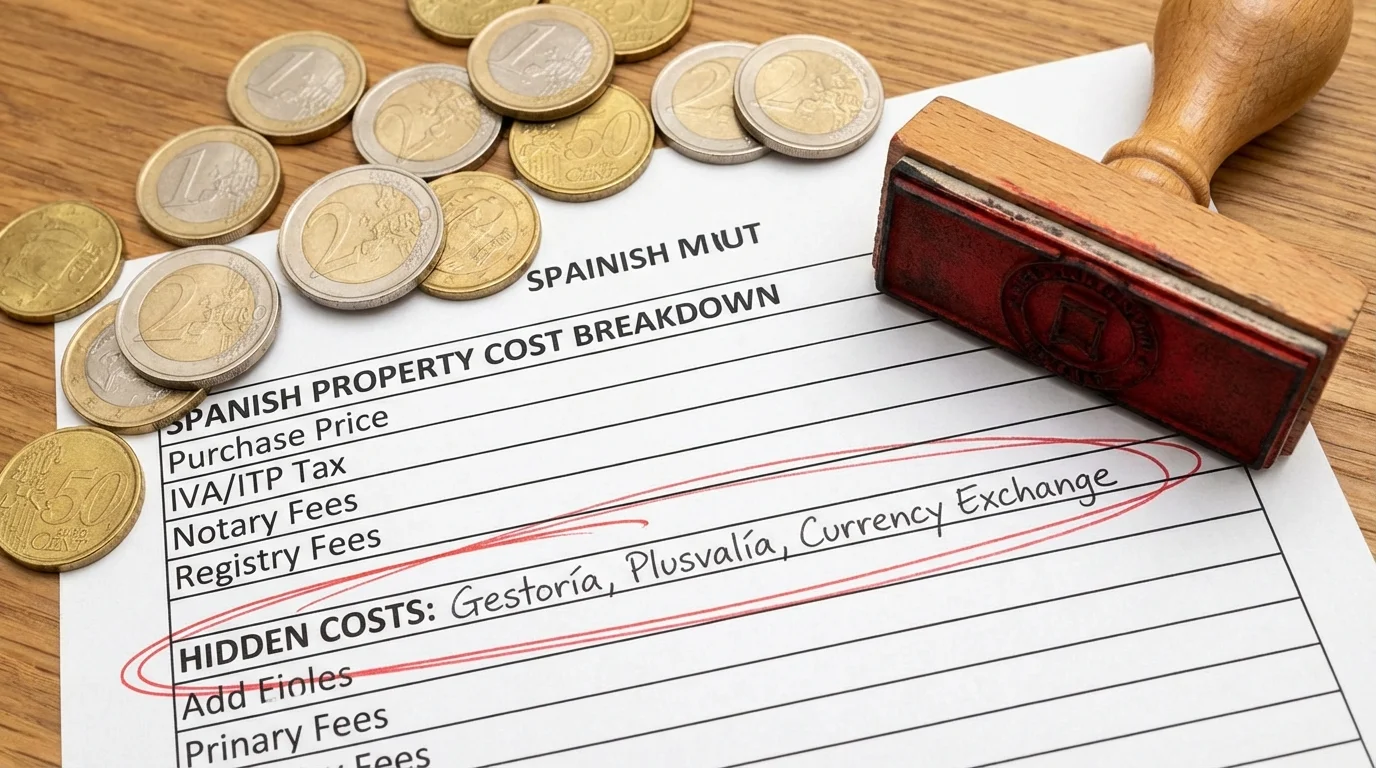
Buying property in Spain costs 10–14% on top of the price: ITP, notary, land registry, lawyer and more. Calculation examples and a region comparison.
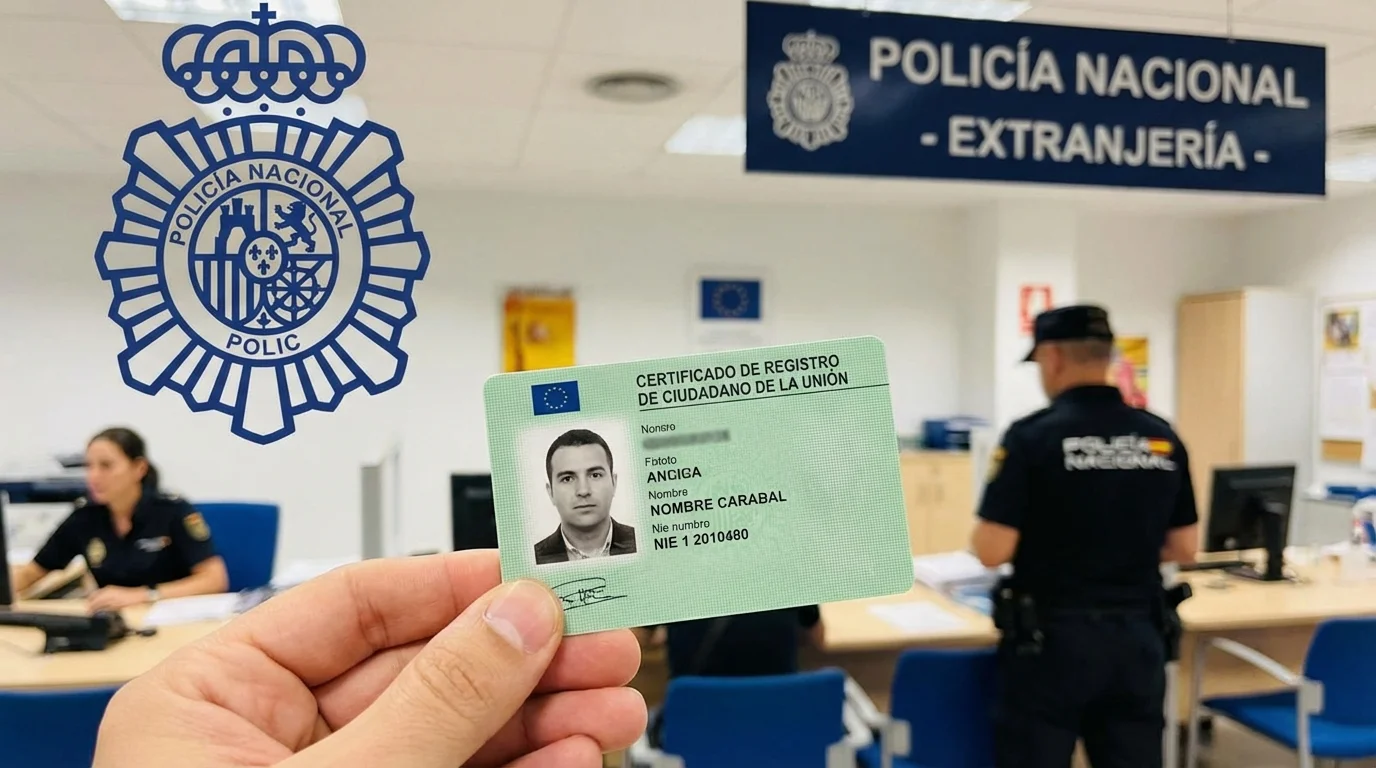
Complete guide to residencia in Spain: requirements, documents, application and what it means for your taxes. Step-by-step for Swedish citizens.