
Area Guides
Calpe – In the Shadow of Peñón de Ifach 2026
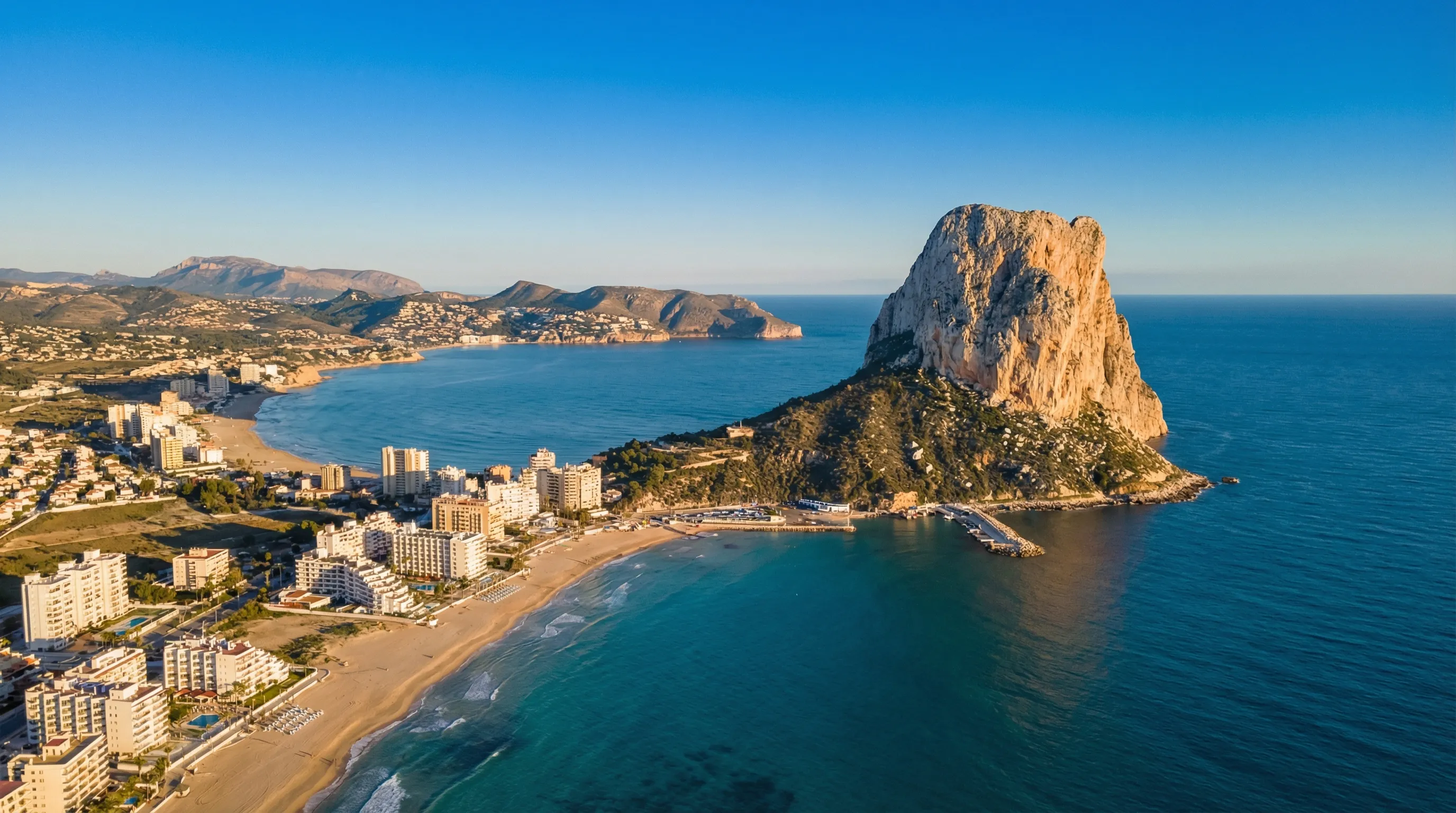
Complete guide to Calpe: Peñón de Ifach, beaches, property prices, the salt lake with flamingos and why it is one of Costa Blanca's most iconic towns.
18 min
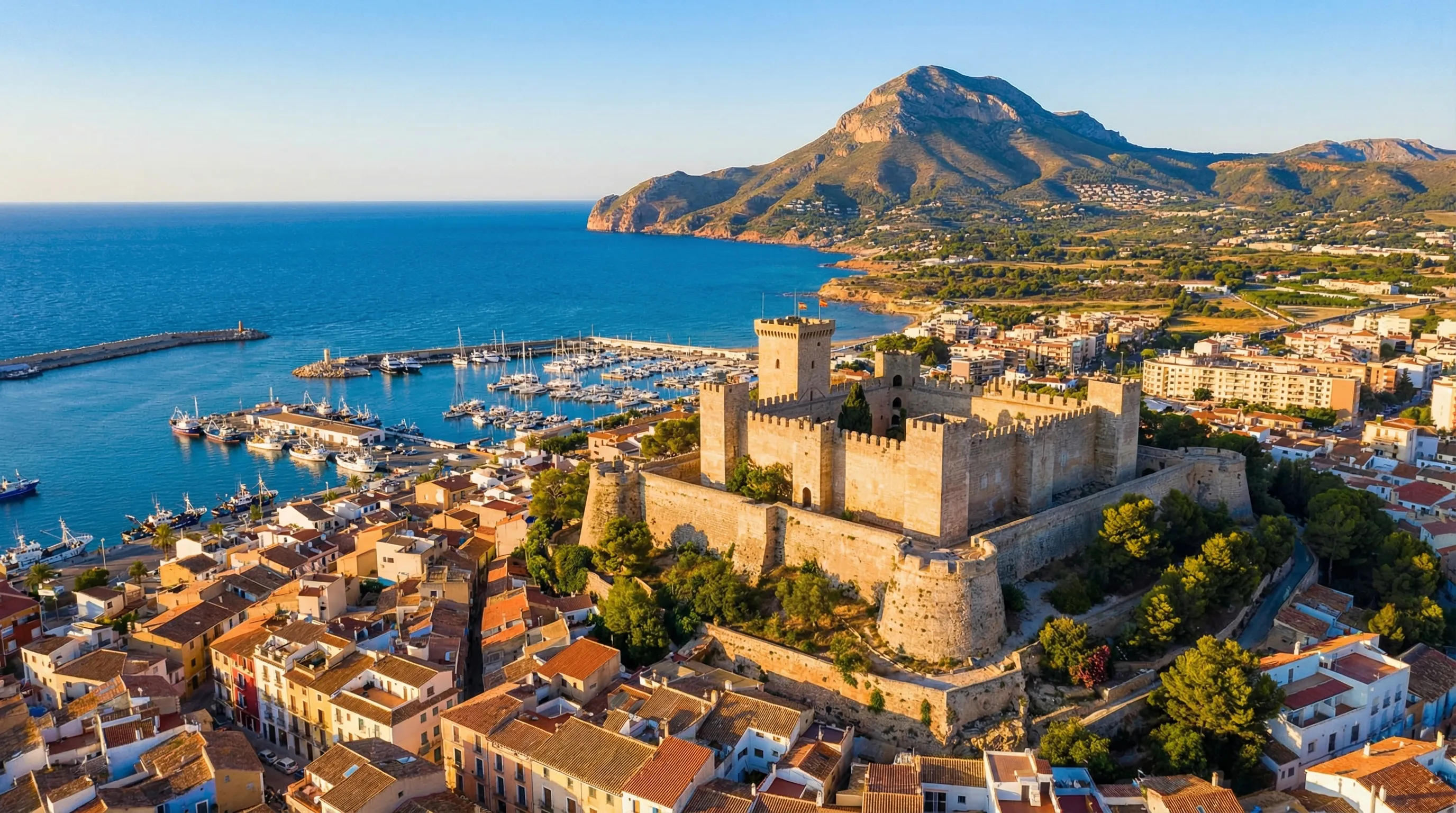
Complete guide to Dénia: UNESCO Creative City of Gastronomy, the castle, beaches, property prices and why it is northern Costa Blanca's most complete city.
Dénia has something most coastal towns on the Costa Blanca lack: it is a real city that happens to be by the sea. A medieval castle, UNESCO-stamped food culture, 20 kilometres of beaches and 49,000 inhabitants of whom a third are foreign-born. The average property price is around 3,000 euros per square metre, and the climate delivers 2,900 hours of sunshine per year with winter temperatures that rarely drop below 10 degrees.
Hospital, schools, a daily ferry to Ibiza, the Montgó nature park on the doorstep. Everything is here without Dénia having become a pure tourist machine. This guide covers what Dénia costs, what it is like to live there, and how the city compares with its neighbours Jávea and Calpe.
Dénia lies at the foot of the Montgó mountain (753 metres) on northern Costa Blanca, in the province of Alicante. Sea to the east, mountain range to the west. The city belongs to the Marina Alta region, which begins where the Costa Blanca's tourist strip gives way to a more rural landscape.
Distances worth knowing:
A practical detail: Dénia is as easily reached from Valencia airport as from Alicante. That gives you more flights to choose from, unlike southern Costa Blanca where Alicante is the only sensible option. From Sweden, SAS, Norwegian and Ryanair fly direct to both airports during high season.
Information
Dénia has held UNESCO Creative City of Gastronomy status since 2015 — one of the few cities in Europe with that distinction. It is not just a title: you see it in everyday life through food markets, restaurant culture and events such as the annual competition centred on the red prawn.
Castillo de Dénia sits on a hill in the middle of the city with views in all directions: the sea, Montgó, the surrounding mountains. The castle has roots in Roman times when the city was called Diannium, was significantly expanded during the Arab period in the 10th and 11th centuries, and was transformed again after the Christian conquest of 1304. The archaeological museum inside the castle covers all these periods in four halls.
Entry costs 3 euros for adults and is free for children under 8. Since 2025 there has been a new exhibition "Dénia, Watchtower City" in the eastern gallery of the ducal palace, about Dénia's role as a historic lookout post along the coast.
Below the castle lies the old town, El Poble Antic. Narrow streets, low houses, whitewashed facades. The Les Roques quarter was part of the Arab medina before the 13th-century Christian conquest, and that is still visible in the street pattern. Carrer Marqués de Campo, the main street from the harbour into the centre, is where people walk in the evenings, have coffee in the mornings and essentially live their daily lives outdoors.
UNESCO named Dénia as a Creative City of Gastronomy in 2015. The distinction is not about the city having expensive restaurants (it does have those too) but about the whole chain: fishermen who bring in prawns every morning, farmers from the inland areas, the market hall where everything comes together, and a food culture that genuinely lives in everyday life rather than just on tourist menus.
The city's signature dish is gamba roja de Dénia, the red prawn fished daily off the coast. Sweet, bright red and expensive: expect 80–120 euros per kilo depending on season. Every year an international cooking competition is held centred on the prawn where 50 chefs from around the world take part, which says something about how seriously people take this prawn.
Other dishes you should not miss:
Dénia has over 300 restaurants. The range goes from simple tapas bars in the lanes of the old town to more expensive dining experiences along the harbour and the Les Rotes coast. Mercado Municipal on Carrer de Magallanes is the market hall you want to visit: fish straight from the morning catch, local vegetables, charcuterie from the inland. It is the best way to understand why UNESCO cared.
Tip
Do not miss the fish auction (lonja) at the harbour. It is held on weekdays at around 5 pm and is open to the public. You see the fishermen coming in with the day's catch and can follow the bidding in person — an experience few tourists discover.
Dénia's coastline stretches over 20 kilometres and divides into two completely different characters: Las Marinas north of the harbour and Les Rotes south of the harbour.
Las Marinas runs 15 kilometres northward from the harbour towards Oliva. Wide, fine sand. Shallow, calm water. Good for families with children and those who want a classic beach day with a sun lounger and a chiringuito.
The beaches are divided into sections: Les Marines, Les Bovetes, Els Molins, L'Almadrava and Les Deveses furthest north. Several have Blue Flag status. Water temperatures reach 24–26 degrees in summer. There is plenty of surfing, kitesurfing and stand-up paddleboarding thanks to the steady northerly winds.
Les Rotes south of the harbour is completely different. A 3-kilometre-long promenade lined with rocks, clear water and small coves. Marineta Cassiana is the only sandy beach here and has Blue Flag status. The rest of the coast is stone and rock, making it good snorkelling and diving terrain.
The promenade itself is worth the visit. Restaurants and bars scattered along the way, views straight out over the Mediterranean. At the end you reach Cabo de San Antonio where Montgó's cliff wall falls straight into the water.
Dénia has become expensive. During 2025 the average price exceeded 3,000 euros per square metre for the first time, an increase of nearly 12 percent in a year. Over ten years prices have almost doubled. It is no longer a bargain, but it is still cheaper than equivalent towns in France or Italy.
Les Rotes — the most expensive area with an average of 3,700 euros per square metre. Here you find villas with sea views and townhouses near the rocks. Supply is limited and properties move quickly.
Las Marinas — the average is around 3,400 euros per square metre. Beachfront apartments and townhouses dominate. New construction is pushing prices even higher.
Centre and harbour — 2,800–3,200 euros per square metre. Apartments in the old town and around the harbour. More affordable but with older building standards.
Inland areas (La Pedrera, Montepego) — from 2,000 euros per square metre. Villas with garden and pool, but further from the beach.
Note
Budget for 10–14 percent in additional costs on top of the purchase price: transfer tax (ITP, 9 percent in the Valencia region since June 2026), notary fees, property registration and solicitor fees. New builds are subject to 10 percent VAT (IVA) instead of ITP.
Properties
Explore available properties in Dénia
Browse current homes in the area and compare locations, price levels and property types at your own pace.
Mediterranean climate with warm, dry summers and mild winters. The Montgó mountain provides protection from cold inland winds, so Dénia tends to be slightly warmer in winter compared to more exposed towns.
Temperatures throughout the year:
Annual average rainfall is around 550 mm, concentrated in autumn. September and October can bring heavy downpours (DANA/gota fría) that cause local flooding — the same phenomenon that affects the entire Costa Blanca. Summer is almost rain-free.
Dénia has 49,047 inhabitants. Of these, 16,113 (33 percent) are foreign-born, and the population represents 107 different nationalities. It is an unusually mixed city.
The largest foreign groups are Colombians (2,538), British (1,411), Germans (1,388) and Ukrainians (1,190). Scandinavians are present but in smaller numbers than in southern Costa Blanca. Dénia attracts a different profile: people who want to live in Spain rather than in an expat enclave, and who care about food and culture as much as sun and pool.
Population growth is driven almost entirely by inward migration. Over the past year the Spanish population increased by just 18 people — the rest of the growth came from foreign migrants. The most common age among residents is 56, and most of the population is in the 40–60 bracket.
One thing worth emphasising: Dénia does not shut down in winter. Restaurants, shops and healthcare run year-round. That sounds obvious, but anyone who has visited a half-empty holiday resort in February knows it is not.
Yes. The shipping company Balearia runs daily ferries from Dénia's harbour to Ibiza. The crossing takes approximately 2 hours and 15 minutes on the fast ferry.
Ticket prices start from around 60 euros per person one way. If you want to take your car it costs more — expect 150–250 euros for a car plus passengers depending on season. During high season up to 10 ferries depart per week, and there are also connections to Mallorca and Formentera.
That makes a weekend in Ibiza or Formentera a spontaneous decision rather than a planned holiday. Few other places on the mainland give you that option.
Parque Natural del Montgó became a nature park in 1987. The mountain is 753 metres high and the park contains over 650 plant species, rare orchids and birds of prey. You often see the eagles soaring in the thermals if you look up.
The best hiking routes:
The summit (PR-CV 355): The most challenging route takes you to 753 metres with panoramic views in all directions. Round trip takes 3–3.5 hours. The final section requires some scrambling and is not for those afraid of heights.
Camí de la Colonia: A more gentle walk along the mountain's northern flank through pine forest with constant views over Dénia and the sea. Ends at Cova del Camell (Camel Cave).
Cova Tallada: A route that follows the coast and leads to an impressive cave in the cliff wall. Occasionally closed for safety reasons — check availability before you set off.
Spring and autumn are best for hiking. In the middle of summer it is too hot, over 30 degrees, and there is no shade at all on the upper sections. Bring plenty of water regardless of season.
Dénia has unusually good healthcare for a city of this size. Marina Salud Hospital opened in 2009 and has 280 beds, a round-the-clock emergency department and over 42,500 square metres of hospital space. In 2012 the hospital received HIMSS Stage 7 certification as the first hospital in Spain and second in Europe, meaning fully digitalised care.
In addition to the public hospital there is HCB Dénia (private, newly built, 6,500 square metres with accident and emergency, intensive care and over 50 specialist clinics) and San Carlos Hospital with private emergency care. As an EU citizen you are entitled to Spanish public healthcare via your European Health Insurance Card (EHIC) or S1 certificate if you are a permanent resident.
There are also four health centres (Centro de Salud) in the municipality plus eight further health centres. In summer healthcare is reinforced with two additional surgeries to handle the growing population.
Advantages:
Disadvantages:
Three towns dominate northern Costa Blanca for foreign buyers. Here is how they differ.
Dénia vs. Jávea: Jávea is quieter, more villa-dominated and has a stronger British character. Prices are comparable or slightly higher. Jávea lacks the restaurant scene and urban feel that Dénia has. Jávea suits you if you want peace and a garden. Dénia suits you if you want city life and food culture.
Dénia vs. Calpe: Calpe is more tourist-oriented with Peñón de Ifach as a landmark. Prices are comparable but Calpe has more affordable apartments in high-rises near the beach. Calpe lacks Dénia's food scene and urban character. Calpe if you want a cheap beach. Dénia if you want a city that lives year-round.
Dénia vs. Altea: Altea is more artistic and bohemian with its white old town. Prices are similar. But Altea is considerably smaller and you have to make do with limited services. Altea if you want charm on a small scale. Dénia if you need a hospital, a supermarket and a city that does not require a car for everything.
Benissa also deserves a mention. It is a smaller town between Calpe and Jávea with a lower profile, lower prices and a charming pueblo. Interesting if you want the nature of northern Costa Blanca without paying Dénia or Jávea prices.
One thing that applies to all these towns: northern Costa Blanca is generally more expensive and further from the airports than the southern section around Torrevieja and Orihuela Costa. You pay more but get a quieter, more Spanish existence with better nature. The decisive question is whether that is worth the price difference. For most people who prioritise quality of life over the cheapest possible housing, the answer is usually yes.
Properties
Explore available properties in Dénia
Browse current homes in the area and compare locations, price levels and property types at your own pace.
Contact
Get in touch and we'll guide you forward — whether you're just starting out or ready to buy.
Contact usLast updated: April 2026. Prices and regulations can change — contact us for current information.
Decision support
Genomsnittspriset i Dénia ligger på cirka 3 000 euro per kvadratmeter (2025). En tvårumslägenhet kostar från 180 000 euro i centrala delar och upp till 350 000 euro nära Las Marinas-stränderna.
Les Rotes-området är dyrast med snittet runt 3 700 euro per kvadratmeter.
Alicante-Elche flygplats ligger cirka 103 kilometer från Dénia. Med bil tar resan ungefär 1 timme och 15 minuter via AP-7 motorvägen.
Valencia flygplats är ett alternativ på 113 kilometer och cirka 1 timme och 20 minuter med bil.
Ja, rederiet Balearia kör färjor från Dénia till Ibiza dagligen. Överfarten tar cirka 2 timmar och 15 minuter.
Biljettpriserna börjar från omkring 60 euro per person enkel resa. Under högsäsong avgår upp till 10 färjor per vecka.
UNESCO utsåg Dénia till Creative City of Gastronomy 2015 tack vare stadens rika matkultur, den röda räkan (gamba roja) från lokalt fiske, medelhavsdieten som levande tradition och evenemang som den internationella matlagningstävlingen. Dénia har över 300 restauranger.
Ja, Dénia fungerar bra som åretruntboende. Staden har 49 000 invånare, fullständig service med sjukhus, skolor och stormarknader.
Klimatet är milt med vintertemperaturer runt 11 till 17 grader. Den stora internationella befolkningen (33 procent utlandsfödda) gör det lättare att komma in socialt.
Sources

Cucarres, Alicante

Serrallonga, Alicante

Gran Sol, Alicante

Altea Hills, Alicante

Racó Del Galeno, Alicante

Playa de La Almadraba, Alicante
Local expertise
Complete guide to Calpe: Peñón de Ifach, beaches, property prices, the salt lake with flamingos and why it is one of Costa Blanca's most iconic towns.
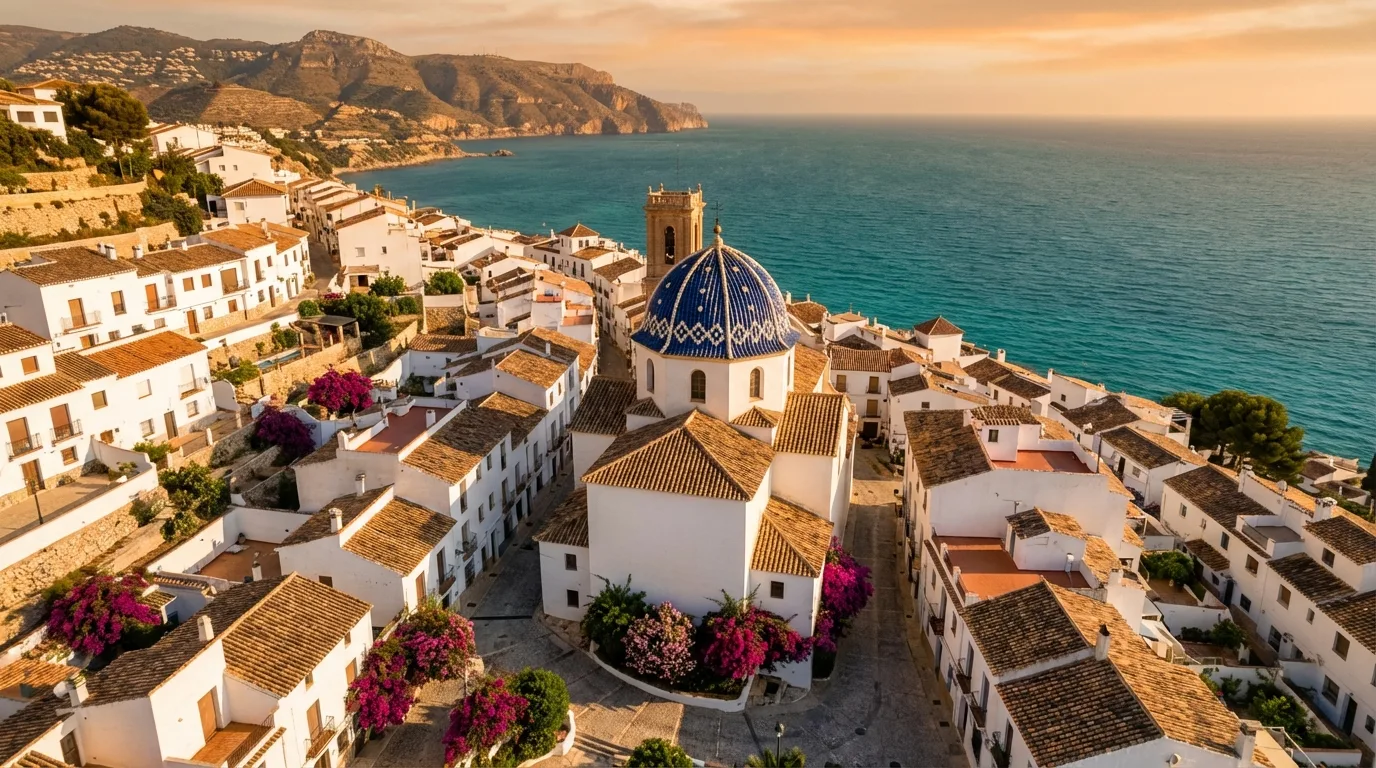
Complete guide to Altea: the white artists' town with its blue church dome, charming lanes, property prices, and why it is called the jewel of the Costa Blanca.
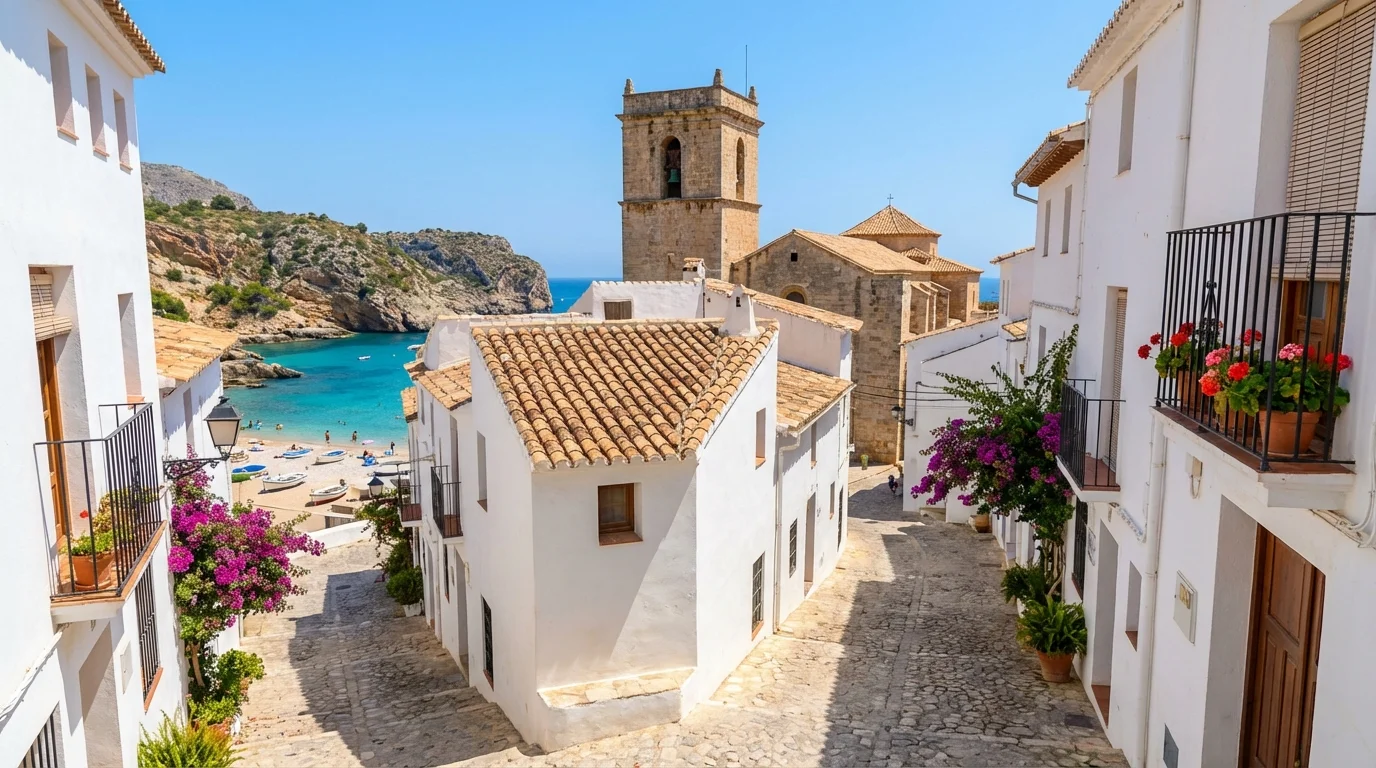
Complete guide to Benissa on the Costa Blanca: charming old town, hidden coves, property prices and why this is an alternative to Moraira and Calpe.