


Area Guides
La Nucia – The city of sport and nature 2026
Complete guide to La Nucia on the northern Costa Blanca: sports facilities, property prices, nature and why Scandinavians love this mountain town near Benidorm.
14 min
Complete guide to Altea: the white artists' town with its blue church dome, charming lanes, property prices, and why it is called the jewel of the Costa Blanca.
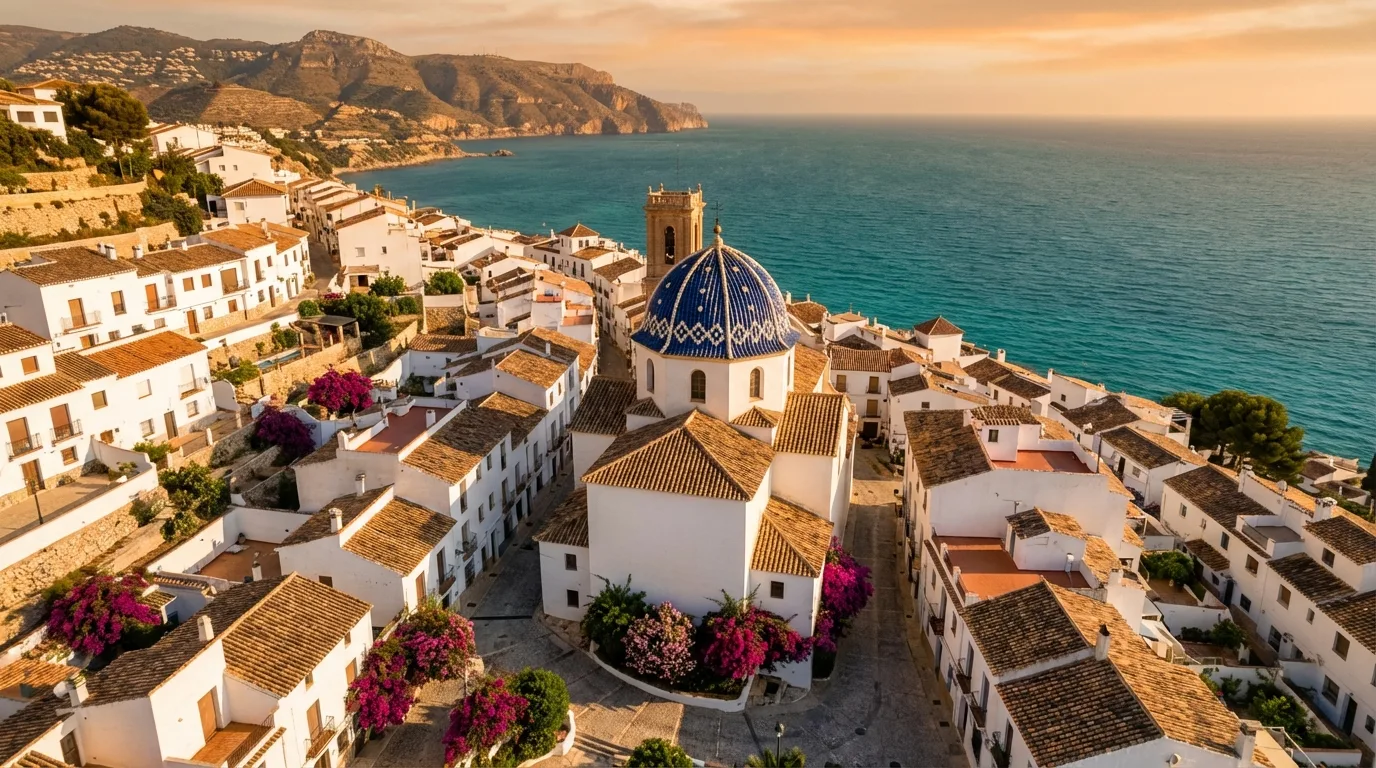
Altea is the place on the Costa Blanca where whitewashed houses climb a hill towards a church with a blue-tiled dome, where artists exhibit in small galleries along cobblestone lanes, and where the Mediterranean glitters in the background no matter which street you are on. The municipality has almost 24,000 inhabitants, a third of them foreign nationals. The average price for a property is 3,000–4,200 euros per square metre depending on location — more expensive than the neighbouring towns but with a charm that is hard to replicate.
Altea is often called the cultural capital of the Costa Blanca, and there is good reason for it. The town has an art faculty at the Universidad Miguel Hernández, an old town classified as a Bien de Interés Cultural by the Valencian government in 2013, and Michelin-recognised restaurants. In this guide I go through prices by area, the old town, beaches, art, climate, and what you should consider before buying.
Altea is located in the comarca Marina Baixa in the Alicante province, on the northern Costa Blanca. The town sits by the sea, nestled between the Sierra Bernia mountain to the north and Benidorm's skyscrapers to the south. The municipality covers 34 square kilometres and has 6 kilometres of coastline.
Distances from Altea:
The AP-7 motorway (toll-free since 2020) passes just south of Altea and provides good connections to both Alicante and Valencia. The TRAM tram stops in Altea and connects the town with Benidorm, Alfaz del Pi, and Alicante. It is unusual on the Costa Blanca to be able to manage without a car, but in Altea it is at least possible.
Information
Altea is one of the few towns on the Costa Blanca with functioning tram services. The TRAM line connects Altea with Benidorm in 20 minutes and with Alicante in just over an hour. This makes it possible to live in Altea without being entirely car-dependent — unusual in the region.
Altea's casco antiguo is the heart of the town and the reason many people fall in love with the place at first sight. The old town sits on a hill above the sea, reached via steep lanes and steps, and is crowned by the church of Nuestra Señora del Consuelo with its characteristic blue-and-white tiled dome.
The church was built in the 18th century and is Altea's most photographed landmark. The blue-and-white ceramic tiles on the dome are visible from a great distance, whether you come from the sea, the mountain road above, or the neighbouring town of Alfaz del Pi. From the square in front of the church you can see 180 degrees across the Mediterranean. On clear days the Peñón de Ifach rock in Calpe is visible to the north.
The streets in the casco antiguo are cobbled, narrow, and car-free. The houses are whitewashed with blue details, a deliberate choice maintained by the municipality through building regulations. Bougainvillea hangs over the balconies. There are about twenty small galleries, ceramics workshops, and art shops.
The street plan partly dates from Moorish times. The streets were built as a labyrinth to confuse intruders. Today it means you find new corners every time you walk through, which is part of the charm.
The entire old town was classified as a Historic-Artistic Ensemble (Bien de Interés Cultural) in 2013 by the Generalitat Valenciana. This means facades, street spaces, and building types are protected. You cannot freely renovate, which keeps the character intact but can be frustrating if you want to remodel.
Tip
The best time to visit the old town is early morning or late afternoon. In the middle of the day during summer it can be crowded with tourists. In the morning you have the lanes almost to yourself and the light over the sea is perfect for photography.
Altea is more expensive than most towns on the Costa Blanca, but prices vary considerably depending on whether you buy in the old town, at the coast, in Altea la Vella, or in the premium area of Altea Hills.
The average price for a resale property is around 3,000–3,500 euros per square metre. New builds cost 4,500–7,000 euros per square metre — 20 to 40 percent more than comparable resale properties. In the most exclusive area, Altea Hills, sale prices have reached 4,200–4,300 euros per square metre for resale.
Price overview
| Area | Apartment | Villa | Townhouse |
|---|---|---|---|
Always budget for 10–13 percent in additional costs on top of the purchase price: transfer tax (ITP, 9 percent in the Valencia region since June 2026), notary fee, land registration, and legal fees.
During 2025 property prices in Spain rose 5–7 percent nationally, and Altea followed the trend with continued rising prices, especially in the premium segment. The market consists 85–90 percent of resale properties, meaning there is limited new development.
Properties
Explore available properties in altea
Altea's coastline stretches 6 kilometres with a mix of pebble beaches, rocky coves, and sandy beaches. Expectations should be calibrated correctly: most of Altea's beaches are pebble or shingle beaches, not the wide sandy expanses you find in Benidorm or Guardamar. What draws people is the clear water, snorkelling, and calmer atmosphere.
The central beach below the old town. Pebble beach with a walkway, lifeguards, wheelchair ramp, and full service. Has blue flag status. The location is good but it can get crowded during high season. Families like the calm water and proximity to restaurants.
North of the harbour, just over a kilometre of beach with a calm atmosphere and crystal-clear water. Offshore lies a small island that creates a natural lagoon. Good snorkelling among posidonia seagrass and fish. L'Olla is probably Altea's most beautiful beach, but it has fewer facilities than La Roda.
The northernmost beach, approximately 2 kilometres long with a rocky bottom and clean water. The best place in Altea for snorkelling, with abundant marine life and rock formations below the surface. Less touristy and more local in feel. A few chiringuitos (beach restaurants) are found along the way.
South of Altea, bordering Albir's beach. Wide pebble beach with blue flag status. Easy to access with a pushchair and good for walks. Less crowded than La Roda during summer.
Note
Most of Altea's beaches are pebble or shingle. Bring water shoes if you have sensitive feet. If you want a wide sandy beach, Benidorm's Playa de Poniente (15 minutes away) or Albir's beach (7 minutes) are better options. However, water quality in Altea is among the best on the entire Costa Blanca.
Altea's reputation as an artists' town has real substance. Here is why.
The Universidad Miguel Hernández has its Faculty of Fine Arts (Facultad de Bellas Artes) in Altea. Hundreds of students study visual art, sculpture, and design for four years. The faculty organises exhibitions, workshops, and international events. In spring 2026, for example, they launched the first international stone carving workshops. The students give Altea a younger energy than most other coastal towns in the region.
Artists and musicians have for decades been drawn to Altea's old town. In the casco antiguo there are about twenty galleries and craft shops selling locally created art, ceramics, jewellery, and paintings. Much of what is sold is made in Altea or by artists living in the municipality. These are not mass-produced souvenirs.
Each September Altea celebrates Moros y Cristianos, a traditional festival with costume parades and re-enactments of medieval battles between Moors and Christians. The festival lasts several days. The rest of the year fills up with art markets, music festivals, and exhibitions, often linked to the university's activities.
Altea has a Mediterranean climate with long, dry summers and mild winters. The town records an estimated 2,870 hours of sunshine per year.
Temperatures throughout the year:
Rainfall: Around 394 mm per year — low compared with Sweden (600–800 mm). Rainfall is concentrated in autumn. Summer is almost completely dry.
Altea had almost 24,000 registered inhabitants as of 1 January 2024, an increase of 0.6 percent from the previous year. Of these, roughly a third are foreign nationals — approximately 8,000 people.
The largest foreign groups are:
The mix of nationalities, university students, and artists means Altea feels different from pure expat enclaves. You hear Spanish, English, and Russian in the cafés. It is not a place where a single nationality dominates.
Altea has surprisingly good food for a town of 24,000 inhabitants. Two restaurants have Michelin recognition and there are a dozen or so other places maintaining a high standard. The food is shaped by the Mediterranean: fish, seafood, rice dishes, and local vegetables.
Altea's gastronomy is built on the same traditions as the rest of Marina Baixa:
Compared with Benidorm, the restaurant offering is smaller but more focused on quality and local ingredients. Prices in the old town are reasonable for the level — a three-course lunch costs 15–25 euros at most places.
Benidorm is a big city by the sea: skyscrapers, wide sandy beaches, 300 restaurants, and a full-service hospital. Prices are on average 15–25 percent lower. Benidorm suits those who want sandy beaches, variety, and an urban buzz. Altea suits those who want charm and culture. Many buyers solve the dilemma by living in La Nucía or Alfaz del Pi, midway between the two.
Calpe shares the northern Costa Blanca character with Altea but has a completely different profile. The Peñón de Ifach rock dominates and the beaches are sandy. Prices are 10–15 percent lower. Calpe has more package tourists and a more touristy character. If you prioritise sandy beaches and lower prices over an old town and restaurant scene, Calpe is the better option.
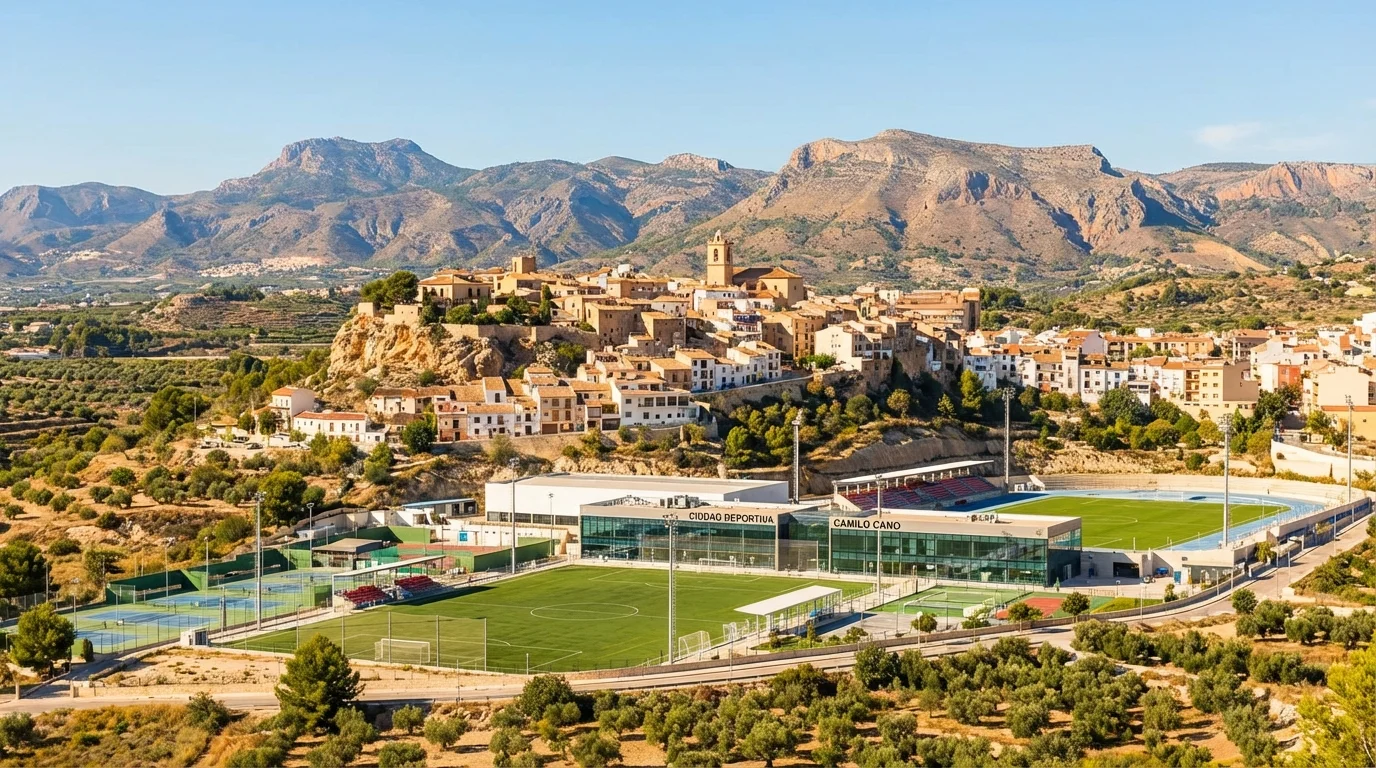
La Nucía is 10 kilometres inland and costs 30–40 percent less. You get a larger plot, world-class sports facilities (Ciudad Deportiva Camilo Cano), and mountain views. In return you lose the coast, the charm, and the cultural life. La Nucía is the smart choice if budget is the priority. Altea is the choice if you are unwilling to compromise on atmosphere.
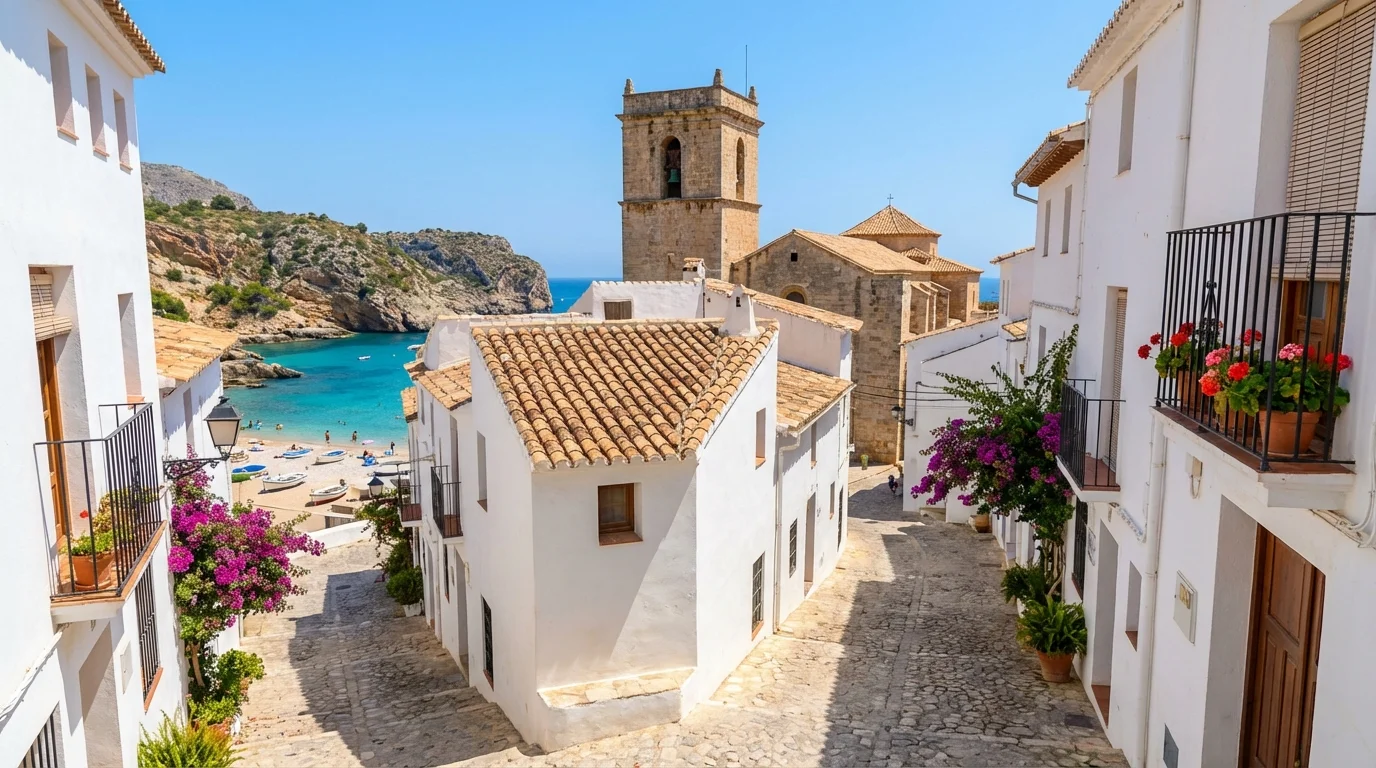
Benissa offers similar medieval charm in its pueblo section, with lower prices (2,200–3,100 euros per square metre). Benissa's coast has hidden coves with crystal-clear water. Altea wins on restaurant offering, university life, and public transport. Benissa wins on peace, authenticity, and lower prices.
Properties
Explore available properties in altea
Contact
Get in touch and we'll guide you forward — whether you're just starting out or ready to buy.
Contact usLast updated: April 2026. Prices and regulations may change — contact us for current information.
Decision support
Alicante-Elche flygplats ligger cirka 60 kilometer från Altea. Med bil tar resan 45–50 minuter via AP-7 motorvägen.
Från Sverige flyger SAS, Norwegian och Ryanair direkt till Alicante på 3,5–4 timmar. Alternativt kan du flyga till Valencia flygplats, som ligger cirka 130 kilometer bort.
Ja, Altea tillhör de dyrare orterna på norra Costa Blanca. Genomsnittspriset ligger på 3 000–4 200 euro per kvadratmeter, jämfört med cirka 2 200 euro i La Nucía och 2 600 euro i Alfaz del Pi.
Du betalar en premie för den unika gamla stan, kustläget och den konstnärliga atmosfären. Vill du bo billigare nära Altea är La Nucía eller Alfaz del Pi bättre alternativ.
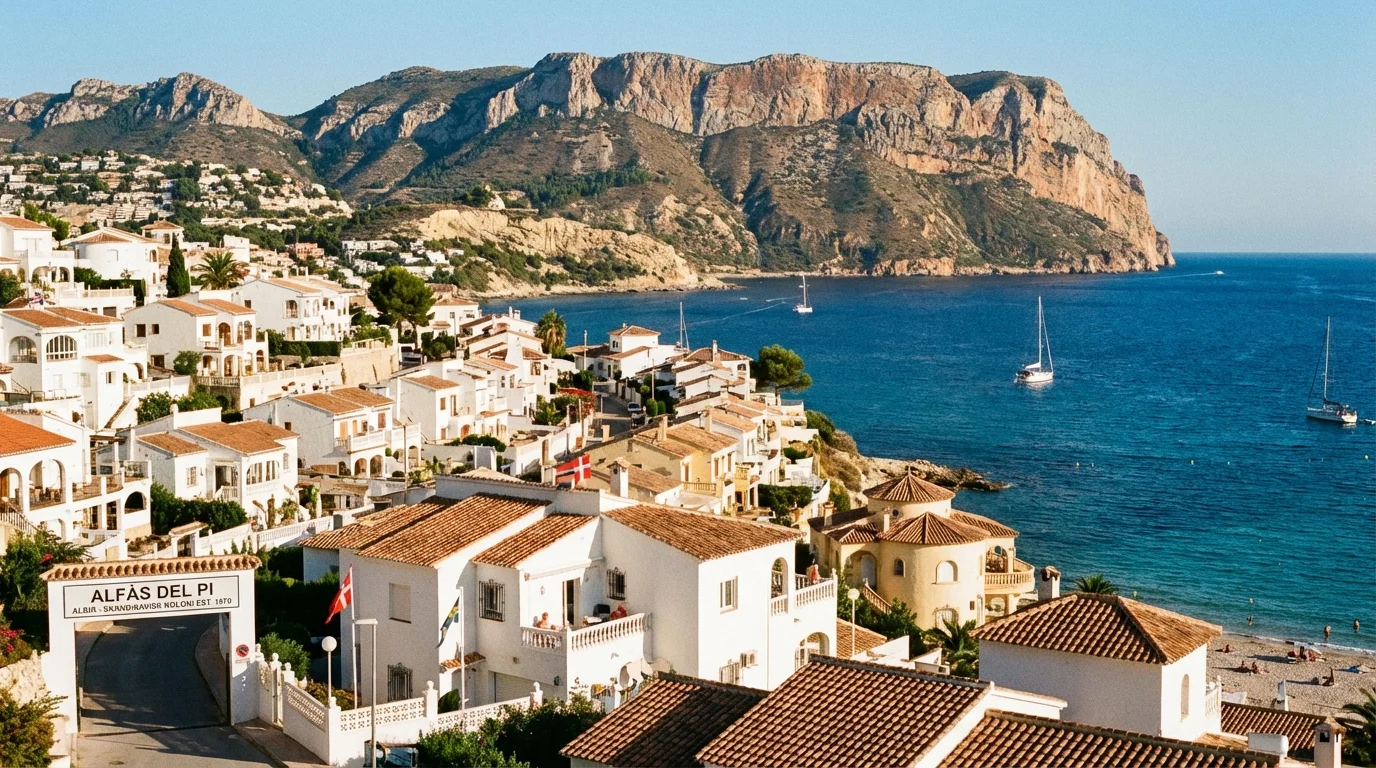
Altea har en liten men etablerad skandinavisk grupp, främst norrmän och svenskar. Den stora skandinaviska gemenskapen finns i grannkommunen Alfaz del Pi med Den Norske Skole Costa Blanca och norska föreningar.
Från Altea tar det 10 minuter med bil till Alfaz del Pi, så du får tillgång till skandinavisk infrastruktur utan att bo där.
Alteas kust sträcker sig 6 kilometer med både stenstränder och vikar. Playa de la Roda är den centrala stranden med promenadstråk och Blå flagg-status.
L'Olla är lugnare med kristallklart vatten och en liten ö utanför. Cap Negret passar för snorkling med klippbotten och marint liv.
Cap Blanch i söder gränsar till Albir och är bred och lättillgänglig.
Ja, Altea är en levande spansk kommun med nästan 24 000 invånare, skolor, vårdcentral, butiker och restauranger öppna året om. Universitetet Miguel Hernández har sin konsthögskola här, vilket ger studentliv och kulturella evenemang även vintertid.
Medeltemperaturen i januari är 12 grader med sol de flesta dagar.
Sources

Cucarres, Alicante

Nou Espai, Alicante

Serrallonga, Alicante

Gran Sol, Alicante

Racó Del Galeno, Alicante

Gran Sol, Alicante
Local expertise
Complete guide to La Nucia on the northern Costa Blanca: sports facilities, property prices, nature and why Scandinavians love this mountain town near Benidorm.
Complete guide to Alfaz del Pi: Scandinavia's largest community in Spain, property prices, healthcare, and why Norwegians and Swedes choose this area.
Complete guide to Benissa on the Costa Blanca: charming old town, hidden coves, property prices and why this is an alternative to Moraira and Calpe.