

Finance & Law
Tax in Spain – Guide for Swedish Property Owners 2026
Complete tax guide for Swedes with property in Spain: IBI, IRNR, wealth tax, capital gains and the double taxation agreement. Updated 2026.
16 min
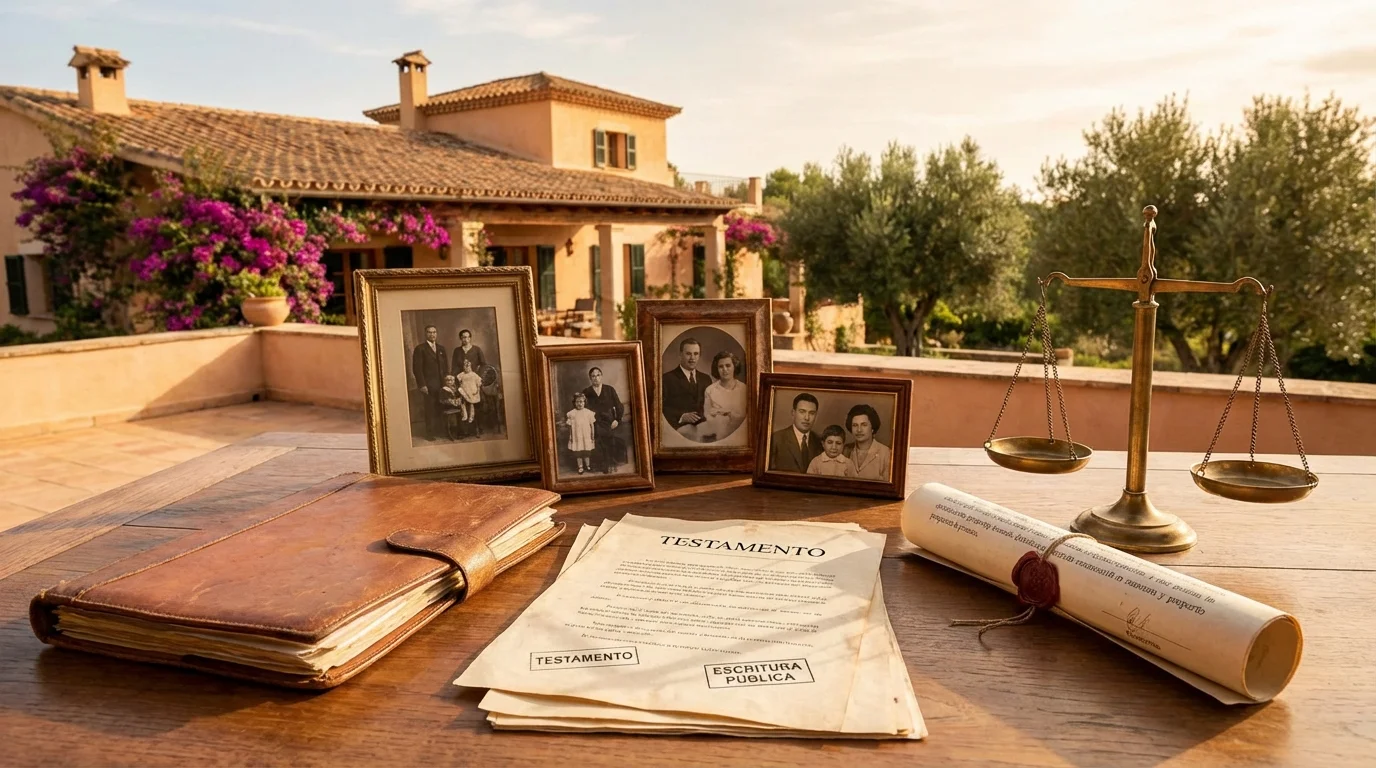
Complete guide to inheritance in Spain: inheritance tax by region, forced heirship, Spanish will, and how to protect your heirs as a Swedish property owner.
Do you own a property in Spain and wonder what will happen to it when you are no longer here? The answer depends on three things: where in Spain the property is located, whether you have a Spanish will, and which law you have chosen to govern your estate. In the best case your heirs pay zero or close to zero in inheritance tax. In the worst case they can face a tax bill of hundreds of thousands of kronor — plus a bureaucratic nightmare that drags on for over a year.
Most regions where Swedes buy property — Andalusia, Valencia, Murcia, and Madrid — have in practice eliminated inheritance tax for close family through reductions of up to 99%. But the tax benefit is not automatic. You must declare the inheritance within six months, have the right documentation, and ideally have drawn up a Spanish will in advance.
This guide explains everything you need to know: how inheritance tax works, what it costs by region, how forced heirship rules (legítima) affect your freedom to make a will, and what concrete steps you should take to protect your heirs. We do not give legal advice — inheritance rules are complex and your situation may require individual assessment by a qualified lawyer.
Spain's inheritance tax — Impuesto sobre Sucesiones y Donaciones (ISD) — is a tax paid by the heir, not the estate. This differs from many other countries where the estate is taxed before assets are distributed. In Spain it is therefore each individual recipient who declares and pays their share.
Inheritance tax has two levels: a national basic structure set by the Spanish state and regional rules determined by each autonomous community (comunidad autónoma). Regions have the right to introduce their own deductions, reductions, and tax rates — and the differences are enormous. An inheritance worth 500,000 euros can cost nothing in inheritance tax in Andalusia but tens of thousands of euros in Catalonia.
You are liable for Spanish inheritance tax if:
As a Swede who owns a holiday home on the Costa Blanca without being registered in Spain, the first point applies: your heirs pay Spanish inheritance tax on the Spanish property.
The calculation is done in four steps:
Note
Deadline: The inheritance tax must be declared and paid within six months of death. You can apply for a further six-month extension, but the application must be submitted within the first five months. If you miss the deadline automatic penalties of 5–20% plus late payment interest are added.
The national tax scale is progressive with rates from 7.65% to 34%. The scale works like a staircase — different portions of the inheritance are taxed at different percentages:
National inheritance tax — brackets (reference)
0 – 7,993 €
7.65% marginal rate
Accumulated tax on previous bracket: 0 €.
7,993 – 31,956 €
8.50–10.20% marginal rate
Accumulated to previous bracket: 611 €.
31,956 – 79,881 €
11.05–15.30% marginal rate
Accumulated: 2,852 €.
79,881 – 159,635 €
16.15–18.70% marginal rate
Accumulated: 9,166 €.
159,635 – 239,389 €
21.25% marginal rate
Accumulated: 23,063 €.
239,389 – 398,778 €
25.50% marginal rate
Accumulated: 40,011 €.
398,778 – 797,555 €
29.75% marginal rate
Accumulated: 80,655 €.
Over 797,555 €
34.00% marginal rate
Accumulated on previous brackets: 199,291 €.
Before the tax is calculated, a personal basic allowance is deducted depending on your relationship to the deceased:
The calculated tax is then multiplied by a coefficient depending on the heir's existing wealth and family group:
Multipliers based on the heir's wealth
Under 402,678 €
Groups I–II: 1.0000
Group III: 1.5882 · Group IV: 2.0000.
402,678 – 2,007,380 €
Groups I–II: 1.0500
Group III: 1.6676 · Group IV: 2.1000.
2,007,380 – 4,020,771 €
Groups I–II: 1.1000
Group III: 1.7471 · Group IV: 2.2000.
Over 4,020,771 €
Groups I–II: 1.2000
Group III: 1.9059 · Group IV: 2.4000.
In practice this means that an heir without large personal wealth who belongs to group I or II (close family) is not affected by any uplift. An heir in group IV with large wealth can however see the final tax more than double.
But — and it is a big but — these national figures are only the starting point. The regional rules are what really determine what you pay.
This is where it gets really interesting for Swedish property owners. Spain's 17 autonomous regions each have their own inheritance tax legislation, and the differences are dramatic. Choose the right region and inheritance tax can in practice be zero for your children and spouse.
Regional differences (brief)
Up to 99% + full exemption
Full exemption of 1,000,000 € per heir in groups I–II. In practice zero for most inheritances.
99% + full exemption
Since May 2023: 99% reduction + basic allowance of 100,000 € for children, spouse, parents.
99% reduction
One of the first regions with a very generous reduction for close family.
99% reduction
In practice zero inheritance tax for close family in many cases.
Limited bonus system
Approximately 100,000 € reduction per heir — among the highest actual taxes in Spain.
Andalusia offers a full exemption of 1,000,000 euros per heir in groups I and II. If you inherit a property worth less than one million euros you pay no inheritance tax at all. If the value exceeds one million euros a 99% reduction on the remaining tax applies. For the vast majority of Swedes with a holiday home on the Costa del Sol this means zero inheritance tax.
Since May 2023 the Valencia region grants a 99% reduction for heirs in groups I and II, plus a basic allowance of 100,000 euros. This is a dramatic change — previously Valencia was one of the most expensive regions for inheritance. New from June 2026: siblings, aunts/uncles, and nieces/nephews (group III) receive a 25% reduction, rising to 50% the following year.
Murcia introduced a 99% reduction as early as 2018 and was one of the first regions to effectively abolish inheritance tax for close family. The region is popular among Scandinavians — and the generous inheritance tax is one of the reasons.
Madrid has long had a 99% reduction on inheritance tax for groups I and II. This applies to both inheritances and gifts. If you own property in the Madrid region, your children and spouse pay essentially nothing.
Catalonia stands out negatively. The reduction for group II is limited to 100,000 euros per heir, with additional deductions based on age for group I (an additional 12,000 euros per year under 21). This means a property worth 300,000 euros can generate a considerable tax bill. If you own property in Catalonia, inheritance planning is especially important.
Tip
Tip: Which region's rules apply depends on where the property is located, not where the heir lives. If you own an apartment in Torrevieja (Valencia region), Valencia's rules apply — even if you and your heirs live in Stockholm.
This is where Spanish and Swedish succession law clash. Sweden has essentially full freedom to make a will — you can bequeath your assets to whomever you choose (except that children can demand their reserved share, laglotten). Spanish law is considerably more restrictive.
Under Spanish succession law, the estate is divided into three equal parts:
This means two thirds of your estate are reserved for your children and grandchildren under Spanish law. A spouse has the right to the use and enjoyment (usufructo) of one third — but not full ownership.
If you do not actively do anything, these rules apply to your Spanish property. This can mean:
Note
Important about cohabitation: Cohabiting partners have no statutory inheritance rights at all under Spanish law — neither to the estate nor to the right of use. If you are not married and want your partner to inherit your Spanish property, a will with a choice of law clause is absolutely necessary.
Yes. The short answer is that all Swedish property owners in Spain should draw up a Spanish will (testamento). Here is why:
If you die without a Spanish will, your heirs must:
The entire process can take 6–12 months and cost 3,000–8,000 euros in lawyer and notary fees — in addition to any inheritance tax. In the meantime the property cannot be sold, renovated, or rented out.
With a will drawn up before a Spanish notary:
The cost of drawing up the will? Normally 100–200 euros at the notary. It is one of the cheapest and most effective steps you can take to protect your heirs.
A Spanish will for a Swedish property owner should at minimum include:
Tip
Tip: Have a Spanish lawyer with experience of international successions draw up the will. The notary signs it, but it is the lawyer who ensures all legal aspects are covered — including choice of law, forced heirship exemptions, and coordination with your Swedish will. The lawyer's fee is normally 300–600 euros.
Properties
Explore available properties in costa-blanca
Browse current homes in the area and compare locations, price levels and property types at your own pace.
EU Regulation 650/2012 — informally known as Brussels IV — is the most important legal tool for you as a Swede with property in Spain. The regulation came into force in 2015 and applies in all EU countries except Denmark and Ireland.
Without an active choice, the law of the country where the deceased had their habitual residence at the time of death is applied. If you live in Sweden, Swedish succession law applies. If you live in Spain, Spanish succession law applies — including the forced heirship rules.
Article 22 of the regulation gives you the right to choose the law of your country of citizenship as the applicable succession law in your will. As a Swedish citizen you can write that Swedish law shall apply to your entire estate — regardless of where the assets are located.
Why is this important? Swedish succession law gives adult children no unconditional right to inheritance (the reserved share only applies if the children actively claim it, and it is half of the inheritance share). Moreover, a spouse inherits before joint children under Swedish law. This gives you considerably more flexibility than Spanish law.
Include a formulation similar to this in your Spanish will:
"In accordance with Article 22 of EU Regulation 650/2012, I choose Swedish law, as the law of the country of which I am a citizen, to govern the succession of my entire estate."
The formulation should appear in both Swedish and Spanish in the will. Let your lawyer adapt the exact wording.
Sweden abolished inheritance tax entirely on 1 January 2005. This means you pay no inheritance tax in Sweden, regardless of what you inherit or from where.
But Spain retains its inheritance tax. This means your heirs pay Spanish inheritance tax on the Spanish property — and there is no Swedish inheritance tax to be doubly taxed against.
Sweden and Spain have a specific double taxation agreement for inheritances and gifts — one of only three such agreements Spain has entered into (the others are with France and Greece). The agreement regulates which assets are taxed where:
In practice this means: your Spanish property is always taxed in Spain. Since Sweden has no inheritance tax, there is no double taxation on the property. However, if the deceased had assets in both countries, a lawyer with knowledge of the agreement should review the situation.
Even if inheritance tax is often minimal thanks to regional reductions, your heirs should be aware that they take over the property's tax cost base. If they later sell the property, capital gains tax (19% for EU citizens) can be significant — calculated on the difference between the original purchase value and the sale price.
In addition to inheritance tax, there is a municipal tax that many people forget: plusvalía municipal (Impuesto sobre el Incremento de Valor de los Terrenos de Naturaleza Urbana). The tax is based on the increase in land value since the property last changed hands and is paid by the person receiving the property — in an inheritance, therefore, by the heir.
Since the 2022 reforms you can choose between two calculation methods and use the one that gives the lowest amount:
The amount varies greatly depending on the municipality and how long the property has been owned. A typical apartment can generate 500–3,000 euros in plusvalía. The deadline is six months from the date of death — the same as for inheritance tax.
Some municipalities offer reductions for inheritance within the family. In Valencia, close relatives can receive up to a 95% reduction on plusvalía when inheriting a primary residence. Check with your local municipality (Ayuntamiento) which rules apply.
Torrevieja and other municipalities in the Alicante province generally have lower rateable values, which results in lower plusvalía compared with major cities.
Inheritance planning does not have to be complicated. Here are the concrete steps you should take:
The most important step. Book an appointment with a Spanish lawyer experienced in international successions. Include a choice of law clause (Article 22, EU Regulation 650/2012) to choose Swedish succession law. Cost: 300–600 euros including legal advice, 100–200 euros for the notary fee.
Make sure your Swedish and Spanish wills do not contradict each other. The Spanish will should clearly state that it only applies to assets in Spain and does not revoke the Swedish one. Speak to a Swedish lawyer who understands international succession law.
Your heirs need NIE numbers (Número de Identidad de Extranjero) to be able to handle the inheritance, pay tax, and register ownership. It is faster to arrange in advance than in a pressured situation after a death.
Collect and store the following in an accessible place:
If you and your spouse own the property jointly (pro indiviso), the surviving spouse inherits their share automatically — but only if the will says so. Without a will, Spanish forced heirship law can complicate matters. Discuss the ownership structure with your lawyer.
Inheritance legislation changes regularly — Valencia's 99% reduction was introduced as recently as 2023. Regional benefits can be extended or restricted. A regular review with your lawyer ensures your planning is still up to date.
By far the most common and most costly mistake. Without a will your heirs risk months of waiting, thousands of euros in extra costs, and potentially unwanted outcomes under Spanish forced heirship law.
Without a clear choice of law clause in the will, Spanish succession law may apply — with forced heirship and limited testamentary freedom as a result. Many Swedes discover this too late.
Heirs often focus on inheritance tax and miss that plusvalía municipal must also be paid within six months. The tax can amount to several thousand euros.
The internet provides an overview, but succession law in Spain varies by region and is sensitive to details. A lawyer who knows the local rules — and who speaks your language — is an investment, not a cost.
The EU Succession Regulation lets you choose which succession law applies (who inherits what). It does not affect inheritance tax (how much tax is paid). Many mistakenly believe that a choice of Swedish law also eliminates Spanish tax.
The six-month deadline for declaring and paying inheritance tax starts running immediately at the time of death. Gathering the necessary documents — death certificate, declaration of heirs, valuations, NIE applications — takes time. Begin the process immediately.
The Spanish tax authority uses reference values (valor de referencia) as a minimum basis for inheritance tax. If you state a lower value, the authority can adjust it upwards and charge the difference plus a penalty.
Contact
We can connect you with experienced Spanish lawyers who help Scandinavians with wills, inheritance planning, and tax matters. Book a free call — no obligations.
Book free consultationLast updated: April 2026. Inheritance rules and tax rates may change — always consult a qualified lawyer for your personal situation. This guide does not constitute legal advice.
Decision support
Ja. Om du ärver en fastighet i Spanien är du skyldig att betala spansk arvsskatt (Impuesto sobre Sucesiones) oavsett var du bor.
Skatten beräknas utifrån fastighetens värde och din släktrelation till den avlidne. De flesta regioner där svenskar äger bostad — Andalusien, Valencia, Murcia och Madrid — ger nära släktingar (barn, make/maka) reduktioner på 99 %, vilket i praktiken eliminerar skatten för de flesta arv.
Men du måste deklarera arvet inom sex månader efter dödsfallet.
Utan spanskt testamente måste arvingarna gå igenom en mer komplicerad och dyrare process. Ditt svenska testamente gäller tekniskt sett även i Spanien, men det måste översättas, apostilleras och godkännas — en process som kan ta 6-12 månader och kosta tusentals euro extra i advokatarvoden.
Med ett spanskt testamente (testamento) förkortas handläggningstiden avsevärt och kostnaderna minskar. Testamentet kostar normalt 100-200 euro att upprätta hos en spansk notarie.
Inte nödvändigtvis. Spansk lag (legítima) reserverar två tredjedelar av kvarlåtenskapen till barn och andra tvångsarvingar.
Men EU:s arvsförordning 650/2012 (Brussels IV) tillåter dig att i ditt testamente välja svensk lag som tillämplig arvsrätt. Svensk lag har inga tvångsarvsregler för vuxna barn, vilket ger dig full testamentsfrihet.
Skriv in lagvalet tydligt i ditt spanska testamente — utan det tillämpas spansk lag automatiskt.
Sverige avskaffade arvsskatten 2005, så du betalar ingen arvsskatt i Sverige. Dock finns ett dubbelbeskattningsavtal mellan Sverige och Spanien specifikt för arv som reglerar vilka tillgångar som beskattas var.
Fastigheter i Spanien beskattas alltid i Spanien. Övriga tillgångar (bankmedel, värdepapper) kan omfattas av avtalets bestämmelser.
I praktiken innebär det att du som svensk arvinge betalar spansk arvsskatt på den spanska fastigheten — men inte svensk arvsskatt på samma tillgång.
Du har sex månader från dödsfallet att deklarera och betala arvsskatten i Spanien. Du kan ansöka om sex månaders förlängning, men ansökan måste göras inom de första fem månaderna.
Missar du tidsfristen utan förlängning tillkommer dröjsmålstillägg på 5-20 % beroende på förseningen, plus ränta. Anlita en spansk advokat eller gestoría direkt — handläggningstiden för att samla nödvändiga dokument (dödsattest, arvsintyg, taxeringsvärden) äter snabbt upp de sex månaderna.
Sources
Complete tax guide for Swedes with property in Spain: IBI, IRNR, wealth tax, capital gains and the double taxation agreement. Updated 2026.
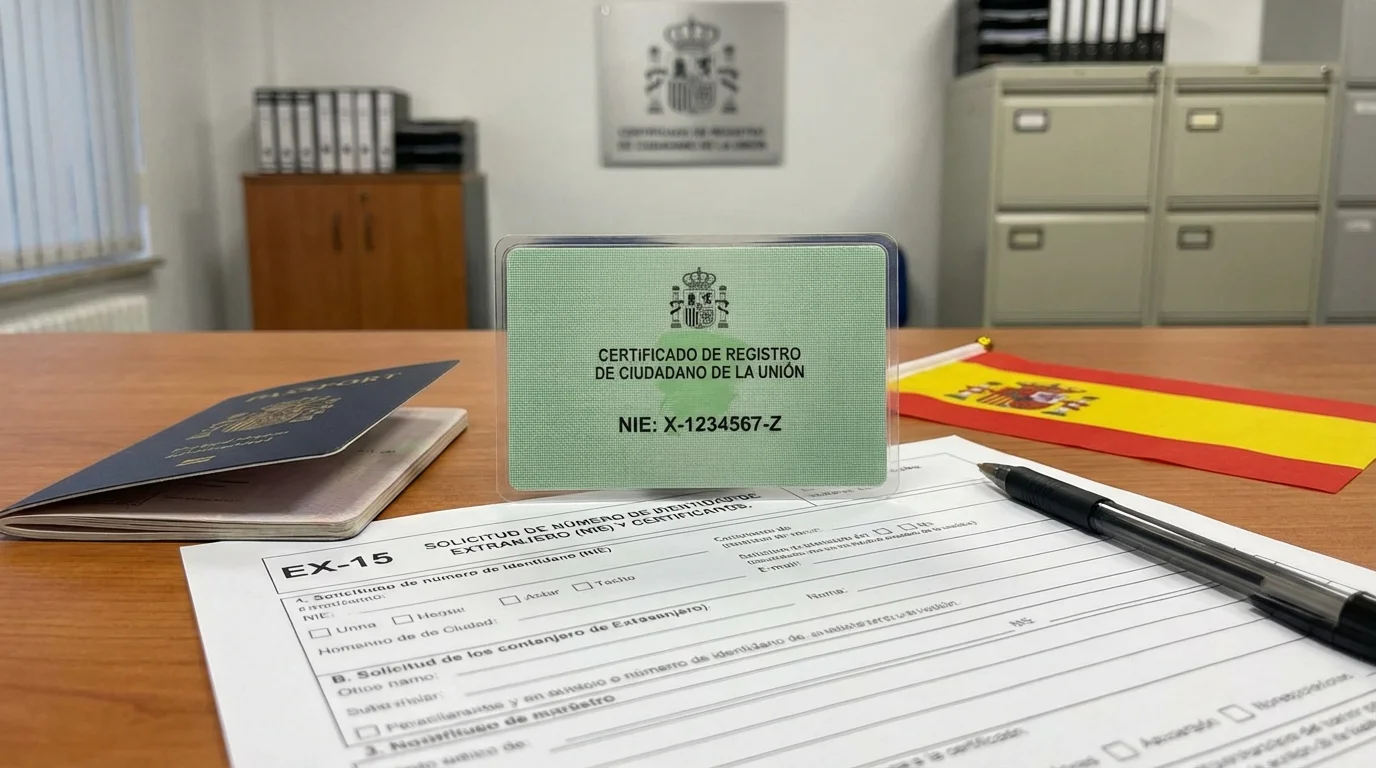
Spanish NIE number 2026: step-by-step guide from Sweden or Spain. EX-15 form, Modelo 790, €9.84 fee, waiting times and NIE/NIF/TIE explained.
Buying a house in Torrevieja: prices by area, purchase process, taxes, NIE and mortgages — practical guide for Swedes who want to live on Costa Blanca 2026.