

Area Guides
Mazarrón – Unspoilt Coast and Affordable Living 2026
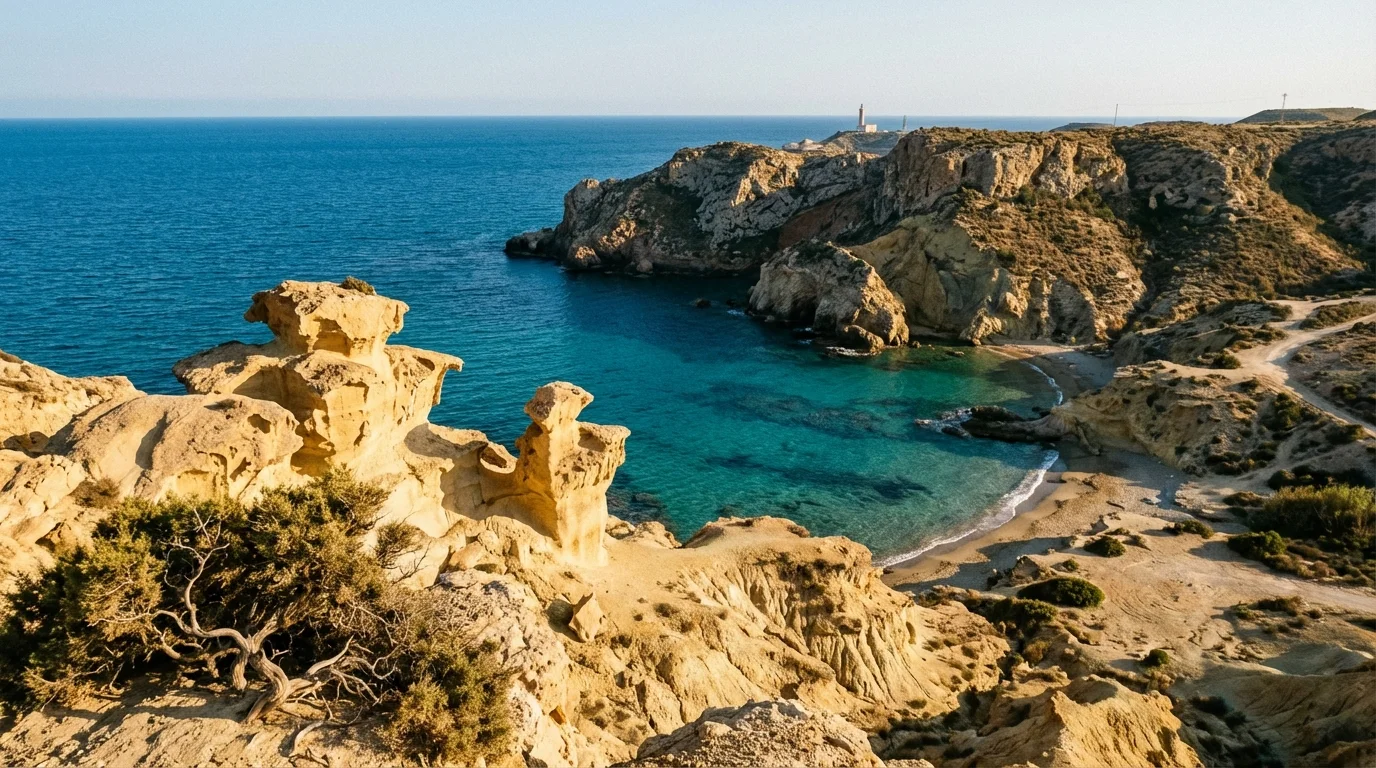
Complete guide to Mazarrón in Murcia: property prices, beaches, climate and why this hidden coastal gem is attracting more and more Swedish buyers.
17 min
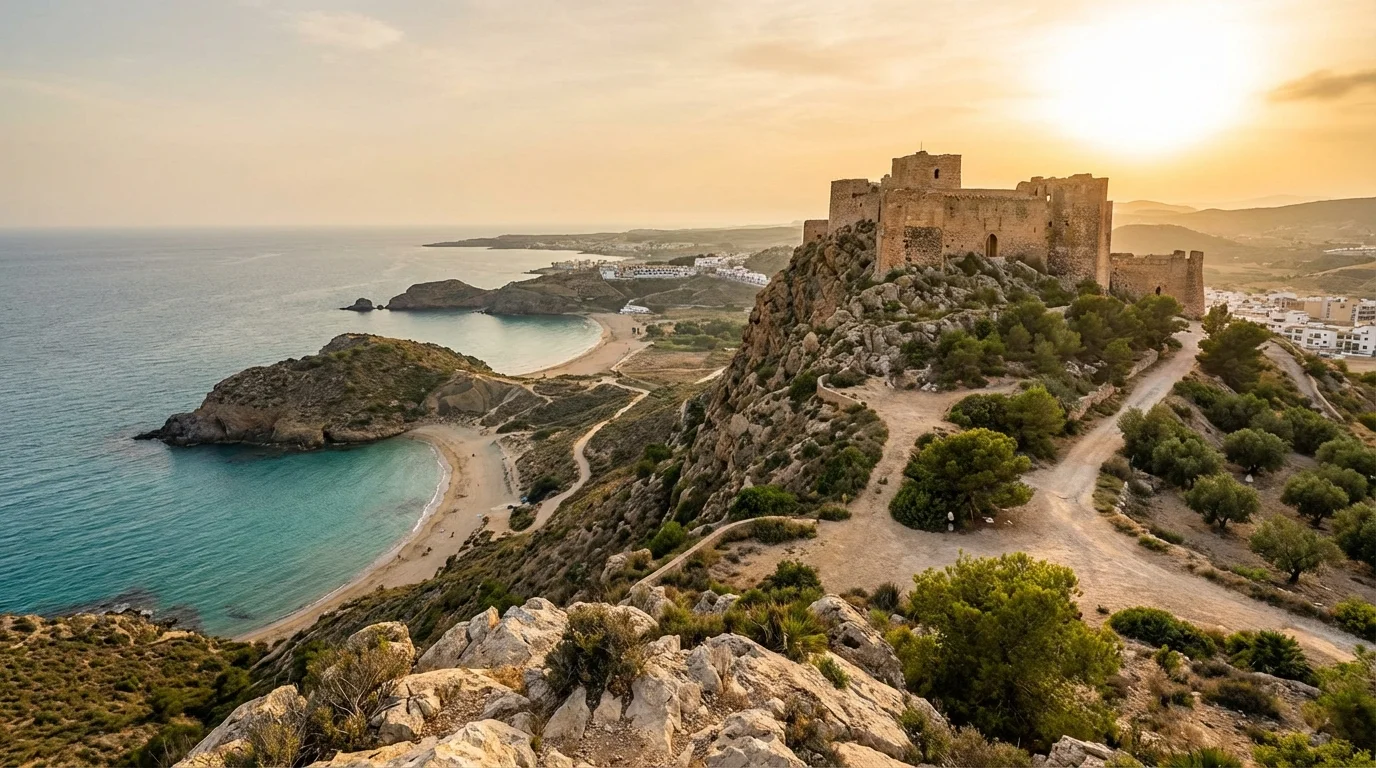
Complete guide to Águilas in Murcia: beaches, property prices, carnival, and why this is Costa Cálida's most affordable coastal town.
Águilas is the southernmost coastal town on the Costa Cálida: 28 kilometres of Mediterranean coast, 35 beaches and coves, property prices from around 1,560 euros per square metre, and over 3,000 hours of sunshine per year. The municipality in the Murcia region has around 36,400 inhabitants and lies at the border with the province of Almería. A two-bedroom apartment in central Águilas costs from 70,000 euros. That is 25 to 35 percent cheaper than comparable coastal locations on the Costa Blanca. The carnival has the status of Fiesta de Interés Turístico Internacional, the same category as Tenerife and Cádiz, and attracts around 100,000 visitors each year to a town that is strikingly quiet for the rest of the year.
This guide is written for those considering buying property in Águilas. I go through what the area offers, what it costs, which beaches are best, and what you should consider, including the drawbacks.
Águilas lies at the southernmost point of the Costa Cálida in the Murcia region, south-eastern Spain. The municipality borders Lorca to the north and the province of Almería to the south. The coastline stretches 28 kilometres with wide sandy beaches, rocky coves, and sheltered bathing lagoons alternating throughout. Behind the coast the terrain is mountainous and dry, with the Sierra del Águila as a backdrop.
The name Águilas means "the eagles", after the eagles that once nested on the cliffs above the harbour. Charles III formally founded the town in 1785, but people have lived here far longer. Off the coast, a Phoenician shipwreck from the 6th century BC has been discovered.
Useful distances:
There is a train station with connections to Lorca and Murcia city via Renfe Cercanías. That is more than most coastal towns on the Costa Cálida can boast. But the journey time to Murcia by train is long — almost 2 hours — so in practice you need a car.
Information
Águilas has one of Spain's oldest railway stations, inaugurated in 1890 as part of the rail line for mining transport. The Embarcadero del Hornillo, the British-built loading pier at Hornillo beach, is an industrial heritage site from the same era and one of the town's most photographed locations.
35 beaches and coves spread along 28 kilometres of coast. That is more per inhabitant than almost any other municipality in Murcia. The range extends from wide town beaches with sun loungers and lifeguards to isolated rocky coves accessible only on foot. Several have blue flags.
Poniente is Águilas' main beach, right in the centre with the promenade behind it. Wide sandy beach, shallow water, lifeguards in summer, showers, and beach service. Restaurants and shops are a stone's throw away. Good for families, but expect crowds in July and August.
Hornillo lies east of the centre with views of the old loading pier. Fine white sand, calm water, and a feeling of being off the tourist trail despite the centre being just a short walk away. Behind the beach is mosaic artist Juan Martínez Casucos' work Rincón del Hornillo.
Calabardina is a small fishing village 10 kilometres north of Águilas town centre. The beach is small but sheltered, with calm water and a handful of fish restaurants at the quay. Divers enjoy the spot for the clear water and the underwater rocks around Cabo Cope.
Cuatro Calas is Águilas' most famous beach area: four coves in a row south of the town, at the border with Almería. The four coves are named La Calarreona, La Higuerica, La Carolina, and Los Cocedores. La Higuerica and La Carolina have blue flags. There is no development here. No beach café. Just sand, rocks, and sea.
Cope lies at the foot of Cabo Cope, a protected coastal mountain rising 245 metres above sea level. The beach is small and stony. The snorkelling is among the best in Murcia. The Cabo Cope and Calnegre area is a regional nature reserve, so development will never be permitted here.
Tip
Cuatro Calas is reached by car via a narrow road from the coastal road. Parking is available, but spaces run out early during high season. Arrive before 10 o'clock in July and August. Bring your own water and a parasol — there are no facilities.
In short: it is cheap. Águilas is one of the most affordable coastal areas in Spain. Prices rose by 26 percent during 2025, but the level is still well below Costa Blanca, Costa del Sol, and the neighbouring town of Vera in Almería.
Current prices (2025/2026):
Apartments:
Townhouses:
Villas:
Price development:
| Year | Price change | Comment |
|---|---|---|
| 2025 | +26.4% | Among Spain's highest price increases |
| 2024 | +14% | Strong international demand |
| 2023 | +9% | Broad rise across the Murcia region |
| Peak Nov 2025 | 1,892 €/sqm | Historic price record |
Note
Budget for 10–13 percent in additional costs on top of the purchase price. In the Murcia region, transfer tax (ITP) is 8 percent for resale properties. On top of this come notary costs, land registration, and legal fees. For new builds, VAT (IVA) at 10 percent applies instead of ITP.
Properties
Explore available properties in aguilas
Águilas has a semi-arid steppe climate (BSk according to Köppen-Geiger). In practice this means: lots of sun, little rain. The mountain ranges to the north protect the coast and create a microclimate that keeps temperatures stable and blocks cold north winds.
Temperatures throughout the year:
Key figures:
Compared with Mazarrón (60 km to the north), the climate is essentially identical. The difference from the Costa Blanca (Torrevieja) is marginal — Águilas has slightly drier air and more sunshine hours during the winter months thanks to its sheltered location.
Most Swedish buyers have never heard of the Águilas carnival, but it has the same official status as the carnivals in Tenerife and Cádiz. In 2015 it was designated Fiesta de Interés Turístico Internacional, only the third carnival in Spain with that classification. The Spanish state therefore regards it as international cultural heritage.
The celebrations last for ten days, usually in February or March depending on the date of Easter. The traditions have been documented since 1886, but the roots go back further.
Highlights:
During carnival week, restaurant turnover increases tenfold. Hotels are fully booked weeks in advance. If you plan to visit during carnival — book accommodation at least two months ahead.
The municipality of Águilas has around 36,400 registered inhabitants. Of these, approximately 12 percent are foreign nationals. Compare that with Torrevieja (40 percent) or Mazarrón (37 percent), and you understand why Águilas feels different. This is a Spanish town that happens to be by the sea, not a tourist destination adapted for northern Europeans.
Population breakdown (estimate):
Short answer: no. The Swedish presence in Águilas is minimal. There is no Swedish association, no Swedish church, and no Scandinavian food shops. The nearest Swedish community of any size is in Torrevieja, 170 km to the north (almost 2 hours by car).
Águilas suits those who want to live in a Spanish society, not an expat bubble. You should have basic Spanish or be willing to learn it. Everyday life functions in Spanish — at the market, at the dentist, at the town hall.
Food in Águilas is about the sea. The fishing harbour is still active, and the restaurants nearest the quay serve fish that was unloaded that same morning.
Caldero is Costa Cálida's answer to paella: rice cooked in a broth of sea fish and ñora pepper, served with aioli on the side. In Águilas, caldero is made with locally caught mújol (mullet) or dorada. A portion costs 12 to 18 euros at most restaurants at the harbour.
Restaurants to try: La Venta del Puerto at the harbour for fish and caldero, Casa Federico in the centre for traditional Murcian food. Águilas also has restaurants with Soles Repsol distinctions, which is unusual for a town of this size.
Advantages:
Disadvantages:
If you are looking for affordable coastal property in south-eastern Spain, these three names come up frequently. Here is how they differ.
Águilas vs. Mazarrón: Mazarrón is 65 km to the north and has a similar profile: undeveloped coast, low prices, Spanish character. But Mazarrón has more international presence (37 percent foreigners vs Águilas' 12 percent), more expat facilities, and a much shorter distance to RMU airport (42 km vs 100 km). Águilas counters with lower prices and its carnival.
Águilas vs. Vera (Almería): Vera is 70 km to the south in the Almería province with Playa de Vera, one of Spain's most well-known beaches. But prices in Vera have shot up. The average is now around 2,850 euros per square metre for the coastal areas, almost double that of Águilas. Vera has more tourist infrastructure but is also more touristy, full stop.
| Factor | Águilas | Mazarrón | Vera (Almería) |
|---|---|---|---|
| Price per sqm | 1,560 € | 1,770 € | 2,850 € (coast) |
| Airport | RMU 100 km | RMU 42 km | LEI 100 km |
| Foreign residents | 12% | 37% | ~20% |
| Beaches | 35, unspoilt | 30, varied | 5–6, touristy |
| Healthcare | Health centre | Health centre | Hospital Huércal-Overa |
| Carnival | International status | Local | None of note |
Properties
Explore available properties in aguilas
Contact
Get in touch and we'll guide you forward — whether you're just starting out or ready to buy.
Contact usLast updated: March 2026. Prices and regulations may change — contact us for current information.
Decision support
Genomsnittspriset per kvadratmeter i Águilas kommun ligger på cirka 1 560 euro för villor och 1 640 euro för lägenheter (2025). En tvårumslägenhet i centrum kostar från omkring 70 000 euro, medan strandnära lägenheter i gott skick ligger på 100 000 till 180 000 euro.
Priserna är bland de lägsta vid hela den spanska Medelhavskusten.
Murcia internationella flygplats (RMU) ligger cirka 100 kilometer från Águilas, ungefär 1 timmes körning. Almería flygplats (LEI) ligger 130 kilometer bort, cirka 1 timme och 20 minuter med bil.
Alicante-Elche flygplats (ALC) ligger 180 kilometer bort, ungefär 1 timme och 45 minuter.
Karnevalen i Águilas är klassad som Fiesta de Interés Turístico Internacional sedan 2015, den tredje karnevalen i Spanien med den statusen efter Santa Cruz de Tenerife och Cádiz. Firandet pågår i tio dagar med parader, äggkastning med konfettifyllda äggskal, valet av La Musa och striden mellan Don Carnal och Doña Cuaresma.
Omkring 100 000 besökare kommer varje år.
I Águilas finns två vårdcentraler: Centro de Salud Águilas Norte och Centro de Salud Águilas Sur, varav den sistnämnda har dygnet-runt-jour. Närmaste sjukhus är Hospital Rafael Méndez i Lorca, cirka 40 minuters bilresa.
För specialistvård finns universitetssjukhuset Virgen de la Arrixaca i Murcia stad, cirka 1 timme och 20 minuter bort.
Ja, Águilas passar pensionärer som söker lugn, sol och låga levnadskostnader i en autentisk spansk stad. Klimatet ger över 3 000 soltimmar per år med milda vintrar kring 16 grader dagtid.
Bostadspriserna är bland Spaniens lägsta vid kusten. Nackdelen är begränsad sjukvård lokalt och liten skandinavisk gemenskap jämfört med exempelvis Torrevieja.
Sources

Collados, Murcia

Collados, Murcia

Collados, Murcia

Playa del Hornillo, Murcia

Isla Del Fraile, Murcia

Isla Del Fraile, Murcia
Local expertise
Complete guide to Mazarrón in Murcia: property prices, beaches, climate and why this hidden coastal gem is attracting more and more Swedish buyers.
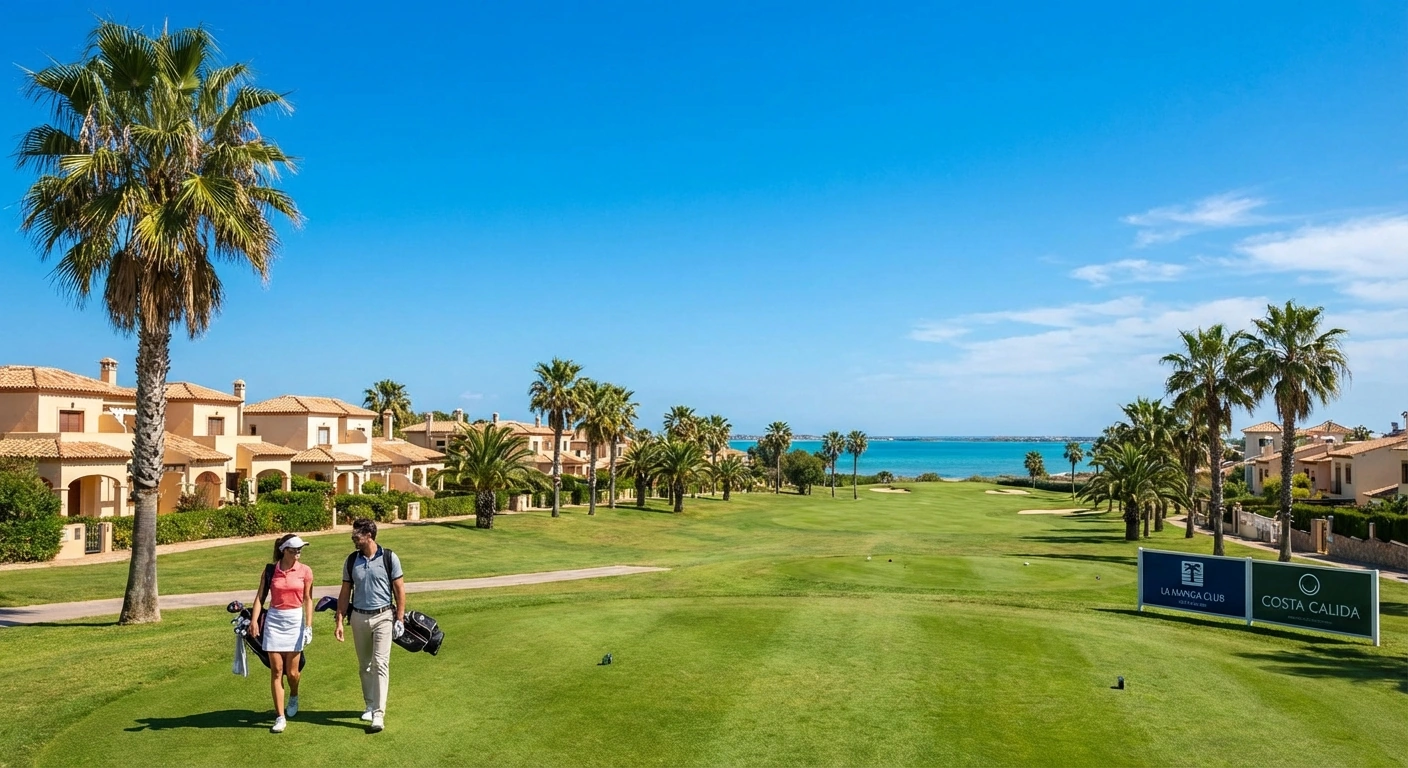
Guide to golf on the Costa Cálida: courses, green fees, areas and why the Murcia coast attracts buyers who want to combine affordable property with year-round golf.
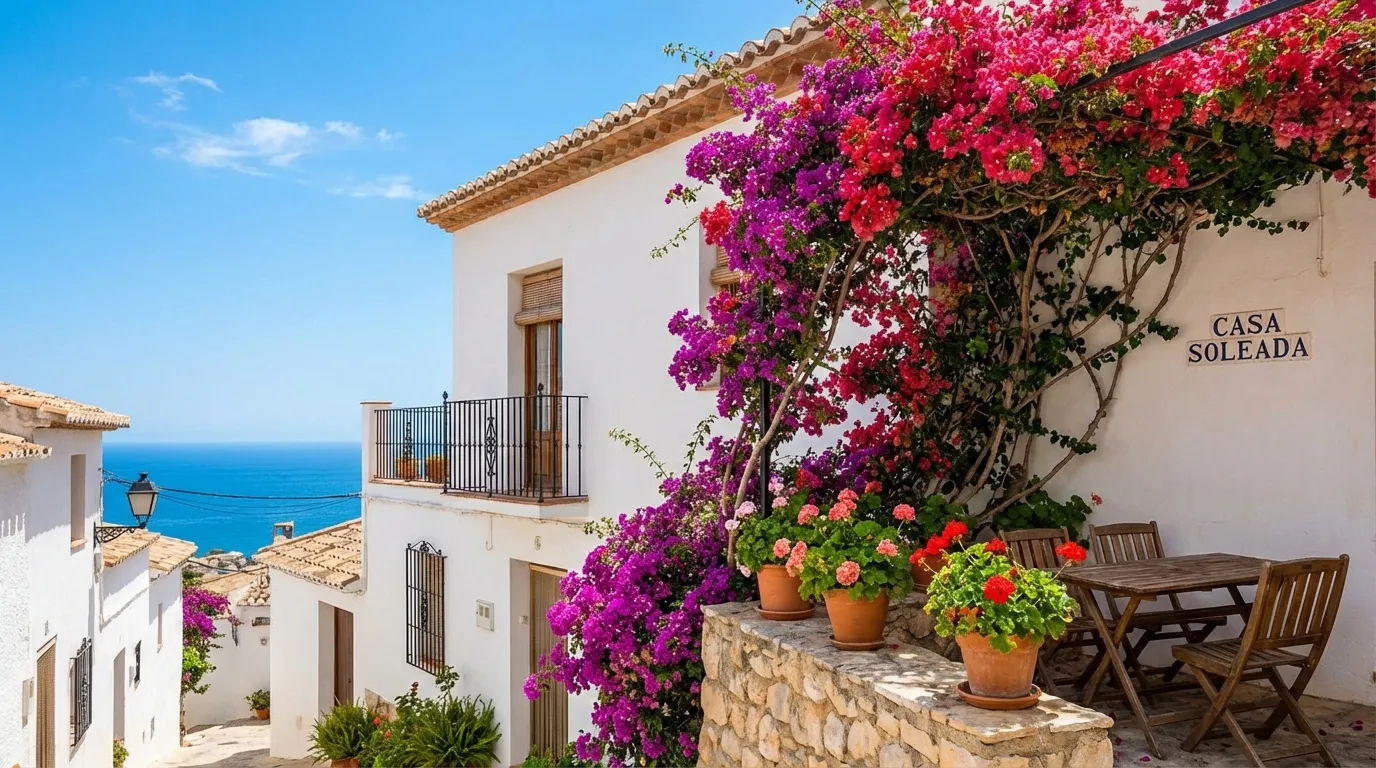
Cheap houses in Spain from 80,000 €: prices on Costa Blanca, Costa Cálida, Torrevieja and Mazarrón — hidden costs, risks and tips for bargains in 2026.