


Area Guides
Torrevieja's beaches – Complete beach guide 2026
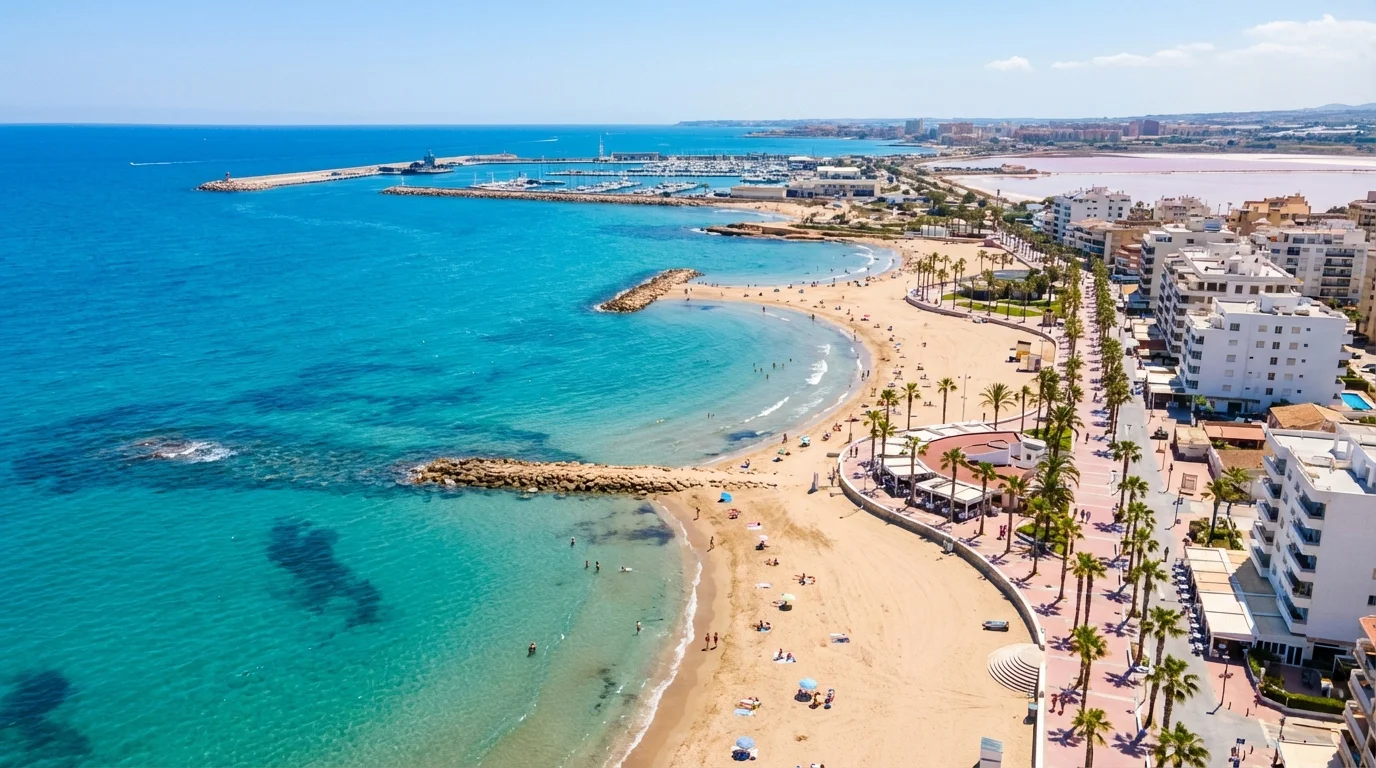
All beaches in Torrevieja: Playa del Cura, La Mata, Los Locos, Cabo Cervera and more. Facilities, Blue Flag status and tips for Swedish visitors.
19 min
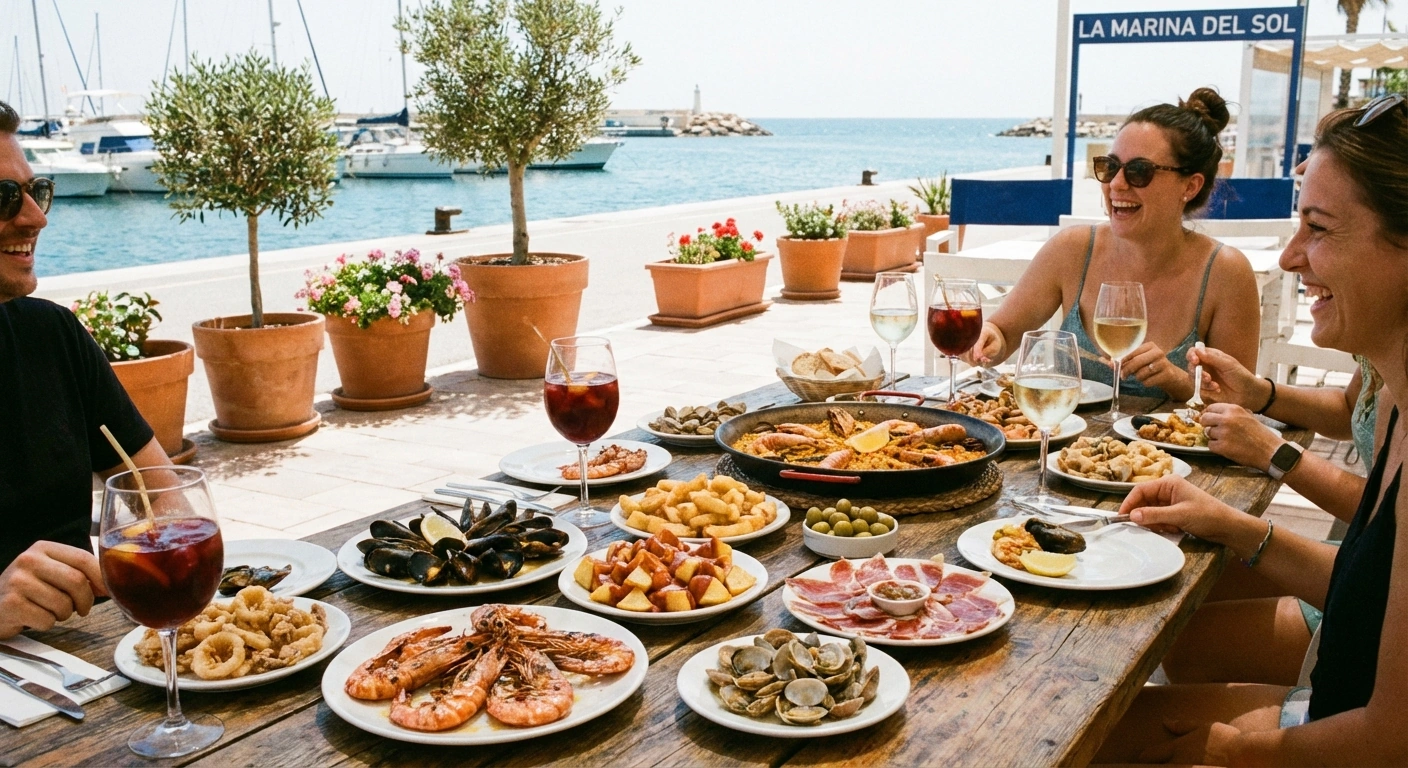
Guide to restaurants in Torrevieja: tapas, fish, set menus, price levels and which areas suit you if you want to live near the city's best dining spots.
If you are looking for restaurants in Torrevieja, the short answer is that the city is stronger on everyday food, fish and long lunches than on formal fine dining. You find good tapas, rice dishes, grilled fish, international neighbourhood restaurants and an unexpectedly large number of places that work even if you live here year-round. This applies particularly around the harbour, Paseo Vistalegre, Playa del Cura and up in La Mata.
What makes Torrevieja interesting is the mix. The city has just over 83,000 inhabitants and approximately 40 percent foreign citizens, which is immediately apparent in the restaurant scene. You can eat classic caldero one day and really good Indian, Italian or sushi the next. Add that Costa Blanca has around 300 to 320 sunny days per year, and you understand why outdoor terraces, late dinners and strolls between bars become such a large part of daily life.
In this guide I go through what you should eat, which areas work best, what it costs, how the season affects quality and which pitfalls are actually worth taking seriously.
The local core is still clearly maritime. Torrevieja's tourism portal highlights caldero as the city's most typical dish, along with arroz a banda, squid, rice with tuna and several older fish and rice dishes from the coast. If you want to understand the food here, start at that end, not with burgers on the seafront promenade.
Caldero is the dish that says most about the place. It is essentially a fish stew where the broth is then used for the rice. That very setup is typical of coastal cities where historically the whole catch was used. Torrevieja.com also highlights pulpo seco, pulpo ensangochao, boquerones en vinagre and sepia a la plancha as classic local flavours. It is food that pairs better with a cold beer or a glass of white wine than with high expectations about presentation.
The good news is that you do not have to hunt for "the best restaurant" to get it right. Often it is enough to choose a place that actually grills its fish, has rice dishes on the board and a dining room where even Spaniards linger over lunch.
Information
Start like this: If you want to eat locally in Torrevieja, look for caldero, arroz a banda, sepia a la plancha, pulpo seco and the day's fish rather than menus that try to do everything at once.
It depends more on the time of day than many think. Torrevieja does not have a single gastronomic centre. The city works more in pockets, where different locations suit different moods.
Around the marina and Paseo Vistalegre you eat best if you want an evening feel, views and a bit more activity. Here fish, tapas and dinner fit better than a quick lunch. The location is strong, especially if you want to combine food with a walk along the harbour. It also helps that the new fish market at the harbour covers 1,775 square metres and was built as part of a larger harbour project. That says something about how clearly the sea still sits in the city's identity.
Playa del Cura and Playa de los Locos work best when you want easy access and plenty of choice. Here there are the most restaurants close together, but also the greatest difference between good and mediocre. It is an area where you can have a really pleasant lunch by the sea, but also a rather tired paella if you walk into the first place you find with a plastic menu in six languages.
Torrevieja centre away from the actual shoreline is often better for those who live here or stay for a long time. There the food is less scenic but often more consistent. You eat not for the view, but because the place seems to be alive even on a Tuesday in February.
In La Mata the pace becomes calmer. Long lunches, rice dishes and fish suit it better than bar-hopping. It is less city and more "we take a beach walk and eat where it looks reasonable". For many buyers who want a calmer everyday life it is a stronger dining location than central Torrevieja, even if the selection is narrower.
If on the other hand you want maximum international range, Orihuela Costa can sometimes win on sheer quantity. Torrevieja is more of a city. Orihuela Costa is more of an international resort coast. I would choose Torrevieja if you want more Spanish everyday life, and Orihuela Costa if you want the greatest chance of finding "a bit of everything" within a short radius.
The price level in Torrevieja is one of the city's real strengths. A simple meal at a cheap restaurant is around 12 euros, the range for a meal is 10 to 15 euros, and a dinner for two at a mid-range restaurant is around 40 euros without drinks. A cappuccino is around 2 euros and a local draught beer around 3 euros.
In practice that means you can eat out fairly often without it feeling like holiday budget every time. My rule of thumb looks like this:
Numbeo's price picture is useful precisely because it captures the everyday reality better than Instagram-friendly exceptions. At the same time, remember that sea views and peak season quickly move you upward. The same dish can cost noticeably more along the shoreline than two blocks inland.
What often pays off best is lunch. Many Spaniards eat their main meal of the day at midday, and set menus are still one of the best shortcuts to decent quality for a reasonable price. In the evening the pricing becomes more tourist-driven, particularly in July and August.
Tip
Best everyday trick: Have your "proper" meal at lunch and keep dinner simpler. In Torrevieja, lunch menus are often better value than evening menus, especially if you live here permanently or spend the winter.
Properties
Explore available properties in torrevieja
If you are considering a property and care about dining life, it is worth being more concrete than "near restaurants". Different parts of Torrevieja give quite different everyday experiences.
Marina, Paseo Vistalegre and the harbour suit you if you want to be able to go out in the evening without planning ahead. Here there is more promenade life, more people moving around and more places where you can have a drink first and decide on dinner afterwards. When it works, it is very pleasant. The downside is that the area also attracts more uneven tourist restaurants.
Playa del Cura and Los Locos suit you if you want proximity to both beach and restaurants. It is easy, social and lively. But it also gets noisier, more crowded and more season-driven. If you love being able to just walk down in shorts for an early dinner this is strong. If you want a calm everyday life in January and August, it can become too much.
Centre inland from the shoreline is perhaps the most underrated option for food-loving residents. You do not get the same postcard feel, but you more often get places that survive on regular customers. For many Swedish buyers this is a better compromise than being in absolute first line to the sea.
La Mata suits you if you prioritise a calmer rhythm, long beach days and food that can be less of a performance. Torrevieja.com states that La Mata's weekly market is held every Wednesday with around 250 stalls. That helps if you like buying local produce and cooking at home several days a week.
Yes, and precisely the mix is a big reason why people stay in Torrevieja longer than they first planned. The local scene is not just Spanish. The large foreign population has created an unusually large supply of British, Italian, Indian, Asian and Northern European food for a city of this size.
That does not mean everything is good. But it does mean that as a resident you do not get stuck in the same type of restaurant week after week. You can eat tapas one day, sushi the next and then go back to fish or rice at the weekend. That is important for buyers who plan to live here for several months at a time. A city that only works as a holiday backdrop becomes quite quickly tiresome.
The tapas part is often best when you keep it simple: marinated anchovies, grilled squid, croquetas, ham, cheese and something warm from the daily board. The more a place tries to be "everything to everyone", the more vigilant you should be. This applies particularly on the most exposed tourist strips.
This is also where Torrevieja's international side becomes useful rather than annoying. If you live permanently it is nice to be able to switch between different cuisines. If you are only on holiday for two weeks it perhaps does not matter so much. For everyday life it does.
A lot. This is perhaps the point buyers underestimate most.
During spring and early autumn Torrevieja is at its most balanced. You get outdoor terraces, good pace and quite a lot of life without every dinner requiring queues or reservations several days in advance. It is often when the city feels best from a food perspective.
During July and August everything shifts. Beachside locations fill up quickly, waiting times increase and kitchens sometimes run too hard. Then the difference becomes clearer between restaurants that are used to pressure and restaurants that mainly try to get as many tables through as possible. Just then it is often smarter to book early, eat a little later than most tourists or go further from the seafront promenade.
In winter the picture is almost reversed. Some seasonal places close completely or shorten the week, but the restaurants that stay open year-round also become easier to judge. If a place has customers in February that says quite a lot. And since Costa Blanca has around 300 to 320 sunny days per year, outdoor terraces and late lunches work surprisingly far into winter.
For you who plan permanent residence this is actually a good sign. Torrevieja is not only strong when everything is full. The city works even when the holiday crowd thins out.
Here Torrevieja differs from a pure holiday resort. You do not need to eat out every day to enjoy the food life. On the contrary the combination is best: a few good lunches out, a couple of reliable dinner spots and the rest at home with local produce.
Torrevieja.com describes the Friday market as one of the largest hubs for small trade in Vega Baja, with up to 700 stalls in an area of around 80,000 to 82,000 square metres. Particularly fruit and vegetables are sold directly from growers in Vega Baja and Murcia. Add the craft market at Paseo Marítimo de la Libertad with around 300 stalls at weekends, and it becomes clear that the city's food life does not only happen in restaurants.
This is especially relevant if you are buying a property. Many appreciate Torrevieja precisely because you can live quite well without everything having to be premium. Good fish counters, markets, simple tapas places and a reasonable lunch cost mean everyday life holds together economically.
If you plan to holiday-let it is also useful. Guests like being able to go out straight away. But owners who live here long-term themselves are often more satisfied if they live somewhere that lets them choose between the market, a food shop and a few reliable neighbourhood spots — not just beach restaurants.
Properties
Explore available properties in la-mata
There are several, and they are worth taking seriously.
The first is the tourist traps. They are mainly found where the location sells the food. If you see large picture menus, staff actively pulling people in from the promenade and a kitchen trying to serve paella, pizza, burger, sushi and schnitzel at the same time, lower your expectations.
The second is queues during peak season. In the most popular locations the waiting time becomes real, and it affects not just the mood but sometimes also the quality. The kitchen manages less. The service becomes more mechanical. This applies particularly around Playa del Cura and the harbour when the city is full.
The third is the variation in menus. A good lunch on Wednesday does not automatically mean a good dinner on Saturday. Some places are strong on the daily menu but weaker when they switch to tourist evenings. Others live almost entirely on their location.
The fourth is that the city's best food is not always where you first look. If you only try restaurants on the first line to the sea you easily get a skewed impression of Torrevieja as more touristy and uneven than it actually is.
Note
Most common mistake: choosing a restaurant by view first and menu second. In Torrevieja it is often better to do the reverse, especially in summer. There are plenty of places selling a good sea view. Good kitchens are more unevenly distributed.
Yes, if you like food in an everyday and realistic way. No, if you are looking for Spain's most ambitious restaurant city.
The best thing about Torrevieja is that the city works for real weeks, not just long weekends. You can eat good fish, decent set menus, classic tapas and at the same time have international alternatives when you tire of the local. The markets are strong, the price level is reasonable and the climate means that food life spills out onto streets and promenades for most of the year.
The worst is that quality varies too much in the most touristy locations. You need to choose a little more carefully than in a city where the top level pulls everything around it up.
For most Swedish buyers the conclusion is still simple: Torrevieja is better than its reputation, especially if you want to live near the sea and still lead a fairly normal food life without a Marbella budget.
Contact
We help you weigh beach location, everyday services and restaurant supply against budget and lifestyle. Book a free call in Swedish if you want to understand which parts of Torrevieja actually suit your everyday life best.
Book a free consultationLast updated: 2026-04-01. Menus, opening hours and price levels change quickly between low and high season, so always check the current situation before choosing a restaurant or property based on the food scene.
Decision support
En enkel lunch eller dagens meny ligger normalt runt 12 till 18 euro i Torrevieja. Numbeo anger att en måltid på billig restaurang ligger runt 12 euro, med ett vanligt spann på 10 till 15 euro.
Strandnära lägen och högsäsong drar ofta upp priset något.
Börja med caldero eller arroz a banda om du vill äta något som verkligen hör hemma i Torrevieja. Stadens turistportal lyfter just caldero, olika risrätter, bläckfisk och pulpo seco som typiska lokala smaker.
Det ger en bättre bild av platsen än en standardpaella för turister.
Torrevieja är oftast bättre om du vill ha mer stadskänsla, fler vardagskrogar och ett mer spanskt inslag. Orihuela Costa är stark på internationell bredd och resortnära utbud.
För permanent boende brukar många föredra Torrevieja. För semesterveckor och maximal variation på liten yta kan Orihuela Costa kännas enklare.
Ja, ofta om du vill äta på populära lägen kring hamnen, Paseo Vistalegre eller Playa del Cura i juli och augusti. Det går fortfarande att spontant äta bra, men väntetiderna blir längre och de bästa tiderna försvinner snabbt.
Särskilt större sällskap bör boka.
Ja, det är faktiskt en av Torreviejas styrkor. Fredagsmarknaden rymmer upp till 700 stånd och har starkt utbud av frukt och grönsaker från Vega Baja och Murcia.
Det gör det lätt att kombinera restaurangliv med rimlig vardagsmat hemma, särskilt om du bor här längre perioder.
Sources

Lago Jardín II, Alicante

Los Balcones, Alicante

San Luis, Alicante

Centro, Alicante

Centro, Alicante

Centro, Alicante
Local expertise
All beaches in Torrevieja: Playa del Cura, La Mata, Los Locos, Cabo Cervera and more. Facilities, Blue Flag status and tips for Swedish visitors.

Laguna Rosa Torrevieja: why the pink lake is pink (Dunaliella salina algae), 2,000 flamingos, 3,700 ha nature park. Visiting tips and swimming rules.
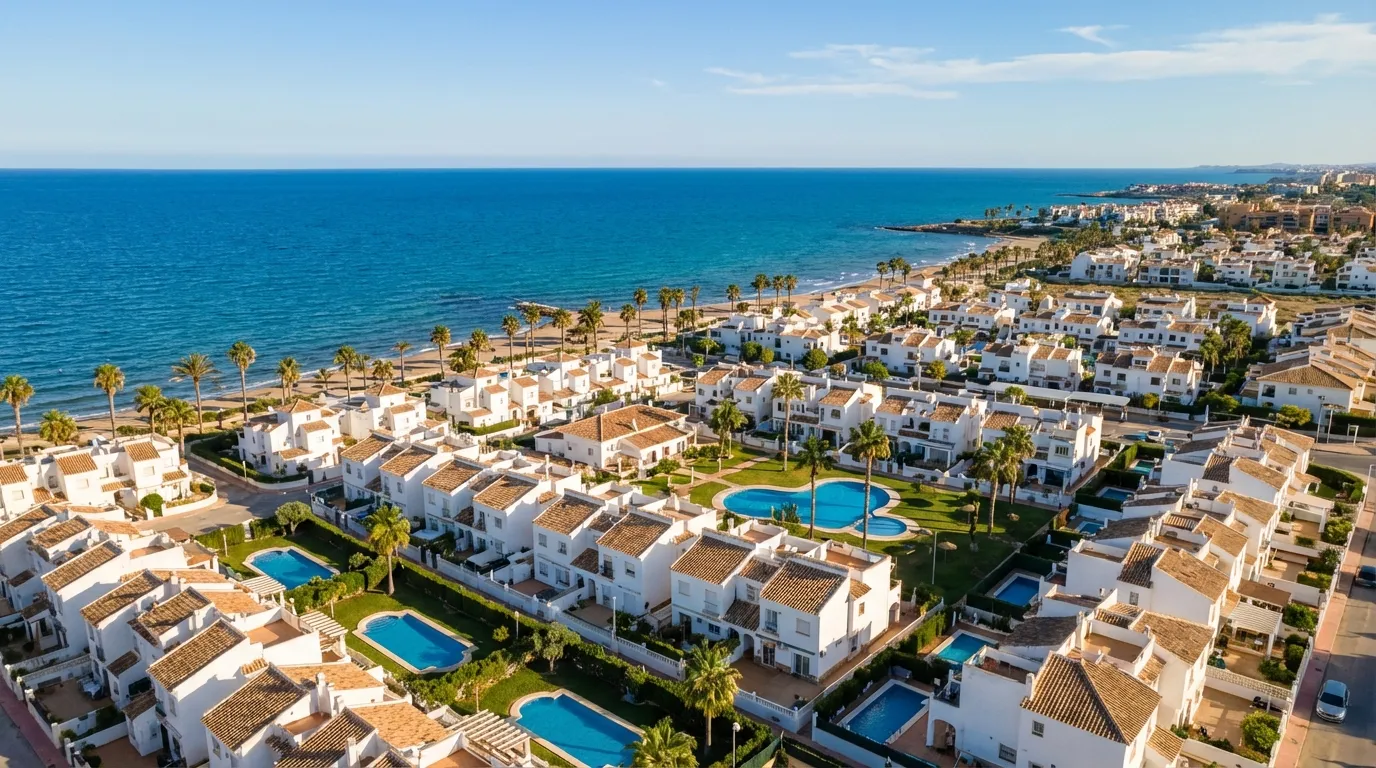
Everything you need to know about Orihuela Costa on Costa Blanca: areas, property prices, climate, beach life and tips for buying property in southern Spain.