


Moving & Living
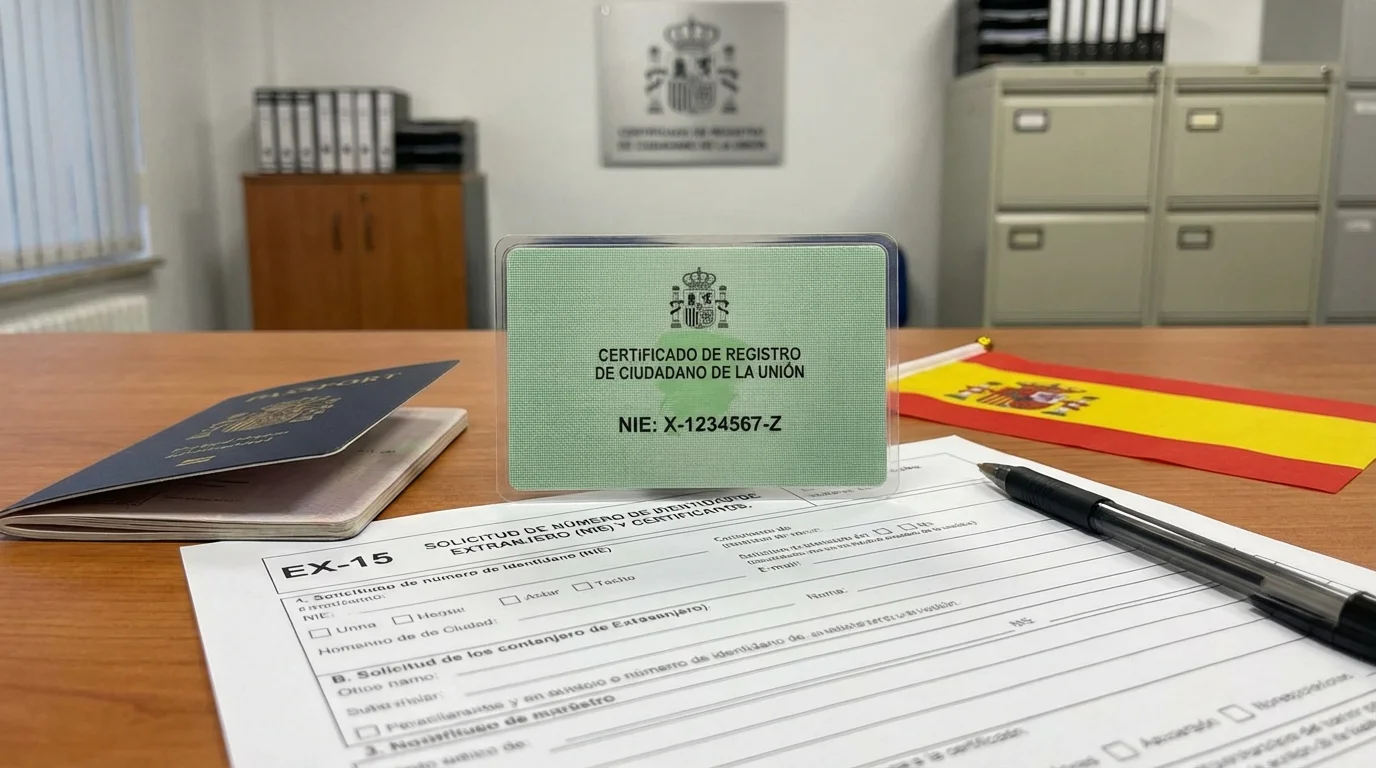
NIE Number in Spain – Complete Guide 2026 (Application, Forms, Waiting Times)
Spanish NIE number 2026: step-by-step guide from Sweden or Spain. EX-15 form, Modelo 790, €9.84 fee, waiting times and NIE/NIF/TIE explained.
15 min
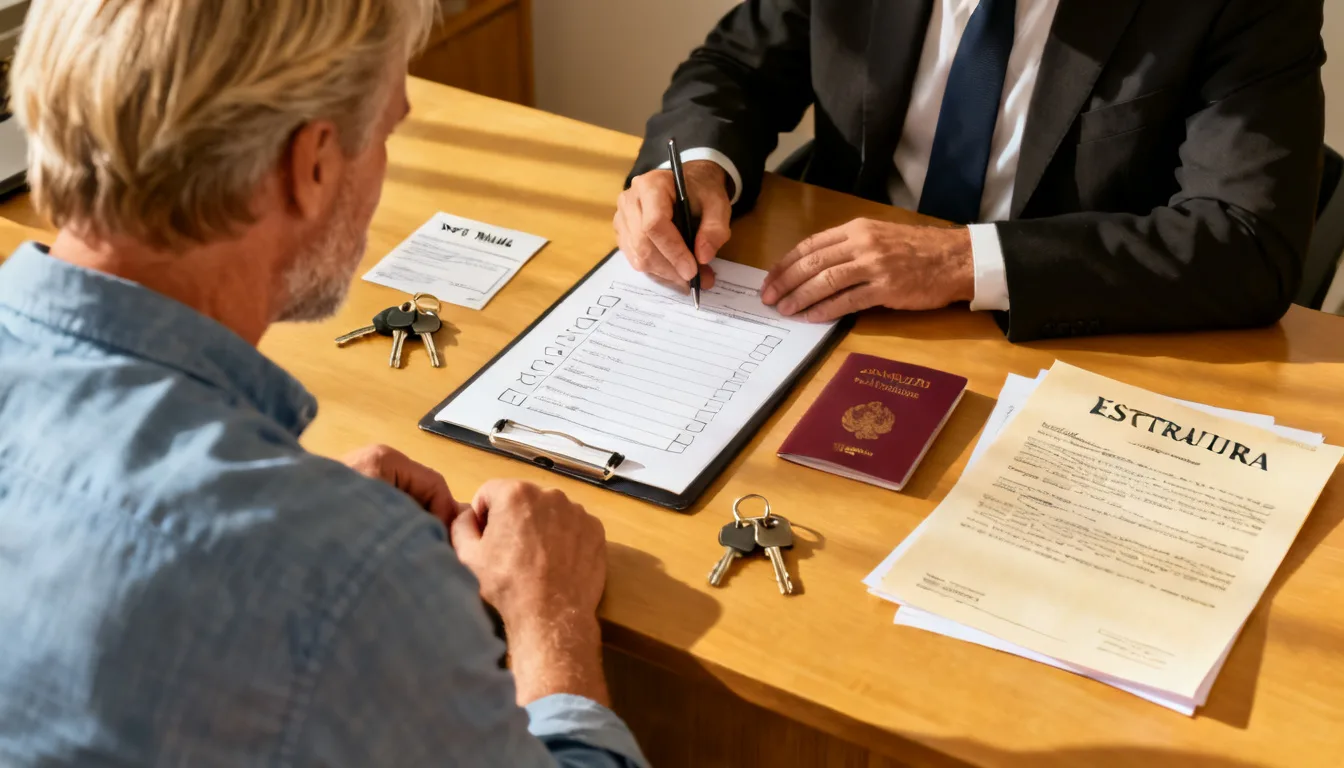
Complete checklist for buying property in Spain in 2026: NIE, budget, mortgage, survey, lawyer, deposit contract, notary, and registration. Every step, cost, and pitfall for international buyers.
Information
Key Takeaways
Two things must be in place before you even start viewing properties in Spain: your NIE number and a realistic budget. Do not skip these — without an NIE the purchase cannot be completed, and without a proper budget the process may stall when purchase costs surface.
The NIE (Número de Identidad de Extranjero) is a personal identification number issued to all foreign nationals with economic, professional, or social interests in Spain. You need it to:
You can apply for an NIE either through the Spanish consulate in Stockholm (processing 2–4 weeks) or directly at a Policía Nacional office in Spain (in some cases same-day). The state fee is €9.84.
Read the full guide: NIE Number in Spain – Complete Guide 2026
The single biggest mistake international buyers make is budgeting only for the property price. The real purchase costs are 10–15 % of the price — and they must be paid in cash, not from the mortgage.
COSTS BEYOND THE PURCHASE PRICE (2026 ESTIMATES)
Transfer tax (ITP), resale
9–10 %
9 % in Valencia from 1 June 2026, 10 % on properties over €1,000,000. 7 % in Andalusia. New builds: 10 % VAT (IVA) + 1.2 % stamp duty (AJD)
Lawyer (abogado)
~1 %
Independent legal review, contract drafting, tax payments
Notary fee
0.3–0.5 %
Set by statutory tariff based on purchase price
Land Registry fee
0.1–0.25 %
Registration of legal ownership
Gestoría (administration)
€200–400
Optional but practical — handles tax payments, registration, utility transfers
Building survey
<0.1 %
Not mandatory but recommended — approx. €300–600 for an apartment, €500–1,000 for a villa
Tip
Example calculation: apartment at €200,000 on the Costa Blanca
As a non-resident in Spain, you can typically borrow up to 60–70 % of the property value. This means:
Spanish banks typically require your total monthly debt payments (including the new mortgage) not to exceed 35–40 % of your net income. The bank conducts a full credit check and requires proof of income, tax returns, and bank statements.
A Swedish-speaking estate agent in Spain can often recommend English-speaking bank contacts familiar with Nordic buyers.
With your budget and NIE sorted, the search begins. In Spain it is standard for multiple agents to market the same property — the market is not split into exclusive mandates like in some countries. Properties are listed on major portals such as Idealista and Kyero, but many international buyers prefer an agent who handles the entire chain in their language.
Here are the most popular areas where international buyers purchase:
POPULAR AREAS FOR INTERNATIONAL BUYERS
Torrevieja–Alicante
Largest community of Swedish buyers. Average €2,100–2,500/m². Wide range of apartments, townhouses, and villas.
Málaga–Marbella
Higher prices but stronger resale market. €2,500–4,000/m² average. Popular for golf and luxury.
Murcia–Cartagena
Lower prices, strong growth. €1,500–2,000/m² average. Lots of new-builds and golf resorts.
In Spain, a pre-purchase survey is not mandatory, and the majority of transactions proceed without one. That does not mean you should skip it — on the contrary. An independent building survey is one of the best insurance policies you can buy.
An independent lawyer — not the seller's or the agent's — should review the following:
A certified surveyor (arquitecto técnico or aparejador) inspects the physical condition of the property:
A survey costs €300–600 for an apartment and €500–1,000 for a villa — a small price compared to the risk of discovering hidden defects after completion.
Note
The critical pitfall: In Spain, sellers have no general duty to disclose defects — buyers are expected to investigate the property themselves (the principle of caveat emptor). Hidden defects (vicios ocultos) are covered by the Civil Code (Article 1484 of the Código Civil), but the burden of proof lies with you as the buyer. An independent survey is your strongest form of evidence.
An abogado (lawyer) specialising in property law is not a luxury — it is standard practice in Spain. The lawyer works exclusively for you, reviews all documents, and handles all official paperwork.
Cost: typically around 1 % of the purchase price, often with a minimum fee of €1,000–1,500.
Tip
Pro tip: NEVER share a lawyer with the seller — it sometimes happens that agents or sellers offer a "shared" lawyer who can act for both parties. A lawyer can only represent one party's interests. Your lawyer should be yours, full stop.
Once you have found the right property and your lawyer has given the green light, the next step is to sign the contrato de arras — the deposit contract.
Spanish law distinguishes three types of arras. The most common in property purchases are arras confirmatorias or arras penitenciales. Make sure your contract explicitly specifies which type applies:
Your lawyer must ALWAYS review the contract before you sign — and confirm it specifies arras penitenciales.
This is completion day — the Spanish equivalent of a contract-signing, but more formal and more definitive.
Note
The notary's role: The Spanish notary (notario) is a state-appointed legal professional — but the notary verifies identities and formalities, NOT that the contract is favourable to you. The notary also does not review the property's legal status. Your legal protection is your own lawyer — not the notary.
The notary verifies that the purchase price matches what has been declared for tax purposes, that the property is correctly identified in the registry, and that payment is properly executed. The notary reports the transaction to Agencia Tributaria (the tax authority).
Yes. With a poder notarial (notarised power of attorney), you can authorise your lawyer or another trusted person to sign the escritura on your behalf. The power of attorney must be executed before a notary — either in Spain or at a Spanish consulate in your home country.
Properties
Explore available properties in Torrevieja
Completion day is not the end of the process. Here is what needs to happen in the following weeks:
The transfer tax must be paid to the regional tax authority within 30 days of the notary date. Your lawyer or gestoría normally handles this — but you are responsible for ensuring it gets done.
After ITP has been paid, the escritura is registered with the Registro de la Propiedad (Land Registry). This is the official step where you become the registered owner. Registration typically takes 1–4 weeks.
Home insurance is not mandatory in Spain in the same way as in some countries, but it is strongly recommended — especially for liability (third-party), fire, water damage, and burglary. The bank requires it if you have a mortgage.
KEY FIGURES FOR BUYING PROPERTY IN SPAIN 2026
Purchase costs
10–15 %
On top of purchase price
ITP Valencia
9 %
From 1 June 2026 (was 10 %)
ITP Andalusia
7 %
Flat rate for resale
Arras (deposit)
10 %
Standard deposit in contract
Mortgage non-resident
60–70 %
Maximum LTV
Process time
6–12 weeks
Arras → completion
Here is the entire purchasing process in a single checklist. Tick off from top to bottom — and you will not miss a thing.
Allow for 10–15 % in purchase costs. The largest item is transfer tax (ITP) at 7–10 % depending on region. On top of that come lawyer fees (~1 %), notary (0.3–0.5 %), Land Registry (0.1–0.25 %), and optional gestoría (€200–400). For new builds, you pay 10 % VAT (IVA) and 1.2 % stamp duty (AJD) instead of ITP.
Yes. Without an NIE you can neither sign the escritura before the notary, open a bank account, nor pay taxes. You can, however, begin the process — make an offer, sign a deposit contract — while your NIE application is pending.
Non-residents can typically borrow up to 60–70 % of the property's market value. The remaining 30–40 % plus the 10–15 % purchase costs must be provided as your own cash deposit.
It is not a legal requirement, but it is strongly recommended — and in practice standard for international buyers. An independent lawyer reviews the property's legal status, drafts contracts, handles tax payments, and arranges registration. Without a lawyer, you bear the entire responsibility for discovering hidden defects, unpaid taxes, or planning issues on your own.
The full process from deposit contract to completion normally takes 6–12 weeks. This includes legal due diligence (1–3 weeks), the deposit contract, preparation of the escritura (4–8 weeks), and the notary appointment itself. Tax payment and registration take a further 1–4 weeks after completion.
The contrato de arras is the Spanish deposit contract. You typically pay 10 % of the purchase price as a deposit. The money acts as security — if you pull out, you lose it; if the seller pulls out, you receive double (if the contract specifies arras penitenciales).
Yes, with a poder notarial (notarised power of attorney), your lawyer or a trusted person can represent you before the notary. The power of attorney must be executed before a notary in Spain or at a Spanish consulate in your home country. Many international buyers still choose to attend — completion day is a significant milestone.
Contact
Get in touch and we'll guide you forward — whether you're just starting out or ready to buy.
Contact usDecision support
Räkna med 10–15 % i kringkostnader. Den största posten är överlåtelseskatten (ITP) på 7–10 % beroende på region.
Därutöver tillkommer advokat (~1 %), notarie (0,3–0,5 %), lagfart (0,1–0,25 %) och eventuell gestoría (200–400 €). Vid nyproduktion betalar du 10 % moms (IVA) och 1,2 % stämpelskatt (AJD) istället för ITP.
Ja. Utan NIE kan du varken skriva under escrituran hos notarien, öppna bankkonto eller betala skatter.
Du kan dock påbörja processen — buda, skriva föravtal — medan din NIE-ansökan är under handläggning.
Som icke-resident kan du vanligtvis låna upp till 60–70 % av fastighetens marknadsvärde. Resterande 30–40 % plus kringkostnaderna på 10–15 % måste du ha som kontantinsats.
Det är inte lagkrav, men det är starkt rekommenderat — och i praktiken standard för utländska köpare. En oberoende advokat granskar fastighetens juridiska status, skriver kontrakt, sköter skatteinbetalning och lagfart.
Utan advokat bär du hela ansvaret själv.
Hela processen från föravtal till tillträde tar normalt 6–12 veckor. Det inkluderar juridisk due diligence (1–3 veckor), föravtalet, förberedelse av escritura (4–8 veckor) och själva notariebesöket.
Contrato de arras är det spanska föravtalet. Du betalar vanligtvis 10 % av köpeskillingen som handpenning.
Pengarna fungerar som säkerhet — ångrar du dig förlorar du dem; ångrar säljaren sig får du tillbaka det dubbla (om avtalet specificerar arras penitenciales).
Ja, med en poder notarial (notariefullmakt) kan din advokat eller en betrodd person företräda dig vid notarien. Fullmakten måste upprättas hos notarie i Spanien eller vid en spansk ambassad i Sverige.
Sources
Spanish NIE number 2026: step-by-step guide from Sweden or Spain. EX-15 form, Modelo 790, €9.84 fee, waiting times and NIE/NIF/TIE explained.
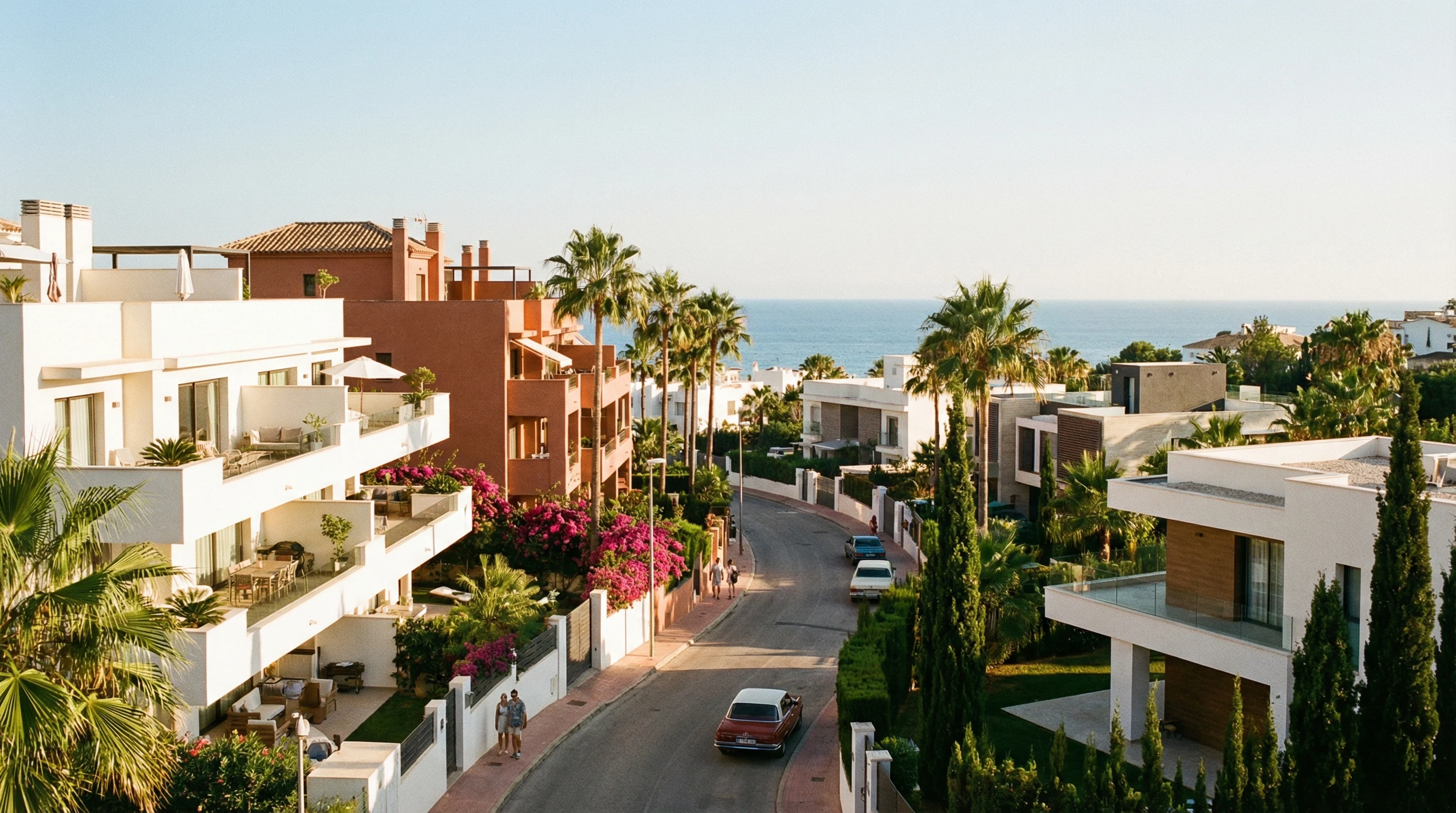
Complete guide to buying a property or apartment in Spain for Swedes: purchase process, taxes, costs, mortgages, regional differences and risks — updated 2026.
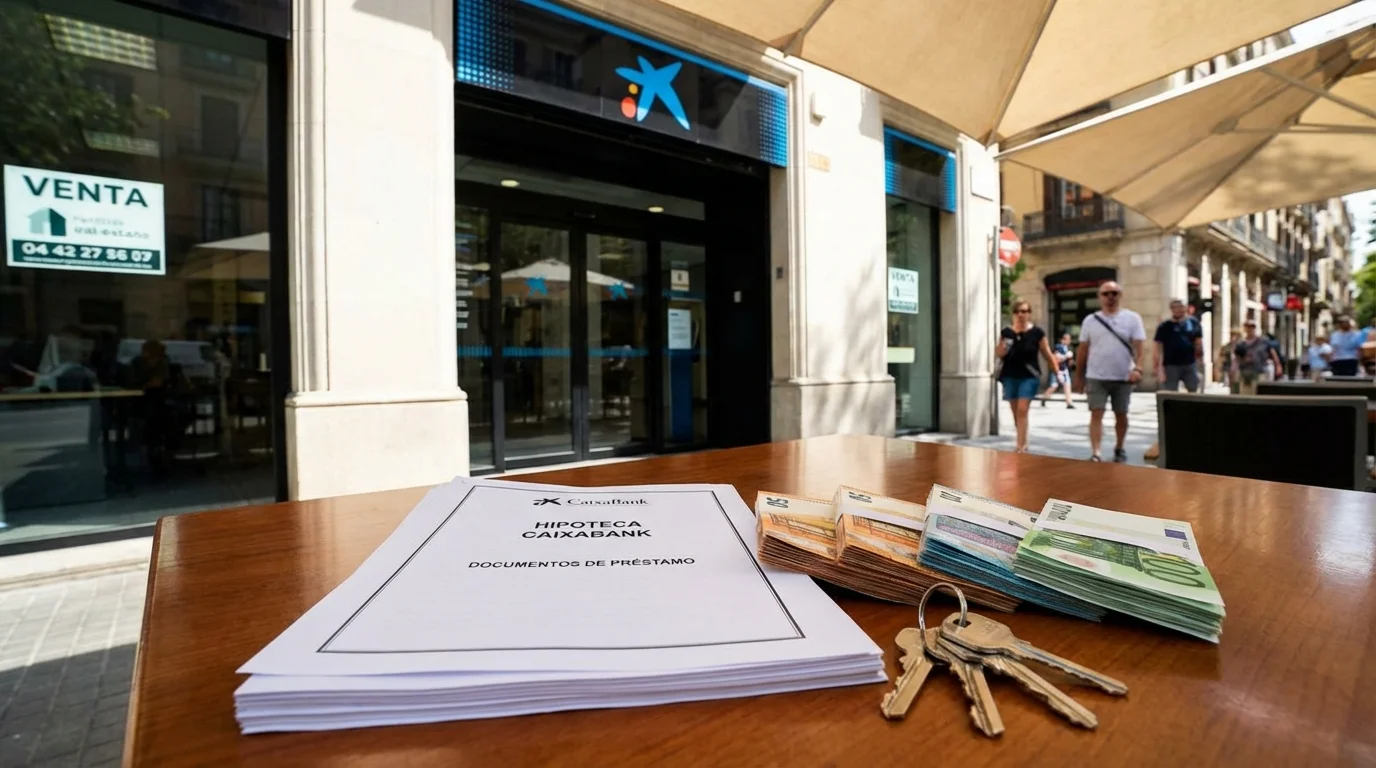
Complete guide to mortgages in Spain: which banks lend to Swedes, current rates, down payment requirements and how the application process works.