
Moving & Living
Renting Out Your Property in Spain – Rules and Tax Effects 2026
How to rent out your property in Spain correctly: tourist licence, long-term rental, tax, deductions, community rules and common mistakes to avoid.
19 min
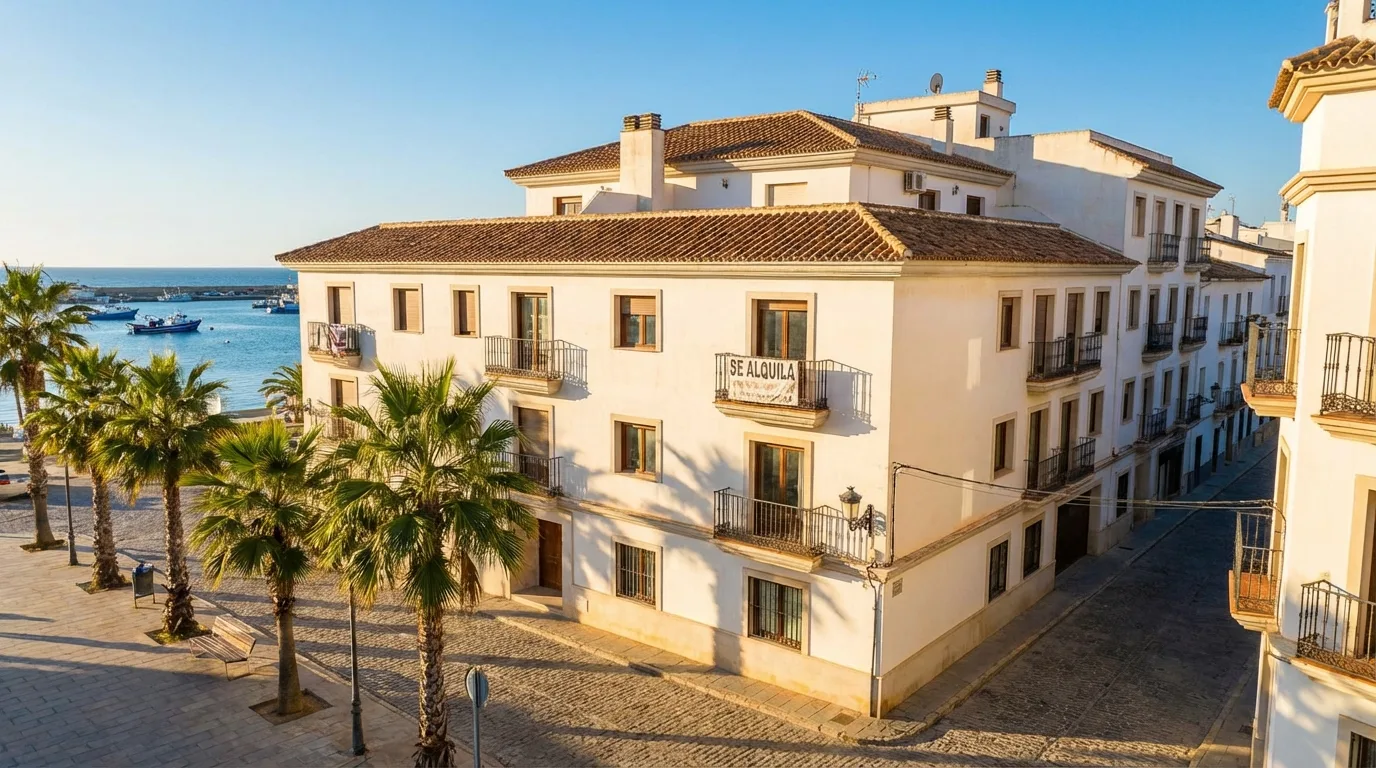
What does the rental market in Spain look like in 2026? Guide to yields, occupancy, regional differences and what Swedish property owners can realistically expect.
The rental market in Spain is still interesting in 2026, but not in a single way. For Swedish owners, the short answer is that 4 to 7 percent gross is still realistic in many coastal locations, while 6 to 8 percent may be achievable in cheaper markets or in very well-managed short-term rentals. That does not mean the money becomes "passive". The difference between gross and net is large, regulations have become stricter and occupancy that looks self-evident in July is far from guaranteed in November.
The most important thing right now is to distinguish between four different types of market. Costa Blanca South often offers the best balance between purchase price, demand and easy day-to-day management. Alicante city offers lower percentage yields but more consistent year-round demand. Costa del Sol can generate strong nightly rates, but you buy in at a high price and become more exposed to seasonality and regulations. Costa Cálida looks best on paper in many calculations, but the market there is thinner and more dependent on getting the right product from the start.
In this overview we go through what demand actually looks like, how the regions differ, when holiday rentals beat long-term rentals and what you as a Swedish owner can realistically expect after costs, tax and vacancy.
Demand is strong, but it comes from different directions depending on where you look. At the national level, construction is still falling short. Spain completes around 100,000 homes per year, while the need according to several market assessments is clearly higher than that. This keeps rents up in major cities and in the coastal markets where there is both tourism and inward migration.
In the province of Alicante, demand is visible in two layers simultaneously. There is the holiday market with direct flights and high summer activity. And there is a broader full-year market from retirees, remote workers, service-sector jobs and local households. Alicante-Elche airport had almost 20 million passengers during 2025. That is a simple data point, but it says a lot about why short-term rentals are not a niche here.
On the Costa del Sol the pressure is even more international. The Málaga area has become broader than just a holiday coast. There are universities, tech companies, language students and a larger group of tenants who actually live and work there year-round. That is an important distinction from classic resort locations where almost all demand comes in waves.
Costa Cálida looks different. There demand is more price-sensitive but also easier to understand. Many buyers and tenants are looking for the same thing: lower entry price, less pressure than on the Costa Blanca and easy access to golf, winter climate and beach. That makes the market attractive if you accept a little less liquidity in exchange for a higher percentage on the spreadsheet.
Information
Brief market overview: Demand is strongest where you get two markets in the same property: tourists in summer and year-round residents the rest of the year. That is why Alicante city and southern Costa Blanca often look more stable than what summer images alone might suggest.
This is where many Swedish buyers confuse the rental market with the investment market. High rent does not automatically mean high yield. What matters is the relationship between purchase price, operating costs, occupancy and how much regulation you have to live with.
Here is a reasonable comparison for the markets most Swedish buyers actually weigh against each other:
Purchase price and gross yield (indicative)
Costa Blanca South
5.5–7% gross
Purchase: from approx. €2,700/m² in Torrevieja to approx. €3,150/m² in Orihuela Costa. Good balance between price and demand.
Alicante city
4.5–6% gross
Approx. €2,535/m². Lower percentage than resort markets, but more consistent full-year base.
Costa del Sol
4–6% gross
Approximately €3,500–4,800/m² at broad municipality levels such as Mijas and Fuengirola. Higher rents but expensive entry.
Costa Cálida
6–8% gross
From approx. €2,140 to €2,962/m² in the Los Alcázares area. Strong percentage but thinner secondary market.
Costa Blanca South remains the most straightforward market for Swedish owners. In Torrevieja the average rental yield was around 6.7 percent during 2025 according to Fotocasa, with studios reaching up to 9.5 percent and two-bedroom apartments around 6.5 percent. That is strong. At the same time one should remember that figures like these often assume the right micro-location and a reasonable purchase price — not just any apartment in the municipality.
Alicante city looks cooler if you only look at the percentage. But the city is also broader. There are students, healthcare workers, civil servants, expats and leisure visitors in the same city. I would therefore rather call Alicante stable than hot. For many owners that is actually better.
Costa del Sol is the market where most expectations tend to go wrong. Nightly rates look attractive. Rents are high. But purchase prices are also much higher than in southern Costa Blanca. Already there, the percentage figure becomes less impressive than many hope.
Costa Cálida is the opposite. There the percentage figure often looks best precisely because the entry is still lower. That does not mean the market is worse. It just means it requires a little more patience if you later want to sell or quickly switch strategy.
Properties
Explore available properties in Costa Blanca
Browse current homes in the area and compare locations, price levels and property types at your own pace.
For Swedish buyers this is often the most important comparison. Not Costa Blanca versus Madrid or Barcelona, but coastal south versus a real city in the same province.
In Torrevieja and Orihuela Costa you are buying primarily simple rental logic. Beach, amenities, airport access and a climate that makes the property usable year-round. Torrevieja had during 2025 summer occupancy of roughly 60 to 75 percent in short-term rentals and winter occupancy of 40 to 50 percent. That is not a full calendar. But it is good enough for many calculations to work, especially when the purchase price is still below Costa del Sol.
Orihuela Costa is slightly more touristic and slightly more dependent on foreign purchasing power. That need not be negative. But it makes the market more sensitive. If the pound or the krona weakens, or if travel and household finances deteriorate in northern Europe, this is felt more quickly there than in a city like Alicante.
Alicante works differently. There you buy less resort and more real city. That means more types of tenants, fewer pure high-season weeks to rely on and less volatility in occupancy. At the same time it also means you rarely get the very highest gross figures.
This is where many Swedish owners need to be honest with themselves. If you want to use the property yourself part of the summer, rent it out for a few weeks and still feel that the deal holds together, then southern Costa Blanca is often simpler. If on the other hand you want to own something that stands firmer even when tourism slows, then Alicante city is often the stronger card despite a lower percentage yield.
The price side reinforces the same conclusion. Torrevieja was at €2,719 per square metre in Q1 2026. Alicante city was around €2,535 per square metre during 2025 but with annual growth of 16.4 percent. Alicante is therefore no longer a "cheap city purchase". But it gives you more full-year market per euro than many holiday resorts do.
Tip
A simple rule of thumb: Choose Costa Blanca South if you prioritise flexibility and want to combine personal use with rental. Choose Alicante city if you prioritise stability, fewer empty weeks and less dependence on the pure holiday season.
It depends on what you mean by "best". Costa del Sol is best at looking self-evident in a calculation with high nightly rates. Costa Cálida is best at looking cheap to enter. Neither is automatically best when you calculate the net.
Costa del Sol has a strong international rental market and a brand that sells itself. Málaga, Fuengirola, Mijas and Estepona have a higher price level than southern Costa Blanca, but also a stronger sense of international premium. The problem is that premium costs. At a broad municipality level, Mijas was around €3,569 per square metre and Fuengirola around €4,798 during 2025. Then rent needs to keep performing for the percentage figure to look good.
Costa Cálida attracts for the opposite reason. The Los Alcázares area was around €2,962 per square metre in August 2025, while cheaper sub-areas were closer to €2,140. That makes a big difference in a rental calculation. You do not need as high a rent to achieve the same percentage yield.
That still does not mean Costa Cálida always wins. The market is smaller. The Swedish buyer base is thinner. And liquidity is not as self-evident if you want to sell quickly. For an owner seeking higher ongoing yield and accepting a little more market risk it may be the right path. For an owner who wants easy resale and maximum recognition, Costa del Sol is often easier.
I would put it this way: Costa del Sol is more forgiving if you buy for lifestyle and want the rental to help bear the cost. Costa Cálida is more interesting if you buy primarily for ongoing yield and are prepared to live with a less mature market.
Properties
Explore available properties in Costa del Sol
Browse current homes in the area and compare locations, price levels and property types at your own pace.
In many listings the answer appears to be yes. In reality the answer is often: "sometimes, but not by as much as you think".
Holiday rental can in good coastal locations generate 30 to 50 percent higher gross income than a long-term contract in the same property. That sounds strong, and it is. But only before you factor in cleaning, key management, wear and tear, platform commissions, empty weeks and the simple reality that someone must solve problems when you yourself are sitting in Sweden.
Long-term rental looks duller on paper. But it is often easier to live with. You get lower operating costs, more consistent cash flow and less seasonal stress. At the same time the LAU regulations give tenants stronger protection. For private landlords contracts are extended in practice up to five years, and up to seven years if the landlord is a company. Since January 2025 the IRAV index is also used for annual increases, which set a cap of around 2.2 percent when it was introduced.
Short-term rental gives more control over the calendar, but also more regulatory risk. In the Valencia region the rules have been tightened noticeably. In Andalusia municipalities have been given greater scope to restrict tourist rentals in high-pressure areas. From 3 April 2025, a community can also stop new tourist rentals in multi-family buildings with a three-fifths majority, and the same majority can decide on up to 20 percent higher community fees.
For Swedish owners the choice therefore rarely becomes ideological. It is practical. Do you want to use the property yourself during the year and have a free calendar? Then short-term is often logical, but only if the licence, community and local management are already resolved. Do you want less friction and can accept lower flexibility? Then long-term rental wins more often than many think.
Note
The big miscalculation: many people calculate holiday rental as if every week were bookable and every guest problem were free. That is precisely where the calculation tends to break down. If you do not have local help in place, high nightly rates are mostly a theoretical comfort.
This is really the core question. Not what is possible in the best case, but what is reasonable when the property needs to work in everyday life.
For a two-bedroom apartment in southern Costa Blanca, purchased at a reasonable level and rented out through a mix of short stays and longer winter periods, I think 5.5 to 7 percent gross is a serious working range. After community fees, IBI, insurance, maintenance, management and tax, many land closer to 3.5 to 5 percent net. As a non-resident you are normally taxed at 19 percent on net income via Modelo 210.
For Alicante city the range is often lower in percentage but more stable in practice. Think rather 4.5 to 6 percent gross and 3 to 4.5 percent net for a well-purchased apartment. You get fewer spectacular summer weeks, but also less need for the calendar to save the whole year.
Costa del Sol often looks strong in holiday calculations but more normal when everything is counted. There 4 to 6 percent gross is still fully respectable. But since the purchase price is higher, it becomes more expensive to be wrong. If you buy too expensive in the wrong micro-location, a strong summer does not help very much.
In Costa Cálida, 6 to 8 percent gross may be possible, especially in simpler properties with low purchase prices. But here you should keep a small addendum in mind: a higher percentage does not always mean a better deal for you specifically. If the property is harder to resell, or if demand is narrower, the extra percentage point is sometimes just payment for higher risk.
Overall, 25 to 40 percent of gross rent tends to disappear in costs and tax before you arrive at a more honest net. That is why I think Swedish owners should stop talking about the best possible nightly rate and start talking about net per year after vacancy.
There are four risks that recur almost every time a Spanish rental calculation turns out worse than planned.
The first is seasonality. Costa Blanca South has a better winter market than many think, but it is still not the same as having a full calendar. Costa del Sol is stronger on international premium demand, but also more expensive to buy into. Costa Cálida is cheaper, but not equally self-evident for every target group.
The second is regulation. If you buy with the short-term rental idea first and read the community protocols later, you are working backwards. The same applies to regional licences. What was easier in 2023 is not necessarily easy in 2026.
The third is operating costs. Cleaning, air conditioning, pool, lift, worn furniture, late check-ins and minor repairs rarely ruin a deal individually. But together they make a big difference. Especially in properties that are used hard during the summer.
The fourth is that many people buy on the wrong basis. They buy because the area feels popular, not because the specific property is rentable. Those are not the same thing. A standard apartment in a prime location can be a better rental property than a flashy home in a mediocre micro-location.
If you want an honest summary it is this: the rental market in Spain can still work very well for Swedish owners. But it is no longer a market where almost anything can be rented out at almost any price. You need to be more precise than that.
Yes, but mainly for those who accept that "good yield" in Spain now means the right property purchased correctly, reasonable occupancy and discipline on costs — not magical percentage figures.
If you want the best combination of price, demand and usability, southern Costa Blanca is still strongest. If you want the most stable full-year logic, Alicante city is better than many investors first think. If you prioritise brand and premium rents, Costa del Sol remains relevant but more price-sensitive. And if you are chasing the highest percentage on paper, Costa Cálida is still hard to ignore, as long as you understand the extra risk.
The realistic goal for Swedish owners is rarely to beat the market. It is to avoid the simple mistakes: buying too expensively, calculating too optimistically and underestimating regulations, seasonality and operating costs.
Contact
We help you compare areas, calculate more realistically on net and understand what actually works for Swedish owners on Costa Blanca, Costa del Sol and Costa Cálida.
Book a free consultationLast updated: 2026-04-01. Rental levels, regulations and yields change continuously. Always confirm licence requirements, community rules and tax arrangements locally before making decisions.
Decision support
Costa Cálida och delar av södra Costa Blanca ger ofta högst bruttoavkastning på pappret, ofta runt 6 till 8 procent i rimliga kalkyler. Costa del Sol ligger oftare lägre i procent eftersom inköpspriserna är högre.
För många svenska ägare är därför Costa Blanca South den mest balanserade marknaden, även om den inte alltid ger högst toppsiffra.
Alicante stad är ofta bättre om du prioriterar jämnare efterfrågan året runt och vill minska beroendet av ren semestersäsong. Costa Blanca South är ofta bättre om du vill kombinera eget bruk med uthyrning och komma in på marknaden till lägre pris.
Det handlar alltså mindre om rätt eller fel, och mer om vilken typ av ägande du faktiskt vill ha.
I bra kustlägen kan turistuthyrning ge ungefär 30 till 50 procent högre bruttointäkt än långtidsuthyrning. Men skillnaden krymper när du räknar in städning, vakans, förvaltning, slitage och plattformsavgifter.
Det är därför många ägare upptäcker att nettot inte blir dramatiskt bättre trots att nattpriset ser mycket högre ut.
Som grov tumregel landar många svenska ägare i spannet 3 till 5 procent netto efter kostnader och skatt, även när bruttosiffran ser ut att ligga på 5,5 till 7 procent. Exakt nivå beror på område, finansiering, communityavgifter, beläggning och hur mycket lokal hjälp du behöver.
Brutto säger därför mindre än många hoppas.
De viktigaste riskerna är regler för turistuthyrning, communitybeslut, säsongsvariation, underskattade driftskostnader och att du köper fel bostad i rätt område. Många kalkyler ser bra ut innan de belastas med städning, tomma veckor, underhåll och skatt.
Det är därför du bör kontrollera regler och netto innan du tittar för mycket på högsta möjliga nattpris.
Sources

Los Balcones, Alicante

Lago Jardín II, Alicante

San Luis, Alicante

San Agustín

Centro, Alicante

Centro, Alicante
Local expertise
How to rent out your property in Spain correctly: tourist licence, long-term rental, tax, deductions, community rules and common mistakes to avoid.
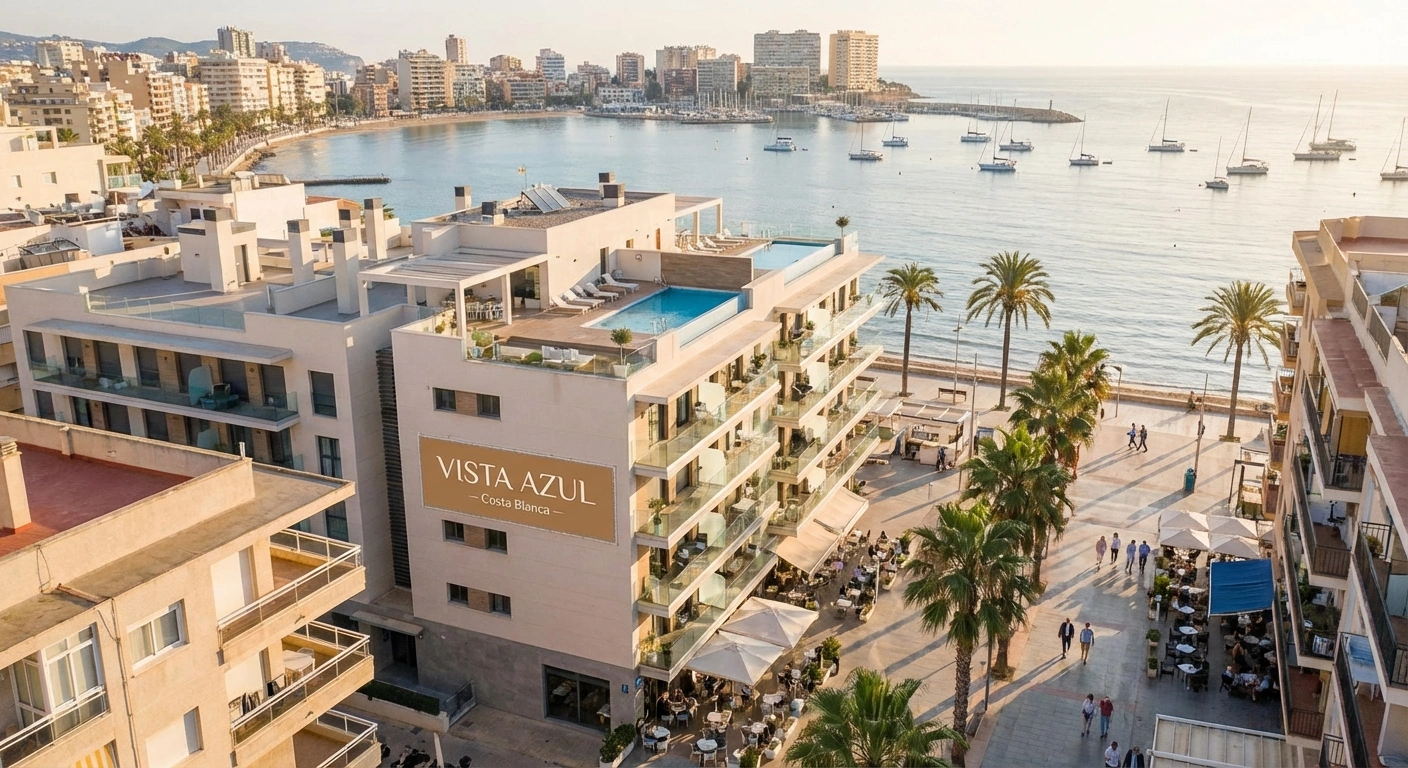
Property prices on Costa Blanca 2026, area by area: Torrevieja €2,719/m² (+39% since 2022), Alicante +16.4%. Where Swedish buyers should be careful.
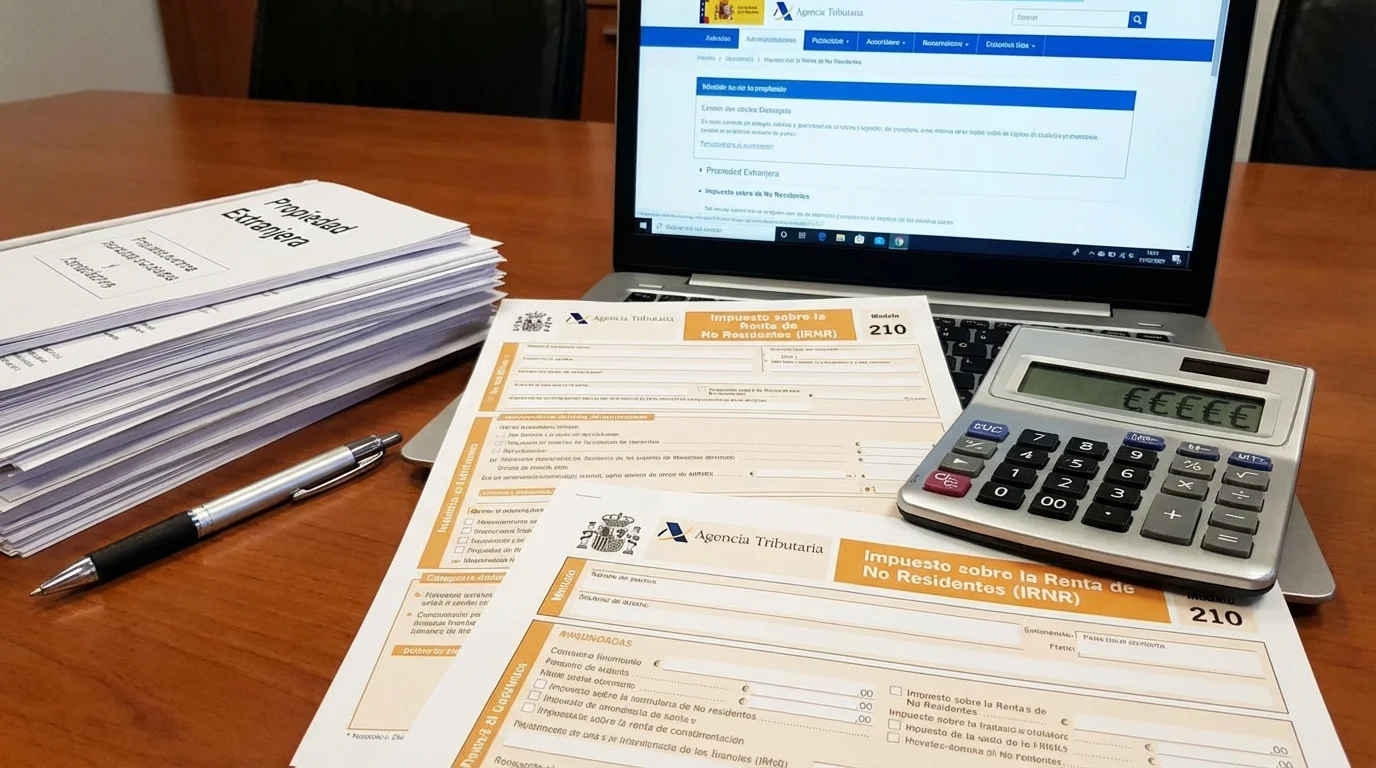
Complete guide to tax for non-residents with a property in Spain: IRNR, Modelo 210, imputed income and how to file your return as a Swede.