
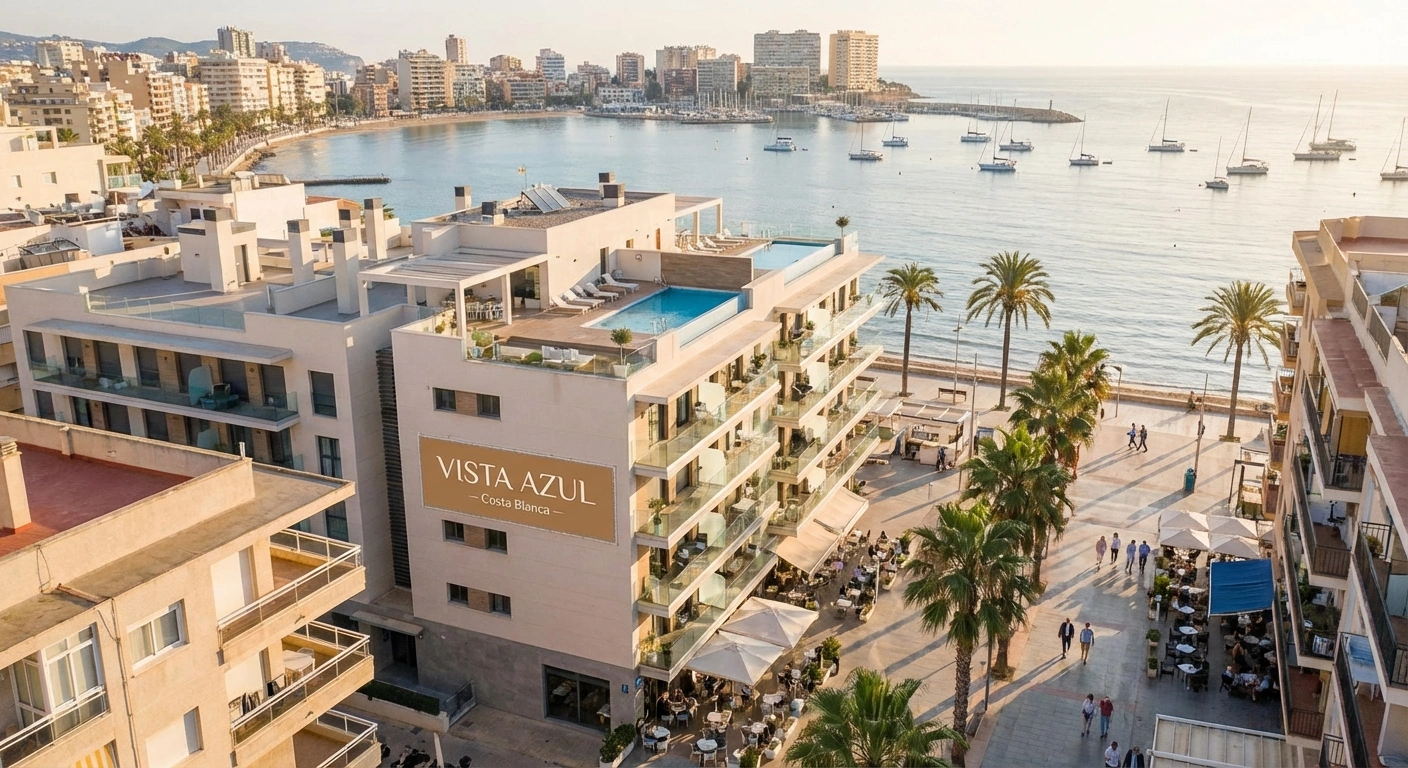
Market & News
Property Price Trends on Costa Blanca 2026 – Area by Area
Property prices on Costa Blanca 2026, area by area: Torrevieja €2,719/m² (+39% since 2022), Alicante +16.4%. Where Swedish buyers should be careful.
16 min
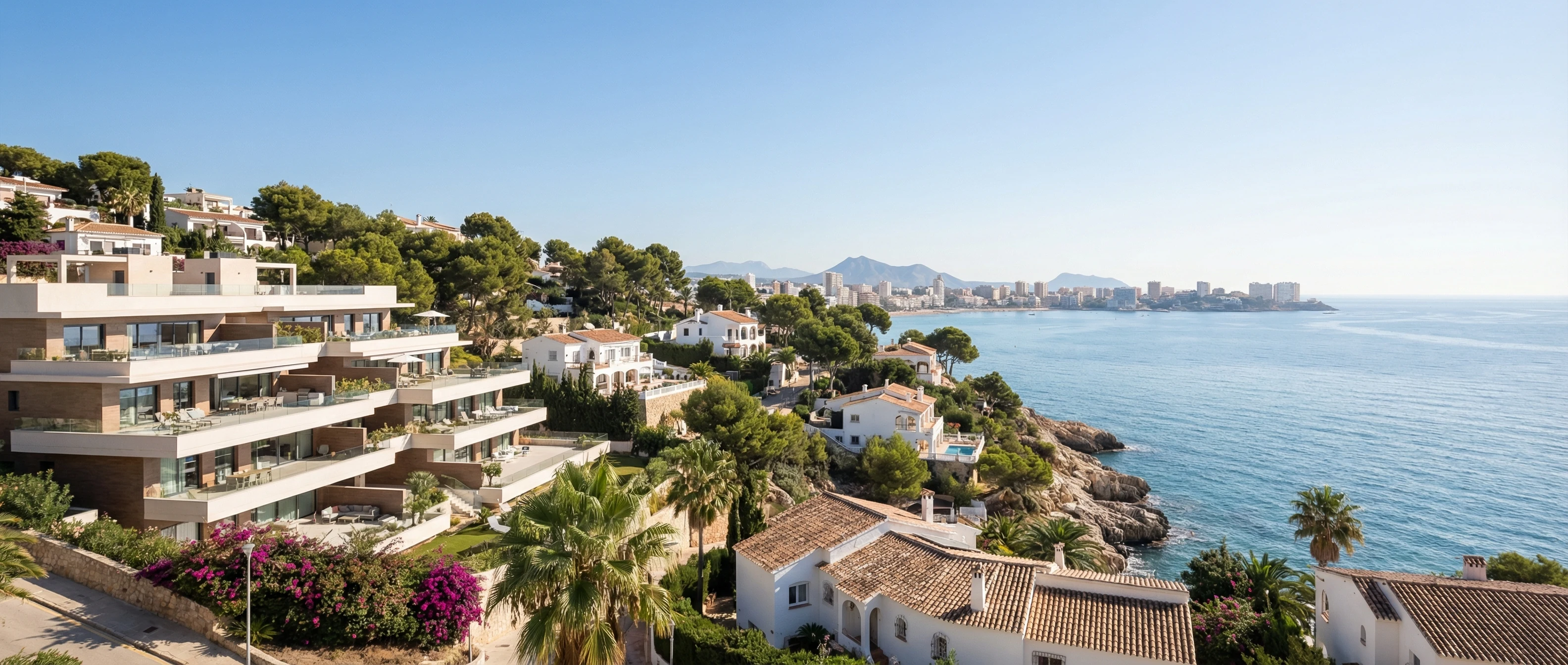
How does the Spanish property market look in 2026? A data-driven review of prices, regional differences, risks and what Swedish buyers should consider now.
The Spanish property market is still strong in 2026, but it is no longer broad and straightforward. The short answer is that prices continue to rise in several key coastal markets, while the gap between strong and weak locations is widening. If you look at southern Costa Blanca, Alicante or the Costa del Sol there is still clear demand, but you can no longer assume that "everything goes up" or that every new-build is a good buy.
The most important thing right now is that the market is being driven by two forces simultaneously: insufficient supply and continued international demand. Spain completes around 100,000 homes per year, while the need in several assessments is well over 200,000. At the same time buyers continue to seek out coastal towns with airports, services and year-round living. That creates pressure, but also greater risk of overpaying in the wrong segment.
In this review I look at what is actually happening in the Spanish property market in 2026, which regions look strongest, which risks have become more apparent and how you should read price data if you are planning a purchase as a Swede.
The Spanish property market enters 2026 with a continued positive direction, but with clearly less "tailwind for everything" than before. This is especially noticeable when you compare different parts of the country. In Torrevieja the average price stands at 2,719 euros per square metre in Q1 2026, after a rise of 39 per cent since 2022. That is still strong, but the annual rate has slowed to around 4.3 per cent.
In Alicante the picture is different. The average there was around 2,535 euros per square metre during 2025, while the year-on-year rise reached 16.4 per cent. That tells us something important: real cities with universities, labour markets, services and transport infrastructure stand on more legs than pure holiday resorts.
On the Costa del Sol levels are significantly higher. Marbella was around 5,485 euros per square metre at the end of 2025, Estepona around 4,116 and Mijas around 3,569. Fuengirola was around 4,798 euros per square metre at the same time, after almost 18 per cent growth in a year. That data shows the market is still hot, but also that the entry price has become considerably higher than on the Costa Blanca.
If you zoom out the conclusion becomes fairly simple. Spain is not one market. It is several markets stacked on top of each other. Coastal holiday locations, real urban locations, premium areas and cheaper growth areas do not react in the same way to the same signals. That is why national headlines are often worse than local understanding.
Information
Brief situation summary: Spain still has a property market with upside in good locations, but 2026 is more a year for selectivity than for autopilot. The right area matters. The right micro-location matters even more.
There are four main drivers behind the market right now.
The first is supply. Spain is still building too little relative to demand. When around 100,000 homes are completed per year while the need is assessed to be well over 200,000, the pressure becomes especially clear in coastal locations where buildable land and planning processes are already restricted.
The second is accessibility. Alicante-Elche airport had nearly 20 million passengers during 2025. That is not just a strong travel figure. It is a measure of how easy the region is to use for both second-home buyers and long-term visitors. A market that is easy to fly to gets more viewings, more returning buyers and less friction when sentiment becomes more cautious.
The third is international demand. In Alicante province foreign buyers accounted for 44 per cent of transactions during 2025. This keeps price levels up in areas such as Orihuela Costa, Torrevieja and parts of Alicante, but also makes the market more sensitive to currency changes and household finances in northern Europe.
The fourth driver is that certain Spanish coastal markets are no longer just sold as holiday destinations. Alicante functions as a year-round city. Fuengirola functions as a daily-life city with a beach. La Cala de Mijas sells family logic, not just views. When demand comes from residents, investors and second-home buyers alike the pricing becomes more resilient.
This is also why the market looks more mature now. When money becomes more selective it more often goes to areas where the property works in November, not just in July.
For Swedish buyers I think the 2026 market can be read as four quite different profiles.
First you have southern Costa Blanca. There the combination of price level, year-round services and rental logic is still hard to beat. In Torrevieja the entry point is still more accessible than on the Costa del Sol, and in Orihuela Costa the average price was around 3,150 euros per square metre during 2025, with a rise of 12 to 13 per cent compared with the year before. That is strong, but still within a range where many Swedish buyers can participate.
Then you have Alicante. In my view it is one of the most interesting sub-markets right now precisely because it is not only driven by holiday buyers. You get a city, schools, healthcare, a labour market and better year-round demand than in many resort areas. That makes Alicante less sensitive to a weak summer and more interesting for buyers who want to own something that works even without a holiday feel.
The third profile is the Costa del Sol. Here the market is stronger in the premium segment and has a broader international profile, but is also more expensive and less forgiving. Marbella remains the clear premium leader, while Fuengirola, Mijas and Estepona attract buyers wanting to combine lifestyle with actual daily life to a greater extent. The problem is not demand. The problem is that a mistaken purchase costs more when the price per square metre is already high.
The fourth profile is the Costa Cálida. There the market is often most interesting for buyers chasing better percentage returns or a lower total budget. The Los Alcázares area was around 2,962 euros per square metre in August 2025, while cheaper parts were closer to 2,140. That kind of level makes the market attractive on paper. At the same time the resale market is narrower than in Alicante or on the Costa del Sol.
Here is a simplified comparison that helps more than most headlines:
Four coastal profiles in brief
Costa Blanca South
2,700–3,150 €/m²
Balanced, broad, international. Suits second homes, rentals and budgets with year-round functionality.
Alicante city
approx. 2,535 €/m²
City, year-round market, robust. Suits permanent living and long-term ownership.
Costa del Sol
3,569–5,485 €/m² (central sub-markets)
Premium, international, expensive. Suits lifestyle purchases and a strong resale market.
Costa Cálida
approx. 2,140–2,962 €/m²
Lower entry, thinner market. Suits value purchases, higher yields and a quieter coastal lifestyle.
Properties
Explore available properties in Costa Blanca
Browse current homes in the area and compare locations, price levels and property types at your own pace.
One of the most common mistakes in 2026 is conflating strong demand with automatic buy-worthiness in new-build. New-build is often in demand, but it is not always the best value.
Nationally, prices of new homes rose by 9.7 per cent during the third quarter of 2025. At the same time new-build along the coast often stands 15 to 25 per cent above comparable resale property. That can be reasonable if you are paying for energy efficiency, a modern floor plan, low initial maintenance risk and a strong rental profile.
But there is a clear disadvantage. In areas with many parallel projects you are not always buying scarcity. Sometimes you are just buying one unit in a corridor where several near-identical products come to market simultaneously. Then the resale turns out to be weaker than many hope, especially if the market cools slightly or buyers become more price-sensitive.
In established locations it is therefore often the resale market that still offers the best value per euro. An older property in a good micro-location, close to the beach, services and everyday life, can be a better buy than a brand-new property further out. This applies in Torrevieja, in Alicante and in several parts of the Costa del Sol.
Tip
Practical rule of thumb: pay a premium for location rather than for showroom appeal. When the market becomes more selective, walkable everyday life and a clear address hold value better than generic new-build.
There are at least four risks that Swedish buyers should take more seriously right now.
The first is buying too expensively in an area where price growth has already done much of the work. This applies particularly in parts of the Costa del Sol and in some newer resort areas on the Costa Blanca. When a market has already risen sharply it becomes less forgiving of mediocre properties.
The second is overestimating how straightforward the rental logic is. In theory many coastal locations can look strong in a calculation. In practice the return is quickly eaten up by vacancy, management, community fees, cleaning, tax and wear and tear. That is why the same area can be both popular and a poor investment case if you buy the wrong product.
The third risk is older stock. In markets such as Torrevieja, parts of Alicante and some cheaper coastal towns a low price can conceal old electrical systems, poor insulation, lift problems or associations with deferred maintenance. That kind of problem rarely shows up in the first round of listings but affects both daily life and resale value.
The fourth risk is dependence on foreign purchasing power. If a market is dominated by British, German, Dutch and Scandinavian buyers it also becomes more exposed to interest rates, currencies and purchasing power falls outside Spain. That does not make the market bad. It just means it becomes more sensitive when the outside world shakes.
Note
The biggest mistake in 2026 is buying "the right area" but the wrong property. The market rarely slows first at the municipal level. It slows first in properties that are noisy, hard to sell, overpriced or technically weak.
There is also a more everyday risk: buying on holiday impressions rather than on actual use. A property can feel perfect on a three-day viewing trip and still be wrong if you are going to live there for longer periods, work from there or carry the running costs over several years.
Yes, for the right buyer it is still a good time to buy in 2026. But the buyer profile has become more important than before.
If you are buying long-term, know what you want and can think of owning for at least five to seven years, there is still good logic in the market. This applies particularly in areas where demand stands on several legs: city, airport, services, year-round life and international purchasing power. There Spain still has more resilience than many other holiday-driven markets.
If on the other hand you are buying to chase short-term gains the market becomes harder. Much of the easy price appreciation has already happened in several popular coastal locations. 2026 is therefore better for buyers who want to live with their property and worse for buyers hoping for quick and near-automatic value growth.
For Swedish buyers I would simplify the conclusion as follows:
That is why the Spanish property market 2026 still looks attractive, but more for careful buyers than for impulsive buyers. You do not need to be afraid of the market. You just need to read it more precisely than before.
Properties
Explore available properties in Costa del Sol
Browse current homes in the area and compare locations, price levels and property types at your own pace.
Contact
We help you compare areas, price levels and risks in a clear-headed way. You get a thorough Swedish-language review of what is actually reasonable now, not just what looks good in a listing.
Book free consultationLast updated: 2026-04-02. Price levels, interest rates and local regulations can change quickly, so always verify current data before making a decision.
Decision support
Ja, i stora delar av marknaden stiger priserna fortfarande, men uppgången är mer ojämn än under 2024 och 2025. Kustmarknader med stark internationell efterfrågan, begränsat utbud och bra flygförbindelser håller uppe tempot bäst.
Det betyder inte att alla områden går lika starkt. Skillnaden mellan rätt och fel mikroläge har blivit större.
För många svenska köpare är södra Costa Blanca fortfarande mest balanserad tack vare lägre inträdespris, bra service och stark efterfrågan. Alicante är stark för dig som vill ha en riktig stad med helårsmarknad.
Costa del Sol fungerar bra om du prioriterar premium, internationell dragningskraft och bred vidareförsäljningsmarknad, men ingångspriset är högre.
Inte automatiskt. Nyproduktion ger ofta bättre energiprestanda, lägre initialt underhåll och enklare uthyrningsprofil, men kostar samtidigt tydligt mer än jämförbart begagnat bestånd.
I marknader med många liknande projekt kan premien vara svår att få tillbaka vid en senare försäljning. Därför är mikroläge och totalpris fortfarande viktigare än att bostaden är ny.
De viktigaste riskerna är att köpa för dyrt i ett område med mycket nyproduktion, att överskatta uthyrningspotentialen och att missa föreningskostnader eller tekniska brister i äldre bestånd. I vissa kustmarknader tillkommer även större känslighet för utländsk köpkraft, räntor och valutor.
Det är därför klokt att räkna på netto, inte bara på annonspris eller bästa möjliga scenario.
Ja, om du köper långsiktigt och vet vad du prioriterar. Marknaden är inte lika enkel som för några år sedan, men den är fortfarande intressant i områden där efterfrågan står på flera ben.
För kortsiktiga spekulationsköp är läget svårare. För köpare som vill ha ett boende i rätt område och kan tänka sig att äga i minst fem till sju år är 2026 fortfarande ett rimligt köpfönster.
Sources

Los Balcones, Alicante

Lago Jardín II, Alicante

San Luis, Alicante

San Agustín

Centro, Alicante

Centro, Alicante
Local expertise
Property prices on Costa Blanca 2026, area by area: Torrevieja €2,719/m² (+39% since 2022), Alicante +16.4%. Where Swedish buyers should be careful.
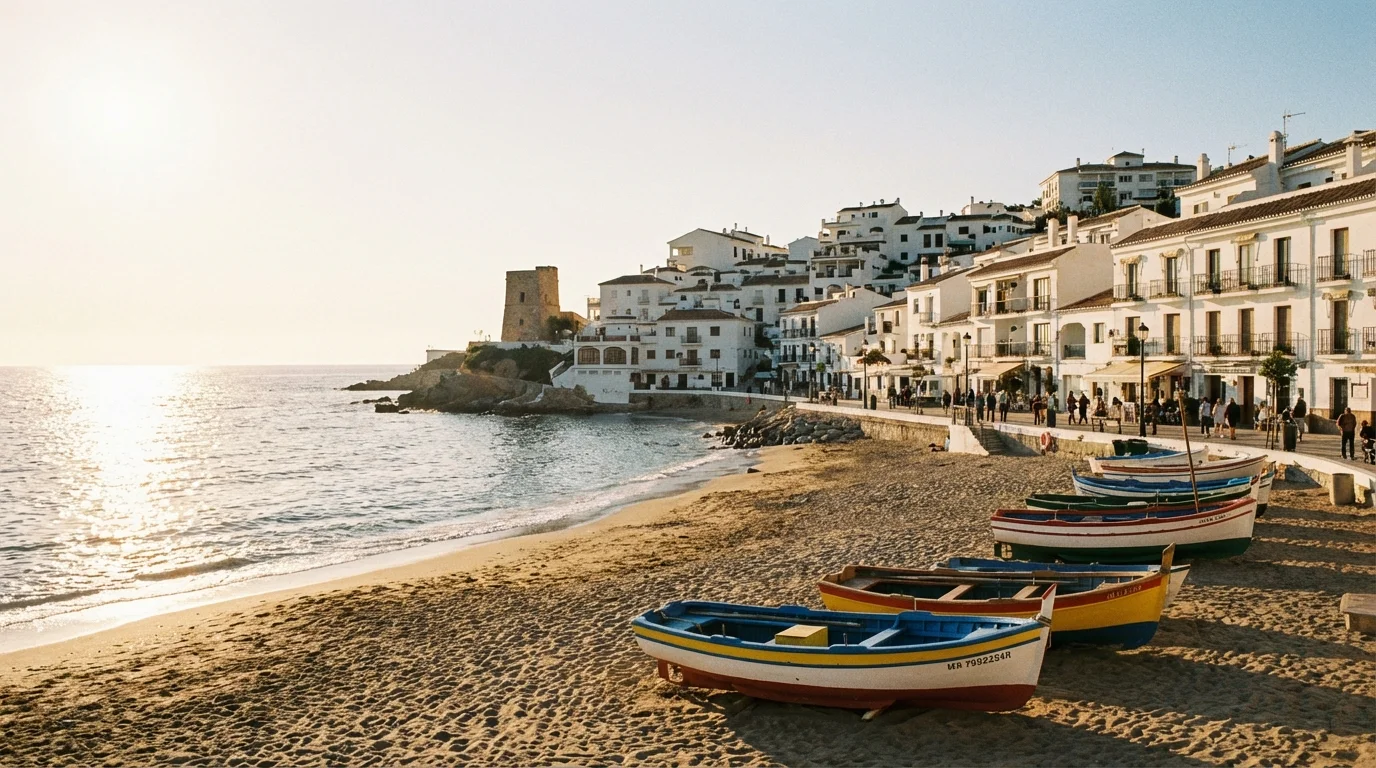
How property prices are developing on Costa del Sol in 2026: area comparison, the drivers behind the price rises and where Swedish buyers should be especially careful.
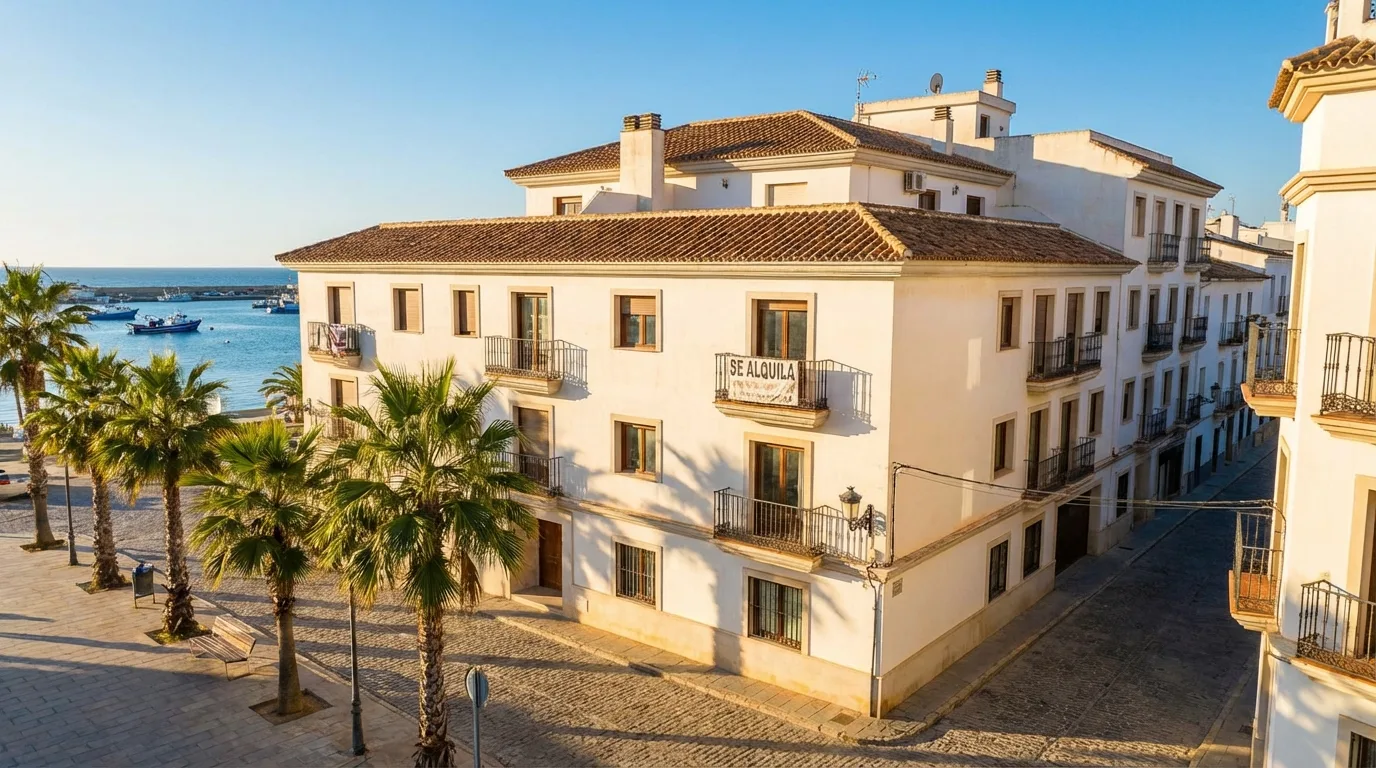
What does the rental market in Spain look like in 2026? Guide to yields, occupancy, regional differences and what Swedish property owners can realistically expect.