


Area Guides
Altea – The Artists' Town on the Northern Costa Blanca 2026
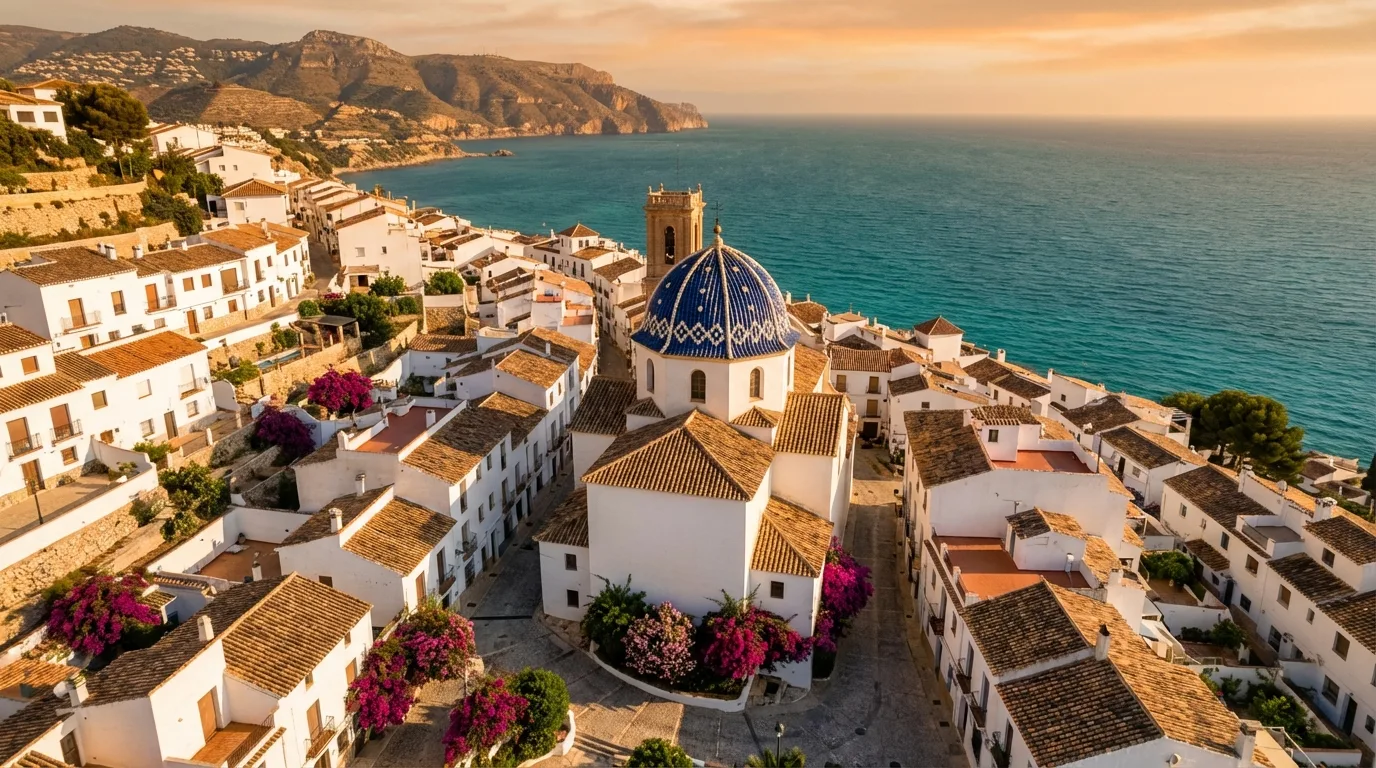
Complete guide to Altea: the white artists' town with its blue church dome, charming lanes, property prices, and why it is called the jewel of the Costa Blanca.
16 min
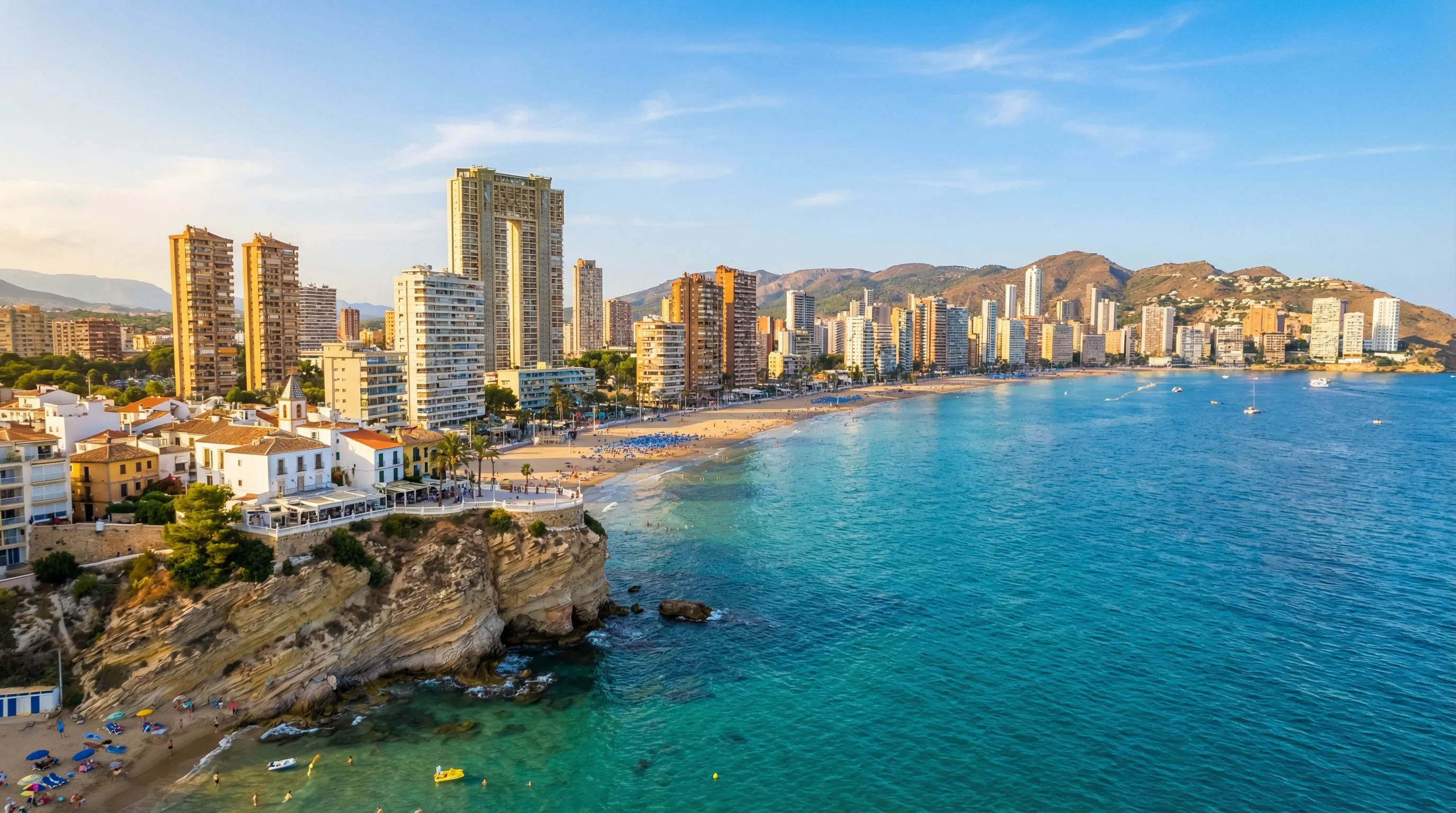
Complete guide to Benidorm: Levante and Poniente beaches, old town, property prices and why there is more beneath the surface than most people think.
Benidorm has 77,221 permanently registered inhabitants, more skyscrapers per capita than any other city in Europe and five kilometres of Blue Flag sandy beach. The average property price is 2,900–3,600 euros per square metre — cheaper than neighbouring Altea but more expensive than Torrevieja. In summer the population quintuples to over 365,000 people, but for the rest of the year Benidorm is a functioning city with a hospital, TRAM connection to Alicante and a street life that never closes.
Most people who have never visited Benidorm picture concrete blocks and drunken holidays. The picture is partly accurate — but it misses the entire old town with Balcón del Mediterráneo, the calm of Poniente beach, the Spanish everyday life in the centre and a price level that makes it possible to buy near the beach without mortgaging yourself to retirement. In this guide I cover beaches, neighbourhoods, property prices by area, climate, nightlife and what you should think about before buying.
Benidorm is situated in the Marina Baixa comarca in Alicante province, on northern Costa Blanca. The city is located in a bay between the Serra Gelada mountain to the northeast and Punta del Cavall to the southwest. The municipality covers 38.5 square kilometres and has around 5 kilometres of continuous beach.
Distances from Benidorm:
The AP-7 motorway (toll-free since 2020) passes through Benidorm and gives fast connections in both directions. The TRAM line connects Benidorm with Alicante to the south (just over an hour) and with Altea, Calpe and Dénia to the north (two hours to Dénia). It is one of the few places on the Costa Blanca where you can genuinely manage everyday life without a car.
Information
The TRAM line between Benidorm and Alicante has recently been upgraded with double track and electrification on the section past Villajoyosa. Travel time to Marina Baixa regional hospital in Villajoyosa is 15 minutes. To Alicante city centre it takes just over an hour — cheaper and often faster than a car during rush hour.
Benidorm's beaches are the reason the city exists in its current form. The tourism boom started here in the 1960s, and the beaches still hold international top status in terms of sand, water and infrastructure.
Levante beach stretches 2 kilometres from Balcón del Mediterráneo in the old town eastwards towards Serra Gelada. It is Benidorm's best-known beach and the one that appears on all the postcards. The sand is light and fine-grained, the water shallow enough for children and the promenade is lined with restaurants, bars and hotels.
Levante has Blue Flag status and full service: lifeguards, wheelchair ramp, showers, sun loungers and water activities such as jet-ski, parasailing and paddleboard. In high season (July–August) it is crowded — plan to arrive before 10 o'clock if you want a good spot. In the off-season you have the beach almost to yourself.
Poniente is on the other side of the rocky headland from Levante and stretches 3 kilometres westwards towards Finestrat. The beach is wider, calmer and more popular with families and permanent residents. The promenade was renovated in 2009 with an award-winning design by architect Carlos Ferrater — white wave-shaped structures that have become a landmark in their own right.
Poniente has the same Blue Flag status and facilities as Levante but without the intense tourist pressure. The sunsets here, with the sun sinking behind Punta del Cavall, are among the most beautiful on the entire Costa Blanca. Property prices along Poniente are paradoxically the highest in Benidorm, precisely because this is where permanent residents want to live.
Hidden between the harbour and Balcón del Mediterráneo you find Cala del Mal Pas — a small cove of just 120 metres with golden sand and crystal-clear water. It is the beach that local residents choose when they want to avoid the crowds. The cove is sheltered by cliffs on both sides, making the water calm even when it is windy.
Mal Pas is easy to miss if you do not know it is there, but it is literally in the middle of the city, below the old town. Perfect for a quick swim after lunch at the old town restaurants.
Tip
Want a calm beach in Benidorm? Choose Poniente over Levante. Want charm and local atmosphere? Cala del Mal Pas. Levante is best for water activities and the classic Benidorm experience — but be prepared for crowds from June to September.
Benidorm's casco antiguo is the part of the city that most tourists never discover. The old town sits on a rocky headland (Cerro Canfali) between Levante and Poniente, with narrow streets, whitewashed houses and the viewpoint Balcón del Mediterráneo as its centrepiece.
The viewpoint sits at the top of the rocky headland and offers 180-degree panoramic views over the Mediterranean, with Levante beach on one side and Poniente on the other. The harbour and Mal Pas cove are visible below. It is one of the most photographed spots on the entire Costa Blanca and entry is free.
There is a folk tradition that says touching the white balustrade wall brings good luck — and it is polished smooth by all the hands that have done so over the years. Whether you believe that or not, the view is worth the visit, particularly at sunset.
The old town's streets are car-free, narrow and lined with tapas restaurants, craft shops and small squares. The church of San Jaime y Santa Ana with its blue dome dominates the skyline. The style recalls Altea's old town but on a smaller scale and with a more everyday, Spanish character — fewer galleries, more local bars.
What makes Benidorm's old town special is the contrast. You step from 47-storey skyscrapers and the beach promenade straight into a medieval labyrinth of cobblestone alleys. Few cities in the world offer that kind of whiplash.
Rincón de Loix is the neighbourhood north of Levante beach, up the slope towards Serra Gelada. It is Benidorm's most international area and what can best be described as an expat enclave. There is a high concentration of British pubs, restaurants with English menus and shops with imported goods.
Properties in Rincón de Loix are predominantly apartments in high-rises from the 1970s and 1980s. Sizes are often compact — 30 to 60 square metres is common — and prices are around 3,100 euros per square metre. This means you can find studios and one-bedroom apartments from 80,000–120,000 euros, which is among the lowest entry prices on northern Costa Blanca.
The downside? Rincón de Loix is the part of Benidorm that most resembles the stereotype. Here the signs are in English, the menus feature fish & chips and it feels more like Blackpool than the Mediterranean. If you are looking for a Spanish character, you are better off living in the centre or by Poniente.
Note
Rincón de Loix has the lowest prices in Benidorm, but properties are often small and in older buildings. Always check the community fees (comunidad), the building's condition and whether there is a lift. Many properties from the 1970s have high deferred maintenance costs. A technical survey before purchase is important — do not underestimate the cost of upgrading plumbing and electrical systems in older high-rises.
Benidorm is cheaper than most places on northern Costa Blanca if you compare with Altea, Jávea or Moraira, but more expensive than southern Costa Blanca towns such as Torrevieja and Orihuela Costa. The average property price in November 2025 was 3,617 euros per square metre, an increase of almost 15 percent compared with the previous year.
Always allow 10–13 percent in additional costs on top of the purchase price: transfer tax (ITP, 9 percent in the Valencia region since June 2026), notary fee, land registry registration and solicitor's fee.
Bank forecasts point to a further 7–9 percent price increase in Spain during 2026. Benidorm follows the trend with continued rising prices, driven by limited land, strong tourism and increasing demand from northern European buyers.
Properties
Explore available properties in Benidorm
Benidorm has a Mediterranean climate with long, dry summers and mild winters. The city records an estimated 2,800–3,000 sunshine hours per year — among the highest in Europe.
Temperatures through the year:
Rainfall: Around 418 mm per year — low compared with Sweden (600–800 mm). Summer is almost entirely dry. Rainfall concentrates in autumn, particularly September–October.
Benidorm's microclimate is favoured by the Sierra Aitana mountain range to the north that protects against cold winds. This means winter temperatures in Benidorm are often 2–3 degrees higher than in for example Alicante city.
Benidorm registered its highest ever population in 2025 with 77,221 inhabitants, an increase of 3.5 percent compared with the previous year. Of these, around 35 percent are foreign nationals — approximately 27,000 people.
The largest foreign groups:
What sets Benidorm apart from smaller coastal towns is the volume. The city has a critical mass of residents that means services, restaurants, shops and entertainment function year-round. You never sit in a ghost town in winter — that is Benidorm's strongest argument as a place to live.
Benidorm has one of the most famous nightlife scenes in all of Spain, and that is both an advantage and a disadvantage depending on what you are looking for.
Nightlife concentrates in three zones. Calle Gerona and surrounding streets (the "English zone") have hundreds of pubs and bars with live music, karaoke and sports screenings — aimed at British tourists. Avenida de Mallorca has larger nightclubs. The old town offers a calmer Spanish alternative with tapas venues and wine bars that close earlier.
Benidorm Palace is a cabaret and variety theatre with over 40 years' history and capacity for 1,600 guests. The shows are professional, featuring international artists, acrobats and dancers. It is not high culture — it is pure entertainment, and visitors consistently rate it highly.
Benidorm Fest (since 2022) is Spain's national Eurovision selection and is broadcast nationally from the city. Fiestas de Benidorm in November includes Moros y Cristianos parades. Summer is filled with concerts and street festivals.
Terra Mítica is Benidorm's theme park, located 5 kilometres northwest of the centre. The park opened in 2000 and celebrated its 25th anniversary in 2025 with new attractions and the water area Isla de Assina. The theme is ancient civilisations — Egypt, Greece, Rome, Iberia and the Islands — with roller coasters, water slides and daily shows.
Terra Mítica is not in the same league as Disneyland, but it is a worthwhile full day out that makes Benidorm more attractive for families with children. Entry prices are 30–40 euros for adults and cheaper for children. The park is open from May to October and selected weekends in winter.
Nearby you also find Aqualandia (one of Europe's largest water parks) and Mundomar (animal park with dolphin shows), making Benidorm the place on the Costa Blanca with by far the most leisure options for children.
Altea is the polar opposite of Benidorm in atmosphere. Where Benidorm has skyscrapers, Altea has whitewashed houses and a church with a blue dome. Altea costs 20–30 percent more per square metre and has no wide sandy beaches (mostly pebbles). Altea suits those who prioritise charm, art and calm. Benidorm suits those who want beach, amenities and a city that never sleeps. The distance between them is 15 minutes, so you can live in one and visit the other.
Villajoyosa (La Vila Joiosa) lies 12 kilometres south of Benidorm and offers an entirely different atmosphere: colourful fishermen's houses, chocolate factories, quiet streets and a growing expat community. Prices are 20–30 percent lower than in Benidorm. Villajoyosa is for those who want a Spanish small-town feel with Benidorm's amenities 15 minutes away. The Marina Baixa regional hospital is in Villajoyosa, which is a bonus.
Alfaz del Pi (and Albir beach) lies 10 minutes north of Benidorm. Prices are 15–20 percent lower. Alfaz has the largest Scandinavian community on the Costa Blanca with a Norwegian school and Nordic associations. Albir beach is calmer than Benidorm. It is a popular compromise choice: calm living with all of Benidorm's facilities a short drive away.
Properties
Explore available properties in Benidorm
Benidorm's skyline deserves its own section, because it is unique in Europe. The city has more high-rises per inhabitant than any other city in the world except (by some calculations) New York. It ranks as the third most densely high-rise city in Europe, after London and Milan.
Intempo is Benidorm's landmark — a 47-storey residential tower (187 metres) completed in 2021 after a dramatic building history involving bankruptcies and ownership changes. It is Spain's tallest residential building outside Madrid and the EU's tallest purely residential building. Apartments in Intempo sell from 300,000 euros upwards.
Gran Hotel Bali is 186 metres tall and was for a long time Europe's tallest hotel. It has 776 rooms and is Benidorm's most iconic building seen from the sea.
The skyscrapers divide opinion. Critics see concrete and mass tourism. Advocates point out that Benidorm's vertical urban planning is actually more environmentally efficient than villa development — more people on less land, with the beach and nature (Serra Gelada nature park) intact right next door. That is an argument the Benidorm municipality actively makes.
Contact
Get in touch and we'll guide you forward — whether you're just starting out or ready to buy.
Contact usLast updated: April 2026. Prices and regulations may change — contact us for current information.
Decision support
Alicante-Elche flygplats ligger cirka 50 kilometer från Benidorm. Med bil tar resan 35-40 minuter via AP-7 motorvägen.
TRAM-spårvägen går också mellan Benidorm och Alicante på drygt en timme. Från Sverige flyger SAS, Norwegian och Ryanair direkt till Alicante på 3,5-4 timmar.
Benidorm ligger i mellanskiktet. Genomsnittspriset är cirka 2 900-3 600 euro per kvadratmeter, billigare än Altea och Jávea men dyrare än Torrevieja och Orihuela Costa.
I Rincón de Loix hittar du smärre lägenheter från 80 000-120 000 euro, medan strandnära lägenheter längs Poniente kostar 250 000-400 000 euro.
Ja, Benidorm har 77 000 fast registrerade invånare och full infrastruktur året runt: sjukhus, skolor, hundratals restauranger, stormarknader och TRAM-förbindelse till Alicante. Vintrarna är milda med 16-17 grader dagtid och staden har en stor årsvistande befolkning av både spanjorer och utländska invånare.
Det beror på vad du söker. Levante (2 km) är den livligaste med vattenaktiviteter och strandrestauranger.
Poniente (3 km) är bredare, lugnare och mer populär bland barnfamiljer. Cala Mal Pas är en liten 120-metersvik med lugnt vatten, perfekt för den som vill undvika folkmassor.
Alla tre har Blå flagg-status.
Benidorm har ett av Spaniens mest kända nattliv. Området kring Calle Gerona och Avenida de Mallorca (den så kallade engelska zonen) har hundratals barer och nattklubbar.
Benidorm Palace erbjuder kabaréföreställningar med internationella artister. På sommaren pågår festligheterna till små timmarna varje natt.
Sources

Cucarres, Alicante

Puntes del Moro, Alicante

Nou Espai, Alicante

Gran Sol, Alicante

Playa del Torres, Alicante

Playa del Torres, Alicante
Local expertise
Complete guide to Altea: the white artists' town with its blue church dome, charming lanes, property prices, and why it is called the jewel of the Costa Blanca.
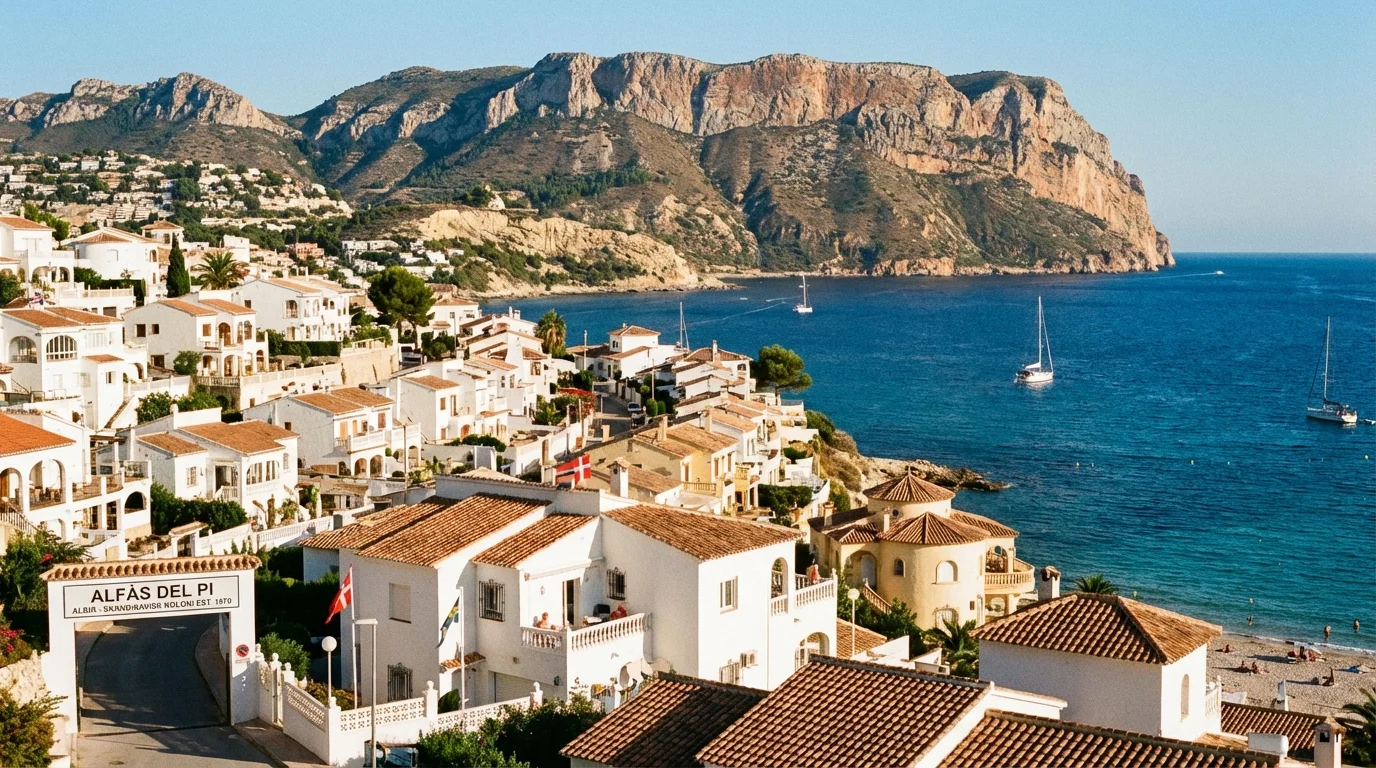
Complete guide to Alfaz del Pi: Scandinavia's largest community in Spain, property prices, healthcare, and why Norwegians and Swedes choose this area.
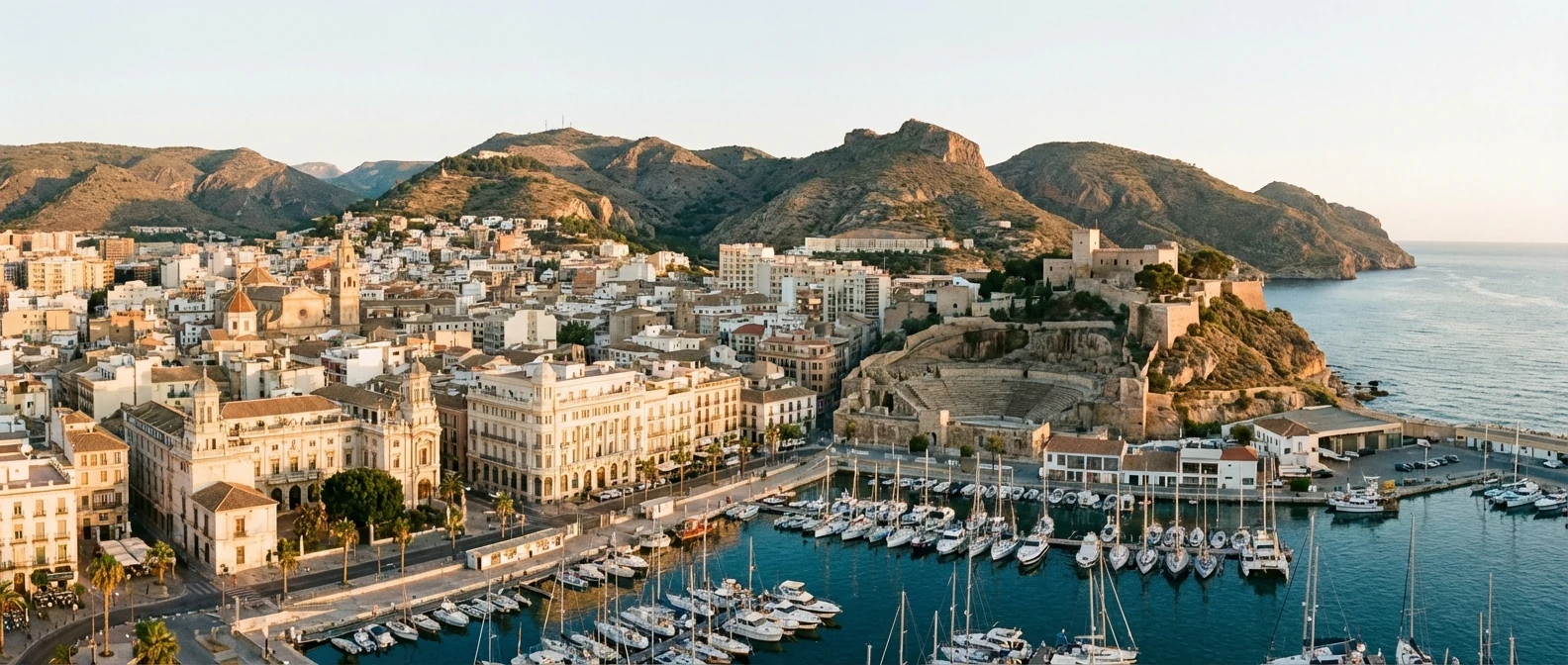
Thinking of living in Cartagena? Here is your guide to city life, the harbour, the old town, prices, climate and what sets Cartagena apart from the resort towns along the Costa Cálida.